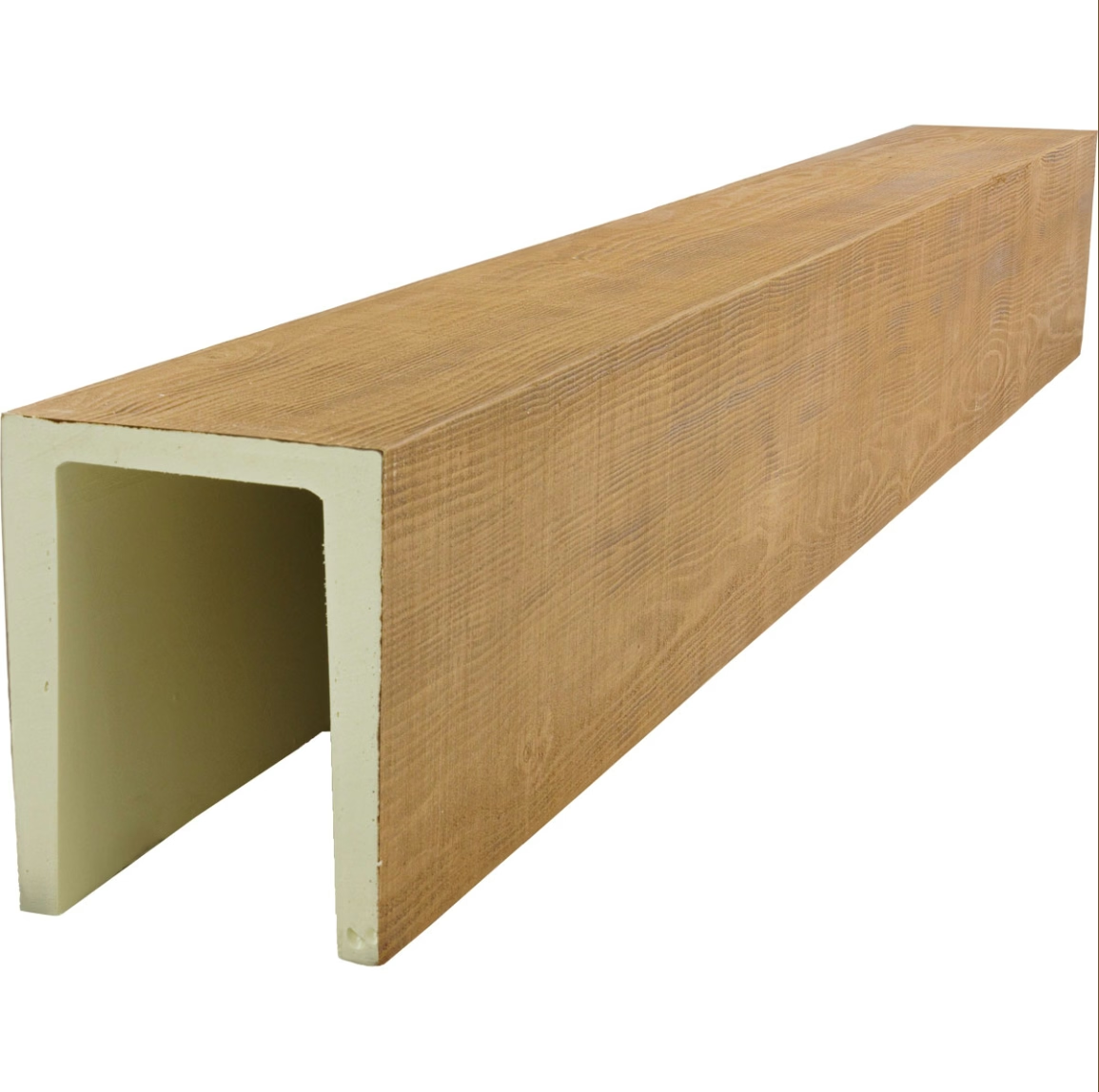
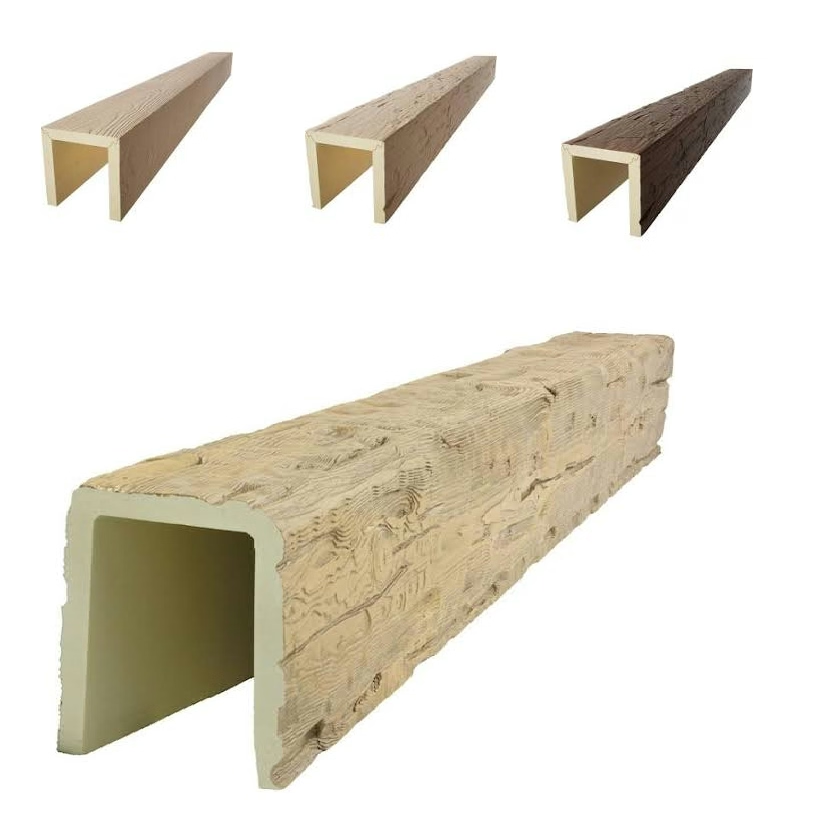
One Material Solves Diverse Interior Beam Needs
Polyurethane faux ceiling beams have earned their position as a go-to material for interior applications across virtually any project type. The combination of aesthetic versatility, practical performance, and cost efficiency makes polyurethane appropriate for residential homes, commercial properties, hospitality venues, and specialized facilities. Understanding the comprehensive range of possibilities helps specifiers identify optimal applications for their specific projects.
The universal applicability of polyurethane beams reflects their unique combination of properties. No single alternative material matches polyurethane's balance of appearance, performance, cost, and installation practicality across such a wide range of applications. This versatility simplifies material selection for projects with varied beam requirements.

Range of Interior Applications
Polyurethane faux ceiling beams serve numerous interior application types:
Residential great rooms and living areas benefit from dramatic beam installations that anchor family gathering spaces. Beams create architectural focal points that define these important rooms.
Bedrooms and private spaces gain warmth and character from beam applications. Beams transform ordinary bedrooms into distinctive personal retreats.
Kitchen and dining areas use beams to create architectural interest in functional spaces. Ceiling beams complement cabinetry and create kitchen features.
Bathroom applications with appropriate moisture-resistant specifications handle humid environments while adding design character. Beams make bathrooms feel less utilitarian.
Home offices and studies benefit from beams that create professional yet comfortable environments. Beams add architectural presence to workspace ceilings.
Basement finishes and lower-level renovations use beams to transform below-grade spaces into attractive living areas. Beams help basements feel like intentional rooms rather than converted storage.
Attic conversions and bonus spaces incorporate beams that address sloped ceilings while adding design character. Beams help define functional zones within irregular spaces.
Loft conversions use beams to add architectural elements appropriate to industrial-style spaces. Beams complement exposed structural elements in converted lofts.
Mudrooms and entry areas benefit from durable beams that handle intensive use while creating welcoming transitions to home interiors.
Hallway and transitional spaces use beams to add visual interest to otherwise overlooked circulation areas.
Commercial Application Spectrum
Commercial interior applications span equally diverse environments:
Office building lobbies and common areas create impressive arrival experiences through beam installations. Beams contribute to professional yet welcoming commercial environments.
Conference rooms and meeting spaces benefit from beams that soften formal commercial aesthetics. Beams add warmth to professional meeting environments.
Retail store interiors use beams to create distinctive brand environments. Beams differentiate retail spaces from generic competitors.
Restaurant dining rooms incorporate beams that contribute to themed dining experiences. Beam applications support diverse restaurant concepts from casual to fine dining.
Hotel guest rooms and suites use beams to add residential warmth to commercial accommodations. Beams help hotels feel like home rather than institutional.
Resort common areas feature beams that create memorable environments reflecting destination character. Beams contribute to distinctive resort identities.
Healthcare facility common areas use beams to create less institutional appearances. Beams help healthcare environments feel more welcoming.
Educational facility spaces incorporate beams that add character to learning environments. Beams contribute to engaging educational settings.
Museum and gallery spaces use beams to add architectural interest without competing with displayed content. Beams provide backdrop rather than focal points.
Theater and entertainment venues feature beams that contribute to themed environments and atmospheric design.
Why Polyurethane Excels Across Applications
Several material properties enable polyurethane beams to serve such diverse applications:
Weight characteristics make beams easy to handle and install in any application. The light weight eliminates structural concerns and simplifies logistics.
Dimensional consistency ensures predictable results regardless of application type. Manufacturers maintain tight tolerances that support reliable installation.
Finish variety accommodates virtually any aesthetic requirement. Multiple finish options suit different style preferences and design contexts.
Size range from small trim pieces to large structural-appearing members addresses varied project requirements. Multiple size options suit different applications.
Profile variety from simple rectangular sections to complex historical profiles addresses diverse architectural requirements. Multiple profile options serve different design needs.
Customization capability for unique requirements that standard products cannot address. Custom options expand application possibilities further.
Performance consistency across product range ensures reliable results regardless of application. Quality manufacturers maintain standards across their product offerings.
Cost effectiveness makes polyurethane appropriate for projects with varied budget levels. The material serves both budget-conscious and premium applications.
Material Properties Supporting Universal Application
Specific material properties support polyurethane's universal interior applicability:
Moisture resistance enables bathroom, kitchen, basement, and pool area applications where other materials would fail. Closed-cell structure prevents water damage.
Fire performance with appropriate formulations meets commercial code requirements across building types. Class A and Class B ratings suit different commercial applications.
Indoor air quality with low-VOC formulations supports healthy environments in sensitive applications. Certifications verify emission performance.
Impact resistance adequate for residential and commercial traffic levels. Standard products handle typical use while enhanced formulations serve demanding applications.
Color stability maintains appearance across varying lighting conditions and exposure levels. Quality finishes preserve appearance over extended periods.
Cleaning compatibility with standard cleaning products enables use in hygiene-sensitive applications. Surfaces release contaminants through normal cleaning.
Acoustic neutrality avoids sound reflection problems that some materials create. Polyurethane typically performs well acoustically in interior applications.
Electrical safety as non-conductive material eliminates grounding concerns in installations. The material supports safe integration with electrical systems.
Specification Considerations for Universal Application
Successful specification across applications requires attention to project-specific factors:
Performance requirement assessment identifies specific demands of each application. Different applications impose different performance requirements.
Code compliance verification for the specific building type and occupancy. Code requirements vary by application.
Environmental condition evaluation including temperature, humidity, and exposure variations. Different applications face different environmental conditions.
Aesthetic requirement documentation including finish, color, profile, and proportion specifications. Clear specifications ensure appropriate product selection.
Installation condition assessment including mounting surface, access, and any special conditions. Installation planning addresses actual project conditions.
Maintenance capacity evaluation matching product characteristics to available maintenance resources. Realistic maintenance expectations support appropriate product selection.
Product Selection Framework
Select appropriate polyurethane beam products using this framework:
Define application requirements including aesthetic, performance, and regulatory factors specific to the application.
Identify product categories that address application requirements. Different product categories suit different applications.
Evaluate specific products within appropriate categories against detailed requirements. Product-level evaluation ensures best fit.
Verify manufacturer capabilities for the specific project requirements. Manufacturer capabilities vary and affect product suitability.
Confirm commercial terms including pricing, lead times, and warranty coverage. Commercial considerations affect final product selection.
Document specifications clearly for procurement and installation reference. Clear documentation supports successful project execution.
Standard Product Categories
Polyurethane beam manufacturers typically offer products in several standard categories:
Residential interior beams designed for typical home applications with standard performance requirements and aesthetic options.
Commercial-grade beams meeting commercial building code requirements with appropriate certifications and documentation.
Premium architectural beams featuring enhanced finishes, custom profiles, and superior performance characteristics.
Specialty application beams designed for specific applications including bathrooms, kitchens, or challenging environments.
Custom fabrication products manufactured to specific project requirements not addressed by standard offerings.
Custom Capabilities for Specialized Needs
Beyond standard products, custom capabilities address specialized project requirements:
Custom profiles manufactured to replicate historical or unique architectural elements.
Custom colors matched to specific project palette requirements or brand standards.
Custom finishes providing specific sheen, texture, or performance characteristics.
Custom dimensions for unusual applications or specific design requirements.
Custom mounting systems engineered for unique installation conditions or performance requirements.
Integration features including lighting, audio, or other technology incorporation.
Quality Indicators for Product Evaluation
Several quality indicators help evaluate polyurethane beam products:
Material certifications from recognized testing laboratories verify performance claims.
Manufacturing certifications including ISO standards indicate quality management commitment.
Warranty terms reflect manufacturer confidence in product performance.
Customer references demonstrate successful application in similar projects.
Technical documentation including specifications, installation guides, and maintenance instructions.
Sample quality demonstrating actual product appearance and finish characteristics.
Lead time reliability indicating operational competence and customer service quality.
Installation Versatility
Polyurethane beams install successfully across varied conditions:
Standard ceiling mounting on flat or slightly textured surfaces using conventional techniques.
Vaulted and cathedral ceiling applications using adapted mounting methods for angled surfaces.
Exposed structural element applications where beams supplement or replace existing structural elements.
Suspended ceiling applications where beams integrate with dropped ceiling systems.
Decorative beam installations on existing ceilings for purely aesthetic enhancement.
Beam-to-beam connections for complex installations requiring multiple beams in geometric configurations.
Integration with other materials including wood, metal, stone, and glass for diverse design effects.
Coordination With Other Building Elements
Polyurethane beams coordinate effectively with other building elements:
Lighting systems integration for recessed, surface-mounted, or concealed lighting effects.
HVAC systems accommodation through appropriate beam sizing and mounting configurations.
Fire protection systems coordination including sprinkler clearances and fire-rated assembly requirements.
Electrical systems integration for wiring concealment and electrical device mounting.
Plumbing systems coordination for bathroom and kitchen applications.
Acoustic systems integration for sound masking, audio distribution, or acoustic treatment.
Smart building systems accommodation for sensors, controls, and connectivity equipment.
Maintenance Versatility
Polyurethane beams accommodate various maintenance approaches:
Standard cleaning using common household or commercial cleaning products.
Periodic refreshing through light cleaning and minor touch-up as needed.
Refinishing capability allowing color or sheen updates over time if desired.
Spot repair addressing localized damage without full replacement.
Section replacement for damaged sections without complete removal of installations.
Adaptation to changing aesthetic preferences through refinishing or replacement.
Sustainability Considerations
Sustainability aspects of polyurethane beam applications:
Manufacturing impacts including raw material sourcing and production energy use.
Service life benefits from long-lasting installations that reduce replacement frequency.
Indoor environmental quality contributions through low-emission product options.
Transportation efficiency from lightweight products that reduce shipping impacts.
End-of-life considerations including disposal options and recycling possibilities.
Manufacturer sustainability programs including take-back and recycling initiatives.
Cost Effectiveness Across Applications
Cost advantages of polyurethane beams apply across application types:
Material cost advantages compared to solid wood and other premium alternatives.
Installation cost savings from easier handling and faster mounting.
Maintenance cost reduction from durable, low-maintenance material characteristics.
Lifecycle cost benefits from extended service life and predictable performance.
Project timeline benefits from faster installation and predictable lead times.
Risk reduction from code-compliant, certified products with appropriate documentation.
Decision Framework for Application Selection
Use this framework when selecting polyurethane beams for any application:
Application analysis identifies the specific purpose and requirements for beam installation.
Performance requirement specification defines the technical capabilities needed.
Aesthetic requirement specification establishes appearance expectations.
Budget parameter establishment defines financial constraints for the application.
Product category identification narrows the field of appropriate products.
Specific product evaluation compares candidate products against requirements.
Manufacturer qualification verifies supplier capability and reliability.
Sample approval process confirms product suitability before commitment.
Specification documentation records decisions and requirements for project execution.
Long-Term Value of Polyurethane Beam Selection
Polyurethane beam selection delivers long-term value across applications:
Consistent quality from manufacturing processes that ensure reliable product characteristics.
Predictable performance based on documented material properties and testing.
Design flexibility that supports both current applications and future modifications.
Code compliance that protects against regulatory issues throughout installation life.
Aesthetic durability that maintains attractive appearance through years of service.
Operational efficiency from reduced maintenance and predictable performance.
Investment protection from products that perform as expected over their service life.
The comprehensive applicability of polyurethane faux ceiling beams makes them appropriate for nearly any interior beam application. Understanding the full range of possibilities enables optimal specification for any project requirement. Whether the application involves simple residential beam installation or complex commercial beam systems, polyurethane products likely offer appropriate solutions that balance aesthetic quality, practical performance, and cost effectiveness.
Technical References
ASTM standards cited in every specification
Test Data
Lab results from internal testing program
Updated 2026
Reviewed against current product specs