
When designers and contractors need a faux wood beam that works in almost any scenario, they reach for hollow polyurethane beams. The hollow construction makes them light, easy to handle, and versatile. The polyurethane material makes them durable, dimensionally stable, and realistic looking. Together, those qualities make hollow PU beams the practical workhorse of the faux wood beam world.
This article explains what hollow PU beams are, why the hollow construction is an advantage, and how they perform across the wide range of interior scenarios where designers want the look of timber.
What "Hollow PU Beams" Actually Means
The Construction
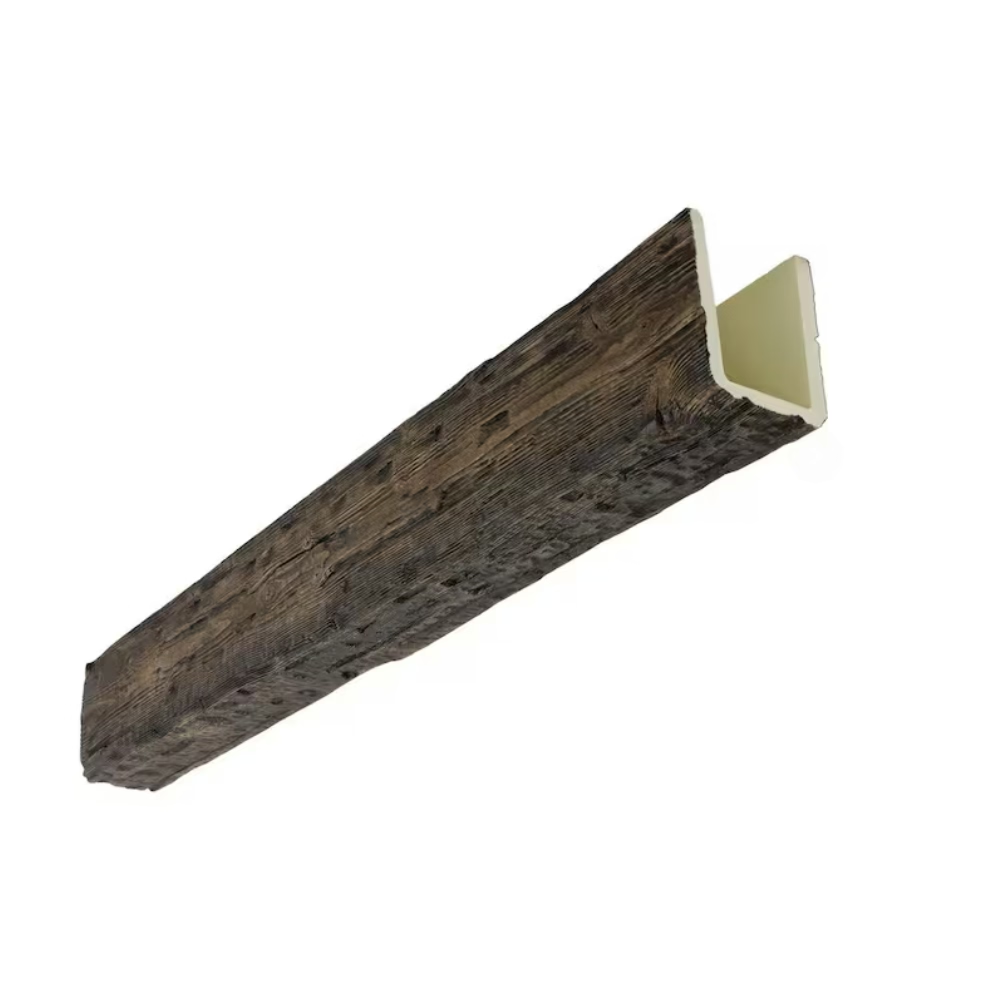
Hollow polyurethane beams are molded with a closed-cell polyurethane shell and a hollow interior. The shell is thick enough to maintain its shape and resist impact, but the beam as a whole weighs a fraction of what a solid timber beam would weigh.
The molded grain pattern is on the outside of the shell, with realistic texture that reads as wood at any distance. The interior of the beam is smooth and consistent, which is what makes the hollow construction so predictable to work with.
Why Hollow Rather Than Solid
A solid polyurethane beam would be unnecessarily heavy and expensive. The hollow construction provides all the visual and structural benefits of a faux wood beam without the weight penalty of solid polyurethane or the cost penalty of solid timber.
The hollow interior also makes the beams easier to handle on site. A typical 12-foot hollow PU beam weighs 30 to 50 pounds, depending on profile and wall thickness. Two installers can carry it comfortably. A solid timber beam of the same dimensions might weigh 200 pounds or more.
The Differentiation From Other Faux Beam Types
There are essentially three categories of faux wood beams:
- Hollow polyurethane — the lightest and most versatile, suitable for almost any interior application.
- High-density solid polyurethane — heavier and more impact-resistant, used for applications where the beam might face physical contact (low ceilings, public spaces, around fireplaces).
- Laminated or composite faux beams — built up from multiple materials, used for specialty applications.
Hollow PU beams are the most common choice because they balance weight, durability, cost, and versatility better than the alternatives.
The Multi-Scenario Versatility
Ceilings
Hollow PU beams work for almost any ceiling type — flat, vaulted, cathedral, coffered, dropped, sloped. They mount to standard ceiling framing with appropriate blocking, and the hollow construction makes it easy to route wiring through the beam interior for integrated lighting or speakers.
For dropped ceiling applications, hollow PU beams can be suspended below the existing ceiling using threaded rod or cable, with the beam wrapping the suspension hardware cleanly. The result is a finished beam that looks like it has always been part of the structure.
For vaulted and cathedral ceilings, hollow PU beams emphasize the height and angle of the space. The beams run perpendicular to the rafters, creating a strong horizontal rhythm against the angled ceiling plane.
Walls
Hollow PU beams work for accent wall applications as vertical cladding or as horizontal banding. The light weight makes them easy to mount on wall surfaces that might not support heavier materials, and the hollow construction simplifies any integrated electrical work.
For full-wall cladding, hollow PU beams can be installed as vertical battens or as horizontal stacked courses. The patterns work in modern, transitional, and rustic interiors alike.
Fireplace Mantels
Hollow PU beams are commonly used as fireplace mantels, where they span the fireplace opening and provide a shelf for display. The hollow construction allows wiring to be routed through the mantel for integrated lighting or for hiding cables from a television mounted above.
Accent Features
Beyond ceilings, walls, and mantels, hollow PU beams appear in a range of accent applications — door and window headers, decorative trims around built-in shelving, faux structural elements in themed spaces, and display elements in retail environments.
The versatility across so many different applications is one of the strongest arguments for hollow PU beams. A single material specification can serve multiple roles in a project, which simplifies procurement and ensures consistency across the finished interior.
Installation Advantages
Easy Handling
The light weight of hollow PU beams means a single installer can usually position a beam for mounting without assistance. Larger beams might need a second person for the actual lifting, but the weight is manageable for typical residential and commercial crews.
The light weight also simplifies transportation. A delivery of hollow PU beams doesn't require a forklift at the job site, doesn't need a flatbed for unloading, and can be staged in the building without a freight elevator.
Simple Mounting
The hollow construction makes mounting straightforward. The beam slides over a cleat fastened to the structure, then locks in place with screws through the side or underside faces. No special brackets, no structural reinforcement, no engineered fasteners.
For non-standard mounting situations — suspended ceilings, vaulted installations, masonry walls — the hollow construction can be adapted with various cleat and bracket systems that are widely available from hardware suppliers.
Field Modifications
Hollow PU beams can be cut, notched, and shaped on site with standard woodworking tools. Fine-tooth saws make clean cuts. For length adjustments, the beams can be trimmed at either end and refinished at the cut edge.
The hollow interior simplifies any field modifications that need to happen for integrated systems. Wiring can be routed through the beam, junction boxes can be hidden inside, and small notches can be cut for intersecting beams or unusual ceiling conditions.
Fast Installation
The combination of light weight, simple mounting, and easy field modifications makes hollow PU beams fast to install. A typical residential beam installation — 5 to 10 beams in a single room — can be completed in a day by a two-person crew. The painter follows behind for touch-ups.
For larger projects, the time savings compound. A commercial installation with dozens of beams across multiple rooms can be completed in a fraction of the time required for solid timber.

Performance Characteristics
Dimensional Stability
Hollow PU beams don't move with humidity changes the way real timber does. They don't expand and contract with the seasons, don't develop checks or cracks as they acclimate to the interior, and don't warp under unusual conditions like bathroom humidity or basement dampness.
For homeowners and facility managers, dimensional stability means the beams look the same in year five as they did in month one. No surprises, no adjustments, no repairs.
Impact Resistance
The hollow construction is surprisingly impact-resistant. The polyurethane shell absorbs impacts without denting the way real wood would, and the closed-cell structure doesn't crush under localized loads.
For high-traffic applications, hollow PU beams handle the daily wear without showing the marks that solid timber accumulates. A bump from a ladder or a piece of moving equipment might leave a mark, but the mark is usually easy to repair with flexible filler.
Fire Performance
Most hollow PU beams carry a Class A or Class B fire rating, depending on the specific formulation. For interior applications in residential and commercial settings, the fire rating meets code requirements without additional fireproofing.
For applications with stricter fire requirements — certain multi-family occupancies, some commercial uses — fire-rated hollow PU beams are available with enhanced ratings. These products have slightly higher cost but simplify the code compliance process.
Acoustic Performance
Hollow PU beams don't contribute meaningfully to acoustic control. The hollow interior doesn't absorb sound, and the polyurethane shell is too thin to provide significant mass. For applications where acoustic performance matters, beams should be combined with dedicated acoustic treatments.
Where Hollow PU Beams Don't Work
Load-Bearing Applications
Hollow PU beams are decorative, not structural. They can't carry the loads that real timber beams carry. For applications where the beam needs to support a roof, a floor, or another structural element, solid timber or engineered lumber is required.
In practice, this limitation rarely affects residential and commercial interior applications because the structure is already in place and the beams are decorative additions. But it's an important distinction for designers to understand.
Direct Weather Exposure
Hollow PU beams are designed for interior use or covered exterior use. They don't hold up to direct weather exposure the way exterior-rated materials do. For pergolas, open porches, or other applications where the beams face direct rain and sun, exterior-grade products are required.
Most manufacturers offer exterior-grade versions of their hollow PU beams with enhanced UV protection and water-shedding surfaces. These products can be used in covered exterior applications but should be specified separately from interior products.
High-Heat Applications
Hollow PU beams handle normal residential and commercial temperatures without issue. They don't handle direct high heat, such as the surface of a wood stove or the immediate vicinity of an open flame. For applications near high-heat sources, clearance requirements and possibly a heat shield are needed.
Choosing the Right Hollow PU Beam
Profile Selection
The profile selection should match the scale and style of the space. Smaller rooms typically look better with thinner profiles (4x6 or 6x8), while larger rooms can support heavier profiles (8x10 or larger).
The profile also affects the perceived style. Clean, simple profiles read as contemporary. Profiles with more architectural detail read as traditional or transitional. Heavily textured profiles read as rustic.
Finish Selection
The finish should match the room's overall design language. Warm finishes (medium oak, warm walnut) create an inviting atmosphere. Cool finishes (weathered gray, whitewash) create a more contemporary or coastal feel. Dark finishes (espresso, ebony) create drama and intimacy.
For consistency across multiple rooms, the same finish can be specified throughout. For variety, complementary finishes in different rooms create subtle differentiation while maintaining a coherent design language.
Manufacturer Selection
Not all hollow PU beams are the same. Quality varies significantly between manufacturers in terms of:
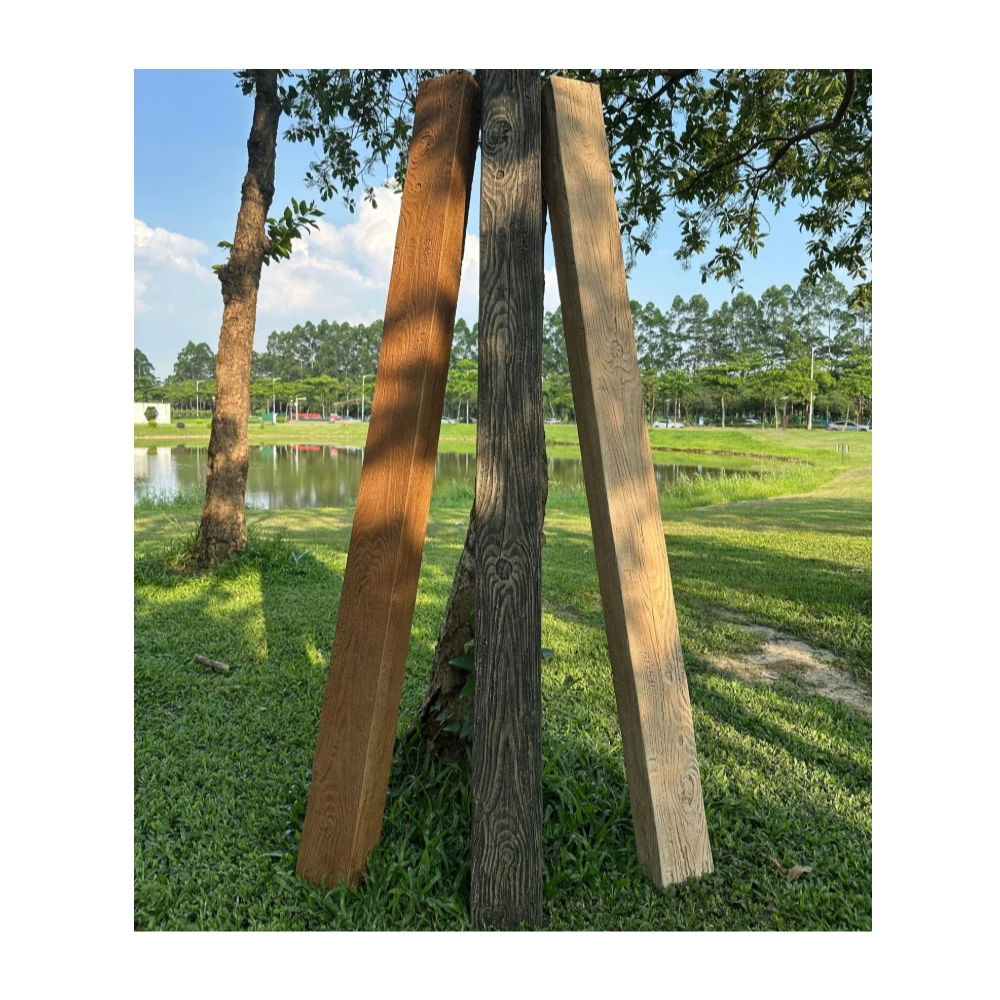
- Grain pattern realism — the deeper and more varied the pattern, the more convincing the beam looks at close range.
- Color consistency — important for projects with multiple beams that need to match.
- Shell thickness — affects impact resistance and overall rigidity.
- UV protection — important for any application with significant light exposure.
- Fire rating — varies between products; verify the specific rating for code compliance.
Working with an established manufacturer that provides detailed specifications and consistent quality is worth the modest upcharge over the cheapest available option.
Wrapping Up
Hollow polyurethane beams are the practical workhorse of the faux wood beam world. They work in almost any interior scenario, install quickly, look convincing at any distance, and last for decades with minimal maintenance. For designers and contractors who need a versatile, reliable beam material across a wide range of applications, hollow PU is hard to beat.
Technical References
ASTM standards cited in every specification
Test Data
Lab results from internal testing program
Updated 2026
Reviewed against current product specs


