
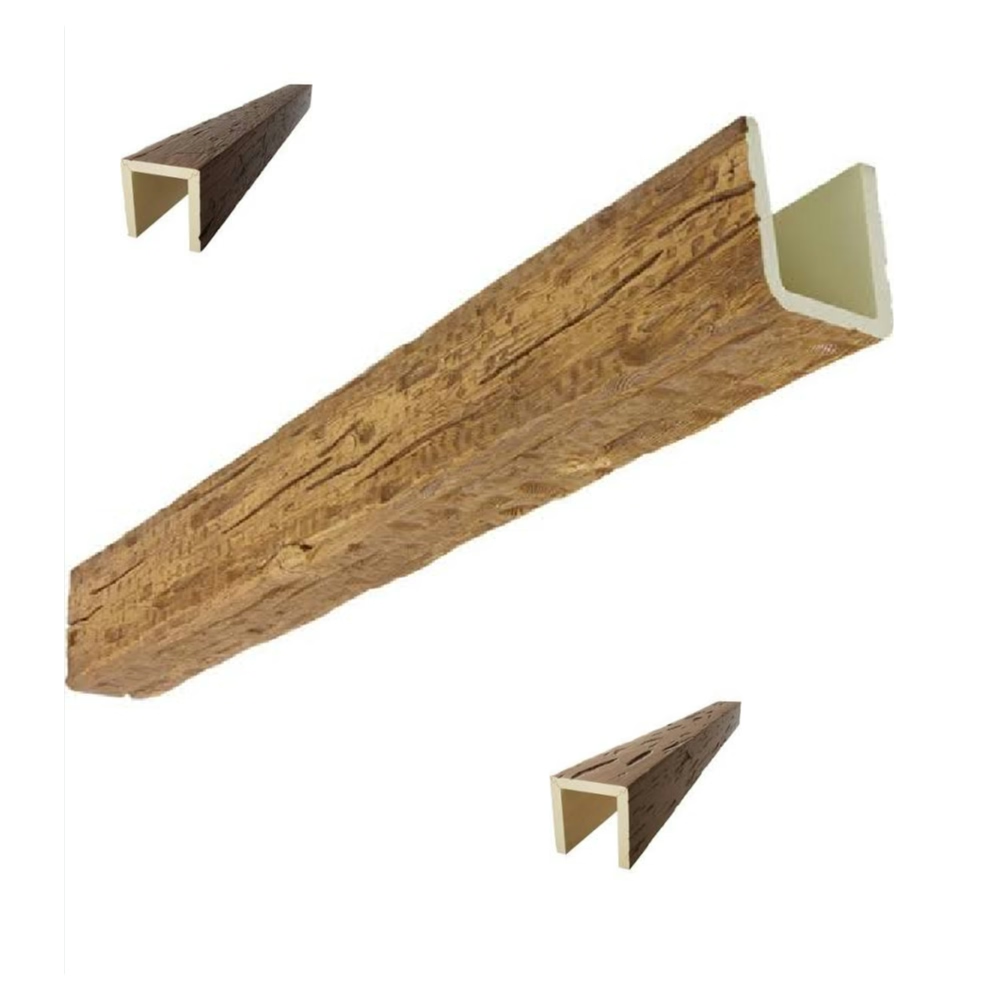
The faux wood beam industry has matured significantly over the last couple of decades, and most of that progress comes down to improvements in the polyurethane resin formulations and shell engineering that go into quality products. Hollow shell construction has emerged as the dominant approach because it balances weight, durability, cost, and visual realism better than any alternative. This article takes a closer technical look at what makes hollow shell PU resin beams work, and what to look for when evaluating products.
The Basics of PU Resin Construction
What Polyurethane Resin Actually Is
Polyurethane is a polymer formed by reacting a polyol with a diisocyanate. The specific formulation can be tuned across an enormous range — from the soft foam in furniture cushions to the hard, rigid foam used in faux wood beams. The difference comes down to the specific chemicals used, the density of the resulting material, and the additives mixed into the formulation.
For faux wood beams, the formulation is engineered for:
- Rigidity — enough to hold shape and resist deflection over long spans.
- Density — high enough to feel solid and resist impact, low enough to keep the overall weight manageable.
- Closed-cell structure — prevents water absorption and gives the beam its long-term durability.
- Surface quality — accepts molded grain patterns and finishes cleanly.
The Difference Between Rigid and Flexible PU
Some polyurethane formulations are flexible (used in car parts, shoe soles, foam cushions). Others are rigid (used in faux wood beams, architectural elements, structural insulation). The rigid formulations are what make hollow shell beams possible — they hold their shape under load and resist the deformation that would cause a flexible foam beam to sag or dent.
The rigidity is achieved through specific chemical formulations that create a cross-linked polymer structure. Once cured, the rigid PU doesn't soften with heat (within its specified temperature range) and doesn't creep under sustained load.
Shell Engineering
Wall Thickness and Its Effects
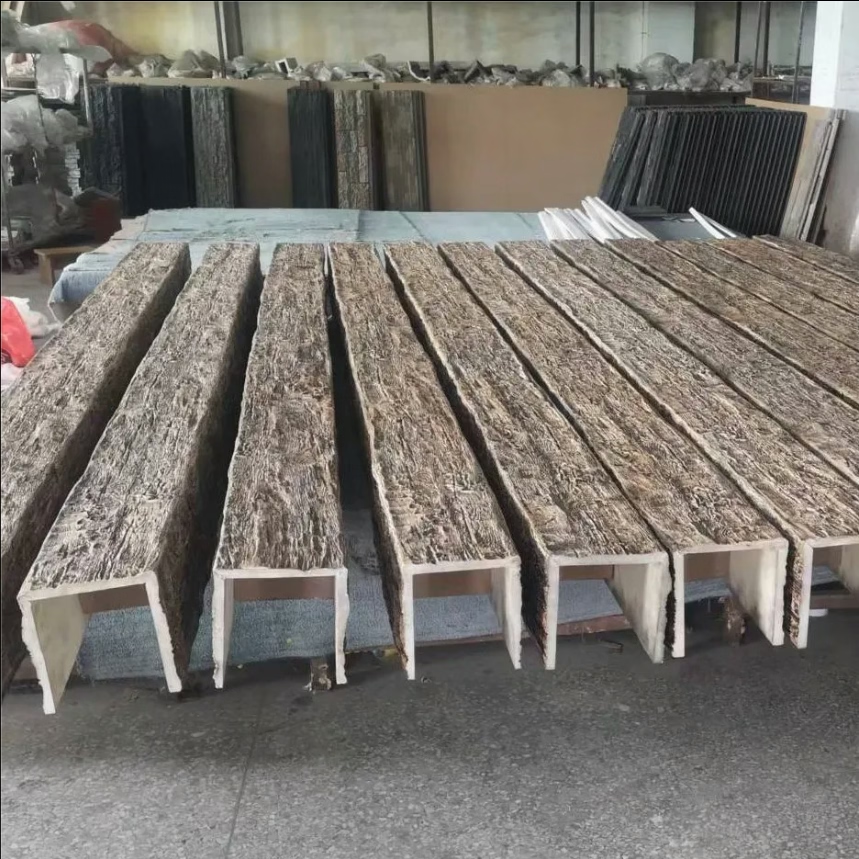
The shell thickness of a hollow PU beam is one of the most important engineering variables. Thicker shells provide:
- Greater impact resistance
- Better dimensional stability
- Improved screw and fastener holding
- Longer service life
Thinner shells provide:
- Lower weight
- Lower material cost
- Easier field cutting and modification
Quality manufacturers specify shell thickness as part of their product documentation. A typical residential-grade hollow PU beam has a shell thickness in the range of 1/4 to 3/8 inch. Higher-grade commercial products can have shells up to 1/2 inch or more for applications that demand extra durability.
Internal Rib Structure
Some manufacturers add internal ribs or webs inside the hollow shell to improve rigidity. The ribs run along the length of the beam at strategic locations, providing additional support without adding significant weight.
Ribbed hollow shell construction is more common in longer spans or in applications where the beam might face unusual loads. The ribs prevent the shell from flexing or denting under impact, and they help the beam maintain its shape through temperature changes.
Surface Mold Detail
The outside of the shell carries the molded grain pattern that makes the beam look like wood. The mold detail is captured from real timber casts, with the grain pattern, knots, and surface texture transferred to the polyurethane during the molding process.
The depth and definition of the mold detail varies between products. Premium products use deeper, more varied grain patterns that look realistic at close range. Budget products use shallower patterns that read as wood from a distance but look unconvincing up close.
Finish Application
The factory finish is applied over the molded surface. Multi-step finishes — base coat, glaze, top coat — give the beam depth and realism that single-step finishes can't match. The finish also provides the first line of protection against UV, moisture, and physical wear.
Quality manufacturers apply finishes in controlled factory conditions rather than relying on field finishing. Factory finishes are more consistent, more durable, and more controllable than anything that can be achieved on a job site.
Performance Characteristics of Quality Hollow Shell PU
Long-Term Stability
The combination of rigid PU formulation and engineered shell thickness gives quality beams a service life measured in decades. The material doesn't degrade under normal interior conditions, doesn't respond to humidity changes, and doesn't host the biological growth that affects organic materials.
For applications with temperature extremes — sunrooms, unheated buildings, three-season rooms — quality PU beams maintain their properties across a wide temperature range. The specific temperature limits vary by formulation, but most quality products handle -20°F to 150°F without issue.
Impact and Abuse Resistance
Hollow shell PU beams handle the typical impacts of residential and commercial life without damage. Ladder bumps, furniture contact, and the occasional thrown object rarely cause more than a surface mark that can be touched up easily.
For applications that face unusual abuse — gymnasiums, workshops, kids' play areas — heavier shell thicknesses or solid PU beams may be more appropriate. The manufacturer can usually recommend the right product for unusual applications.
Fire Performance
Fire performance is critical for architectural materials, and quality hollow shell PU beams carry appropriate fire ratings for their intended applications. The most common ratings are:
- Class A — the highest rating, suitable for the most demanding applications.
- Class B — suitable for most residential and commercial interior applications.
- Class C — suitable for lower-risk applications.
The fire rating depends on the specific formulation, including any fire-retardant additives. Manufacturers provide documentation of the fire rating for code compliance and insurance purposes.
UV and Color Stability
UV exposure causes most materials to fade or yellow over time. Quality PU formulations include UV inhibitors that slow this degradation dramatically. The specific inhibitor package affects how long the beam holds its color under UV exposure.
For interior applications with limited UV exposure, color stability is rarely an issue. For applications with significant UV — sunrooms, atriums, near large windows — it's worth confirming the UV performance with the manufacturer.
Moisture Resistance
The closed-cell structure of rigid PU makes it essentially impermeable to water. The beams don't absorb moisture, don't swell when wet, and don't support mold or mildew growth. For bathroom, basement, and covered exterior applications, this moisture resistance is a major advantage over real wood.
What to Look for in Quality Products
Manufacturer Reputation
The faux wood beam industry has a wide range of manufacturers, from premium producers with decades of experience to newer entrants with limited track records. Working with an established manufacturer with a documented quality system is worth the modest upcharge for most projects.
Reputable manufacturers provide detailed product specifications, fire rating documentation, UV performance data, and installation instructions. They're also available to answer technical questions and help with project-specific challenges.
Material Certifications
For commercial and multi-family projects, material certifications matter. Common certifications and standards to look for:
- Fire rating certification — verified by an independent testing laboratory.
- Code compliance documentation — confirms the product meets relevant building codes.
- Indoor air quality certification — confirms low VOC emissions for sensitive applications.
- Quality system certification — confirms consistent manufacturing processes.
Warranty Terms
Quality manufacturers stand behind their products with meaningful warranties. A typical warranty for premium hollow shell PU beams covers defects in materials and workmanship for 10 years or longer. The warranty should be clearly documented and easy to understand.
Sample Evaluation
Before specifying a product for a project, request samples and evaluate them carefully. Look at the samples in the lighting conditions of the actual project. Examine the grain pattern at close range. Check the finish quality and consistency. Handle the beam to feel the weight and rigidity.
A sample evaluation is the best way to compare products and ensure the selected beam will perform as expected in the specific application.
Common Manufacturing Variations
Density Variations
Different products use different PU densities, typically ranging from 15 to 30 pounds per cubic foot. Higher density products are heavier and more impact-resistant but cost more. Lower density products are lighter and more affordable but may dent more easily.
For most residential interior applications, mid-range density provides the best balance of weight, durability, and cost.
Color and Finish Options
Most manufacturers offer a range of standard finishes covering the most popular wood tones. Custom finishes are usually available for an upcharge and a longer lead time.
The finish options vary significantly between manufacturers, with some offering a dozen or more standard options and others offering only a few. For projects that need a specific color match, it's worth confirming that the manufacturer can deliver the required finish.
Profile Options
Standard profiles (4x6, 6x8, 8x10, and similar) are widely available. Custom profiles can be manufactured but typically require a mold investment that adds significant cost and lead time.
For projects that need profiles outside the standard range, working with a manufacturer that has flexible molding capabilities is important. The cost of custom profiles can be substantial, but it may be necessary for projects with specific design requirements.

The Future of PU Beam Construction
Improving Formulations
Polyurethane formulations continue to improve, with new generations of resin offering better fire performance, improved UV stability, and lower environmental impact. Bio-based polyols are increasingly used to reduce the reliance on petroleum-based raw materials.
Better Mold Technology
Mold-making technology has improved significantly, allowing finer grain detail and more varied surface textures. The next generation of faux wood beams will look even more realistic at close range, with grain patterns that capture the subtle variations of real timber.
Sustainability Improvements
The faux wood beam industry has made progress on sustainability through recycled content, bio-based raw materials, and improved manufacturing efficiency. Quality manufacturers can now produce beams with significant recycled content while maintaining the performance characteristics that the products are known for.
For projects with sustainability goals, working with a manufacturer that has documented sustainability practices is worth the effort. The environmental story of PU beams is increasingly competitive with real timber, especially when lifecycle considerations are included.
Wrapping Up the Technical Picture
Hollow shell PU resin construction has emerged as the dominant approach for faux wood ceiling beams because it delivers the best balance of weight, durability, cost, and visual realism. Understanding how the resin is formulated, how the shell is engineered, and what to look for in quality products helps designers and contractors choose the right beam for their specific application.
For projects that demand long-term performance, code compliance, and convincing wood appearance, hollow shell PU beams from quality manufacturers are the practical choice that delivers on all three requirements.
Technical References
ASTM standards cited in every specification
Test Data
Lab results from internal testing program
Updated 2026
Reviewed against current product specs


