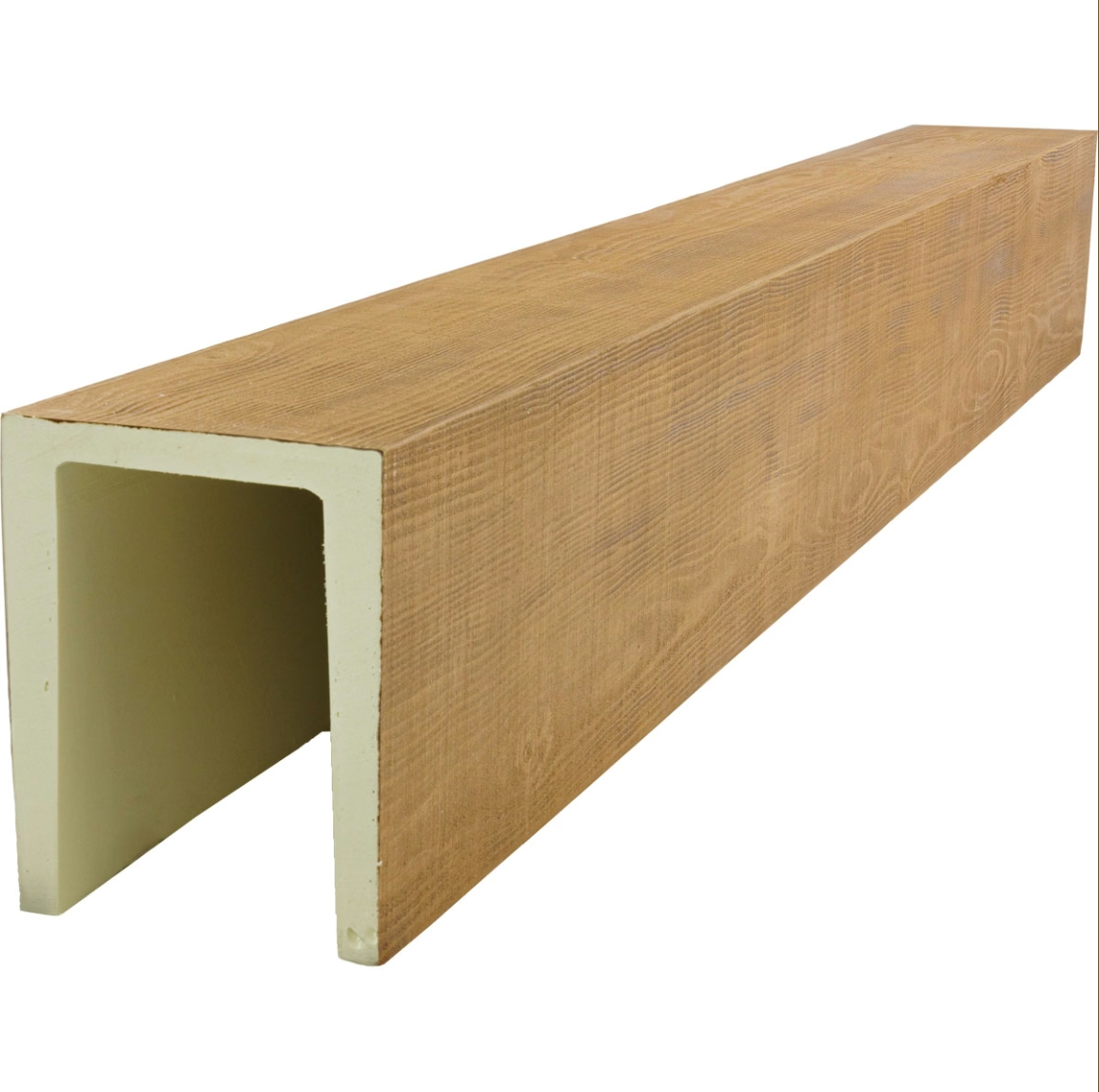
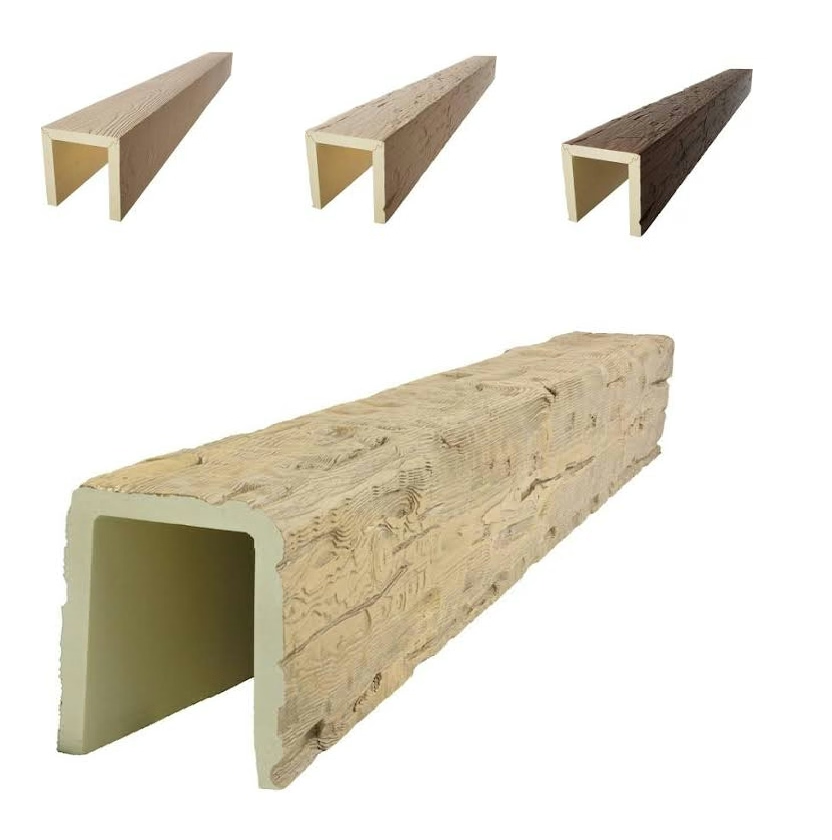
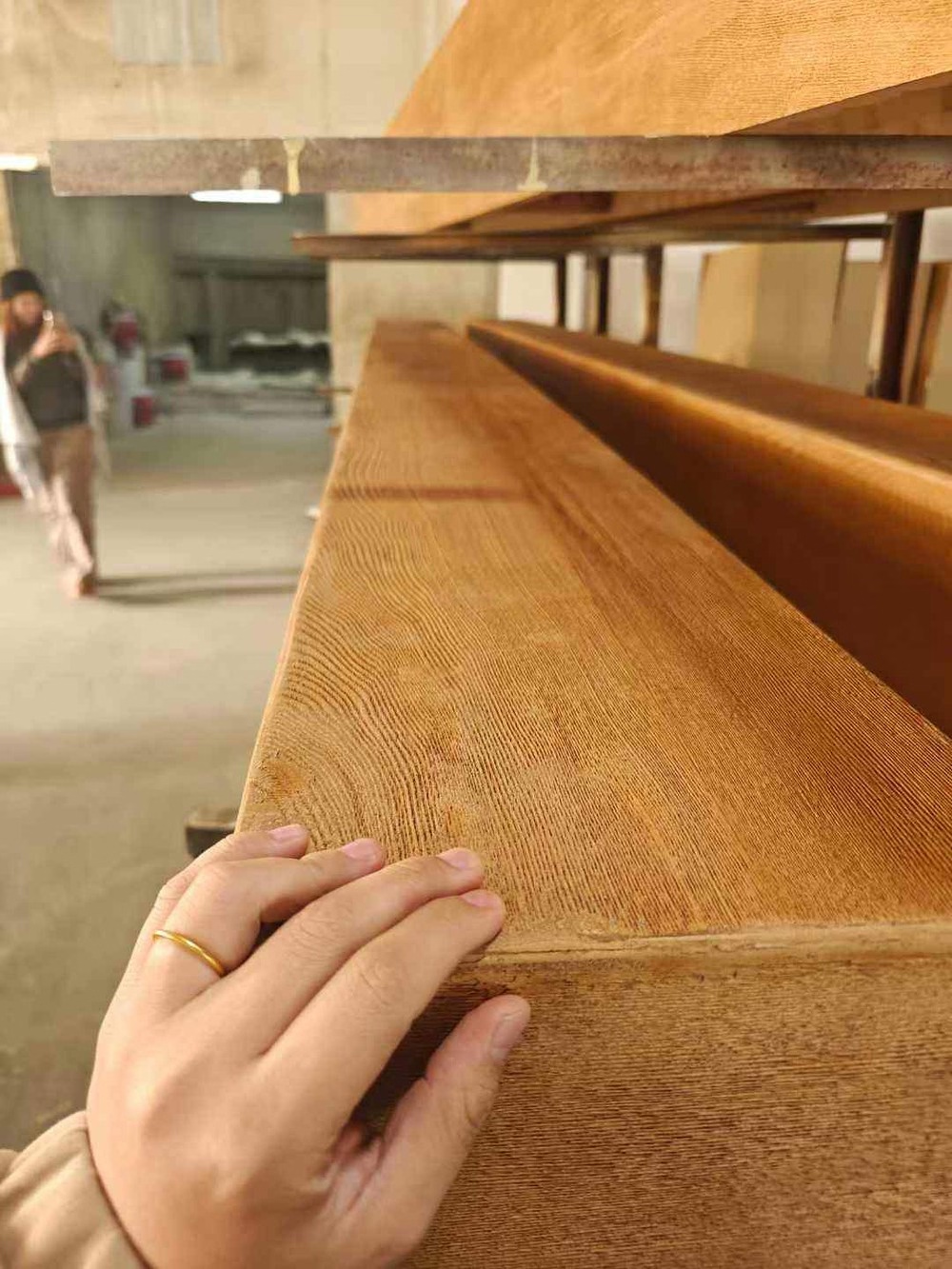
Interior upgrades come in all sizes. A single-room refresh, a kitchen remodel, a bathroom makeover, a whole-house renovation, a commercial fit-out — each scenario has different requirements, but they all share the same need for materials that look great, install easily, and last for years. Polyurethane ceiling beams have earned their place as a go-to material for interior upgrades because they adapt to virtually any scenario.
This article walks through how PU ceiling beams work across the full range of interior upgrade projects, what to consider when selecting them for different scenarios, and how to get the best results regardless of project size.
Why Polyurethane Works for All Scenarios
The Adaptability Factor
The single biggest reason polyurethane ceiling beams work across so many scenarios is their adaptability. The same product family — with different profiles, finishes, and installation methods — can serve a small powder room or a great room with vaulted ceilings. A homeowner can use PU beams for a single accent wall or a designer can specify them throughout an entire commercial property.
This adaptability comes from the manufacturing flexibility of polyurethane. The material can be molded into virtually any profile, finished in any color, and engineered for any installation scenario. A manufacturer with a comprehensive product line can serve the full range of interior upgrade projects from the same basic material.
The Cost Spectrum
PU beams also adapt across a wide cost spectrum. Budget products work for simple refresh projects where the beam is a small part of the overall scope. Mid-range products work for typical residential renovations. Premium products work for high-end custom homes and commercial projects with demanding specifications.
The cost flexibility means designers and homeowners can find a PU beam product that fits any budget, without compromising on the fundamental benefits that make PU beams attractive in the first place.
The Performance Consistency
Whatever the scenario, PU beams deliver consistent performance. They don't absorb moisture, they don't warp, they don't need refinishing, and they install with similar methods across the entire product range. The performance characteristics that make PU beams good for a kitchen are the same characteristics that make them good for a commercial lobby.
This consistency means that once a homeowner or designer understands how PU beams work in one scenario, they can confidently apply that knowledge to other scenarios. The learning curve is minimal compared to materials that behave differently in different applications.
Single-Room Upgrades
Powder Rooms and Small Bathrooms
Small bathrooms benefit from a few well-placed ceiling beams that add architectural interest without overwhelming the modest proportions. PU beams work especially well in bathrooms because they handle humidity without warping or developing mold.
A common pattern is to run two or three parallel beams across the ceiling, with the beam direction coordinated with the room's longest dimension. The beams make the ceiling feel more designed and the room feel more like a considered space.
Bedrooms
Bedroom ceiling upgrades with PU beams create a more restful, residential feel. A coffered ceiling over the bed creates a focal point and makes the bed feel like the centerpiece of the room. Beams in the rest of the bedroom add architectural interest without dominating the typically modest proportions of the space.
Home Offices
Home office upgrades often focus on making the space feel more professional and productive. PU beams in a home office add the kind of architectural detail that makes the space feel like a dedicated workplace rather than a corner of a bedroom.
Dining Rooms
Dining room upgrades with PU beams create a more formal, intentional atmosphere. A coffered ceiling treatment or a single dramatic beam across the room anchors the dining table and makes the room feel like a designed space for gathering.
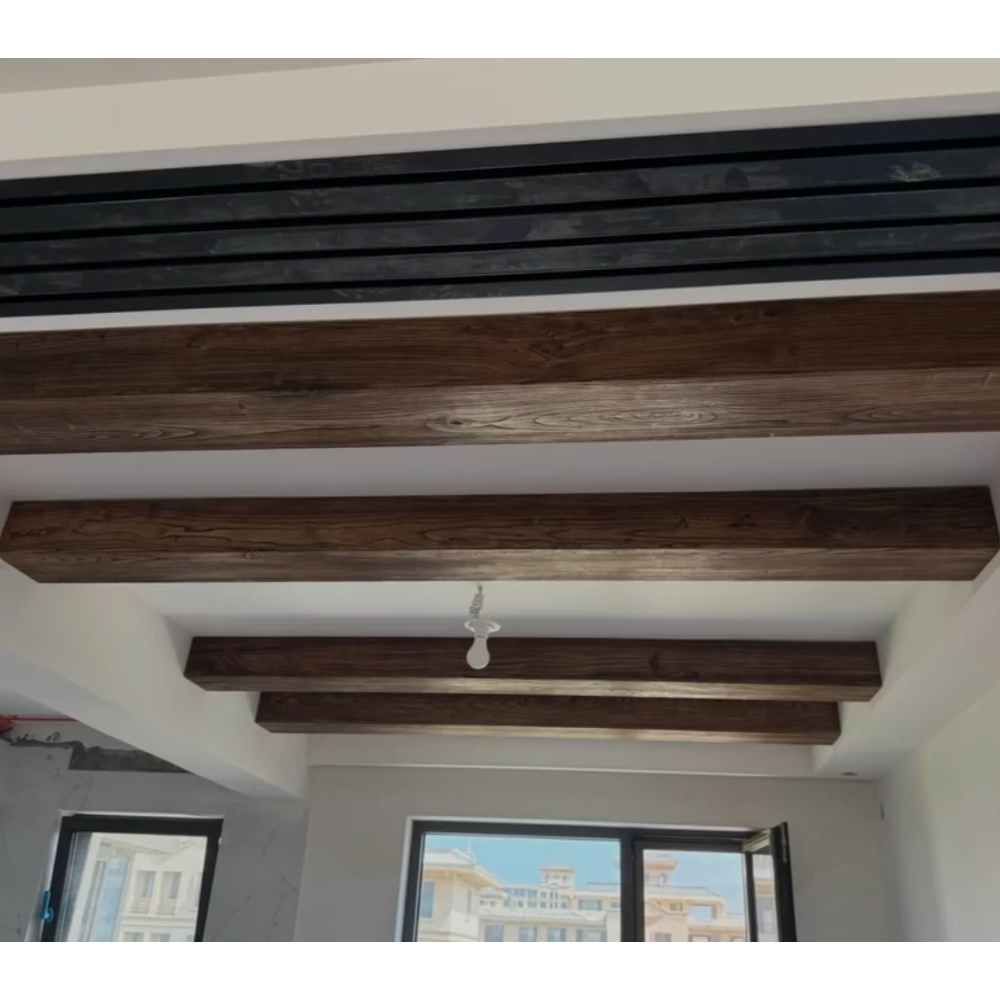
Whole-Room Renovations
Living Room Makeovers
Living room makeovers are some of the most common projects that incorporate PU beams. The living room is often the most visible room in the home, and a beamed ceiling creates a dramatic transformation at a relatively modest cost.
The beam pattern depends on the room's architecture. Flat ceilings get parallel runs or coffered patterns. Vaulted ceilings get perpendicular beams that emphasize the height. Open-plan living areas get beam patterns that define the living room zone within the larger space.
Kitchen Renovations
Kitchen renovations have evolved beyond pure function to include serious design ambition. PU beams in kitchens add character to a space that's traditionally been dominated by cabinetry and appliances.
Beam patterns in kitchens range from subtle (a few beams over the island) to dramatic (full ceiling treatments with integrated lighting and ventilation). The PU material handles kitchen humidity and cooking residues better than real wood, which is one of the reasons kitchen designers have embraced PU beams.
Great Rooms and Open-Plan Spaces
Great rooms with high ceilings are ideal canvases for PU beam treatments. The beams emphasize the volume of the space, create rhythm across what would otherwise be an unbroken ceiling plane, and provide a mounting surface for lighting and other features.
For very large great rooms, heavier beam profiles (8x10 or larger) work better than smaller profiles. The scale of the room can support the visual weight of substantial beams without feeling overwhelmed.
Whole-House Renovations
Standardization Across Rooms
Whole-house renovations benefit from standardization. The same PU beam specification can be used across multiple rooms, creating a consistent design language throughout the home. The consistency makes the house feel like a designed whole rather than a collection of separately designed rooms.
Standardization also simplifies procurement and installation. The same crew can install the same beam across multiple rooms, which reduces cost and time. The same finish can be specified across all the beams, which simplifies ordering and delivery.
Varying Profiles Within a Consistent Vocabulary
Whole-house renovations don't have to use the same beam profile in every room. A consistent vocabulary of profiles and finishes can be applied with variation across rooms. The living room might have heavier beams, the bedrooms might have lighter beams, and the bathrooms might have thin trim pieces. The variation creates visual interest while maintaining the overall coherence.
Phased Installation
Whole-house renovations often happen in phases. PU beams work well with phased installation because the same product is available years later if the homeowner wants to add beams to a room that wasn't originally included in the scope.
The phased approach allows homeowners to spread the cost over time while still achieving the consistent design language they want throughout the home.
Commercial Scenarios
Small Business Fit-Outs
Small businesses — boutique retail stores, professional offices, restaurants, cafes — often use PU beams to create distinctive interiors on tight budgets. The beams add character that distinguishes the business from competitors while staying within the financial realities of a small operation.
Larger Commercial Projects
Larger commercial projects have more demanding specifications — fire ratings, accessibility compliance, building code requirements. PU beams from quality manufacturers meet these specifications while still delivering the design impact the project requires.
Hospitality and Multi-Family
Hotels, restaurants, and multi-family residential projects have specific performance requirements that PU beams handle well. The durability, low maintenance, and consistent appearance across multiple installations are particularly valuable in these applications.
Working With Contractors
Finding PU-Experienced Installers
PU beams install differently than solid timber, and the best results come from installers with PU-specific experience. The mounting methods, adhesive choices, and finishing techniques are all slightly different from what a traditional carpenter might do with real wood.
When selecting an installer, ask about their PU beam experience specifically. Most quality manufacturers maintain lists of experienced installers in different markets, and they're a good starting point for finding qualified contractors.
Coordinating the Trades
PU beam installation needs to be coordinated with other trades in the project. The sequencing, the access requirements, and the integration with lighting and mechanical systems all need to be planned in advance.
A coordinated approach with all trades referencing a single reflected ceiling plan eliminates most field conflicts and keeps the project on schedule.
Managing the Schedule
PU beams install fast, which is one of their main advantages. But the speed can also create scheduling pressure on other trades if the beam installation isn't properly sequenced. The trades that follow the beam installation — painters, finishers, electricians — need to be scheduled with appropriate time after the beams are in place.
Design Considerations Across Scenarios
Scale and Proportion
The most important design consideration across all scenarios is scale and proportion. The beam profile should match the room's dimensions, the ceiling height, and the overall architectural style. A beam that's too small disappears. A beam that's too large overwhelms.
For whole-house projects, the scale should vary appropriately across rooms but maintain a consistent design vocabulary. A consistent vocabulary creates harmony without monotony.
Finish Consistency
The finish on PU beams should coordinate with the other finishes in the space — the wall color, the flooring, the cabinetry, the furniture. Complementary finishes create a cohesive feel. Contrasting finishes create emphasis.
For whole-house projects, a consistent finish across all beams creates a strong design statement. For mixed-use projects, complementary finishes in different rooms allow for individual expression while maintaining overall coherence.
Lighting Integration
Lighting is an important companion to PU beams. The beams can support various lighting types — recessed lights between beams, pendant lights hanging from beams, track lighting mounted to beam faces.
The lighting design should be coordinated with the beam layout from the start. The reflected ceiling plan should show every light location relative to every beam.
Long-Term Value Across Scenarios
Adaptability to Future Changes
PU beams adapt to future changes more gracefully than most other architectural elements. They can be repainted if the color scheme changes. They can be refinished if the style evolves. They can be removed and reinstalled if the room layout changes.
This adaptability is valuable across all scenarios — single-room refreshes, whole-house renovations, commercial fit-outs. The materials installed today can evolve with the occupant's changing needs.
Lifecycle Cost
The lifecycle cost of PU beams is consistently low across scenarios. They don't need refinishing, don't need replacement, and don't need special maintenance. The initial cost is typically recovered many times over the life of the installation.
For projects with budget constraints, the lifecycle cost story is one of the strongest arguments for PU beams. The total cost of ownership is lower than almost any alternative.
Resale Value
For residential projects, PU beams add to the home's resale value by creating distinctive, attractive interiors that buyers notice. The beams differentiate the home from comparable properties and can support a higher asking price.
For commercial projects, the distinctive interiors that PU beams create support the brand positioning and the customer experience. The investment in beams typically pays back many times over in customer perception and brand value.
Pulling It Together
Polyurethane ceiling beams adapt to virtually any interior upgrade scenario, from single-room refreshes to whole-house renovations to commercial fit-outs. They look great, install easily, last for decades, and cost less than most alternatives over their lifetime. For designers and homeowners planning their next interior upgrade, PU beams are worth considering from the earliest design phases — they often turn out to be the practical choice that delivers the design impact the project needs.
Technical References
ASTM standards cited in every specification
Test Data
Lab results from internal testing program
Updated 2026
Reviewed against current product specs