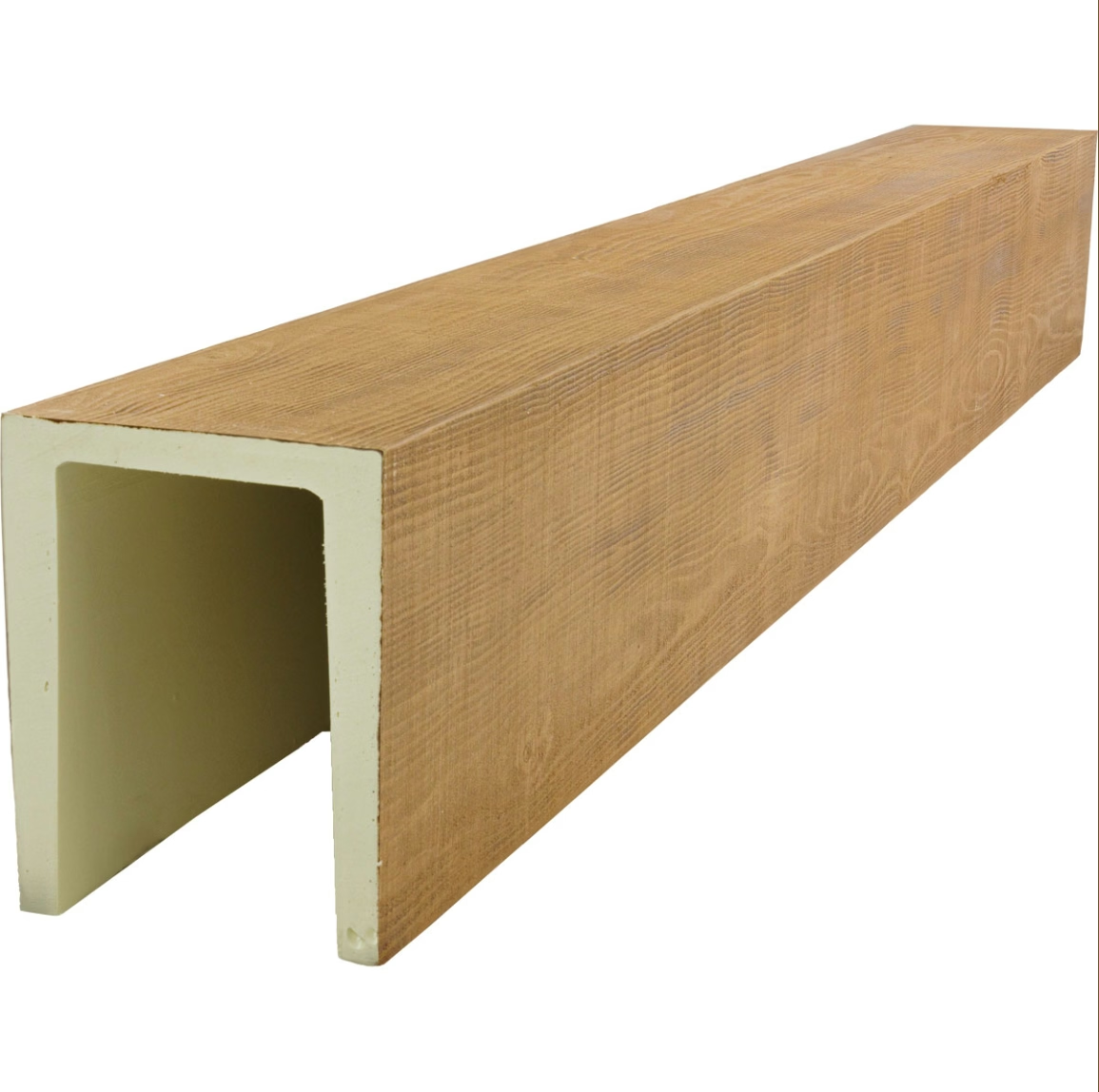
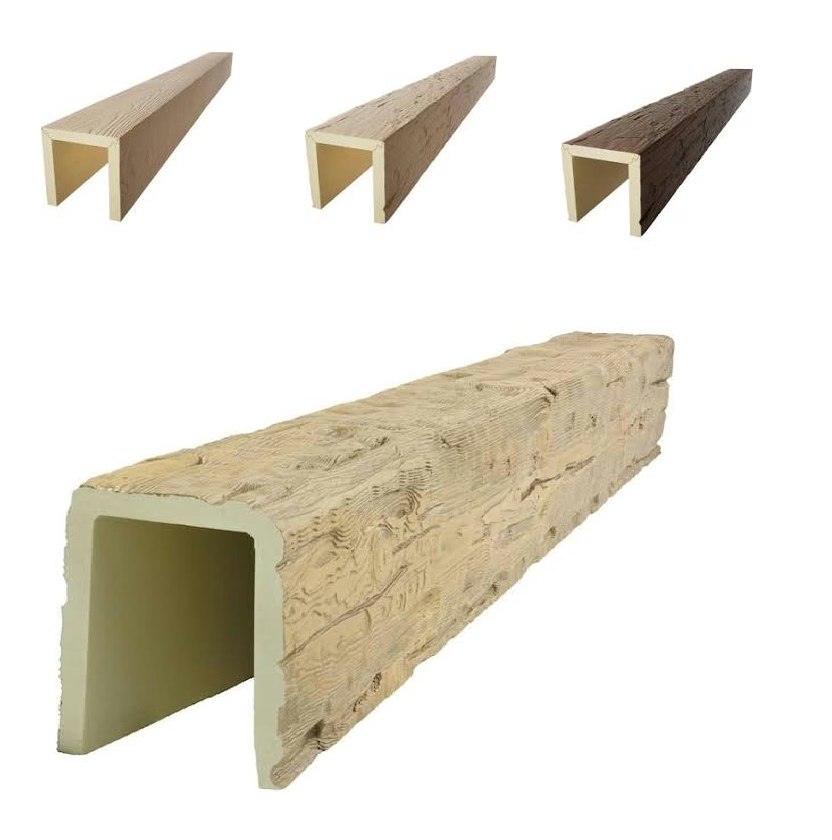
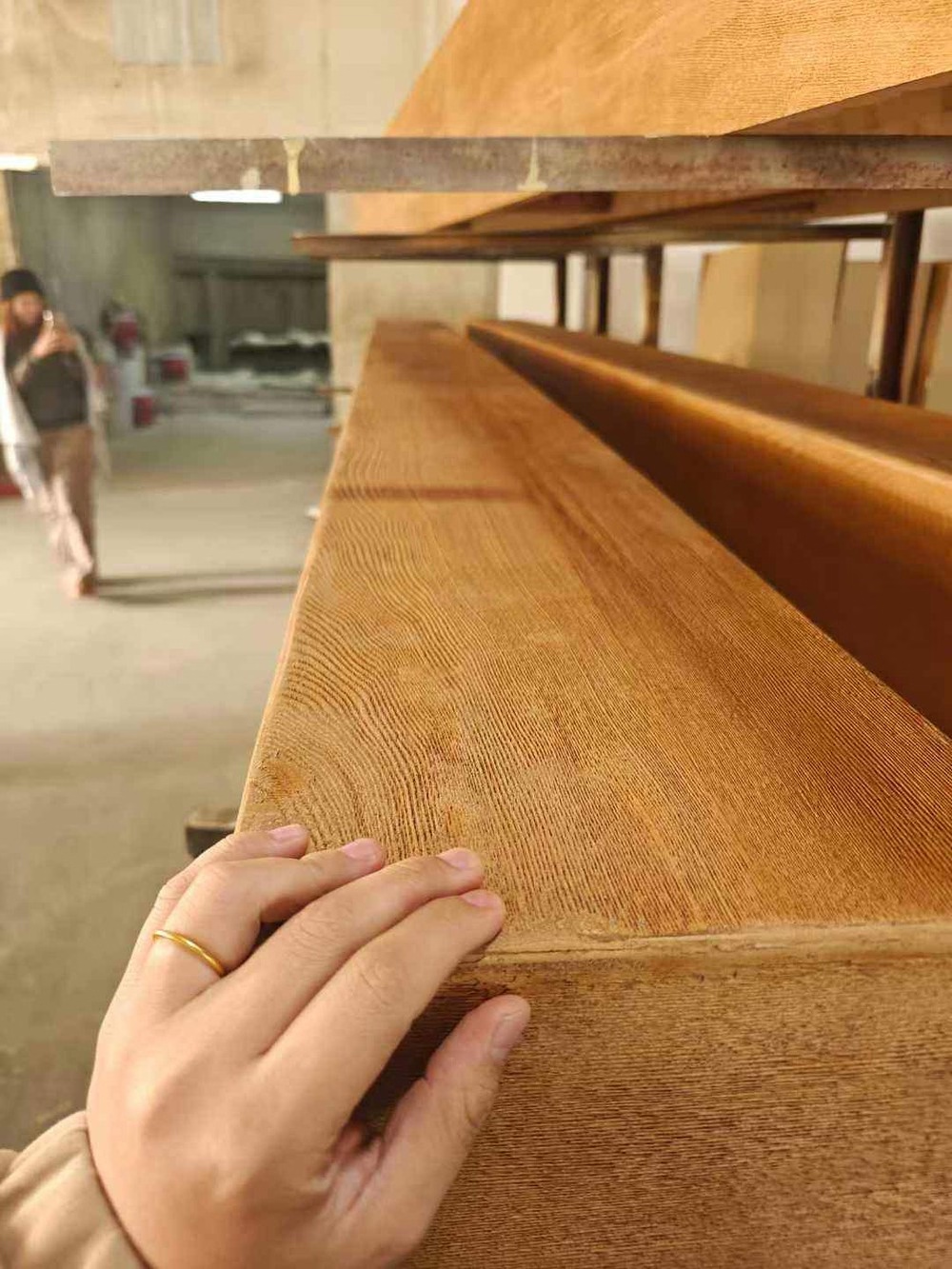
Big-box retailers like Lowes have made faux wood beams accessible to mainstream consumers. The beams are stocked on shelves or available for order, they come with predictable pricing, and they can be picked up today rather than waiting for a specialty order. For many homeowners, that's exactly the right solution. But there are projects where the big-box selection doesn't quite deliver — where the profile options are limited, the finishes are basic, or the quality doesn't hold up to close inspection.
This article looks at where big-box faux beams work well, where specialty manufacturer polyurethane beams are the better choice, and how buyers can decide between the two for any given project.
What Big-Box Retailers Offer Well
Convenience and Accessibility
The biggest advantage of buying faux beams from Lowes or similar retailers is convenience. Walk in, look at the samples, make a selection, and take the product home the same day. For homeowners working on a weekend refresh project, that convenience is hard to beat.
The retail experience also makes the product accessible to homeowners who might not know about specialty manufacturers. The big-box shelf is where many people first encounter faux wood beams as a product category.
Predictable Pricing
Big-box pricing is transparent and consistent. The price on the shelf is the price you pay, with no special ordering complications or unexpected upcharges. For homeowners working with a fixed budget, that predictability is valuable.
Standard Sizes for Common Projects
The beam selection at big-box retailers focuses on the most common sizes and profiles. For a typical homeowner project — a single-room refresh, a basic ceiling treatment — the standard options usually work fine. The dimensions are sensible, the profiles are versatile, and the finishes are broadly appealing.
Where Big-Box Selection Falls Short
Limited Profile Options
Big-box faux beams come in a few standard profiles. If your project needs a profile outside that limited selection — a heavier beam, a more architectural profile, a specific texture — the big-box shelf won't have it. Specialty manufacturers offer dozens of profiles covering the full range of design needs.
Limited Finish Options
Big-box finishes tend to be basic — a few wood tones, maybe a white or a weathered gray. The selection works for standard projects, but doesn't offer the depth of finish options that specialty manufacturers provide. Specialty manufacturers often have 20 or more finish options, including custom finishes for specific project requirements.
Quality Variations
The quality of big-box faux beams varies significantly. Some products are excellent — made by reputable manufacturers and sold through the retail channel. Other products are budget items with lighter shell construction, shallower grain patterns, and simpler finishes.
Distinguishing between the quality products and the budget products on a big-box shelf can be challenging. The packaging and pricing don't always communicate the quality differences clearly.
Limited Length Options
Big-box beams are typically stocked in standard lengths — 8 feet, 12 feet, maybe 16 feet. Longer beams usually require special order. Specialty manufacturers offer longer standard lengths and custom lengths for projects that need them.
Limited Customization
For projects with specific design requirements — a particular profile, a specific color match, a custom texture — big-box retailers can't deliver. The products are made in large production runs for the retail channel, with limited flexibility for customization.
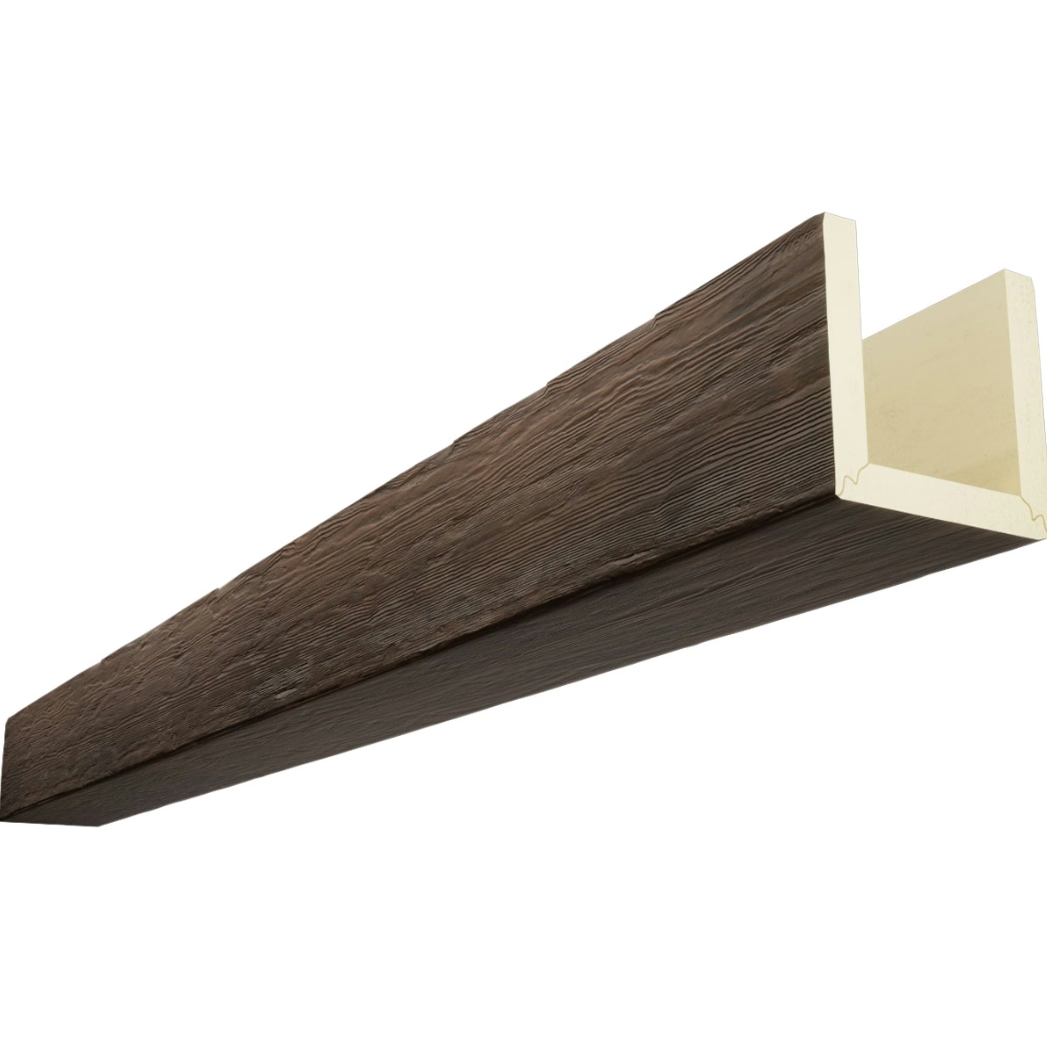
What Specialty Manufacturers Offer
Comprehensive Product Lines
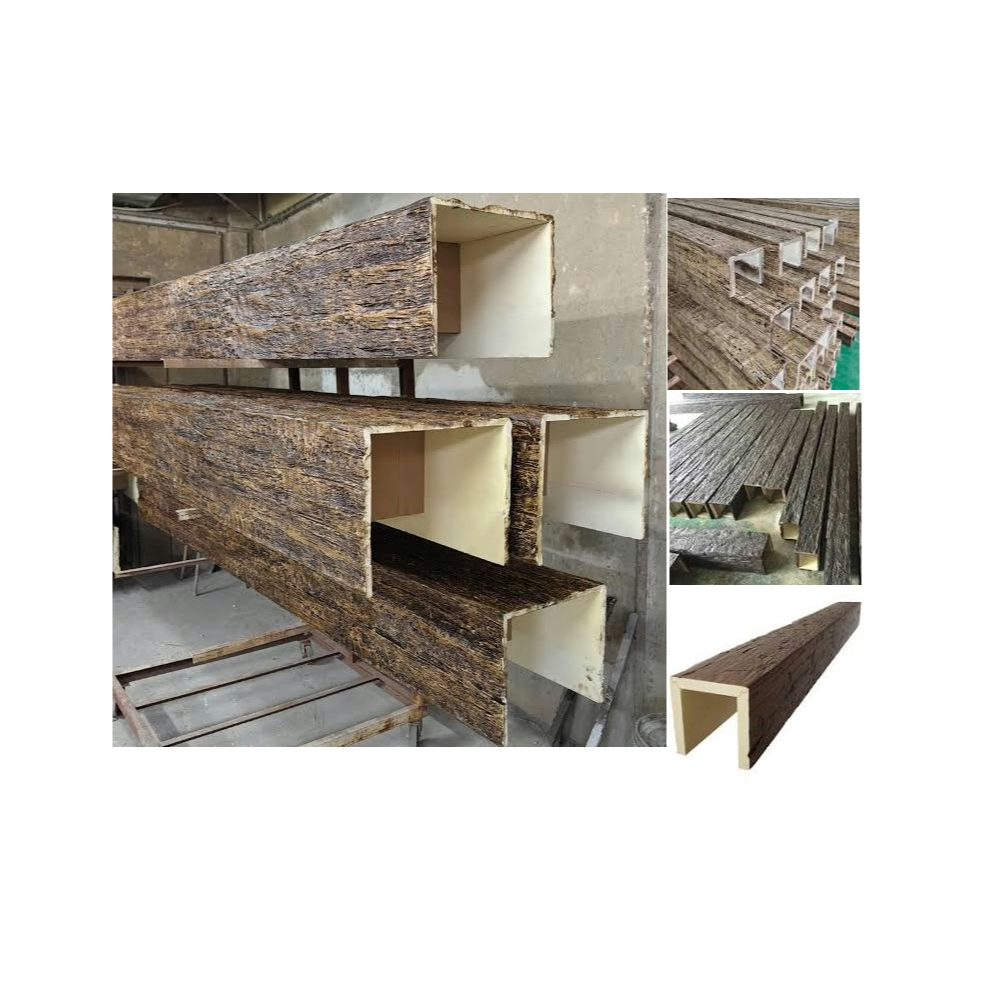
Specialty manufacturers of polyurethane faux beams typically offer dozens of profiles, from simple rectangular beams to complex architectural shapes. The selection covers virtually any design requirement a project might have.
Wide Finish Selection
The finish selection at specialty manufacturers is much broader than what's available at big-box retailers. Standard wood tones in many variations, custom color matching, specialty finishes for unique design concepts — the range of options supports serious design work.
Higher Quality Construction
Specialty manufacturers focus on quality as their differentiator. Their products typically have:
- Higher density polyurethane for better impact resistance
- Deeper, more realistic grain patterns
- More robust factory finishes
- Better fire ratings
- Longer warranties
The higher quality shows up at close range and in long-term durability. For projects where the beams will be examined closely or need to last for decades, specialty manufacturer products are usually worth the upcharge.
Custom Capabilities
Specialty manufacturers can produce custom profiles, custom finishes, and custom lengths for projects with specific requirements. The custom capabilities cost more and take longer to deliver, but they enable design work that big-box products can't support.
Technical Support
Specialty manufacturers typically provide technical support that big-box retailers can't match. Detailed installation instructions, fire rating documentation, structural guidance, and project-specific consultation are all available from the manufacturer's technical team.
For contractors and designers working on complex projects, the technical support is often as valuable as the product itself.
Better Warranty Terms
Specialty manufacturer warranties are typically more comprehensive and longer than what big-box products offer. The warranty reflects the manufacturer's confidence in their product and provides the buyer with better long-term protection.
Matching the Product to the Project
When Big-Box Beams Make Sense
Big-box beams work well for projects that:
- Need standard profiles and finishes
- Have modest quality requirements
- Need immediate availability
- Fit within tight budget constraints
- Don't require custom specifications
For a single-room refresh using standard sizes, the big-box shelf is often the right answer. The product is available, the price is right, and the quality is adequate for the application.
When Specialty Manufacturer Beams Are Worth the Investment
Specialty manufacturer beams are worth the investment for projects that:
- Need profiles or finishes outside the big-box selection
- Demand higher quality construction
- Require long-term durability
- Have specific aesthetic requirements
- Need custom specifications
- Benefit from technical support
For whole-house renovations, commercial projects, high-end custom homes, and any project where the beams are a significant design feature, specialty manufacturer products typically deliver better results.
Hybrid Approaches
Some projects benefit from a hybrid approach. Standard rooms use big-box beams for cost efficiency, while focal point rooms use specialty manufacturer beams for design impact. The hybrid approach lets the project budget go where it has the most effect.
For example, a whole-house renovation might use big-box beams in bedrooms and bathrooms, with specialty manufacturer beams in the living room, dining room, and entry. The homeowner gets the convenience and cost savings of big-box products where appropriate, and the quality and design impact of specialty products where it matters most.
Evaluating Specific Products
Quality Indicators to Look For
Whether buying from a big-box retailer or a specialty manufacturer, certain quality indicators are worth checking:
- Density and weight — a quality PU beam has substantial heft without being unreasonably heavy.
- Grain pattern depth — deeper, more varied grain patterns look more realistic at close range.
- Finish quality — multi-step finishes with depth and richness outperform single-step finishes.
- Shell thickness — affects impact resistance and long-term durability.
- Warranty terms — longer and more comprehensive warranties indicate manufacturer confidence.
Red Flags to Watch For
Some red flags suggest lower-quality products regardless of the seller:
- Very lightweight construction that feels flimsy
- Shallow grain patterns that look unconvincing at close range
- Single-color finishes without depth or variation
- Limited or no documentation of fire ratings and code compliance
- Very short or no warranty terms
Asking the Right Questions
When comparing products, asking the right questions helps clarify the differences:
- What is the polyurethane density?
- What is the shell thickness?
- What fire rating does the product carry?
- What is the warranty coverage and duration?
- Are custom profiles and finishes available?
- What technical support is available during installation?
The answers to these questions help identify products that meet the specific project requirements.
Cost Considerations
Initial Cost
The initial cost of big-box beams is typically lower than specialty manufacturer products. The price difference reflects the production volume, the channel costs, and the quality differences between the products.
Lifecycle Cost
The lifecycle cost often tells a different story. Specialty manufacturer products typically last longer, need less maintenance, and hold their appearance better than big-box products. Over a 20-year service life, the total cost of ownership can favor the specialty product despite the higher initial cost.
Value Engineering
For projects where the budget is tight, value engineering might mean using big-box products in low-visibility areas and specialty products in high-visibility areas. The hybrid approach optimizes the budget allocation while maintaining quality where it matters most.
Installation Considerations
Installation Methods Are Similar
Whether the beam comes from a big-box shelf or a specialty manufacturer, the installation methods are similar. The basic principles — secure mounting, appropriate blocking, coordinated finishing — apply to all PU beams.
The quality of the installation matters as much as the quality of the product. A well-installed big-box beam will look better than a poorly installed specialty beam, and vice versa. Investing in experienced installers is worth the cost regardless of which product you choose.
Documentation Differences
Specialty manufacturers typically provide more detailed installation documentation than big-box retailers. The documentation can be valuable for installers who haven't worked with the specific product before, and for inspectors who need to verify code compliance.
For DIY installations, the documentation can be the difference between a successful project and a frustrating one. The more detailed the documentation, the more confident the installer can be about the installation process.
Making the Final Decision
The Project-Specific Approach
The right choice between big-box and specialty manufacturer beams depends on the specific project. There's no universally correct answer — each project has its own requirements, constraints, and priorities.
For projects where standard profiles and finishes work, big-box beams are often the practical choice. For projects where the beams are a significant design feature, where quality matters, or where custom specifications are needed, specialty manufacturer products typically deliver better results.
Working With Design Professionals
For projects where the choice isn't clear, working with a design professional can help. Interior designers, architects, and experienced contractors have seen enough projects to know which products perform well in which applications. Their advice can save homeowners from making expensive mistakes.
Wrapping Up
Polyurethane faux beams are available through both big-box retailers like Lowes and through specialty manufacturers, and each channel has its strengths. The big-box shelf offers convenience, predictable pricing, and accessibility for standard projects. Specialty manufacturers offer comprehensive product lines, higher quality construction, custom capabilities, and technical support for demanding projects.
For homeowners planning a project that requires faux wood beams, the choice between the two channels depends on the specific project requirements, the budget constraints, and the quality expectations. Understanding the differences helps buyers make smarter choices and get the best results for their investment.
Technical References
ASTM standards cited in every specification
Test Data
Lab results from internal testing program
Updated 2026
Reviewed against current product specs