The phrase "synthetic wood" once carried a clear connotation: an inexpensive substitute for people who could not afford the real thing. That connotation has been outdated for years, but the language has been slow to catch up. In contemporary building decoration, premium synthetic wood products are not substitutes. They are a distinct category of architectural material with their own performance characteristics, their own design language, and their own justification for selection.
The shift happened gradually. As polyurethane formulations improved, the surface quality of synthetic wood products became indistinguishable from timber at typical viewing distances. The structural performance of hollow and solid synthetic members matched or exceeded the requirements of common applications. The maintenance requirements dropped to near zero. The cost calculation shifted from a comparison of initial purchase prices to a comparison of lifetime costs, and synthetic products began winning that comparison in many scenarios.

The Category of Premium Synthetic Wood
The term "premium" in this context is not marketing language. It refers to a specific tier of synthetic wood products that meet standards beyond basic commodity offerings.
Surface Fidelity
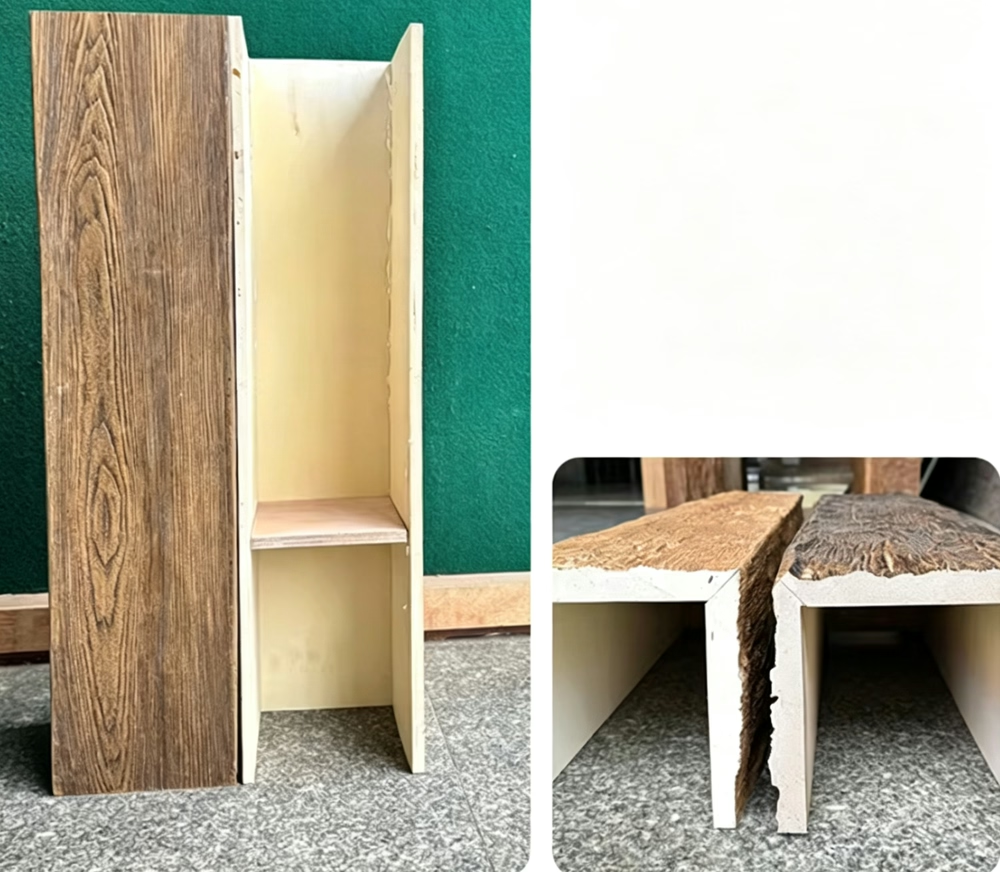
Premium synthetic wood products reproduce the visual characteristics of timber with high fidelity. The grain patterns are taken from actual wood species, not generic textures. The color variations that occur naturally in aged timber are reproduced in the surface coloration. The tool marks, knots, and imperfections that distinguish reclaimed wood from new lumber are often deliberately included.
This surface fidelity matters in applications where the synthetic material will be viewed alongside real wood or where the design calls for a specific wood species appearance. Premium products deliver consistency in texture and color that natural wood, with all its variability, cannot provide.
Material Performance
Beyond appearance, premium synthetic wood is engineered for performance. The polyurethane formulations used in these products include additives that address specific environmental challenges: UV stability for outdoor use, fire retardancy for code compliance, closed-cell structure for moisture resistance, and impact modifiers for durability.
The performance characteristics are documented and verified through testing. Manufacturers provide specifications that architects and engineers can use in their calculations, ensuring that the product will perform as expected throughout its service life.
Customization Capability
Premium synthetic wood products can be customized in ways that natural wood cannot. Specific colors can be produced to match a designer's sample. Custom profiles can be molded to match an unusual architectural detail. Lengths can be produced beyond what is available in solid timber, eliminating the joints that would otherwise interrupt a long visual line.
This customization capability is itself a form of premium service. It allows architects and designers to specify exactly what the project requires, rather than working around the constraints of available natural materials.
Applications in Building Decoration
Premium synthetic wood products serve in nearly every application where natural timber has traditionally been used, with advantages in specific scenarios.
Beam and Ceiling Treatments
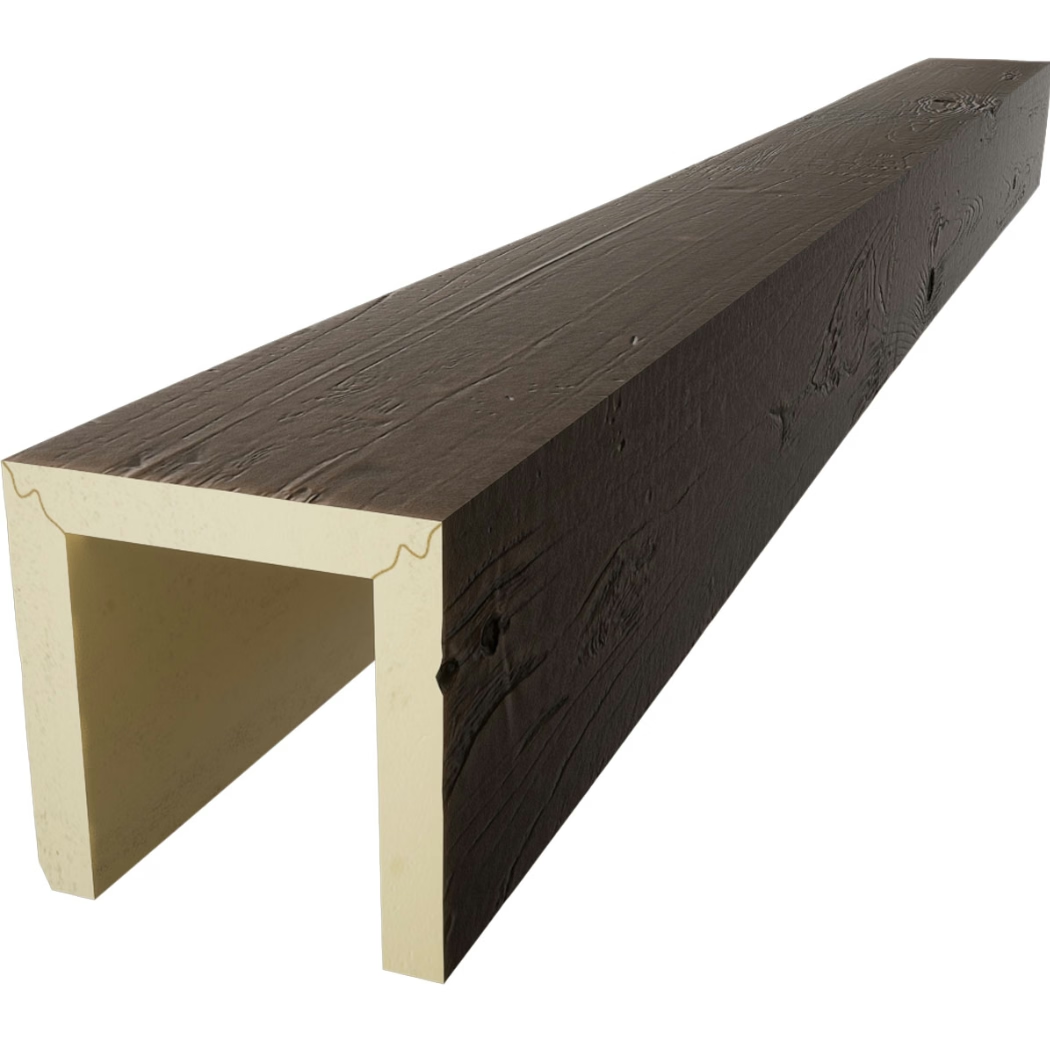
Decorative beams remain the most visible application of premium synthetic wood. The material's light weight, predictable dimensions, and consistent appearance make it ideal for both new construction and renovation projects. Architects specify synthetic beams when they want the timber look without the structural complications, or when they want a beam profile that would be impractical in solid wood.
Beyond beams, the same material appears as ceiling planks, coffers, and decorative panels. The consistency of synthetic products allows patterns and grids to be created with precision that would be difficult to achieve with natural wood, where each piece varies slightly from the next.
Wall Cladding and Accent Surfaces
Synthetic wood products are increasingly used as wall cladding in both interior and exterior applications. The panels install faster than individual boards, provide consistent appearance across large surfaces, and require none of the maintenance associated with natural wood siding.
For accent walls in particular, premium synthetic wood allows designers to specify unusual wood species or custom finishes that would be prohibitively expensive in natural form. A feature wall that looks like aged barn wood or rare exotic timber can be created with synthetic materials at a fraction of the cost, with none of the variability that natural materials would introduce.
Architectural Details
Beyond walls and ceilings, premium synthetic wood appears in a wide range of architectural details: column wraps, decorative brackets, corbels, and trim elements. Each application benefits from the material's consistency, weather resistance, and ease of installation.
For restoration projects where original architectural details have been lost or damaged, synthetic reproductions can replace missing elements with components that match the remaining historic fabric. Custom molding and fabrication services allow manufacturers to match period-specific profiles that may no longer be available in any other form.
Furniture and Built-Ins
The same synthetic materials used in architectural applications also appear in furniture and built-in elements. Cabinet facings, shelving, headboard panels, and decorative screens all benefit from the same performance characteristics that make synthetic wood valuable in larger architectural applications.
Designers appreciate the consistency that allows a kitchen's cabinet panels to match the adjacent ceiling beams precisely, creating visual continuity across multiple elements in a room.

Why Premium Synthetic Wood Wins Specific Projects
The case for synthetic wood is not universal. Some projects are better served by natural materials. The premium synthetic category earns its place in specific scenarios.
Long Spans and Large Profiles
Natural timber beams are limited by the size of the trees they come from. A solid timber beam of truly substantial dimensions is rare, expensive, and often warped or checked from the stress of being cut to such size. Premium synthetic wood can be produced in profiles and lengths that would be impractical or impossible in solid timber.
For projects where the design calls for dramatic, oversized beams, synthetic products allow the vision to be realized without the structural concerns or sourcing difficulties that natural materials would introduce.
Moisture-Sensitive Environments
Bathrooms, kitchens, pool houses, and coastal properties all present moisture challenges that natural wood handles poorly. Premium synthetic wood thrives in these environments. The closed-cell structure does not absorb water, and the color and finish are unaffected by humidity cycles.
For a beachfront property where the timber look is desired but the environment is hostile to natural wood, synthetic products offer the only sensible path to the desired appearance.
Tight Construction Schedules
Natural wood requires lead time for sourcing, fabrication, and acclimation. Premium synthetic products are produced in factories with predictable outputs and reliable lead times. For projects on tight schedules, this predictability can be the difference between meeting the completion date and missing it.
The construction schedule advantage extends beyond the initial installation. Synthetic wood does not require on-site finishing or extended curing periods. The installation team can complete a ceiling in days rather than weeks, moving the project forward without the delays associated with traditional materials.
Sustainability Considerations
For projects where sustainability is a priority, premium synthetic wood offers a compelling story. The polyurethane formulations use less energy to produce than the harvesting, milling, and transporting of equivalent timber products. No trees are cut for synthetic wood. The products can often be recycled at the end of their service life.
Some manufacturers have documented life cycle assessments for their products, providing the data that LEED and other green building certification programs require. For projects pursuing certification, these documents support the credit calculations directly.
Selecting Premium Synthetic Wood Products
Choosing the right product requires attention to specification, manufacturer reputation, and project-specific requirements.
Verify Specifications
Not all synthetic wood products are created equal. The premium category includes products from manufacturers with rigorous quality control and products from manufacturers with less consistent output. Specifications should be reviewed carefully, with attention to material density, fire ratings, UV stability, and warranty terms.
Independent testing and certification provides additional assurance. Products that have been tested by recognized laboratories carry documentation that supports their performance claims. This documentation is particularly important for commercial projects where the specifier may need to justify the selection to building officials or insurance providers.
Request Samples
Physical samples allow the specifier to evaluate the product firsthand. The samples should be viewed under lighting conditions similar to those in the final installation, both to confirm color accuracy and to verify that the surface quality meets expectations.
For large projects, a full-scale mockup of a representative section may be appropriate. The mockup reveals aspects of the product that samples cannot, including how the material behaves at joints, how it finishes at terminations, and how it reads at normal viewing distances.
Consider Manufacturer Support
Premium products typically come with premium manufacturer support. Technical representatives can assist with specification, custom color matching, and installation guidance. Warranty service is more responsive from manufacturers who stand behind their products.
For projects where the specification is unusual or the installation conditions are challenging, this manufacturer support can be the difference between a successful project and one that encounters unexpected difficulties. Selecting a product from a manufacturer with the resources to support the project is part of the premium value proposition.
The Future of Building Decoration
Premium synthetic wood products represent a maturation of the building materials industry. They acknowledge that natural materials are not always the best choice for every application, and they offer engineered alternatives that deliver comparable or superior performance for specific requirements.
As manufacturing technology continues to improve, the visual and performance characteristics of these products will continue to evolve. New surface textures, more accurate color reproduction, and expanded customization options will further close the gap between natural and synthetic materials. For designers and builders willing to move beyond traditional assumptions, premium synthetic wood offers a versatile, durable, and economically sound path to the timber aesthetic their projects require.
Technical References
ASTM standards cited in every specification
Test Data
Lab results from internal testing program
Updated 2026
Reviewed against current product specs


