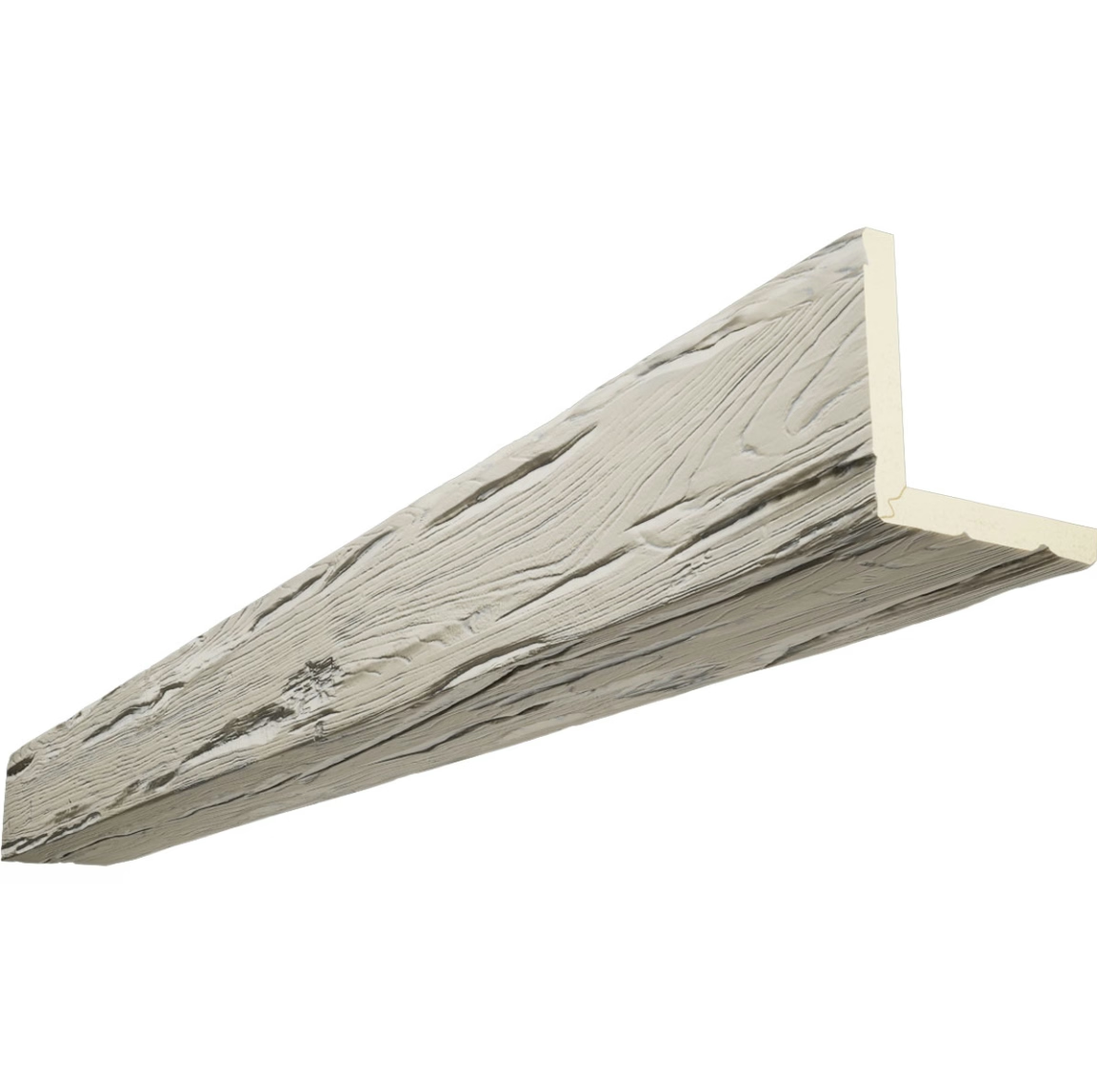
Polyurethane has been used as a building material since the 1950s, but the modern formulation of PU synthetic resin used in faux ceiling beams is a far cry from the rigid foam of mid-century construction. Today's beams are manufactured from high-density closed-cell polyurethane resin, often with additives that improve fire performance, UV stability, and impact resistance. The result is a material that looks and feels like solid timber but behaves more like a high-performance composite.
Understanding what the material actually is helps designers, contractors, and homeowners make better decisions about where it belongs in a project. PU synthetic resin is not a substitute for wood that should be tolerated. It is a different material that solves different problems, and it performs best when those differences are respected.

How PU Synthetic Resin Is Made
The manufacturing process for faux ceiling beams starts with a mold. The mold is typically cast from a real timber beam, then digitally refined to remove surface imperfections and to ensure that every beam produced from that mold has the same texture and dimensions. The mold is treated with a release agent and a base color coat, then closed.
Two liquid components are mixed and poured into the mold. The components react with each other, expand to fill the mold cavity, and cure into a rigid closed-cell foam. Within minutes, the beam has enough structural integrity to be removed from the mold. After a short cooling period, the beam is trimmed, finished with additional coats of color and sealant, and prepared for packaging.
The chemistry is more nuanced than that simple description suggests. The resin formulation can be adjusted to produce foam of different densities, cell structures, and surface hardness. A beam designed for a vaulted ceiling where it will be visible from close range needs a harder surface than a beam that will sit 20 feet overhead. A beam destined for an exterior application needs UV additives that are unnecessary in an interior product.
Closed-Cell Versus Open-Cell Foam
The difference between closed-cell and open-cell foam is fundamental to how the beam performs over time. Closed-cell foam, as the name suggests, has cells that are sealed off from each other. Water cannot migrate through the material even if the surface is compromised. Open-cell foam has interconnected cells that can absorb moisture if the surface seal is broken.
PU synthetic resin ceiling beams are made from closed-cell foam. That property is what allows them to be used in kitchens, bathrooms, and covered outdoor spaces without absorbing water at the cut edges. It is also what gives the material its structural rigidity and resistance to impact.
Density Ratings and What They Mean
Density is measured in pounds per cubic foot. Most interior faux ceiling beams fall in the 1.5 to 2 pound range. Higher-density beams (2.5 to 4 pounds per cubic foot) are used for applications that require additional impact resistance, such as commercial spaces or low-ceiling installations where the beam is within reach.
Density correlates with weight, cost, and stiffness. A denser beam is heavier, more expensive, and stiffer than a lighter beam at the same dimensions. For most residential ceiling applications, a 1.5 to 2 pound density is the sweet spot. For commercial or heavy-use applications, the higher densities are worth the premium.
Where PU Synthetic Resin Beams Perform Best
The material has particular strengths and weaknesses that make it well suited to certain applications and less suited to others.
Interior Ceilings With High Visibility
The most common application for PU synthetic resin beams is interior ceilings in living rooms, kitchens, primary bedrooms, and great rooms. The factory finish looks consistent from beam to beam, the texture is crisp enough to read from across the room, and the material holds up to decades of climate-controlled interior conditions without any maintenance beyond an occasional wipe-down.
Commercial Lobbies and Public Spaces
Hotels, restaurants, and corporate lobbies use PU beams because they need to look pristine for years without the disruption of refinishing. The material does not check, cup, or develop raised grain the way solid wood does. It does not yellow the way PVC can. It does not require periodic resealing.
Covered Outdoor Spaces
Beams under a porch, veranda, or covered patio benefit from the closed-cell structure of PU synthetic resin. Rain that blows sideways under the roof does not penetrate the material, and the UV-stabilized topcoat resists color fade for years. Open-air applications without any overhead protection are not recommended for the standard interior-grade material.
Areas Where the Material Is Less Suitable
PU synthetic resin is not recommended for direct ground contact, for submerged applications, or for environments with continuous temperatures above 200 degrees Fahrenheit. It is also not a structural material in the engineering sense. Beams that need to carry actual loads above their own weight should be solid timber, steel, or engineered lumber. PU beams are decorative.

Fire Performance and Building Code Considerations
Fire performance is a legitimate concern with any foam building material, and it is one of the first questions raised about PU faux beams in commercial projects.
Fire Ratings of PU Beams
Most PU synthetic resin beams carry a Class C fire rating under ASTM E84, which means they have a flame spread index between 76 and 200. Class C is acceptable for most residential applications and many commercial applications. For projects that require Class A or Class B ratings, manufacturers offer fire-retardant treated versions that meet higher standards at a modest upcharge.
The actual fire performance of a faux ceiling beam is heavily influenced by what is behind it. A PU beam mounted against a drywall ceiling behaves very differently in a fire than the same beam mounted against exposed framing. For most code purposes, the beam is treated as a finish material rather than a structural element, and the fire rating of the underlying assembly governs.
Smoke Developed Ratings
The other half of the ASTM E84 test is the smoke developed index, which measures how much smoke the material generates when it burns. PU foam can produce significant smoke if it ignites, but the closed-cell structure and the factory-applied fire retardants reduce smoke output considerably. Specifiers concerned about smoke ratings should request the specific test data from the manufacturer rather than relying on general category ratings.
Comparing PU to Real Wood and Other Faux Materials
The choice between PU synthetic resin and other materials depends on what is being optimized. Each option has its place.
Solid Wood
Solid wood is the gold standard for authenticity. It looks like real wood because it is real wood. It also costs significantly more, weighs more, requires more careful installation, and needs periodic refinishing to maintain its appearance. For high-end custom homes or restoration projects where authenticity is paramount, solid wood remains the right answer. For most other applications, PU beams deliver a similar visual effect at a fraction of the cost and maintenance.
PVC Beams
PVC beams are lighter and less expensive than PU, and they are completely waterproof. They lack the convincing texture and depth of PU, however, and they sound hollow when tapped. They are also prone to yellowing in direct sunlight unless specifically formulated for UV resistance. PU offers a better balance of weight, appearance, and durability for most projects.
Fiberglass Beams
Fiberglass beams are another option, particularly for very large structural-looking installations. They are strong enough to span long distances and can be molded into complex shapes. They are also significantly more expensive than PU and require specialized installation. For most residential and light commercial projects, the cost of fiberglass is difficult to justify.
MDF Wrapped in Veneer
Medium-density fiberboard wrapped in real wood veneer is sometimes used for budget installations. It is heavier than PU, less resistant to moisture, and the veneer can chip or peel over time. It is also less convincing in texture and color depth. PU beams outperform wrapped MDF in nearly every category except initial material cost.
Longevity and Long-Term Performance
The longevity question is the one that matters most for any long-term investment. PU synthetic resin beams have a track record of 20 to 30 years in residential applications and even longer in commercial settings.
What Affects Lifespan
UV exposure is the primary driver of surface aging. Beams in interior applications with filtered daylight can last decades without measurable change. Beams under covered porches with some sun exposure will start to show very gradual color shift after 10 to 15 years. Beams in direct outdoor exposure without any protection will age faster and may need recoating after 5 to 10 years.
Mechanical damage is the other major factor. Beams that are bumped by ladders, hit by falling objects, or scraped during furniture moves will show the wear at the impact point. Most minor damage can be repaired with a manufacturer-supplied patch kit.
Refreshing an Aging Beam
When a PU synthetic resin beam does start to look tired, it can usually be refreshed rather than replaced. Light sanding removes surface oxidation, a fresh coat of compatible paint or stain restores the color, and a new layer of topcoat seals the surface for another decade of service. The process takes a few hours per beam and requires no specialized equipment.
That kind of serviceability is one of the most underrated advantages of PU synthetic resin. A wood beam that needs refinishing has to be sanded aggressively, which removes material and shortens its life. A PU beam can be resurfaced repeatedly without losing its dimensions or structural integrity.
The Bottom Line on Material Choice
PU synthetic resin faux ceiling beams are not a compromise. They are a different material that solves different problems than solid wood, PVC, or fiberglass. They look like wood, weigh less than wood, install faster than wood, and last longer than wood in many applications. They also cost less than wood in most cases and require almost no maintenance.
For projects where authenticity is the absolute priority, solid wood remains the answer. For every other application, PU synthetic resin offers a combination of appearance, durability, cost, and ease of installation that is difficult to beat.
Technical References
ASTM standards cited in every specification
Test Data
Lab results from internal testing program
Updated 2026
Reviewed against current product specs


