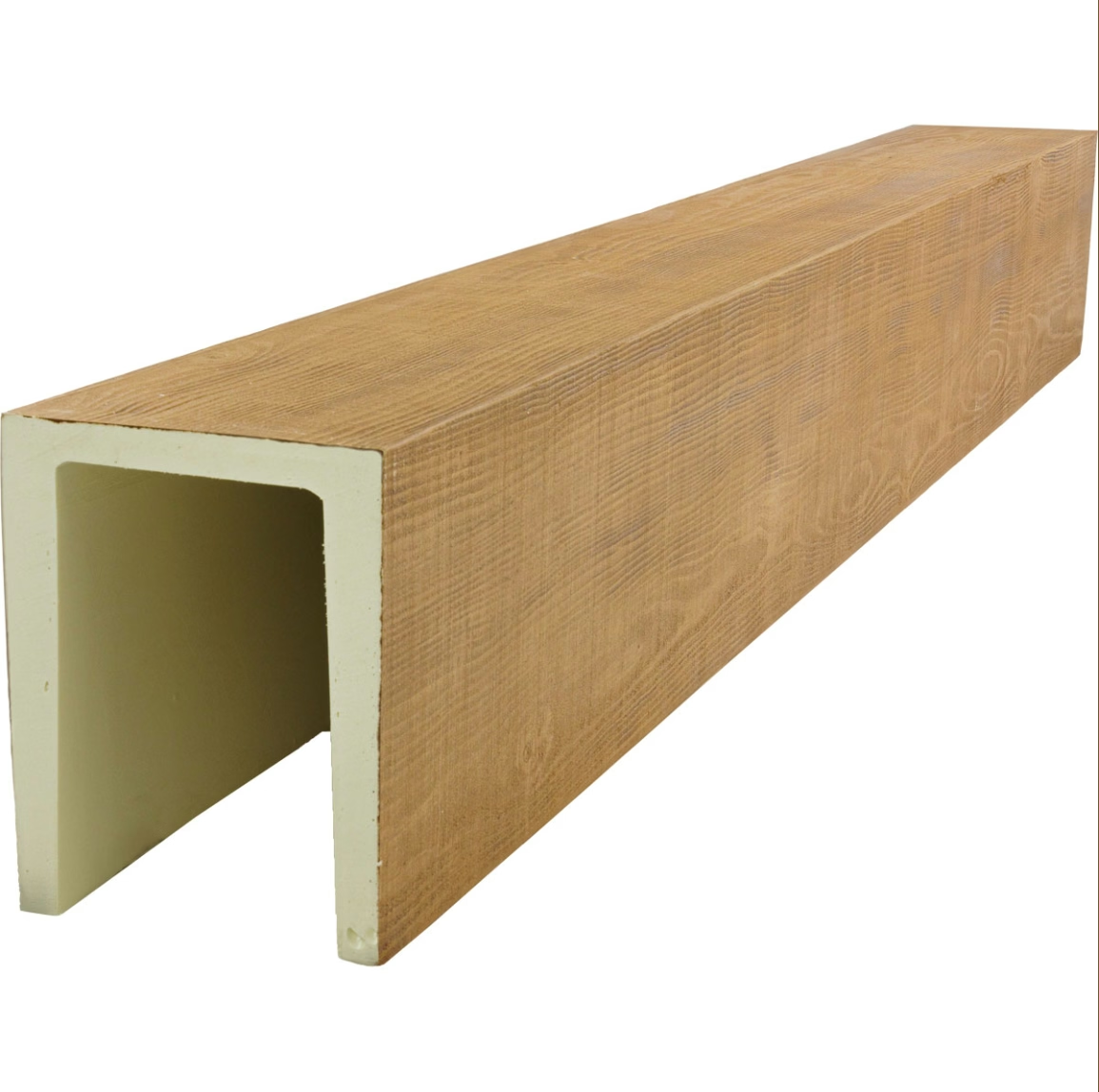
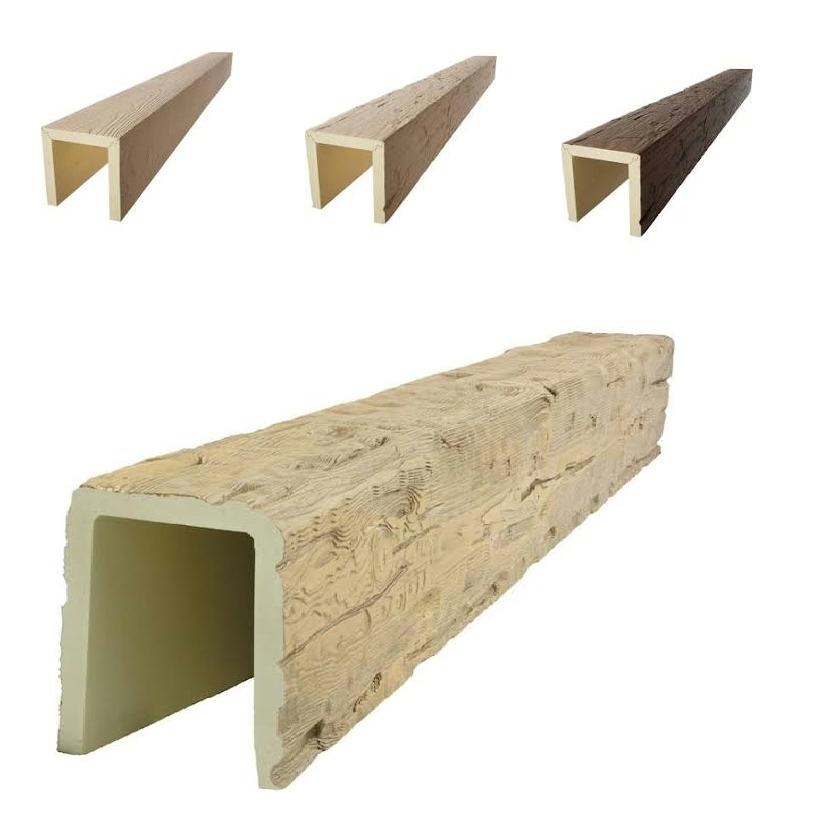
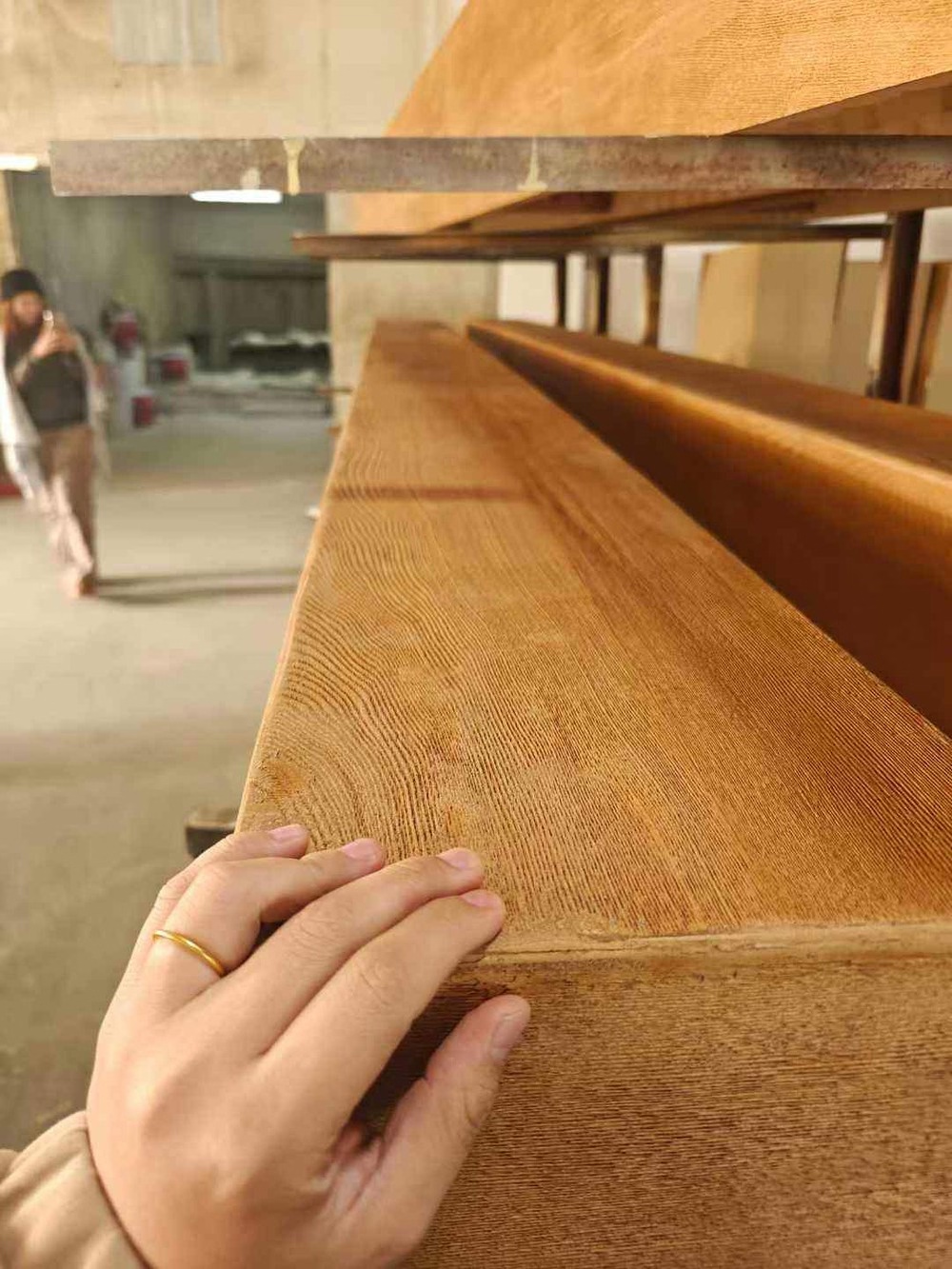
There is something about a timber ceiling that makes a room feel finished. The weight of the beams overhead, the warmth of the wood tone, the way the texture catches light from the windows. For centuries, the only way to get that feeling was to mill actual trees into beams and hoist them into place. Today, synthetic timber PU faux beams deliver nearly all of the visual impact of real timber with none of the structural demands, the maintenance schedule, or the cost.
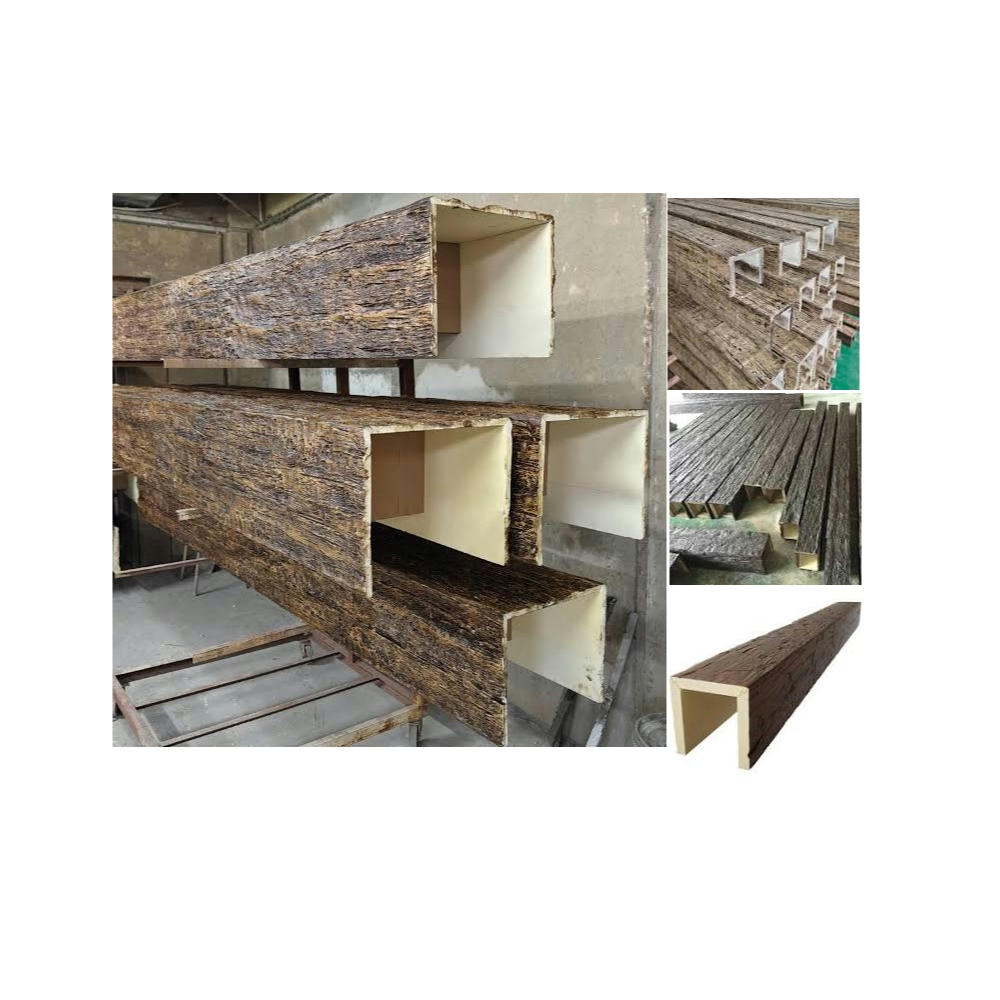
The synthetic timber category covers a range of faux beam products designed to mimic the appearance of solid timber as closely as possible. PU faux beams are the highest-performing segment of that category, combining deep molded texture, consistent factory finishes, and a closed-cell foam core that holds up for decades.

The Visual Case for Synthetic Timber
The first question most people ask about faux timber is whether it looks real. The honest answer is that it depends on the quality of the product and the distance from which it is viewed.
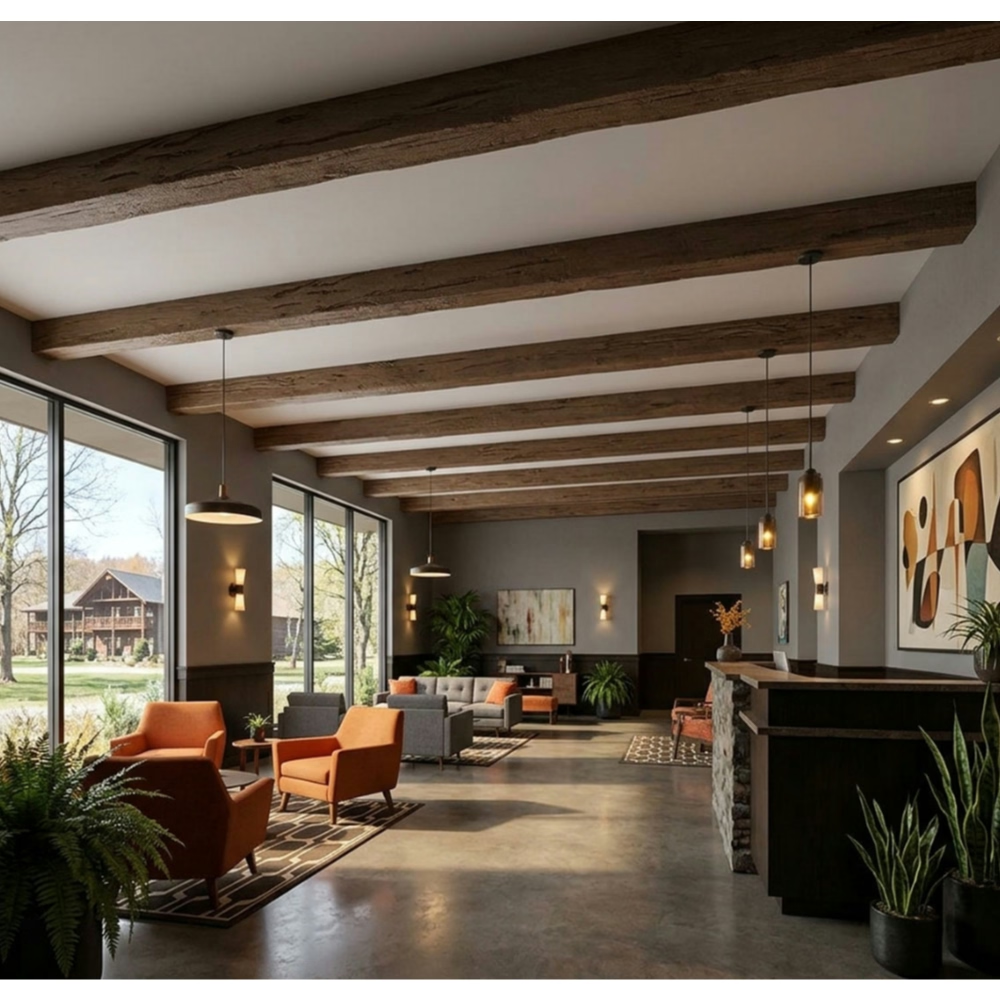
From across the room, a high-quality synthetic timber beam looks indistinguishable from a solid timber beam. The molded texture catches light in the same way as real wood grain. The factory finish replicates the depth and variation of a stained timber surface. The proportions match what the eye expects to see in a timber beam of that size.
Up close, the differences become more apparent. The grain pattern repeats because it is molded from a single master rather than grown naturally. The weight is lighter, which can give away the deception if someone taps the beam or pushes against it. The surface temperature is closer to the surrounding air because the foam does not have the thermal mass of solid wood.
For most interior applications, the visual performance at normal viewing distances is more than adequate. Guests do not typically walk up to a ceiling beam and inspect it at arm's length. They see it from the seating area, from the entry, from across the room. At those distances, synthetic timber beams pass inspection comfortably.
What Separates Premium Synthetic Timber From Budget Versions
Not all synthetic timber beams are equal. The differences between a premium product and a budget version are visible from across the room.
Texture depth is the most obvious differentiator. Premium beams have deep, well-defined grain patterns with visible tool marks, knots, and character. Budget versions have shallow textures that flatten out under most lighting conditions. The deeper the texture, the more convincing the beam looks.
Color variation is the second differentiator. Premium products use multiple base coats and hand-rubbed finishing techniques to create the kind of color variation that real timber shows. Budget products use a single uniform color that looks painted rather than stained. The variation is what makes a timber beam look like it grew that way rather than being manufactured.
Detail work at the ends and corners is the third differentiator. Premium manufacturers produce matching end caps, corner blocks, and splice plates that look like they were carved from the same tree as the beam. Budget products often have mismatched accessories or none at all, leaving the installer to improvise.
Performance Advantages of PU Construction
Beyond the visual performance, PU synthetic timber beams offer practical advantages that real timber cannot match.
Dimensional Stability
Solid timber moves with humidity. It expands in summer, contracts in winter, cups along the grain, and checks at the ends. Over years of seasonal cycling, these movements open joints, telegraph through finishes, and slowly distort the beam from its original geometry.
PU beams do not move. The closed-cell foam has a coefficient of thermal expansion similar to the surrounding building materials and essentially zero response to humidity changes. A PU beam that is straight at installation is straight 30 years later, and the joints that closed at installation stay closed.
Weight
A solid timber beam can weigh 10 to 20 pounds per linear foot depending on the species and dimensions. A comparable PU beam weighs 1 to 3 pounds per linear foot. The weight difference is meaningful for installation, but it also matters for the structural design of the building. Older homes with marginal framing can accept PU faux beams where solid timber would require structural reinforcement.
Fire Performance
Timber is combustible. PU foam is also combustible but can be formulated with fire retardants that significantly slow ignition and flame spread. Premium PU beams carry Class B or Class A fire ratings under ASTM E84, which makes them suitable for many commercial applications where solid timber would not be permitted.
Pest Resistance
Timber beams are vulnerable to termites, carpenter ants, and powderpost beetles. PU beams are not a food source for any wood-boring insect. In regions with active termite pressure, that immunity alone justifies the choice of PU over solid timber.
Where Synthetic Timber PU Beams Excel
The combination of visual quality and practical performance makes synthetic timber PU beams a strong choice for many applications.
Renovations Where Existing Timber Cannot Be Matched
Older homes often have timber beams that are no longer available in the same species, finish, or dimension. Synthetic timber can be specified to match existing beams exactly, with custom finishes that blend the new and old elements seamlessly. A renovation that would have required sourcing rare reclaimed timber can be completed with consistent synthetic products that look identical.
New Construction With Tight Budgets
Building a new home with solid timber beams can consume a significant portion of the construction budget. Synthetic timber delivers the visual impact at a fraction of the cost, freeing up budget for other elements. The savings are most pronounced on large custom homes where the beam package can run into six figures.
Commercial Spaces With High Foot Traffic
Restaurants, hotels, and retail spaces benefit from the durability and consistency of synthetic timber. Every beam in a 30-location hotel chain looks identical because they were produced from the same mold. The low-maintenance finish handles the wear of high-traffic commercial use without requiring periodic refinishing.
Coastal and High-Humidity Environments
Coastal homes, tropical resorts, and properties near large bodies of water all expose timber to conditions that accelerate aging. Salt air, high humidity, and intense sun break down solid timber finishes quickly. Synthetic timber PU beams hold up to those conditions with minimal maintenance, particularly when specified with UV-stabilized topcoats.
Comparing Lifecycle Costs
The initial cost of synthetic timber PU beams is typically 40 to 60 percent of the cost of solid timber. The lifecycle cost comparison is even more favorable.
Maintenance Intervals
Solid timber beams require refinishing every 10 to 15 years in interior applications, more often in high-traffic or high-humidity environments. Each refinishing project involves sanding, staining, and sealing the beams in place or removing them for off-site refinishing. The cost of refinishing a room full of beams can exceed the original installation cost.
Synthetic timber PU beams require no refinishing over their service life. The factory finish holds its color and integrity for decades. The only routine maintenance is occasional dusting or wiping with a damp cloth.
Replacement Risk
Solid timber beams can be damaged by impact, water leaks, or pest infestation. Major damage often requires replacement of the affected beam, which is a significant project in a finished home. The replacement beam may not match the existing beams perfectly because wood varies from piece to piece.
Synthetic timber beams are resistant to the most common causes of damage and can be replaced individually if necessary. Because every beam from a production run is identical, a replacement beam matches the existing installation exactly.
Total Cost Over 30 Years
A 30-year cost comparison for a typical residential beam package shows synthetic timber PU beams at roughly 30 to 50 percent of the total cost of solid timber, once installation, refinishing, and potential replacement are factored in. The cost advantage increases with the size of the installation and the harshness of the environment.
Installation Considerations
Synthetic timber PU beams install using the same methods as other faux beam products, with a few considerations specific to the synthetic timber category.
Matching Patterns Across Production Runs
For large projects that span multiple production runs, request samples from each run before installation to verify color consistency. Most manufacturers maintain excellent batch-to-batch consistency, but natural variations in raw materials and aging equipment can cause subtle differences. Verifying ahead of time avoids surprises in the field.
Handling the Texture
The deep molded texture that makes synthetic timber look so good is also more vulnerable to handling damage than smooth surfaces. Beams should be carried with clean hands or gloves, set on padded surfaces during staging, and protected from impact during installation. Minor scuffs can be touched up with manufacturer-supplied repair kits, but avoiding damage in the first place is always easier.
Coordination With Other Finishes
Synthetic timber beams look most convincing when they are coordinated with the surrounding finishes. The trim, doors, flooring, and other wood elements in the room should share a color family with the beams, even if the specific tones are different. A coordinated palette ties the beams into the room and reinforces the impression of an integrated design rather than a standalone element.
Synthetic timber PU faux beams represent a mature category of building products that has earned its place in residential and commercial interiors. The combination of convincing appearance, durable construction, and favorable lifecycle cost makes them a practical choice for projects where the goal is a long-lasting timber look without the maintenance demands of solid wood.
Technical References
ASTM standards cited in every specification
Test Data
Lab results from internal testing program
Updated 2026
Reviewed against current product specs