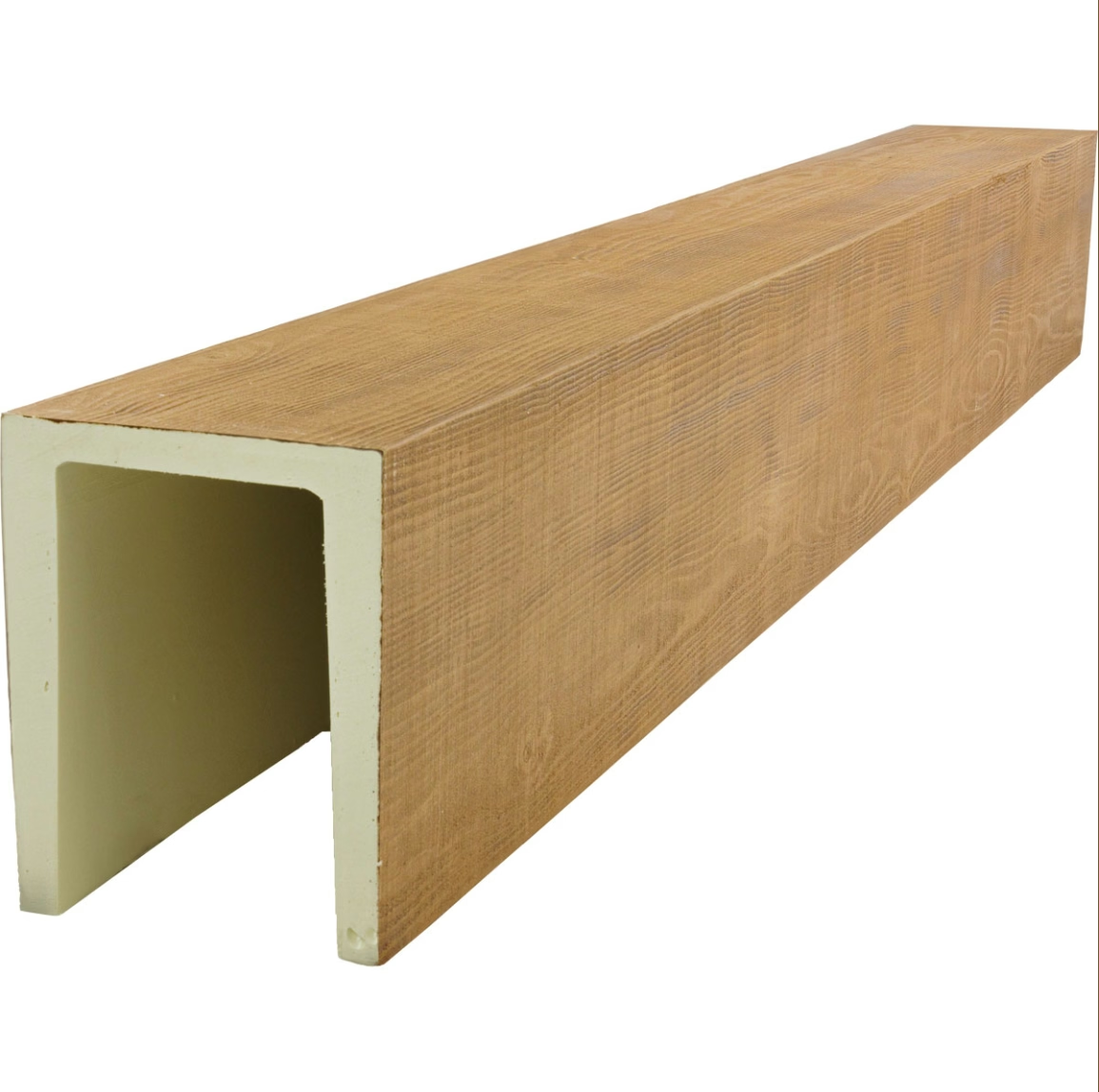
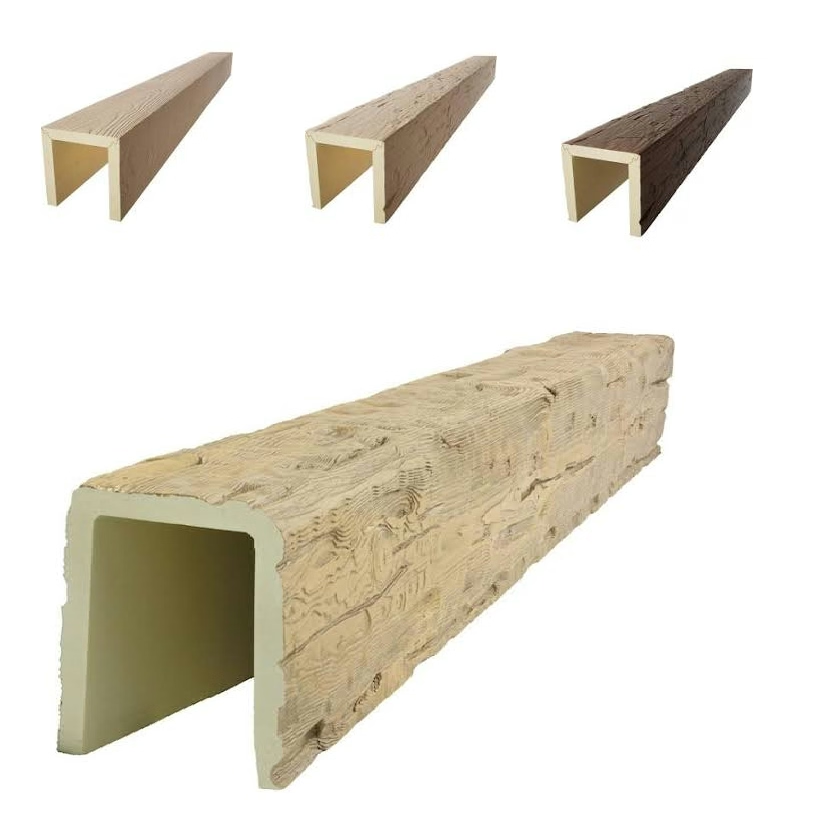
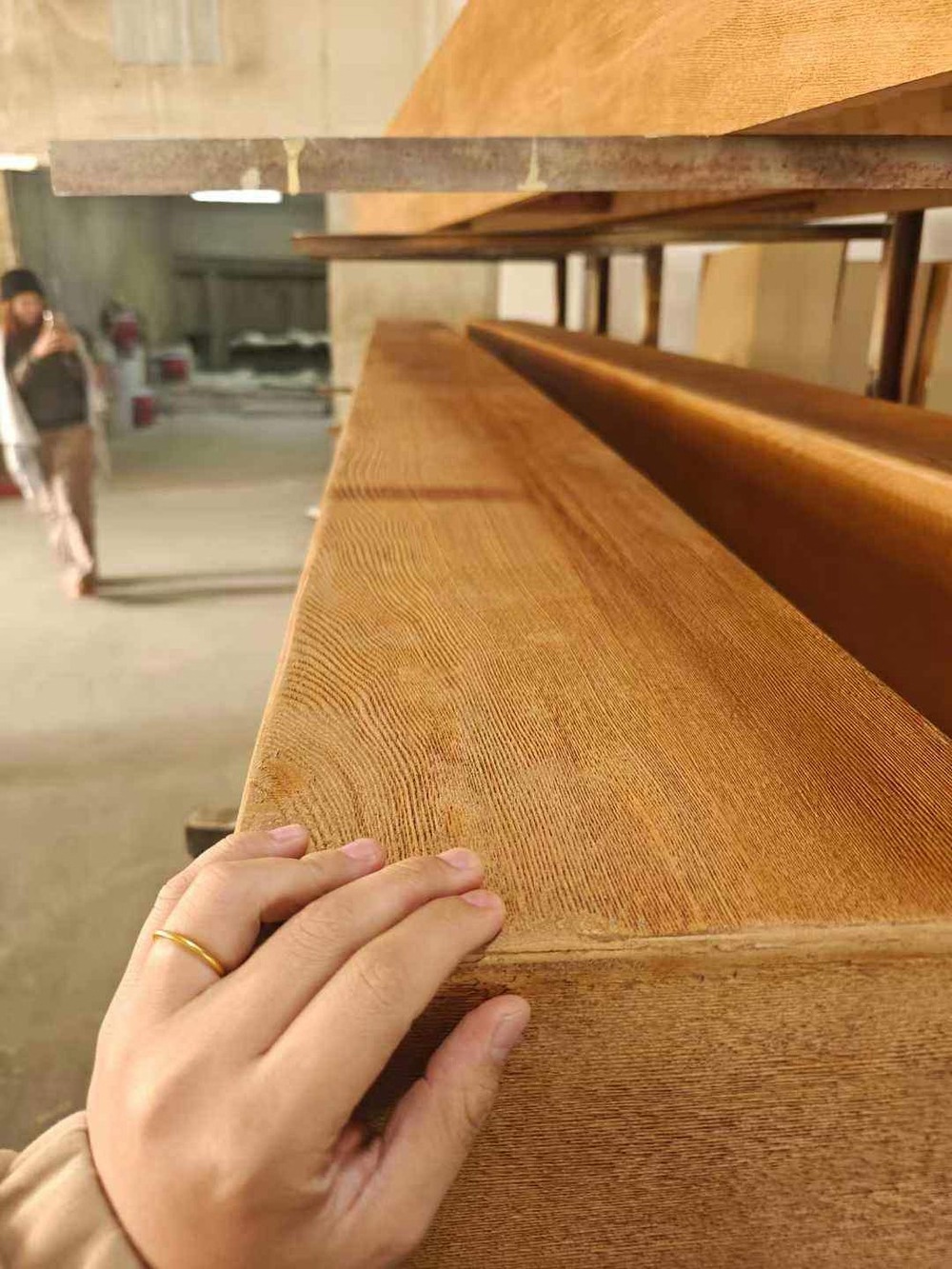
The category of synthetic wood material decorative ceiling faux beams encompasses a range of products designed to mimic the appearance of solid timber while offering practical advantages that real wood cannot match. The materials, manufacturing techniques, and finish options have evolved significantly over the past two decades, and the current generation of products delivers visual quality that satisfies all but the most demanding applications.
Understanding what "synthetic wood material" actually means, how the products are made, and where they perform best helps specifiers, designers, and homeowners choose the right beam for their project without overpaying for features they do not need or compromising on quality where it matters.

Composition of Modern Synthetic Wood Beams
The phrase "synthetic wood material" covers several different formulations, each with its own performance characteristics.
High-Density Polyurethane Foam
The most common material for premium synthetic wood beams is high-density polyurethane foam. The foam is created by mixing two liquid components that react and expand to fill a mold. The result is a rigid closed-cell material that is light, strong, and dimensionally stable.
Polyurethane foam is the preferred material for applications where weight matters, where dimensional stability is important, and where a deep molded texture is desired. The foam accepts molded textures more readily than other synthetic materials and produces sharper detail in the finished beam.
Coextruded Polymers
Some synthetic wood beams use coextruded polymers that combine a dense outer shell with a lighter foam core. The coextrusion process bonds the two materials during manufacturing, producing a beam that has the impact resistance of a solid polymer on the outside and the weight advantage of a foam core on the inside.
Coextruded beams are more expensive than standard polyurethane foam beams but offer superior impact resistance. They are popular for commercial applications where the beams may be subjected to more abuse than they would see in a residential setting.
Glass-Fiber Reinforced Beams
For applications that require maximum strength and impact resistance, glass-fiber reinforced synthetic wood beams offer the best performance. The glass fibers are embedded in the foam or polymer matrix during manufacturing, providing reinforcement that allows the beam to span longer distances and resist impacts that would damage other materials.
Glass-fiber reinforced beams are the most expensive synthetic option and are typically used in commercial or institutional applications where the additional cost is justified by the performance requirements.
Hybrid Constructions
Some manufacturers offer hybrid constructions that combine different materials for specific parts of the beam. A common approach is a polyurethane foam main body with a denser polymer cap along the bottom edge for added impact resistance. The hybrid approach optimizes the material properties for the specific demands of different parts of the beam.
Manufacturing Process and Quality Indicators
The quality of a synthetic wood beam is determined as much by the manufacturing process as by the raw materials.
Mold Quality
The mold used to produce a synthetic beam is the single most important factor in determining the visual quality of the finished product. High-quality molds are produced from carefully prepared master patterns and capture fine detail in the grain texture. Lower-quality molds produce beams with softer textures and less defined grain patterns.
When evaluating synthetic beam products, request samples and inspect the texture closely. The grain should be sharp and well-defined, with visible variation in depth and direction. Knots and character marks should look natural rather than stamped.
Density Consistency
The density of the foam should be consistent throughout the beam. Variations in density can cause differential shrinkage, warping, or surface irregularities in the finished product. Quality manufacturers monitor density throughout the production run and reject beams that fall outside the specified range.
Finish Application
The factory finish is applied in multiple stages, typically including a base color, a wash or glaze to add depth, and a protective topcoat. Each stage should be evenly applied and properly cured before the next stage begins. Quality manufacturers control the application environment to minimize dust, temperature variation, and other factors that can affect the finish.
Dimensional Accuracy
Synthetic beams should be produced to precise dimensional tolerances. The length, width, and height of each beam should match the published specifications within a small fraction of an inch. Variations in dimensions cause problems during installation, particularly when multiple beams are butted together or when beams need to fit between fixed walls.
Sizing and Proportion Guidelines
The visual success of a synthetic wood beam depends heavily on getting the proportions right for the room.
Width to Height Ratios
The ratio of beam width to beam height affects the visual character of the installation. Square or near-square beams (equal width and height) feel chunky and rustic. Tall, narrow beams (height significantly greater than width) feel elegant and traditional. Wide, shallow beams (width significantly greater than height) feel modern and refined.
For most residential applications, a height-to-width ratio between 1:1 and 1.5:1 works well. Commercial applications with high ceilings can support more elongated beams with ratios up to 2:1 or higher.
Scaling to Room Dimensions
Beam size should scale with the dimensions of the room. A common guideline is to size the beam so that the height of the beam is approximately one-tenth of the ceiling height. An 8-foot ceiling looks proportional with an 8-inch tall beam; a 12-foot ceiling looks proportional with a 12-inch or 14-inch tall beam.
The room width also matters. Beams that are too narrow for a wide room look spindly, while beams that are too wide for a narrow room feel oppressive. For rooms wider than 15 feet, consider larger beams or closer beam spacing to maintain visual proportion.
Length Considerations
Synthetic beams are produced in standard lengths up to about 20 feet. Longer runs require splices between sections, which should be planned to land over supporting blocking and finished with appropriate splice plates or joint covers.
For very long runs, factory-mitered corners and decorative transitions can be specified to maintain the illusion of a continuous beam. The added cost of factory transitions is usually justified by the improved visual result.
Finish Options for Different Design Styles
The finish on a synthetic wood beam determines how it integrates with the surrounding design.
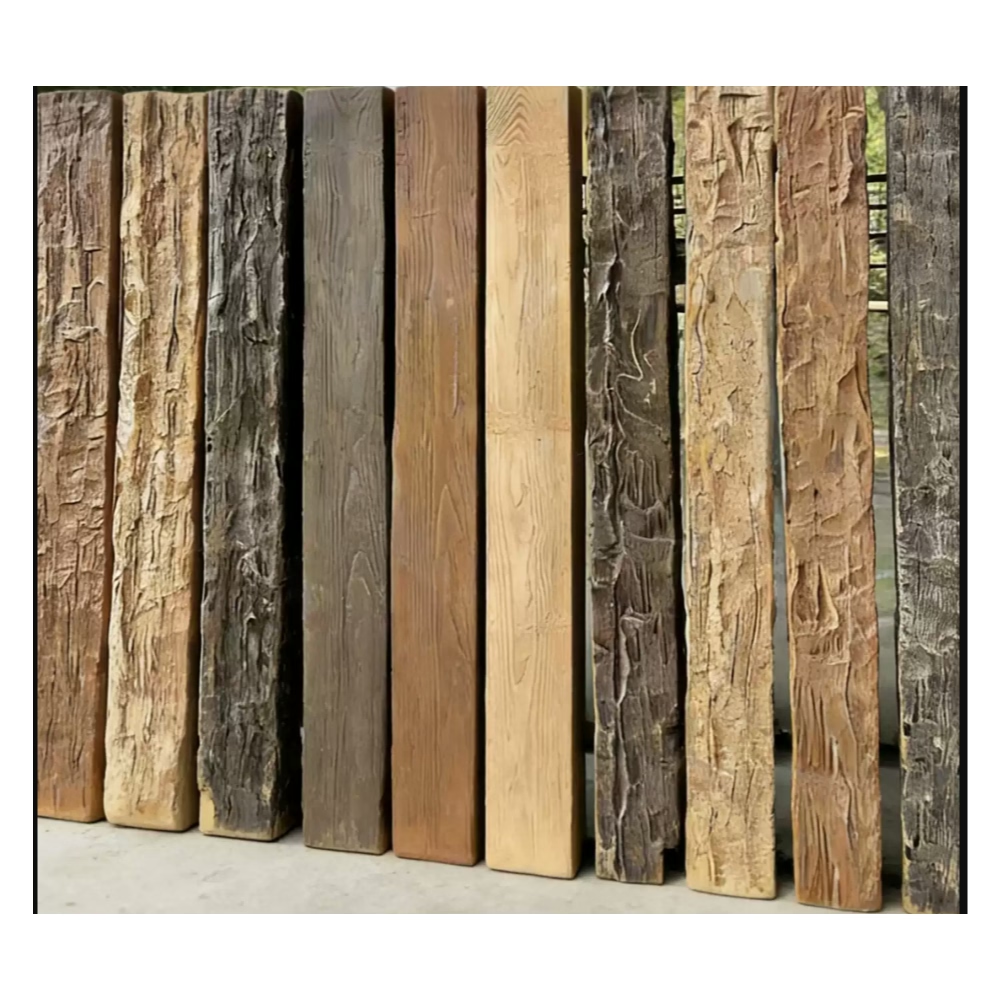
Traditional Wood Tones
Traditional wood tones like oak, walnut, cherry, and mahogany suit classic interior design styles. The colors are warm and rich, complementing traditional furnishings and architectural details. For residential applications, traditional tones create a sense of established quality that suits period homes and formal interiors.
Weathered and Distressed Finishes
Weathered and distressed finishes mimic the appearance of reclaimed or aged timber. They are popular in farmhouse, industrial, and transitional interiors. The finishes often include multiple colors and a hand-rubbed appearance that suggests history and character.
These finishes tend to be more forgiving of minor installation imperfections because the distressed appearance absorbs small irregularities. They are also less likely to show dust and fingerprints than smoother finishes.
Painted Finishes
Painted synthetic wood beams work in modern, coastal, and Scandinavian interiors. White, soft gray, and pale blue are common colors. The paint covers much of the grain texture but does not eliminate it, leaving a subtle surface variation that adds interest.
Painted finishes require the most diligent surface preparation during manufacturing because any substrate imperfection shows through the paint. Quality manufacturers use multiple primer coats and careful sanding to achieve a smooth, even finish.
Custom Color Matching
For projects that require a specific color, custom color matching services are available from most premium manufacturers. Send a sample of the desired color and the manufacturer will produce beams tinted to match. Custom colors add 2 to 4 weeks to lead time and a modest upcharge per beam.

Installation Methods and Hardware
The installation method for synthetic wood beams depends on the application and the structural context.
Wrapping Existing Beams
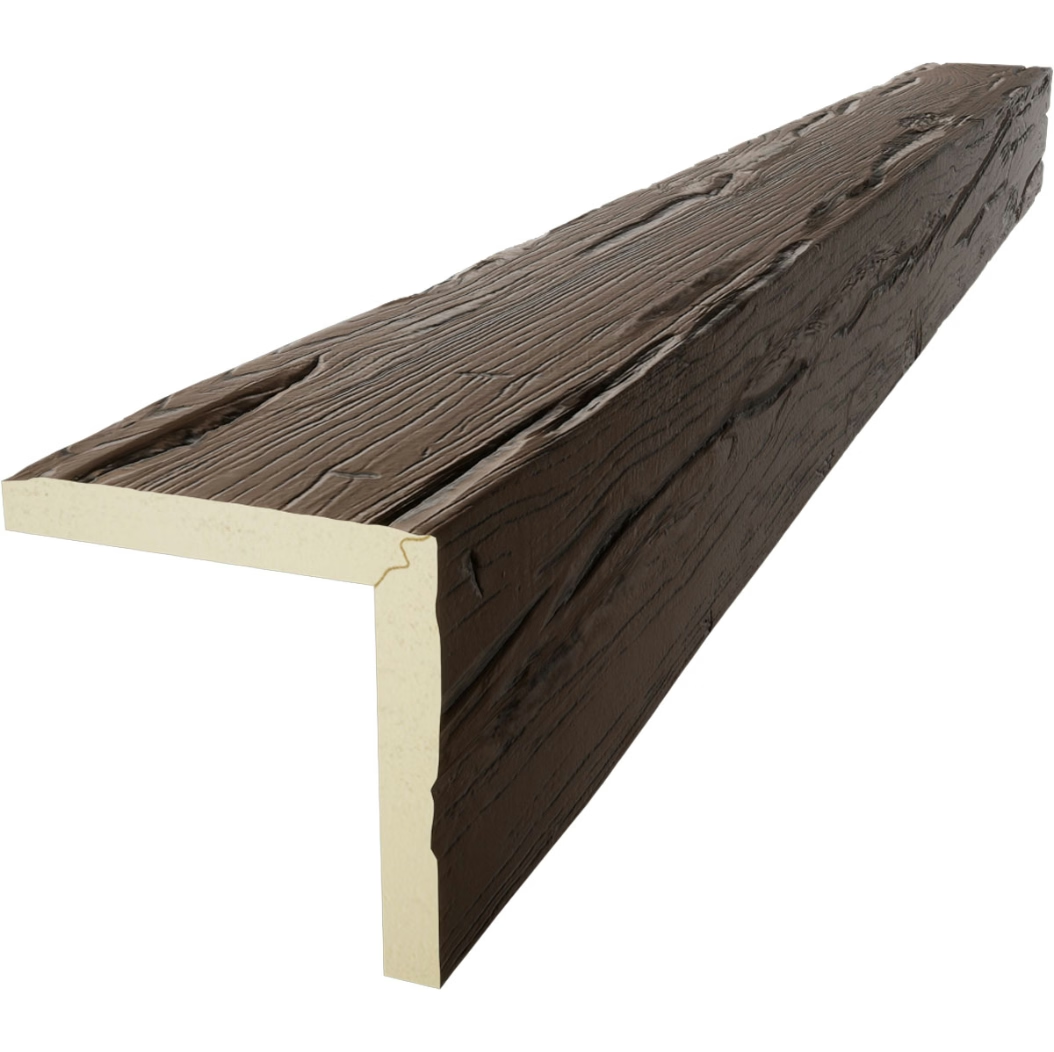
The most common residential application is wrapping an existing structural beam with a synthetic wood shell. The shell slides over the existing beam and is secured to the framing above with screws through the side flanges. The installation takes a few hours and produces an immediate visual transformation.
Mounting to Flat Ceilings
For decorative beams added to flat ceilings without exposed structure, blocking must be installed between the ceiling joists to provide a mounting surface. The blocking is typically wood framing that matches the depth of the joists and is fastened to the joist sides with screws or nails.
Once the blocking is in place, the synthetic beam is mounted to the blocking using the same methods as a beam wrap. The result is a decorative beam that appears to be a structural element but carries no actual load.
Suspended Mounting
For applications where the ceiling structure cannot support blocking, such as concrete slabs or vaulted ceilings with no accessible framing, suspended mounting systems are used. The suspension hardware transfers the beam weight to the structural deck above through cables, threaded rod, or specialized brackets.
Suspended mounting is more complex than direct mounting and typically requires professional installation. It is essential for applications where the beam must be positioned below an existing ceiling without modifying the ceiling structure.
Hanging Loads
Synthetic wood beams can support hanging loads up to a reasonable limit when the load is transferred to the structure behind the beam. Light loads like pendant lights, hanging plants, or small ceiling fans can be supported with simple blocking behind the beam. Heavier loads require more substantial reinforcement.
The reinforcement options include wood backer blocks installed between joists before the beam is mounted, threaded inserts molded into the beam during manufacturing, or surface-mounted brackets that distribute the load across a wider area of the beam surface.
Where Synthetic Wood Beams Make the Most Sense
The combination of appearance, performance, and cost makes synthetic wood beams a practical choice for many applications.
Whole-Home Renovations
Renovating a home with consistent beam packages throughout the main living areas creates a unified design vocabulary. Synthetic beams deliver that consistency at a cost that allows the package to extend to multiple rooms without breaking the budget.
Commercial Buildouts
Restaurants, hotels, offices, and retail spaces benefit from the durability and low maintenance of synthetic beams. The consistent factory finish holds up to commercial use, and any damage that does occur can be repaired with manufacturer-supplied materials without disrupting business.
Custom Homes on Tight Budgets
Building a custom home with a limited budget requires choices about where to spend and where to save. Synthetic beams allow the visual impact of timber ceilings without the cost of solid timber, freeing budget for other elements like flooring, cabinetry, or landscaping.
Historic Renovations
Matching new beams to existing historic timber is a common challenge in renovation projects. Synthetic beams can be specified in profiles and finishes that match historic timber, allowing new construction to blend seamlessly with preserved elements.
Synthetic wood material decorative ceiling faux beams have evolved into a sophisticated product category that serves a wide range of design and practical needs. The combination of consistent quality, durable construction, and flexible design options makes them a practical choice for projects where the goal is a timber appearance without the demands of solid wood.
Technical References
ASTM standards cited in every specification
Test Data
Lab results from internal testing program
Updated 2026
Reviewed against current product specs