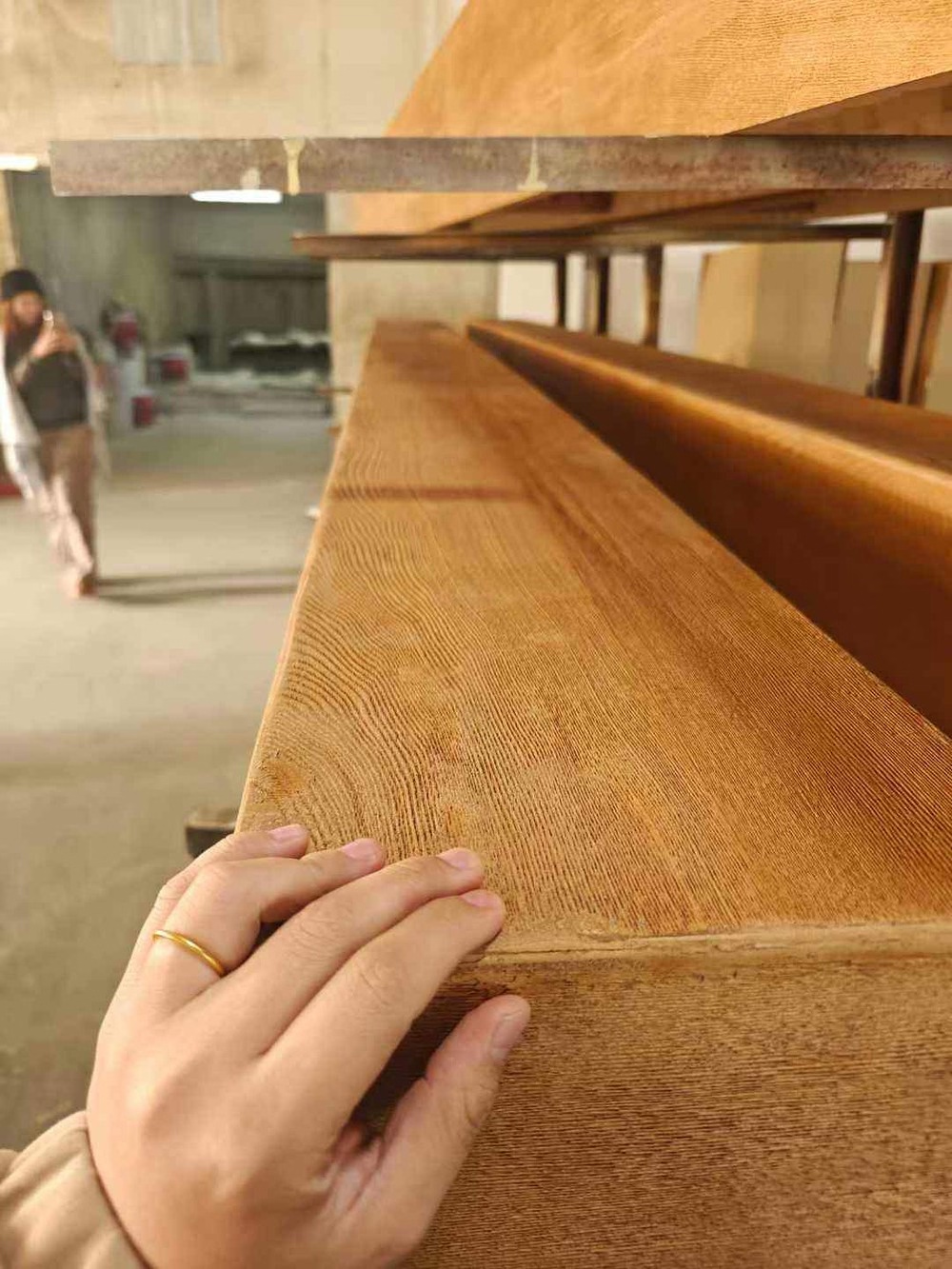
If you have ever spent a Saturday afternoon balanced on a ladder trying to wipe down rough wooden ceiling beams, you already know why a dust-resistant finish matters. Real wood has grain, knots, and tiny pores that grab dust and hold onto it. Polyurethane faux beams solve the problem at the source: a factory-applied coating seals the surface before the beam ever reaches your ceiling.
This piece walks through how that protective coating actually works, what maintenance looks like once the beams are installed, and the practical situations where the dust-resistant finish makes the biggest difference. Whether you are a homeowner with vaulted ceilings, a property manager juggling turnover, or a designer specifying materials for a hospitality project, the takeaway is the same — coated PU beams turn ceiling care into a five-minute job instead of a half-day project.
What a Dust-Resistant Coating Actually Does
A dust-resistant coating on PU faux beams is a thin, transparent layer of acrylic or polyurethane sealant applied during manufacturing, after the beam has been molded, textured, and color-stained. The sealant fills the microscopic pores on the beam's surface and creates a smooth skin that dust struggles to grip onto.
Most manufacturers apply the coating in two passes. The first pass soaks into the surface and bonds with the pigment layer underneath. The second pass builds up a hard, wipeable topcoat that resists fingerprints, cooking residue, and airborne particles. The result is a beam that looks like raw timber to the eye but behaves like finished cabinetry to a microfiber cloth.
In practice, this means airborne dust particles land on the beam but do not embed themselves. They sit lightly on the surface, ready to be picked up by a static duster or a damp cloth. Compare that to unsealed wood, where dust migrates into the grain over time and creates a dull gray film that no quick wipe can fully remove.
The Science Behind the Surface
The coating chemistry matters because not all sealants perform the same way. Cheaper wax-based finishes can yellow over time and break down with UV exposure. Higher-quality coatings use water-based acrylics or aliphatic polyurethanes, which remain clear for years and resist yellowing even in sunlit rooms.
For buyers evaluating suppliers, the practical question to ask is what coating system the factory uses and whether it has been tested for UV stability and adhesion. A well-formulated coating should hold up to ten years or more without reapplication under normal indoor conditions.
Where Dust-Resistant Beams Make the Biggest Difference
Not every room generates the same kind of dust. Kitchens throw grease and flour into the air. Bedrooms shed skin cells and fabric fibers. Living rooms with fireplaces accumulate fine soot. A sealed beam surface handles all of these scenarios far better than an open-pore finish.
For homes with vaulted ceilings or two-story foyers, the dust-resistant coating is more than a convenience — it is a safety feature. Cleaning high beams usually means climbing, stretching, and balancing, and homeowners often skip the job entirely because the dust is not visible from below. With a coated beam, dust stays visible on the surface rather than disappearing into the grain, which serves as a built-in reminder to wipe down the beam during regular room cleaning.
Hospitality settings benefit even more. Restaurants, hotels, and short-term rentals all need ceilings that look presentable between guests. Property managers can brief housekeeping staff to give coated beams a quick once-over with a microfiber duster, the same way they handle light fixtures and window frames. No special products, no ladders in most rooms, and no callbacks about grimy ceilings.
High-Traffic Ceilings Worth Considering
If you are weighing the upgrade, the rooms that justify the coating premium first are open-concept kitchens, dining rooms with chandeliers, and stairwells with tall vertical rises. These are the spaces where dust becomes visible fastest and where regular cleaning is most disruptive to daily life.

A Realistic Maintenance Routine
The good news about coated PU beams is that maintenance is boringly simple. For most homes, a weekly dusting with a microfiber pole duster is enough. Once a month, run a slightly damp cloth along the beam to pick up anything the duster missed. Twice a year, do a deeper clean with a mild soap-and-water solution to remove any accumulated film.
The key rule is to avoid abrasive cleaners, scouring pads, and harsh solvents. The coating is tough, but it is not indestructible. Abrasive cleaners can scratch the surface and create micro-grooves where dust will eventually accumulate, undoing the very benefit the coating provides.
For ceilings that are out of comfortable reach, many homeowners attach a microfiber pad to a painter's pole and work from below. The smooth surface means a single pass picks up nearly everything. Some people use a vacuum cleaner with a soft brush attachment, which works well in commercial settings where speed matters.
Common Mistakes to Avoid
The biggest mistake homeowners make with coated beams is treating them like raw wood. They apply wood polish, furniture wax, or oil-based conditioners in the belief that the beam will look better. In reality, these products leave a residue that attracts more dust and can dull the coating over time.
Another mistake is ignoring the coating until it visibly fails. If you notice water beading up less readily on the surface, or if the beam starts to look chalky in direct sunlight, the coating is wearing thin and may need a refresh. A fresh coat of water-based acrylic clear finish, applied with a brush or roller, can restore the dust-resistant properties without changing the beam's appearance.
How Coated Beams Compare to Other Ceiling Options
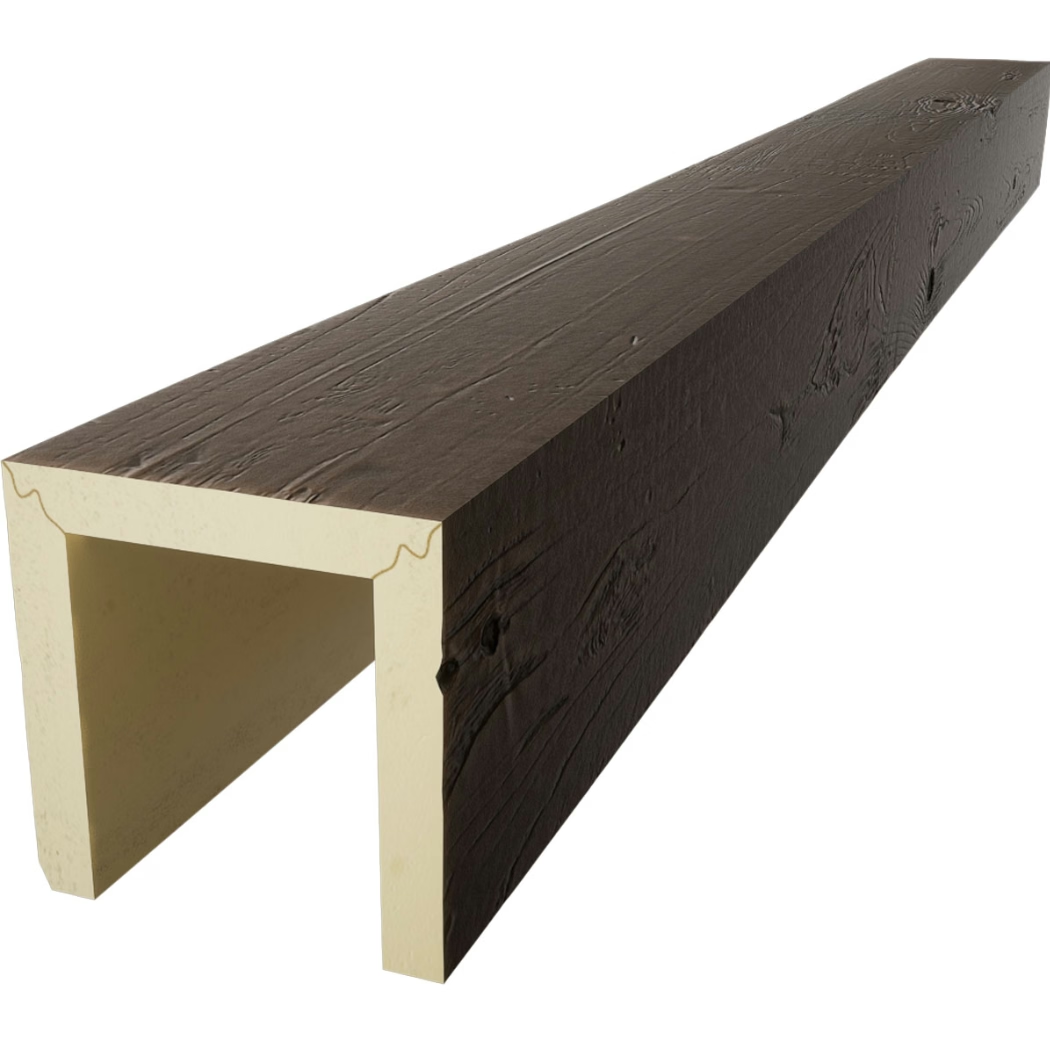
If you are choosing between materials for a new ceiling project, it helps to put dust resistance in context. Raw solid wood beams are the hardest to maintain, since their grain traps dust and their weight makes cleaning risky. Wrapped MDF beams fall in the middle — they have a sealed surface but the wrapping can peel or yellow at the seams. Coated PU faux beams combine the sealed surface with a realistic wood appearance and a fraction of the weight.
For contractors, the weight difference is significant. A coated PU beam at ten feet long typically weighs under twenty pounds, which means one installer can handle it without scaffolding in most rooms. The dust-resistant coating adds almost no measurable weight but saves hours of post-installation cleanup and years of future maintenance.
Buyers should also note that the dust-resistant finish does not interfere with paint or stain touch-ups. If a beam is damaged during installation or modified on-site, a fresh coat of matching sealant restores the protective properties. Most factories sell touch-up kits that include stain, brush, and clear topcoat in one package.

Installation Tips That Preserve the Coating
A few installation habits go a long way toward keeping the coating intact. First, avoid dropping or dragging beams during installation — even though the surface is sealed, sharp impacts can chip the coating at the edges. Second, use clean gloves when handling beams, since oils from bare hands can interfere with how well the coating bonds if touch-up is needed later. Third, store beams in their original packaging until ready to install, and keep them out of direct sunlight during storage to prevent uneven curing of the coating.
If you are installing beams in a kitchen, consider adding a light spray of stainless-steel polish on a cloth and running it along the beam once a month. The polish leaves an invisible anti-static film that helps repel airborne grease particles, extending the time between deeper cleans.
For projects near fireplaces or wood stoves, the dust-resistant coating also helps with soot management. Soot particles sit on the sealed surface rather than embedding in the grain, which means a quick wipe removes them before they stain the finish. Open grain would absorb soot and gradually darken the beam in ways that cannot be wiped away.
What to Look for When Ordering
When you are talking to suppliers about coated PU faux beams, a few specific questions will help you sort marketing claims from actual performance. Ask what type of sealant is used — water-based acrylic and aliphatic polyurethane are the strongest performers. Ask whether the coating is applied to all six sides of the beam or only the visible faces. Ask for UV stability data, particularly if the beams will be installed near skylights or large south-facing windows.
Most reputable manufacturers publish care sheets with their products. If a supplier cannot provide written care instructions or a technical data sheet for the coating, that is a red flag about the overall quality of the product. Established factories treat the coating as part of the product, not as an afterthought.
It is also worth asking whether touch-up coating is available as part of the order. A small bottle of matching clear sealant costs very little but gives installers and homeowners the ability to repair any damage that happens during shipping or installation. Without touch-up coating, a single scratch can become a weak spot where dust starts to accumulate faster than the surrounding surface.
A Long-Term Investment in Cleaner Ceilings
The dust-resistant coating on a PU faux beam is one of those features that seems minor until you live with it. Once you have wiped down a coated beam in thirty seconds and watched the dust come off in a single swipe, the appeal of raw wood beams starts to feel nostalgic rather than practical.
For homeowners planning to stay in a property long-term, the coating pays for itself in saved cleaning time. For commercial property managers, it reduces turnover cleaning costs and helps maintain consistent appearance across units. For designers, it provides a ceiling treatment that stays looking good in photos and in person without constant maintenance calls.
In the end, a dust-resistant coated PU faux beam is not a high-tech marvel. It is a sensible, well-engineered solution to a problem every ceiling owner eventually faces. The factory does the hard work of sealing the surface, and you get to enjoy a beam that looks like timber and cleans like glass.
Technical References
ASTM standards cited in every specification
Test Data
Lab results from internal testing program
Updated 2026
Reviewed against current product specs