
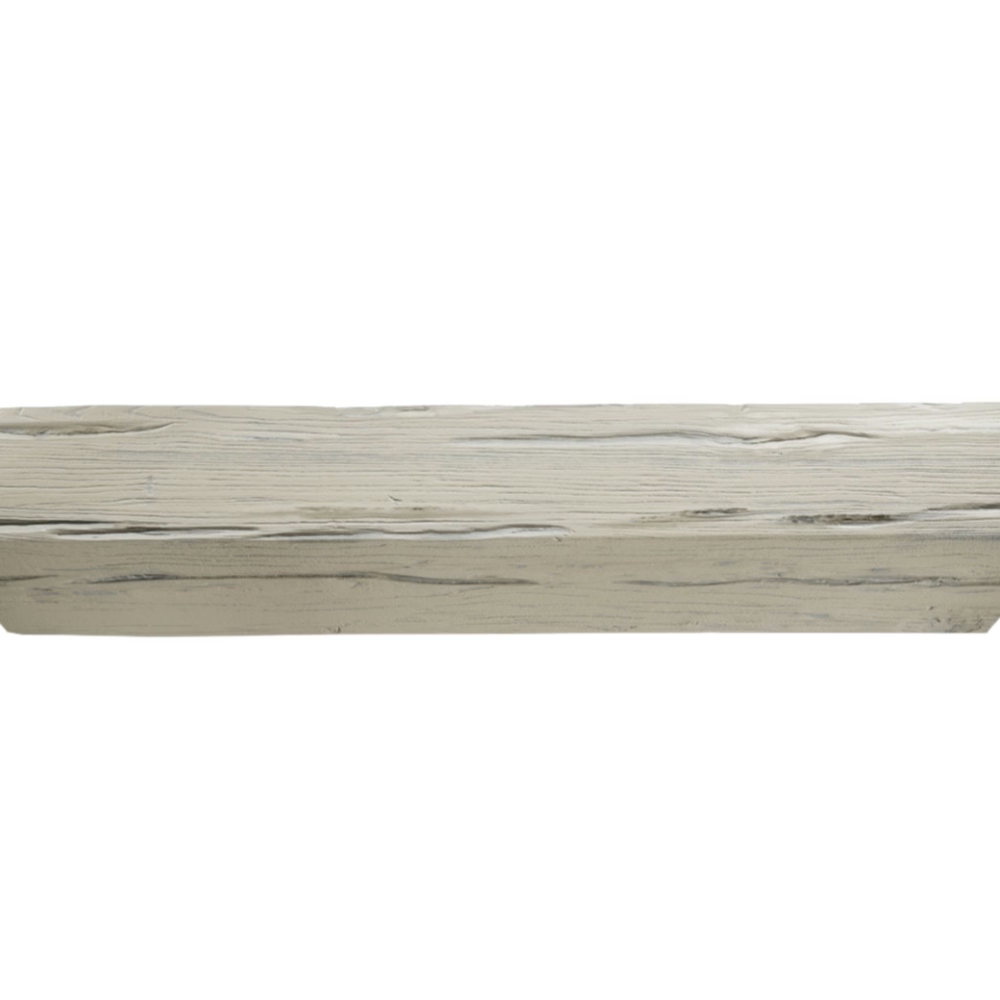
A traditional PU faux beam is typically a single piece that ships in a long box. For most installations, that format works perfectly. But there are situations where a single-piece beam is impractical — narrow stairwells, apartments with size-restricted elevators, shipping containers with limited interior length, or even remote job sites accessible only by small vehicles.
Knock-down portable PU faux beam kits solve these problems by breaking the beam into shorter sections that ship and store compactly, then assemble on-site into a finished beam that looks identical to a single-piece installation. The joint between sections disappears once the beam is mounted, leaving no visible evidence of the assembly.
This format is gaining popularity with both DIY homeowners and professional contractors who appreciate the convenience. The kit includes the sectioned beam parts, alignment hardware, finishing materials, and instructions for joining the sections into a continuous beam.
Why the Knock-Down Format Exists
The single-piece beam format has been the standard for decades because it produces the cleanest finished result. A single piece has no joints, no seams, and no opportunity for the installation to show its modular nature. For installations where a single piece is practical, that format remains the best choice.
The knock-down format exists for the cases where single-piece beams are not practical. The most common situations include delivery to upper floors of buildings without freight elevators, transport in personal vehicles rather than delivery trucks, and shipping to remote locations where oversized packages are difficult.
Manufacturers developed the knock-down format to bring the convenience of PU faux beams to situations that were previously limited to solid timber or other heavy materials. The format has matured to the point where assembled knock-down beams are visually indistinguishable from single-piece installations.
The Trade-Offs
The trade-off for the convenience is more assembly work on-site. A knock-down kit requires the installer to join sections before installing the beam, which adds steps to the process. For installers who value convenience over portability, the single-piece format remains preferable.
For installers who face logistical constraints that make single-piece beams impractical, the trade-off is well worth it. The ability to transport a long beam in a compact car, carry it up a narrow stairwell, or fit it into a small freight elevator opens up installation possibilities that would otherwise be closed.
The finished result of a properly assembled knock-down beam is identical to a single-piece installation. The joints between sections are hidden in the beam's profile and reinforced internally to prevent separation or movement over time.
Anatomy of a Knock-Down Kit
A knock-down PU faux beam kit typically includes two or more sections that combine to form the complete beam, internal joining hardware that connects the sections, alignment shims or guides that ensure the sections line up correctly, finishing materials for any visible joint areas, and detailed assembly instructions.
The sections are usually between four and eight feet long, depending on the total beam length. For a twenty-foot beam, the kit might include three sections of approximately six feet each. For a twelve-foot beam, two sections of six feet each is typical.
The joining hardware is typically a metal or wooden spline that slides into grooves molded into the inside of each section. The spline aligns the sections and provides mechanical strength at the joint. Some kits use multiple splines for added strength.
The finishing materials include color-matched filler for any joint areas that need smoothing, touch-up stain for minor adjustments, and sometimes end caps if the beam terminates in a visible location.
Quality Variations Across Manufacturers
Not all knock-down kits are created equal. The quality of the joining hardware, the precision of the molded joints, and the completeness of the finishing materials vary significantly across manufacturers. Higher-quality kits use precision-molded joints that require minimal adjustment, while budget kits may have noticeable gaps or alignment issues that require more effort to resolve.
The best knock-down kits include pre-mitered ends that produce clean corners without on-site cutting. The mitered ends fit together to form a perfect corner that requires only minor finishing to disappear visually.
When evaluating kits, it is worth ordering from manufacturers that specialize in the knock-down format rather than treating it as an afterthought. The specialized manufacturers invest in tooling and quality control that produce better results.
The Assembly Process
Assembling a knock-down PU beam kit is straightforward but requires attention to detail. The process typically involves laying out the sections in order, joining them using the provided hardware, allowing any adhesive to cure, and then installing the assembled beam as a single unit.
The layout step is important for ensuring the sections are in the correct order. Most kits number the sections or mark them for sequential assembly. Laying them out in order before joining prevents confusion during the actual assembly.
The joining process varies by kit design. Some kits use a sliding spline that connects two adjacent sections. Other kits use internal brackets that screw into both sections. Either design produces a strong joint when properly assembled.
After the sections are joined, adhesive is often applied to the internal joint for additional strength. The adhesive is not always necessary for short-term holding, but it provides long-term durability and prevents any movement at the joint.
Allowing for Proper Curing
Most knock-down kits recommend allowing the adhesive to cure before installation. The curing time varies by adhesive type but is typically between four and twenty-four hours. During the curing period, the joined sections should be supported on a flat surface to prevent any stress on the joints.
Rushing the curing step can compromise the assembly. If the sections are installed before the adhesive reaches full strength, the joint can flex or separate over time, leading to visible gaps or movement.
For installers on tight schedules, some manufacturers offer kits with mechanical joining systems that do not require adhesive. These kits use bolts or cams that lock the sections together with high mechanical strength immediately after assembly.
Where Knock-Down Kits Excel
The knock-down format shines in situations where transportation or access would otherwise complicate a beam installation. Apartments with narrow doors and stairways are common applications, as are historic homes where large deliveries would damage landscaping or architecture.
Vacation homes and remote cabins benefit from the format because the kits can be transported in standard vehicles to locations where delivery trucks cannot easily reach. The homeowner can bring the kit to the property and assemble it in the workspace.
International shipping is another application where knock-down kits offer advantages. The compact package sizes typically cost less to ship than oversized single-piece beams, and the reduced dimensions avoid the surcharges and complications associated with oversized packages.
Limitations to Consider
The knock-down format has limitations that affect its suitability for some projects. The assembled length is typically limited to about twenty feet, because longer assemblies become difficult to handle as single units. For longer runs, multiple knock-down beams can be installed end-to-end, but the joints between beams are visible in the finished ceiling.
The kits are also typically more expensive than equivalent single-piece beams. The additional engineering, hardware, and packaging add to the cost. For projects where the knock-down format is not necessary, the single-piece beams offer better value.
For installers who are not comfortable with the assembly process, the additional steps may offset the convenience of portability. The format is most useful when transportation or access limitations would make a single-piece beam impractical.

Installation Differences
Once assembled, a knock-down PU beam installs much like a single-piece beam. The mounting blocks, the attachment methods, and the finishing steps are essentially identical. The only difference is the additional handling required to position an assembled kit that may be longer or heavier than a single piece.
For assembled beams, having multiple helpers during installation is wise. The assembled length is often longer than typical single-piece beams, and the additional length requires more hands to position correctly.
Once installed, the assembled beam performs identically to a single-piece beam. The joints are hidden inside the beam's profile and do not affect the structural strength, the appearance, or the long-term performance. Homeowners cannot tell whether their beam was a single piece or an assembled kit once it is on the ceiling.
The Practical Takeaway
Knock-down portable PU faux beam kits are a specialized solution for specialized situations. For projects where transportation, access, or shipping limitations apply, they offer capabilities that single-piece beams cannot match. For projects without these limitations, the single-piece format remains the better choice.
The format is worth knowing about for any homeowner or contractor who may eventually face an installation where traditional beams are impractical. The kit format opens up possibilities that would otherwise require expensive workarounds or solid timber that may be unsuitable for other reasons.
For the right project, a knock-down kit delivers the same finished result as a traditional beam with the convenience of a more manageable package. The combination is unique to PU faux beams and represents one of the most practical innovations in the ceiling beam industry.
Technical References
ASTM standards cited in every specification
Test Data
Lab results from internal testing program
Updated 2026
Reviewed against current product specs


