
Walk into any newly built café, coastal cottage, or renovated loft and you might notice ceiling beams that look like they came from an old barn. Look closer and the material tells a different story. More and more of those beams are made from high-density polyurethane foam rather than solid timber, and designers are choosing them not because they are cheap, but because they fit into a wider sustainability strategy. The conversation around decor materials has shifted away from simple aesthetics toward full lifecycle thinking, and polyurethane beams sit squarely in that conversation.
What Makes Polyurethane a Sustainable Material Choice
Polyurethane is a polymer, and like most polymers it starts with petrochemical feedstocks. On the surface that does not sound particularly green. The full picture is more interesting. Faux beams made from PU are remarkably lightweight, which means a single shipping container can carry many times the linear footage it could carry if loaded with solid oak. Less fuel per meter of beam is a meaningful reduction in embodied transport emissions.
The second factor is durability. A polyurethane beam that is properly primed and finished can last decades indoors without warping, cracking, or inviting termites. Long service life means the material does not have to be replaced often, which offsets the carbon cost of producing it in the first place. Sustainability is rarely about one number, and lifecycle thinking rewards products that stay out of the landfill.
A third consideration is wood displacement. Old-growth forests, particularly in North America and Southeast Asia, supply the timber trade that feeds traditional beam construction. Substituting engineered faux beams for solid sawn beams reduces the pressure on those forests. Designers and contractors can still specify responsibly harvested wood when the project requires it, but for ceiling applications where the beam is purely decorative, faux products offer an honest alternative.
Indoor Air Quality and Finishes
A common concern with synthetic decor materials is off-gassing. Reputable faux beam manufacturers now offer low-VOC and zero-VOC formulations, and most use water-based stains and sealants as the final finishing coat. For sensitive spaces like bedrooms, nurseries, and healthcare interiors, this matters. Look for products that carry recognized indoor air quality certifications, and ask suppliers for safety data sheets before specifying.
Weight, Handling, and Waste on Site
Because polyurethane beams weigh a fraction of what solid wood does, installation crews can move them around the job site without heavy lifting equipment. That reduces the chance of jobsite injuries and also limits the amount of packing material, bracing, and offcut waste that ends up in a dumpster. Crews can cut beams with standard woodworking tools, and any scrap can usually be recycled through regional plastic reclamation programs.

Comparing Lifecycle Impact With Real Timber
The honest comparison is not between polyurethane and an idealized timber beam. It is between polyurethane and the average timber beam that ends up in a residential or commercial project. Much of the lumber used for decorative beams travels thousands of miles, is kiln-dried using significant energy, and arrives at the site with moisture content that may not be ideal for the local climate. Warping, checking, and insect damage then shorten the lifespan of the actual product.
Polyurethane sidesteps most of those problems. The beams arrive at consistent dimensions, hold their shape through seasonal humidity swings, and do not require ongoing treatment with preservatives. A simple repaint every decade or so is enough to keep them looking new. Over a typical 30-year service life, the maintenance footprint is small.
There is a place where real timber still wins, and that is structural application. Faux beams are not load-bearing. They are designed to wrap around or attach to existing structural members. For projects where an actual beam is needed to support a roof load, real engineered lumber remains the right answer. For projects where the beam is there for character, proportion, or historical reference, faux is a defensible choice.
Carbon Footprint Considerations
Carbon footprint comparisons depend heavily on the supplier, the finishing system, and the shipping distance. A polyurethane beam manufactured locally and finished with water-based stains can have a smaller carbon profile than an imported solid timber beam. The reverse is also true. Designers running formal lifecycle assessments should request environmental product declarations from shortlisted manufacturers and compare them on a project-by-project basis.
End-of-Life Options
When a polyurethane beam finally does reach the end of its useful life, options include regrinding into composite feedstock, energy recovery in appropriate waste-to-energy facilities, or, in some regions, mechanical recycling into new polyurethane products. Disposal in general construction waste is still possible but less ideal. Specifying a take-back program with the manufacturer can lock in a responsible end-of-life path.
Where Sustainable Faux Beams Work Best
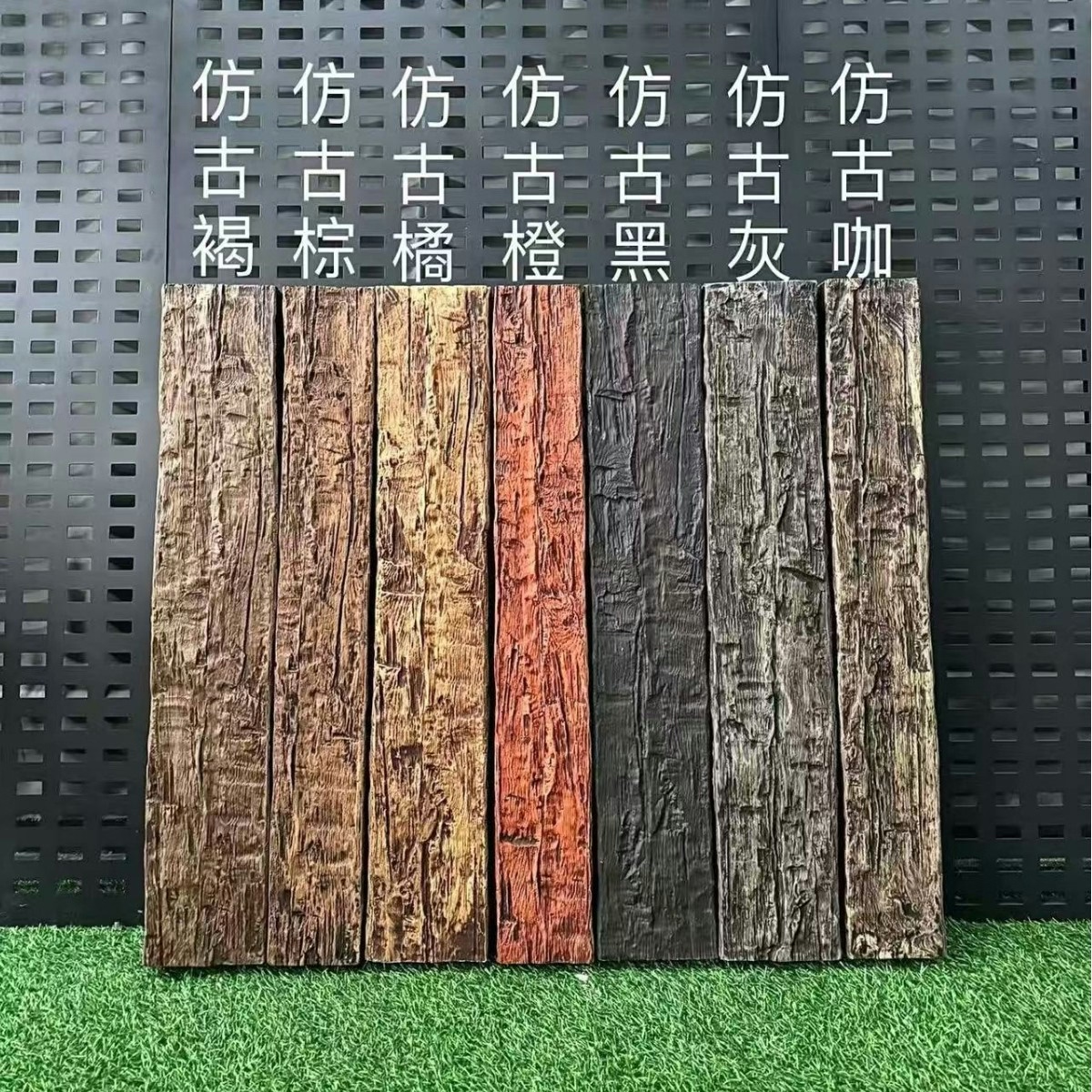
These products show up in three broad project categories. New residential construction where developers are pursuing green building certifications often selects faux beams to lock in points related to material efficiency and indoor environmental quality. Commercial interiors, particularly restaurants and boutique retail spaces, use faux beams to introduce warmth and texture without committing to ongoing wood maintenance. Historic preservation projects also lean on faux beams when the original structure is too fragile to support additional weight, or when the design intent is to recreate a look without altering load-bearing walls.
Across these categories, a few practical rules tend to guide specification. Match the beam profile and texture to the architectural style. Choose a finish that complements the surrounding material palette, including flooring, cabinetry, and trim. And confirm with the manufacturer that the specific product being ordered is rated for the project's climate zone, particularly in spaces with high humidity or temperature swings.
Choosing a Manufacturer Worth Partnering With
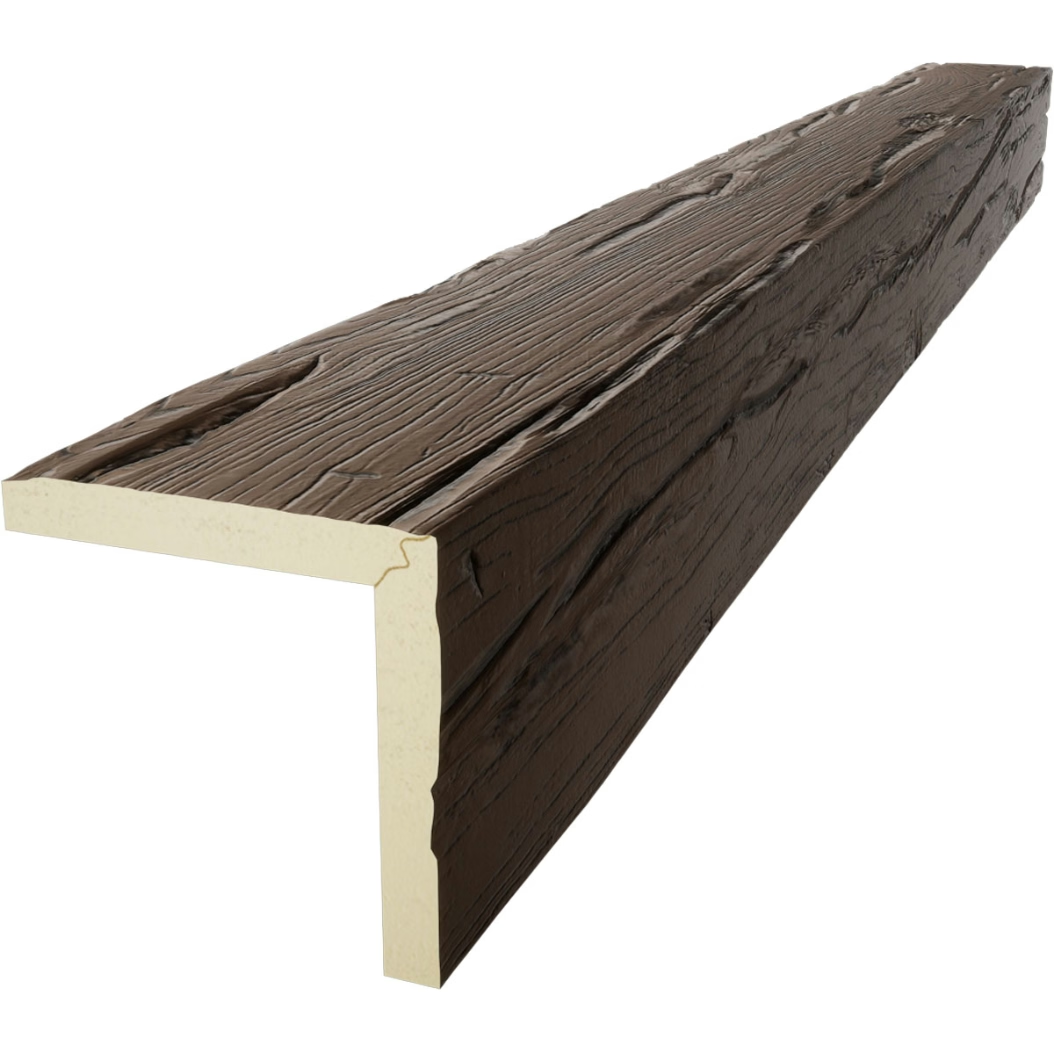
Not every faux beam is built the same way. Higher density products hold detail better, resist denting, and accept finishes more evenly. Cheaper products can look fine on a showroom sample but disappoint on a long ceiling run. Ask for technical data sheets, request finish samples, and, when possible, visit an installed project or showroom before placing a full order. Manufacturers who support their products with installation videos, take-back programs, and warranty coverage tend to be the safer long-term partners.
Communicating the Choice to Clients
For architects and interior designers working with sustainability-minded clients, explaining the choice matters. Many clients assume that natural materials are always the greener option. Walking them through the full lifecycle comparison, including transport, treatment, replacement frequency, and end-of-life, often changes the conversation. When the alternative is a beautiful interior that performs well over decades with minimal environmental intervention, the choice becomes clearer.
Practical Sourcing and Specification Notes
For teams ready to specify polyurethane faux beams, a few details help the project move smoothly. Confirm the beam profile, length, and end detail before ordering. Most manufacturers offer custom lengths to reduce on-site cutting and joint count. Verify the recommended adhesive and mechanical fastener schedule, since faux beams typically attach with construction adhesive and a limited number of finish nails or screws. And coordinate the finish schedule early so the beam color and sheen align with adjacent millwork and ceiling paint.
Lead times for custom finishes can run several weeks, so build that into the procurement timeline. Stock profiles with standard finishes usually ship faster. For international projects, confirm packaging standards, container loading options, and whether the manufacturer can consolidate multiple beam sizes into a single shipment. Consolidated freight lowers the per-meter cost and reduces the environmental footprint of the import process.
Finally, keep a small stock of touch-up materials on site for the inevitable scuff during installation. The same stain or paint used for the original finish will keep the repair invisible. With that, the project is ready to deliver a ceiling that looks like it has been there for generations, even though it was specified just weeks before construction began.
Technical References
ASTM standards cited in every specification
Test Data
Lab results from internal testing program
Updated 2026
Reviewed against current product specs


