
The idea of a tree-free wood beam sounds almost like a contradiction, yet it is precisely what thousands of installers are fitting into new homes every year. Polyurethane technology has matured to the point where a faux beam can pass a careful inspection even from people who work with wood professionally. That capability has opened up a real conversation about what we expect from our decor materials, and whether the warmth of a timber ceiling has to come at the expense of a forest.
What "Tree-Free" Really Means in Decor
A tree-free beam is a decor product made entirely from non-wood materials. The structural core is usually high-density polyurethane foam, sometimes with an internal reinforcement for longer spans. The surface is molded from real timber casts, which is why the grain patterns look authentic rather than printed or obviously fake. The finish is typically a water-based stain and a clear protective coat, both applied in the factory or on site by the finishing trade.
The benefits of this composition go well beyond the obvious "no trees were cut" message. Tree-free beams do not absorb moisture the way solid wood does, so they do not swell in a humid summer or shrink in a dry winter. They do not host insects. They do not require the chemical treatments that pressure-treated lumber needs for outdoor or high-moisture applications. And because the production process is repeatable, every beam in a long run looks consistent from piece to piece.
Honest Disclosure in Marketing
Tree-free does not mean nature-free. Polyurethane is a synthetic material made from petrochemical feedstocks, and the most responsible suppliers are transparent about that. What tree-free means is that no trees are harvested for the visible material of the beam. For projects that need to make a clear sustainability claim, that distinction is important. Marketing copy should reflect the actual benefit rather than overselling the product as a miracle material.
Comparing Tree-Free to Engineered Wood Products
Engineered wood products like LVL, glulam, and cross-laminated timber all use wood fiber, even when they use it more efficiently than solid sawn lumber. Tree-free beams represent a different choice: no wood fiber at all in the visible material. For projects with strict sustainability targets, that difference can matter. For projects that simply want a low-maintenance ceiling beam that looks like wood, both options can work, and the choice often comes down to specific design goals, structural requirements, and budget.
How Tree-Free Beams Are Made
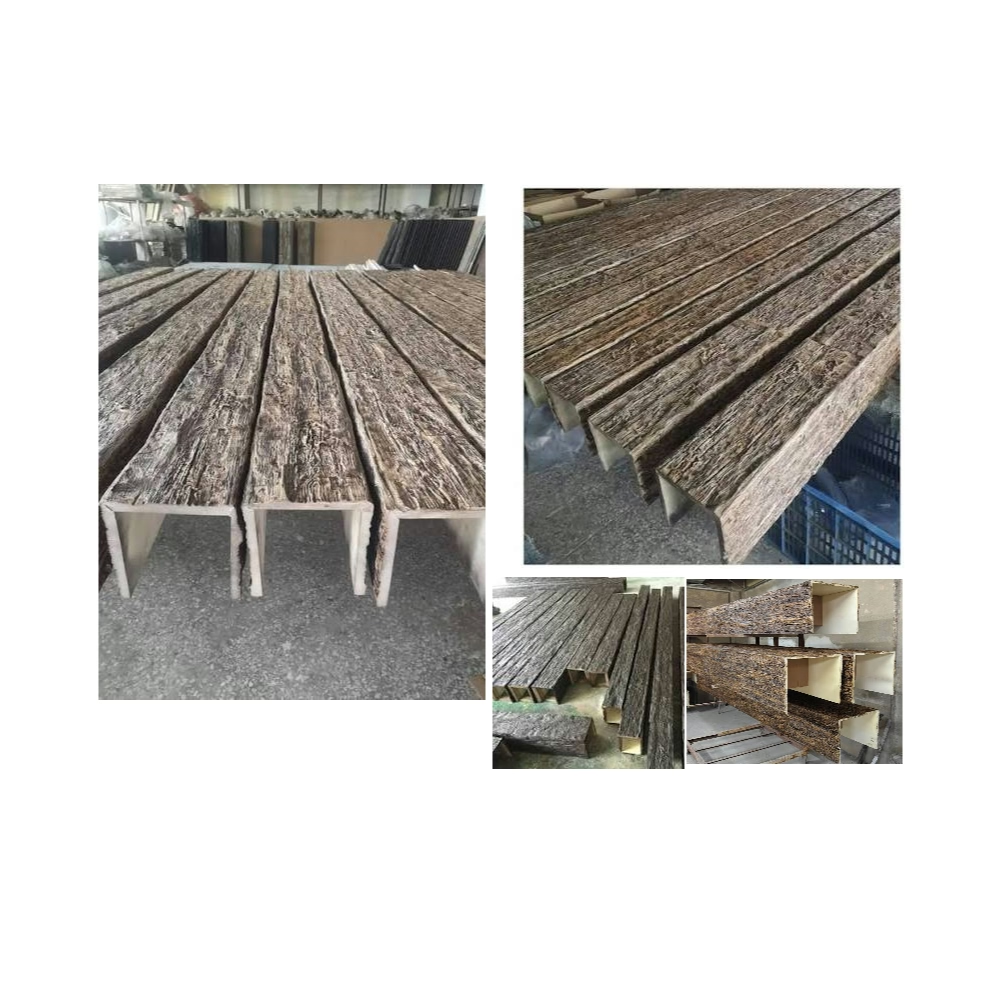
The production process for high-quality faux beams is more involved than it might seem. Manufacturers start with a master casting taken from a carefully selected piece of real timber, capturing the depth and irregularity of natural grain. That casting is used to create a mold, which then receives liquid polyurethane under controlled conditions. The foam expands, fills the mold, and cures into the finished shape.
Density is one of the most important variables. Cheaper products use lower-density foam that can dent easily and lacks the heft needed to feel substantial once installed. Better products use higher-density formulations that resist compression, hold fastener threads, and feel closer to real wood when handled. The price difference between the two is often small enough to justify the upgrade.
After curing, beams are trimmed, sanded, and finished. Some manufacturers apply the full finish system in the factory, which is convenient but limits customization. Others ship beams in a primed state and let the finishing trade handle staining on site, which gives designers more control over the final appearance. Both approaches are valid, and the choice usually depends on project logistics and the desired level of finish consistency.

Where Tree-Free Beams Fit Best
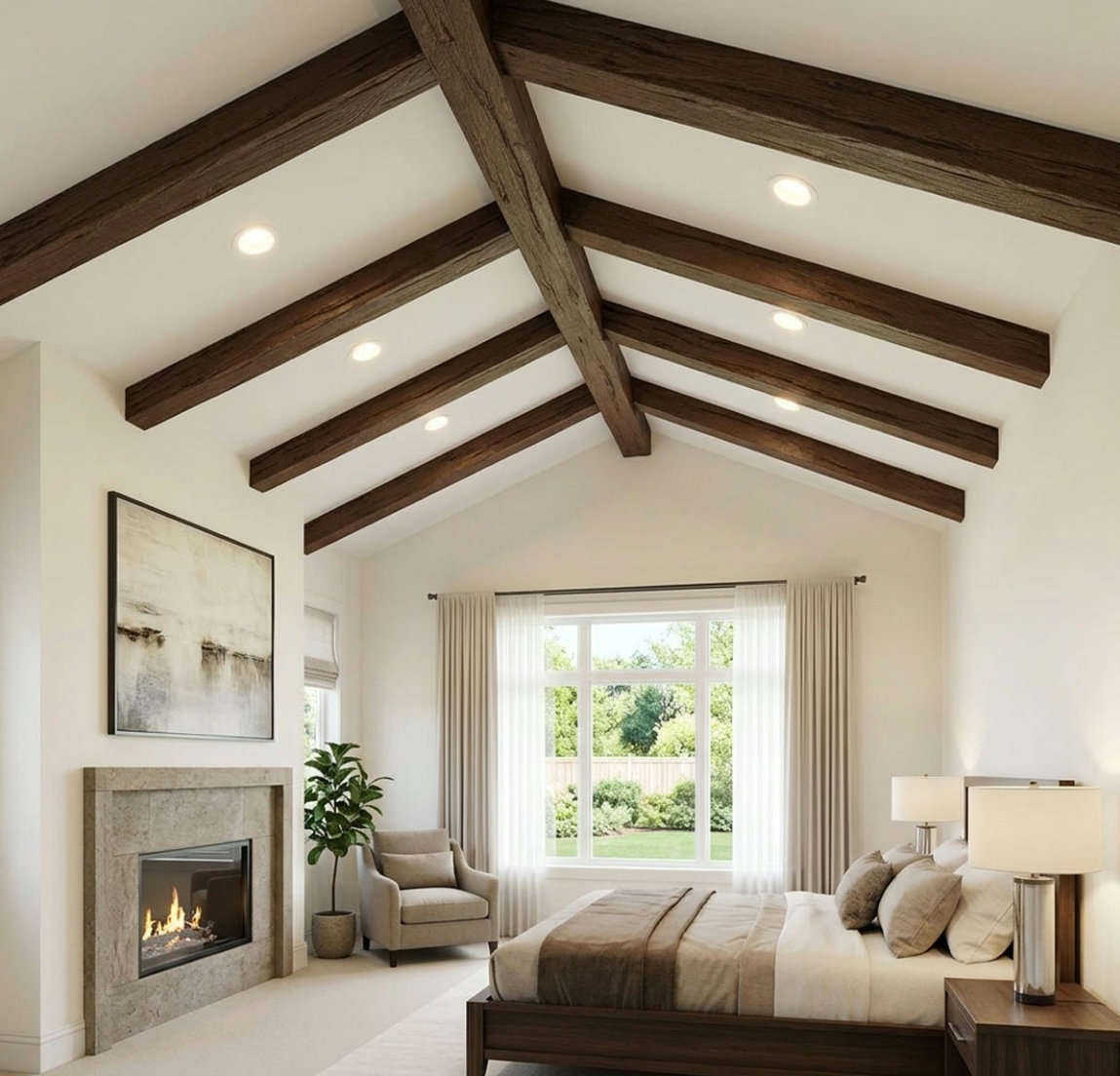
Tree-free beams shine in projects where the design calls for the warmth of timber but the budget, timeline, or sustainability goals rule out solid wood. Residential renovations often use them to add character to a flat ceiling without the mess and complexity of installing structural beams. New construction uses them to dress up great rooms, kitchens, and entryways. Commercial interiors use them to soften hard architectural lines and introduce natural texture into spaces that might otherwise feel sterile.
A few specific applications deserve mention. Coastal homes, where salt air and humidity punish real wood, benefit from the moisture resistance of polyurethane. Mountain cabins and ski lodges, where seasonal temperature swings cause wood to expand and contract, appreciate the dimensional stability of faux beams. And urban apartments, where ceilings are often concrete and structural modifications are difficult or impossible, use them to add visual interest without altering the structure of the building.
Coastal and High-Humidity Applications
In coastal environments, salt air accelerates the degradation of even the most carefully maintained timber. Real wood beams in these locations require frequent refinishing and are prone to checking, splitting, and discoloration. Tree-free polyurethane beams sidestep these issues almost entirely. They do not absorb moisture, they do not host mold or mildew, and they clean easily with a damp cloth. For beach houses, lakeside retreats, and tropical resorts, this is a meaningful practical advantage beyond the sustainability angle.
Historic and Traditional Style Projects
Projects that lean traditional, such as Tudor revivals, craftsman bungalows, and farmhouse restorations, often call for the visual weight of heavy timber. Solid sawn beams of the right scale can be prohibitively expensive or simply unavailable in the lengths and profiles the design requires. Tree-free beams can be custom-cast in nearly any profile, including hand-hewn, weathered, and rough-sawn textures, giving designers the freedom to match any architectural tradition without harvesting old-growth material.
Specifying Tree-Free Beams for a Project
A few specification details make a real difference in the outcome. First, decide whether you want factory-finished or field-finished beams, and align that decision with the project's finishing schedule. Second, confirm the beam dimensions against the architectural drawings, paying special attention to the projection from the ceiling, which affects how the beam reads from below. Third, identify the appropriate fire rating for the occupancy type and the local building code. And fourth, lock in the fastener schedule and adhesive type with the manufacturer's installation guide.
For projects where the beams will wrap around existing structural members, confirm the inside dimensions of the faux beam against the outside dimensions of the structural member. A small mismatch here creates visible gaps or unsightly shimming, both of which are difficult to correct after installation. Most manufacturers offer custom inside dimensions for a modest upcharge, and the savings in installation time usually justify the cost.
Working With Finish Samples
Finish samples are worth requesting before placing a full order. Most manufacturers will send a small set of stained and sealed chips representing their standard finishes, and many will produce a custom sample to match a specific color reference. Lighting in the actual space affects how the finish reads, so the ideal time to evaluate samples is in the room where the beams will be installed, at the same time of day the space is most heavily used. Designers who skip this step occasionally find that a finish they loved in the sample crate reads very differently once it is stretched across a long ceiling run.
Sustainability Documentation
For projects pursuing green certification, documentation is part of the specification process. Request environmental product declarations, safety data sheets, recycled content documentation, and any third-party certifications the manufacturer holds. Compile these into a submittal package that the project's sustainability consultant can review and incorporate into the certification submittal. A well-organized documentation package often accelerates the certification review and prevents back-and-forth requests from the certifying body.
Tree-free beams are not a silver bullet for every project, but they offer a credible alternative to solid timber for decorative applications. When the design calls for the warmth and texture of wood, when sustainability is a real priority, and when budget and timeline favor a manufactured product, tree-free polyurethane beams earn their place in the specification. The result is a ceiling that looks like the building has always had it, even if the trees are still standing where they always were.
Technical References
ASTM standards cited in every specification
Test Data
Lab results from internal testing program
Updated 2026
Reviewed against current product specs


