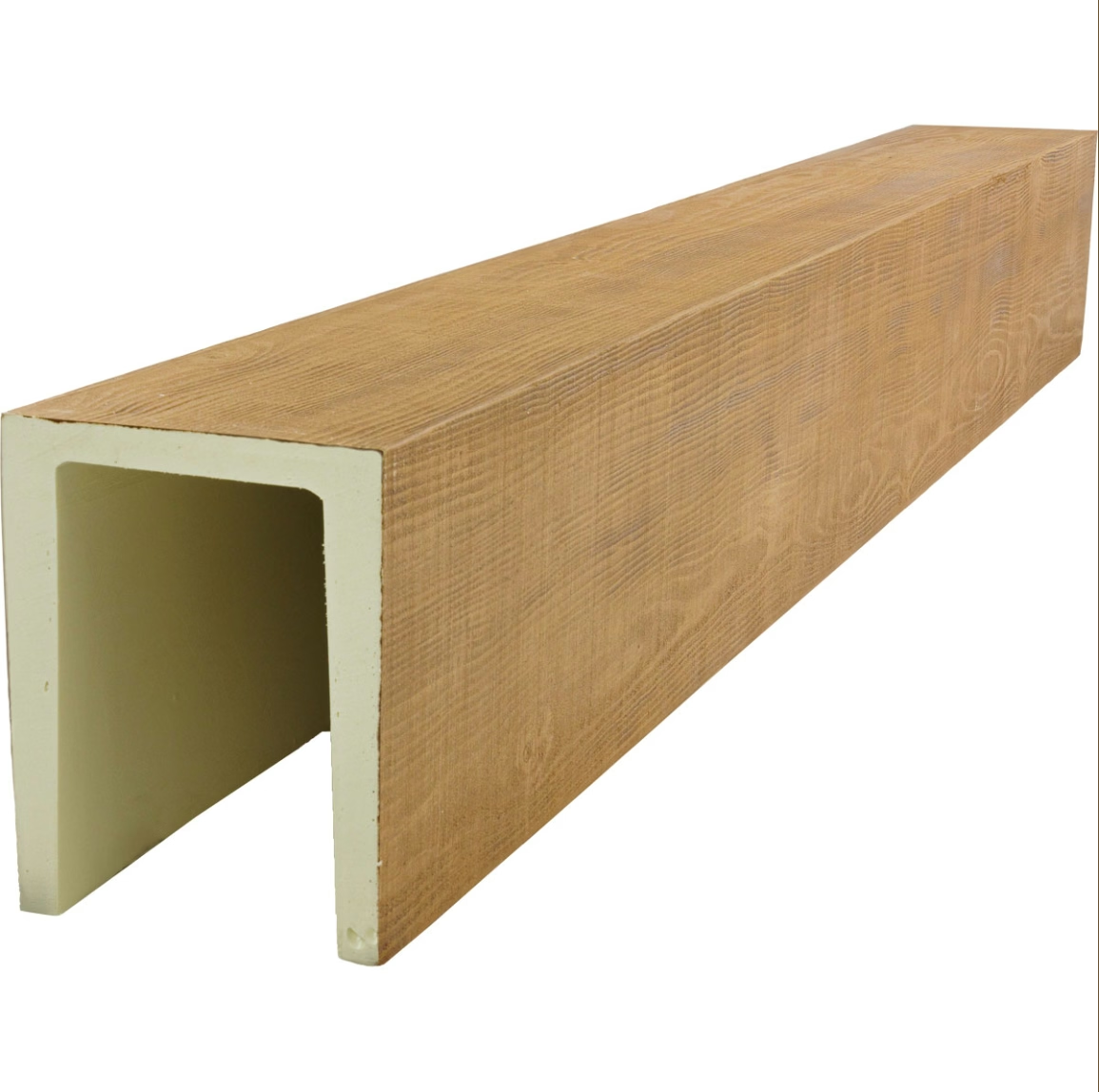
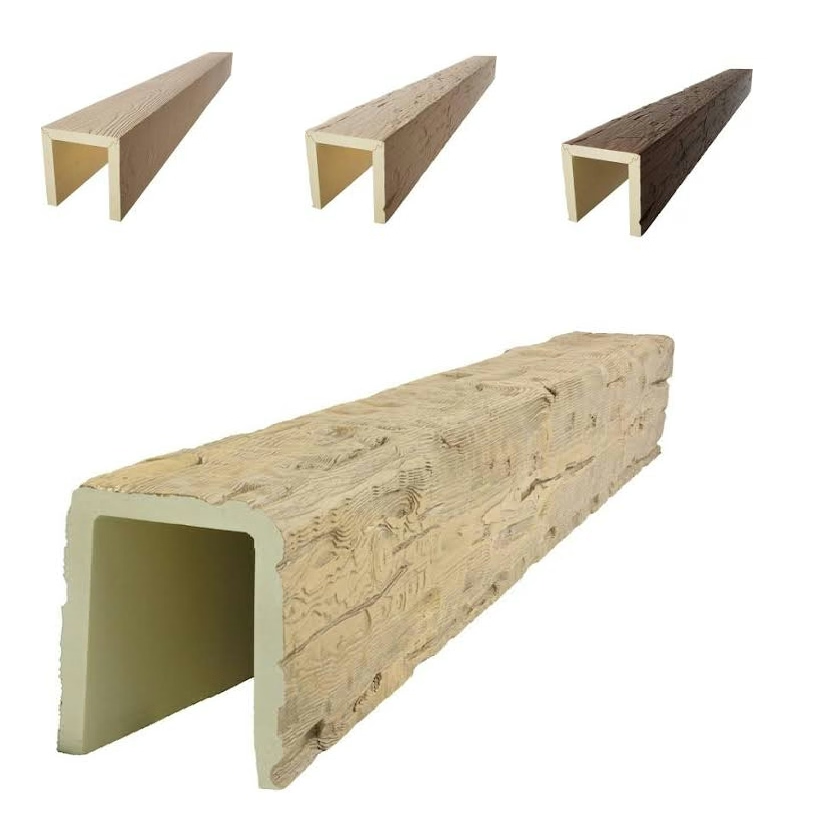
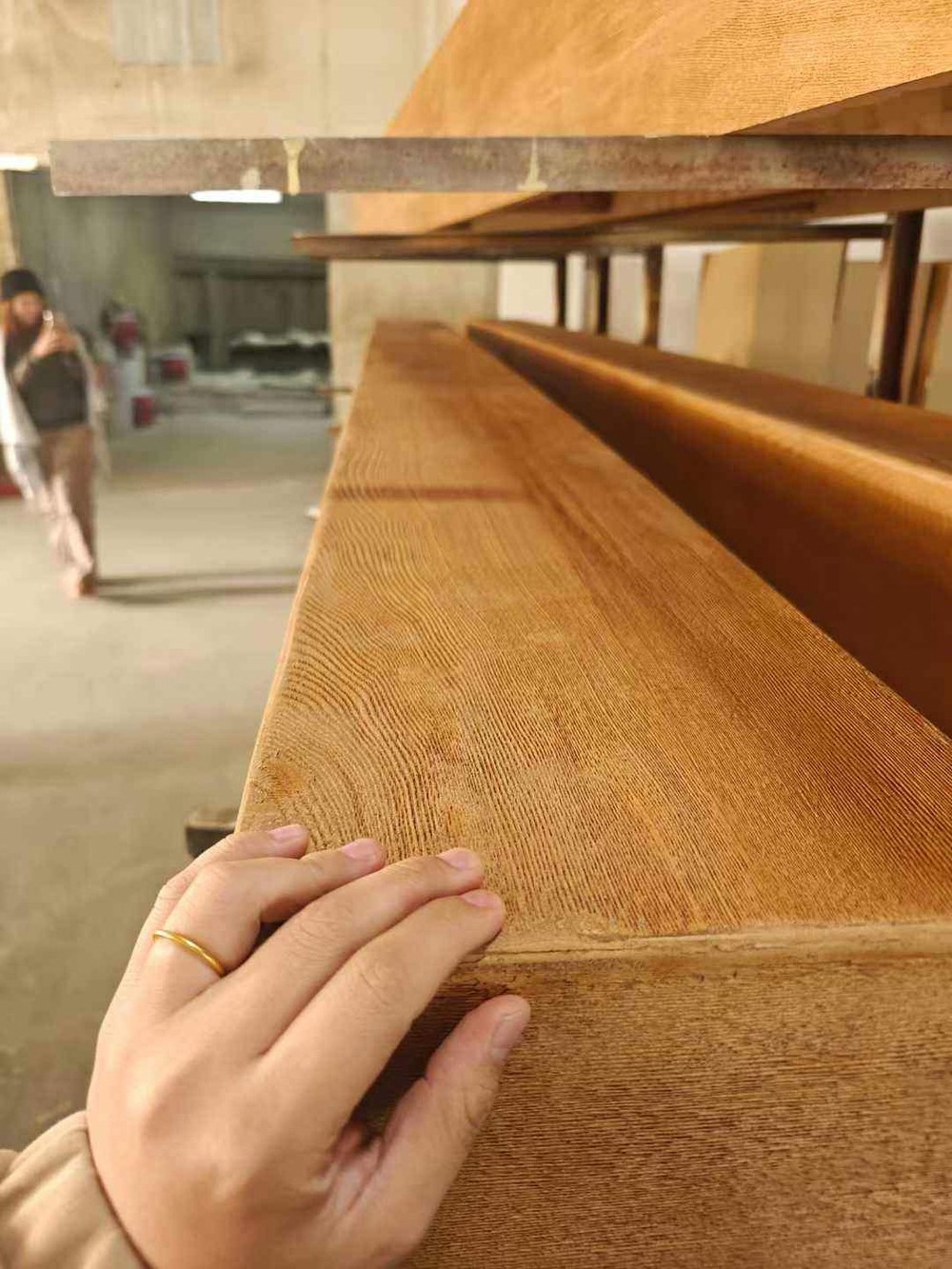
The phrase "export-grade" carries weight in the building materials world. It signals that a product has been manufactured, inspected, and packaged specifically to survive the journey from a production line to a construction site on another continent. For polyurethane faux wood materials, that journey involves weeks of ocean freight, exposure to humidity and temperature swings, and a customs process that demands accurate paperwork. Export-grade production anticipates all of that.
Buyers in distant markets often assume that any polyurethane beam leaving a factory is essentially the same as the next one. In practice, the differences between domestic-grade and export-grade products are meaningful. They show up in pigmentation accuracy, dimensional tolerance, surface coating durability, packaging protection, and the documentation that arrives in the buyer's hands before the container does.
How Export Standards Shape Production
A faux wood material that will travel thousands of kilometers cannot rely on the same finishing tolerances as a product that will be installed the same week it leaves the factory. Export-grade production lines operate with tighter quality gates between each step of the process. Resin batches are checked for viscosity and reactivity before foaming. Pigment lots are matched against reference panels under standardized lighting conditions. The molded parts are inspected for surface consistency, edge sharpness, and grain depth.
After molding, the parts move through a finishing process that may include primer, base coat, glaze, and a UV-resistant topcoat. Each layer is applied in a controlled booth with calibrated spray equipment. Between coats, parts are inspected for coverage and color uniformity. Any out-of-spec piece is pulled aside for rework or rejection. The batch is not released to the packaging line until the quality team signs off.
This kind of process discipline is more expensive than a looser approach, but it pays for itself in reduced claims, faster customs clearance, and happier buyers. Importers who source from suppliers with documented export-grade processes typically experience fewer disputes and lower warranty costs over the life of a project.
Raw Material Selection for Long-Distance Performance
The polyurethane resin used in export-grade faux wood materials is formulated to remain stable across a wide range of conditions. Production facilities located in regions with cold winters and hot summers have to consider the same temperature swings as their finished product will encounter in transit. Special additives are blended into the resin to prevent brittleness at low temperatures and to resist softening or surface deformation at elevated temperatures.
The pigment system is similarly engineered. Outdoor exposure tests verify that the colors hold up under intense UV, since a beam that fades noticeably after a few months in a sunny climate will be a warranty claim waiting to happen. For buyers who intend to use the material in exterior applications, additional UV inhibitors and weather-resistant topcoats can be specified during production.
For applications where fire performance is critical, export-grade materials are often produced with fire-retardant additives that meet ASTM E84 Class B or Class A ratings, EN 13501 B-s2,d0 ratings, or other regional standards. The test certificates are issued by independent laboratories and are supplied with each export shipment as part of the standard documentation package.
Packaging Designed for International Freight
A beam that survives the factory without damage is not yet safe. Once it is crated, the beam has to survive handling at the port, stacking on a vessel, and potentially weeks at sea. Packaging that works for a domestic truck delivery may not be adequate for international freight.
Export-grade packaging begins with individual protection. Each beam is wrapped in a foam sheet that cushions it against neighbors and prevents abrasion of the finished surface. End caps, brackets, and small accessories are packed in reinforced cartons with internal foam inserts. Larger components may be wrapped in corrugated cardboard sleeves or housed in custom-cut foam cradles.
The outer crate is typically built from fumigated timber that complies with ISPM 15 regulations. Heat-treated or methyl-bromide-fumigated wood is required for crates entering dozens of countries, and skipping this step can result in a shipment being refused entry or sent back for fumigation at the importer’s expense. Reputable export suppliers treat every wooden crate and dunnage component to the same standard.
Containers are loaded to optimize space. A 40-foot high-cube container can accommodate a substantial volume of beams, particularly if the beams are nested with the appropriate void fills. The loading plan is shared with the buyer in advance so that the receiving team knows what to expect in each crate and how to plan their unpacking.
Custom Crating for Oversized Items
Some faux wood building materials are too long, too wide, or too awkward to fit in a standard crate. Export-grade suppliers maintain relationships with specialized crating companies that can build custom wooden frames, braced pallets, or even steel-reinforced containers for oversized items. The added cost of custom crating is usually modest compared to the cost of a damaged shipment, and the supplier should be willing to discuss crating options during the quotation stage.
For particularly heavy or delicate items, climate-controlled containers may be recommended. Although polyurethane faux wood is not as sensitive to temperature as some other materials, very long transits through equatorial waters can expose cargo to extreme heat. Ventilated containers or containers with desiccant packs help manage this risk.
Documentation Standards for Smooth Crossings
The paperwork that accompanies an export shipment is as important as the physical product. Export-grade suppliers provide a standard set of documents with every shipment, including the commercial invoice, packing list, certificate of origin, bill of lading or airway bill, and fumigation certificate for wooden packaging.
For shipments to markets that require additional documentation, the supplier prepares the necessary paperwork in advance. This may include a FORM E or FORM A certificate of origin for preferential tariff treatment, a EUR.1 movement certificate for European destinations, or a specific certificate required by customs authorities in regions such as the Gulf Cooperation Council. Material safety data sheets are also standard, even though polyurethane is a stable finished product.
Fire rating certificates, recycled content declarations, VOC emission reports, and product warranty documents are typically available on request. For large or recurring orders, suppliers may store these documents digitally and send them with each shipment automatically. This kind of consistency saves time for the buyer and reduces the risk of missing a critical document during customs clearance.
Common Use Cases Around the World
Export-grade faux wood building materials appear in projects across every inhabited continent. In the Middle East, faux wood beams are popular for hotel lobbies, restaurants, and luxury residences where the look of solid timber is desired without the maintenance or import cost. In Southeast Asia, faux wood provides a wood-like aesthetic in humid climates where real timber tends to warp, crack, or attract insects. In Latin America, faux wood is favored for resort developments that need to ship materials to remote or coastal locations.
European buyers often specify faux wood for renovations where conservation regulations restrict the use of new solid timber, particularly in historic structures. North American buyers typically appreciate the speed of installation and the consistency of appearance across large residential developments. African buyers value the reduced shipping weight and the speed with which faux wood projects can be completed in markets where solid timber is expensive.
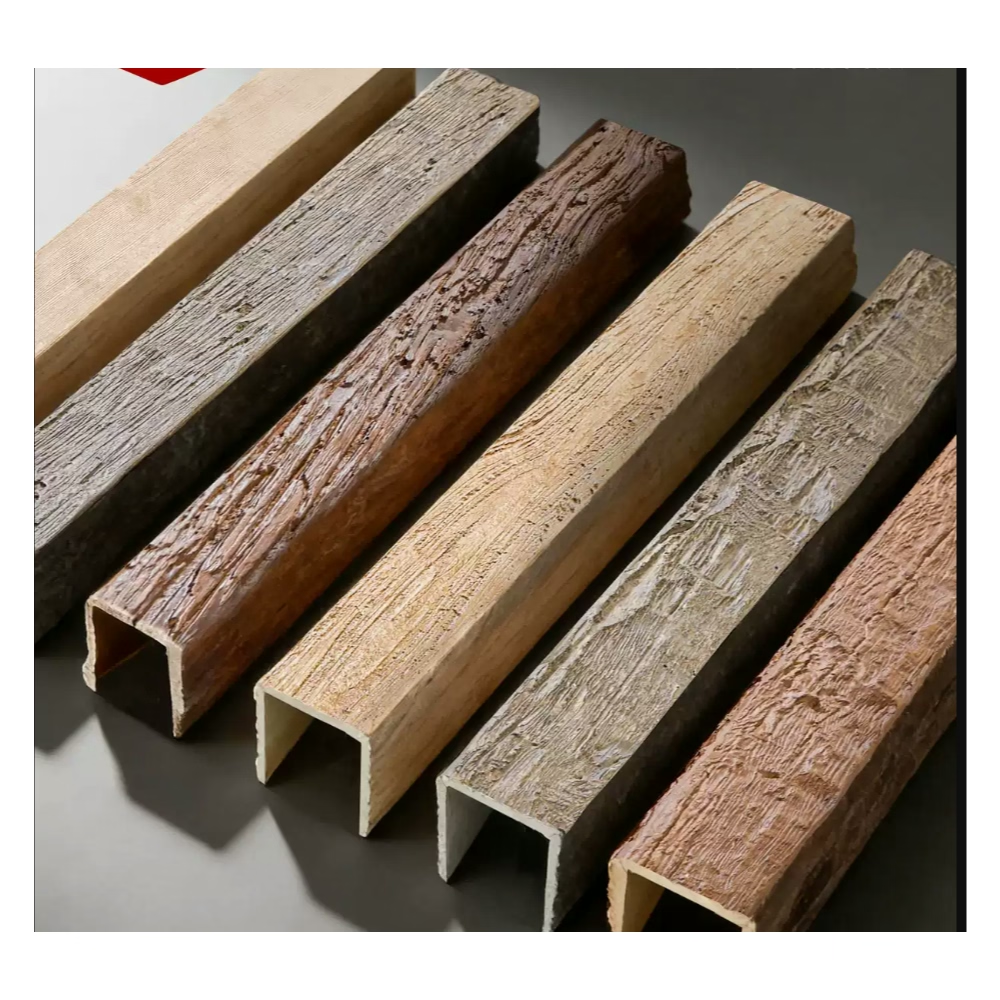
Each of these markets has its own aesthetic preferences. A faux wood beam for a Scandinavian interior is likely to be a light, brushed oak tone. A beam for a Middle Eastern hotel may be a deep walnut. A beam for a tropical resort might be a weathered driftwood gray. Export-grade suppliers maintain color libraries that cover these regional preferences, and many offer custom color matching when an order is large enough to justify the setup.

Evaluating a Supplier for Export Work
The right export partner does more than make good product. They communicate clearly, prepare accurate documents, and stand behind their work when something goes wrong. Buyers evaluating faux wood suppliers for export should ask several pointed questions. What is the production capacity in units per month. Can the supplier provide references from buyers in the same destination market. What is the standard lead time from purchase order to ex-factory. What documentation is included with each shipment as standard, and what is available on request.
Sample shipments are a useful tool before committing to a large order. A sample crate of three or four beams plus accessories gives the buyer a chance to evaluate product quality, packaging protection, and documentation accuracy before investing in a full container. The cost of a sample shipment is small compared to the cost of receiving a full container that fails to meet expectations.
Site visits to the production facility are valuable when the relationship is likely to grow. Buyers who visit in person gain firsthand insight into the production capacity, the quality control processes, and the people who will be managing their orders. Even when travel is not practical, video tours of the factory can provide a meaningful sense of the operation.
The Future of Export-Grade Faux Wood
As sustainability regulations tighten in major markets, the demand for faux wood products that can demonstrate responsible sourcing is increasing. Export-grade suppliers are responding by offering products with recycled content, low-VOC finishes, and certifications that allow the buyer to claim sustainability credits for their projects. Carbon footprint documentation is becoming more common as well, particularly for buyers who must report on the embodied carbon of their material choices.
Digital documentation is also reshaping the export process. Electronic bills of lading, digital certificates of origin, and online document portals are reducing the time and cost of moving paperwork across borders. Suppliers that have invested in these systems are finding that they can offer faster, more transparent service than competitors still relying on paper-based processes.
The combination of consistent product quality, reliable packaging, accurate documentation, and forward-looking sustainability practices is what defines export-grade faux wood building materials. Buyers who prioritize these qualities position themselves for projects that complete on time, on budget, and to the standard their clients expect.
Technical References
ASTM standards cited in every specification
Test Data
Lab results from internal testing program
Updated 2026
Reviewed against current product specs