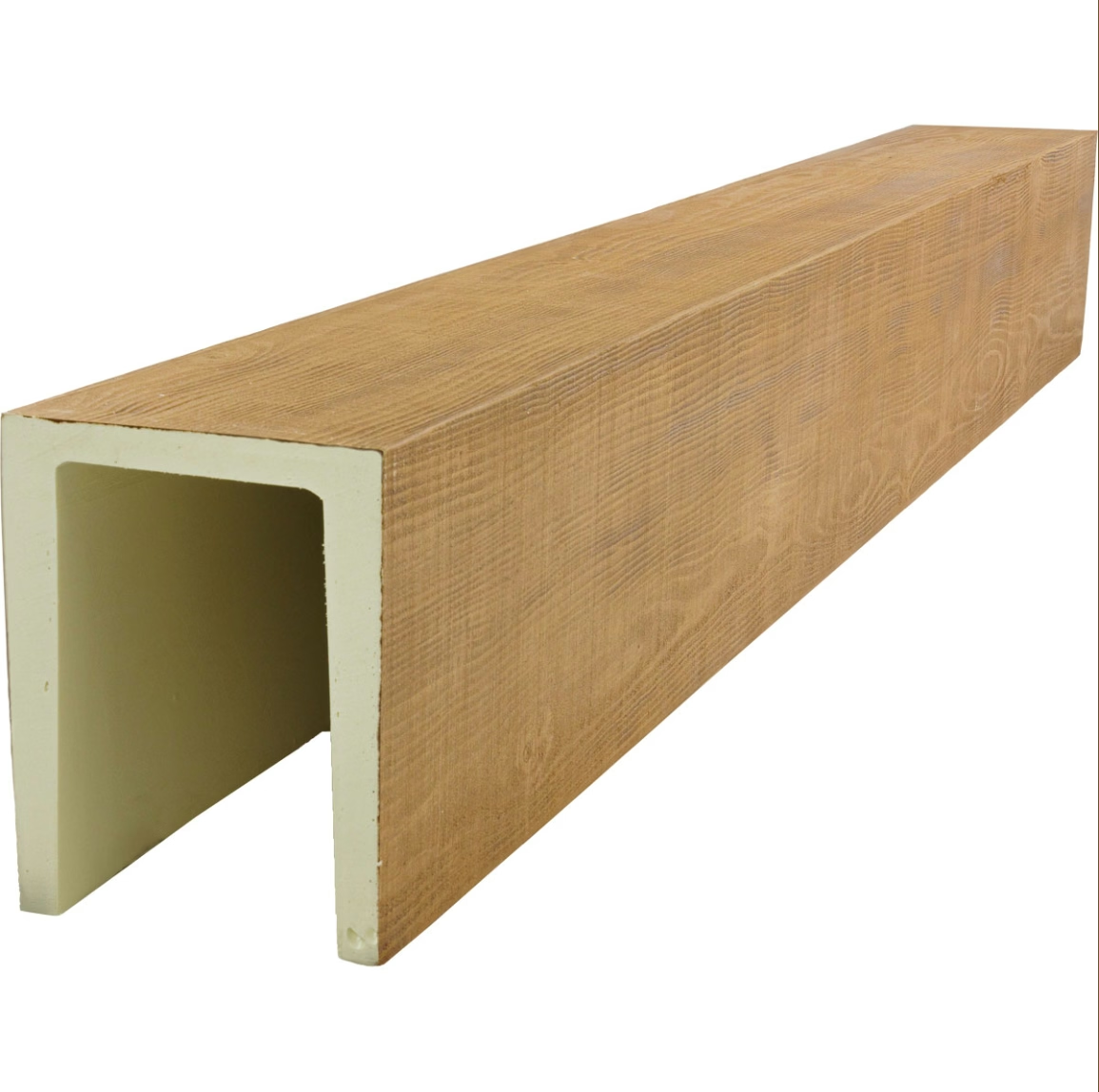
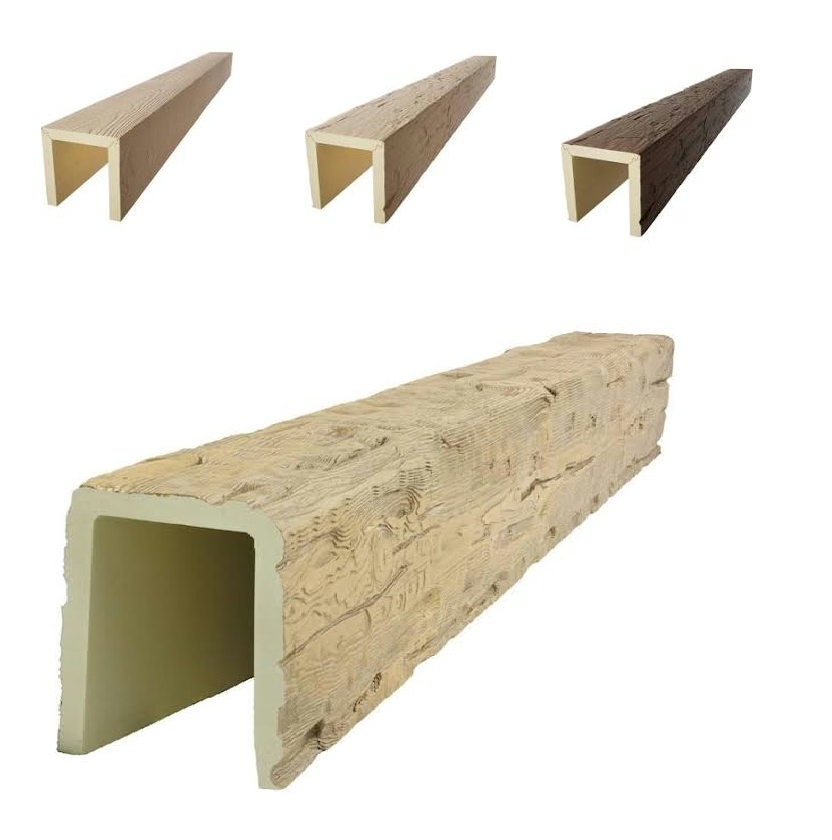
The phrase master craft carries an expectation. It suggests work done by a person with decades of experience, working by hand with traditional tools, producing one piece at a time. A genuinely master-crafted wooden beam represents the kind of skill that takes a lifetime to develop. The cost of such work reflects the time invested.
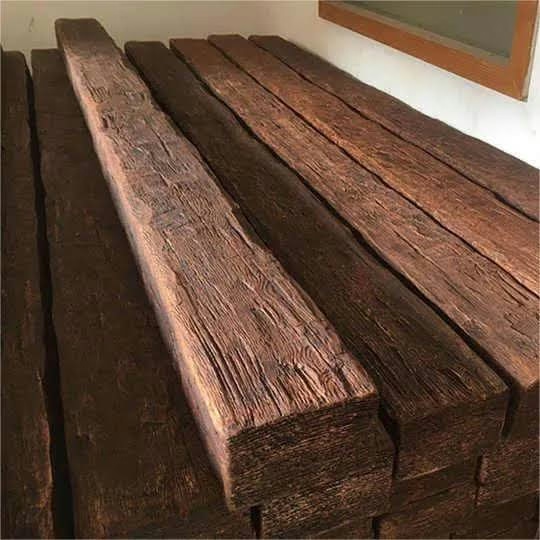
Polyurethane faux beams cannot replace that human skill, but they can reproduce its visual result. Premium polyurethane beams now carry details that mimic the marks of master craftsmen working in wood: the deep gouges of a hand-hewn timber, the crisp chamfers of a planed edge, the subtle tool marks that distinguish a hand-finished surface from a machine-finished one. The same mold produces every beam in an order, so the master craft look is reproduced consistently across the entire project.
What Defines Master Craft Detail
A master craft detail on a wooden beam is the kind of element that the eye notices but the mind struggles to name. It might be a slight irregularity along an edge that suggests the beam was hand-shaped rather than machine-milled. It might be a series of small facets across the surface that catch light differently depending on the viewing angle. It might be the gentle sweep of a chamfer that transitions from one face of the beam to another.
These details are what separate a premium beam from a commodity beam. A commodity beam is straight, uniform, and predictable. A master craft beam is straight but not perfectly so, uniform but with subtle variation, and predictable in its character but not in its precise shape. The human eye reads the variation as authenticity and the consistency as quality.
Polyurethane beams at the premium end of the market now include these details. The molds are created from hand-carved originals that were produced by skilled woodworkers. The negative captures every chisel mark, every drawknife stroke, every irregularity that the original craftsman left behind. When the polyurethane is cast in that mold, the detail transfers to the new beam.
Types of Master Craft Detail
Several categories of detail appear consistently in premium faux beams. Hand-hewn texture mimics the marks of axes and broad chisels used to shape timbers before the era of mechanized milling. The texture is irregular and dramatic, with facets that vary in depth and direction. This detail works in traditional, rustic, and historical reproduction settings.
Rough-sawn texture mimics the marks of large circular saws used in early sawmills. The marks are parallel and consistent but with subtle variations that distinguish them from modern band-sawn surfaces. This detail works in farmhouse, transitional, and industrial settings.
Hand-planed texture mimics the marks of hand planes used to smooth timber surfaces. The marks are subtle and directional, with the slight irregularities that come from a blade guided by hand. This detail works in refined traditional and craftsman-style settings.
Chamfered and rounded edges mimic the slight softening of edges that occurs when timber is worked by hand or aged naturally. The chamfers may be uniform along the length of the beam, or they may vary slightly to suggest the organic irregularity of hand work. This detail works in virtually any setting because the edge treatment is what the eye notices most on a beam seen from below.
The Production Process for Premium Details
Creating a premium faux beam starts with a hand-carved original. A skilled woodworker shapes a timber to the desired profile, working with traditional tools to produce the master craft look. The original is then used to create a mold. The mold can be made of silicone, fiberglass, or steel, depending on the production volume and the level of detail required.
For very deep detail or large production runs, the mold is often made of cast aluminum or machined steel. These materials hold their shape across thousands of casts, which is essential when the goal is consistency across a large order. For smaller runs or less demanding detail, silicone molds can be sufficient and are faster to produce.
The polyurethane is cast into the mold under controlled conditions. Temperature, pressure, and cure time are all managed to ensure that the detail transfers cleanly from the mold to the finished beam. After curing, the beam is removed from the mold, finished, and inspected. Beams that do not match the reference standard are rejected and the mold may be cleaned or repaired before the next cast.
This process is more expensive than producing a commodity beam, but the result justifies the cost. The detail is consistent from beam to beam, the finish is applied under controlled conditions, and the production lead time is shorter than the time required to produce a similar number of hand-crafted real timber beams.
Where Master Craft Detail Makes the Difference
Some projects require master craft detail because the design demands it. A historical reproduction, for example, has to match the character of the original building as closely as possible. A faux beam that looks too clean or too uniform breaks the illusion. Master craft detail allows the new beam to blend with the existing architecture.
Custom homes often specify master craft detail because the owners want a level of character that commodity products cannot provide. The beams in a custom home are visible architectural elements, and the owners want to feel that the beams were made with care rather than mass-produced.
High-end hospitality projects also favor master craft detail. A boutique hotel or a flagship restaurant is meant to feel unique, and the beams contribute to that feeling. Visitors notice the details, even if they cannot articulate what they are noticing. The hand-hewn facets, the irregular chamfers, and the tool marks all contribute to an impression of craftsmanship and quality.
Luxury retail environments use master craft detail in the same way. A high-end boutique that wants to feel curated rather than commercial can use the ceiling as a way to signal quality. Beams with master craft detail tell the customer that the brand values craftsmanship and is willing to invest in it.
Beams That Are Meant to Be Touched
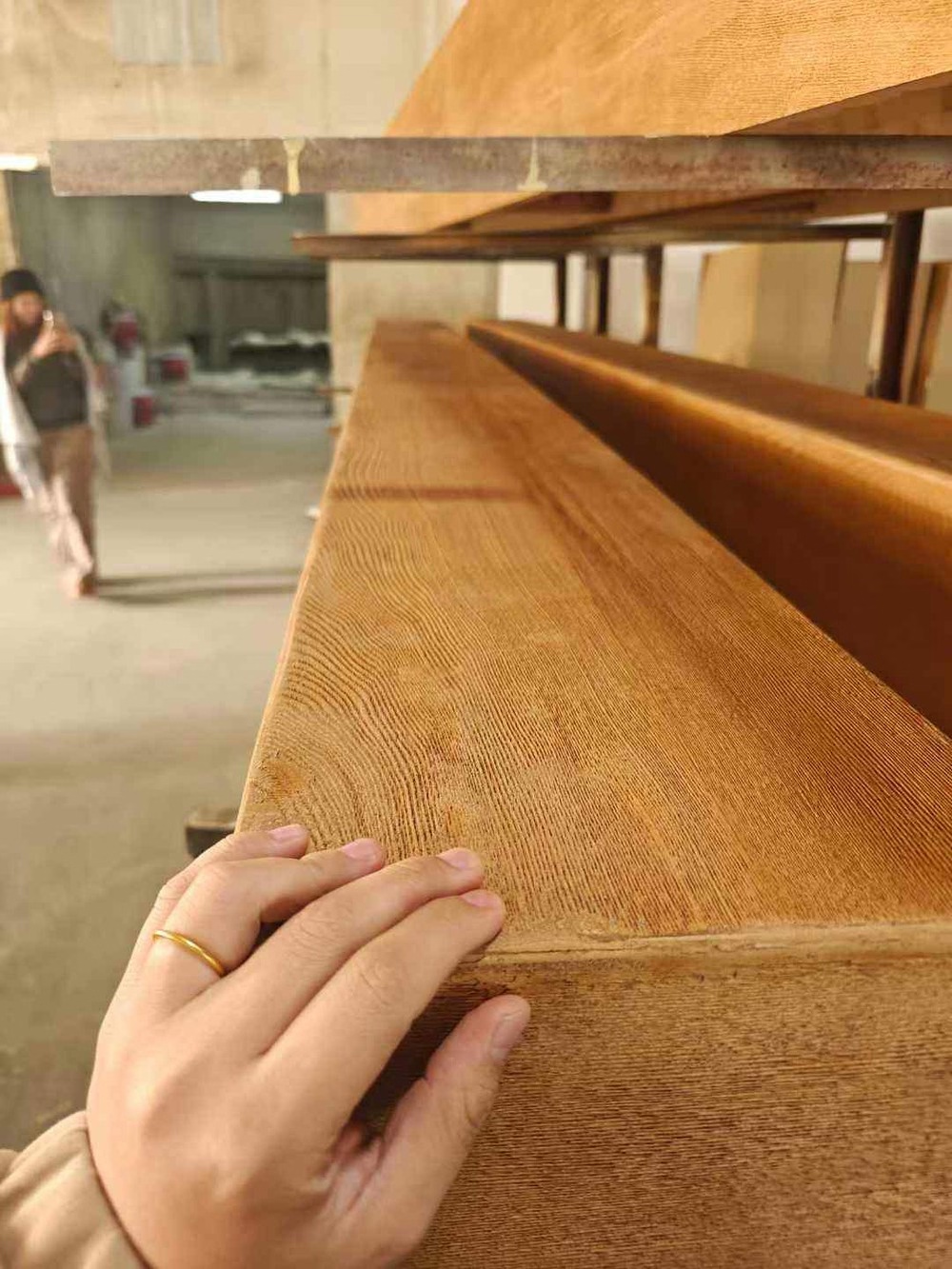
In some installations, the beams are within reach and are meant to be touched. A low-ceiling library, a wine cellar, a covered outdoor living space, or a stairwell with a low soffit all bring the beams into physical contact with the occupants. In these settings, the master craft detail is felt as well as seen.
The hand-hewn texture of a premium faux beam feels like wood. The slight irregularities in the surface, the soft chamfers along the edges, and the warm feel of the finish all contribute to a tactile experience that matches the visual impression. Polyurethane does not feel exactly like wood, but premium finishes now come close enough that the difference is hard to detect without a careful inspection.
For installations where the beams are truly meant to be appreciated by touch, samples should be evaluated in person. A printed catalog or a digital rendering can show the visual detail, but the tactile experience requires a physical sample. Reputable suppliers are happy to provide samples for projects that require this level of evaluation.
The Limitations of Master Craft Detail
Premium faux beams can carry remarkable detail, but there are limits. Very fine carving, such as the kind found on a baroque or rococo piece, is difficult to capture in a polyurethane mold. The undercuts that give carved wood its depth become fragile in a molded material. For projects that require extremely fine detail, real wood remains the better choice.
The depth of detail is also limited by the production process. A hand-hewn facet on a real timber might be a quarter inch deep in places, with significant variation from one side of the beam to another. Polyurethane molds can capture detail at this depth, but the deeper the detail, the more challenging the mold and the casting. For most projects, the detail depth is well within what polyurethane can handle.
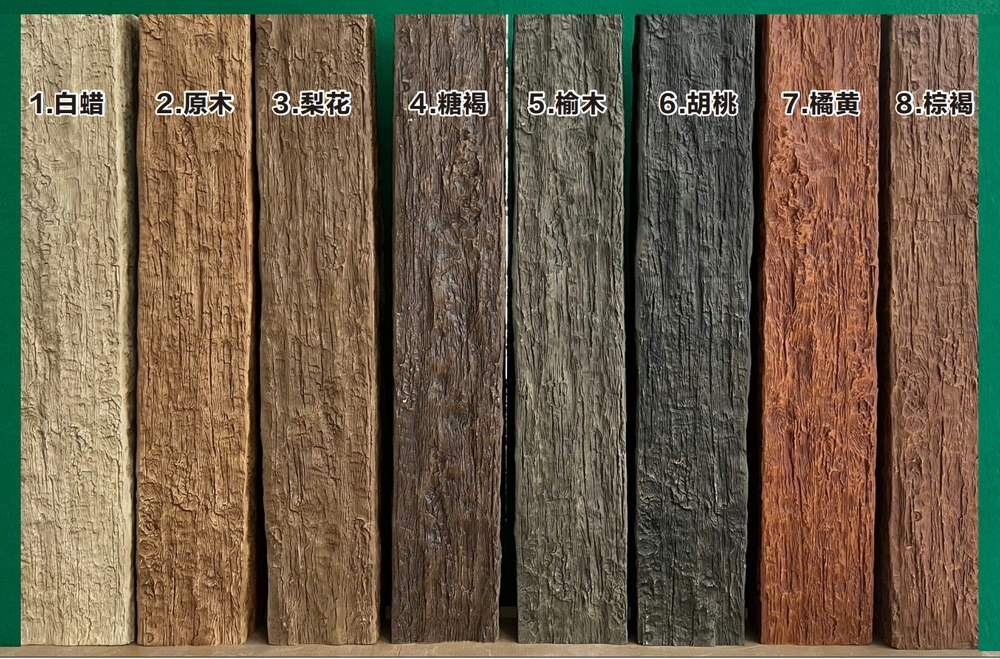
Color is another consideration. Premium faux beams can be finished to match virtually any wood tone, but the depth of color in real wood comes from the way light penetrates below the surface. Polyurethane surfaces are opaque, and the color is a surface effect rather than a throughout property. For projects where the beams will be viewed under raking light or examined closely, this difference may be noticeable.
For most installations, these limitations are not significant. The beams are viewed from a distance, under normal lighting, and at angles where the surface color reads accurately. The master craft detail is what the eye registers, and the polyurethane beams deliver that detail consistently and reliably.
Comparing Real Wood and Premium Faux
A skilled woodworker can produce a master-crafted real timber beam that captures all the detail of hand work. The beam will look and feel authentic. It will also be heavy, expensive, slow to produce, and prone to the dimensional movement that comes with seasonal humidity changes.
A premium faux beam produces the same visual result at a fraction of the weight and cost. The detail is consistent from beam to beam, which is difficult to achieve with hand work. The lead time is shorter. The maintenance requirements are lower. The beam will not warp, crack, or check over time.
For projects that require many beams with consistent detail, faux is often the only practical option. A historical reproduction that needs twenty beams of identical character would be prohibitively expensive in real wood, and the variation between beams would be obvious. Faux delivers the consistency that the project requires.
For projects that require a single, unique, master-crafted piece, real wood may still be the better choice. A single carved fireplace mantel, for example, can be produced by a woodworker and can be a one-of-a-kind piece. The economics and the practical considerations favor real wood for very small quantities.
The decision depends on the project. For most installations where master craft detail is wanted across multiple beams, premium faux is the practical answer. For installations where a single piece is meant to be a unique artistic statement, real wood still has its place.
Choosing a Supplier for Premium Detail
Not every polyurethane beam producer can produce premium detail. The molds, the production process, and the finishing line all have to be capable of working at the level required. Buyers evaluating suppliers for premium projects should ask about the mold production process, the curing cycle, and the quality control procedures.
Sample beams are essential. A premium faux beam should be compared side by side with a real timber reference to confirm that the detail is convincing. The sample should also be evaluated under the lighting conditions of the actual project, because detail that looks correct under fluorescent light may look different under LED or natural light.
Production lead times for premium beams are typically longer than for standard production. The molds have to be prepared or selected, the production batch has to be scheduled, and the finishing process may require additional steps. A supplier who can deliver premium detail on a reasonable schedule is a more reliable partner than one who promises premium detail on a standard lead time.
The Value of Detail
Master craft detail is what separates a beam from architecture. A plain beam is a structural element. A master-crafted beam is a piece of the building's story. Premium faux beams now make that level of detail available to projects of every scale and budget, and the consistency of polyurethane production makes it possible to deliver the same level of craftsmanship across dozens of beams without compromise.
Technical References
ASTM standards cited in every specification
Test Data
Lab results from internal testing program
Updated 2026
Reviewed against current product specs