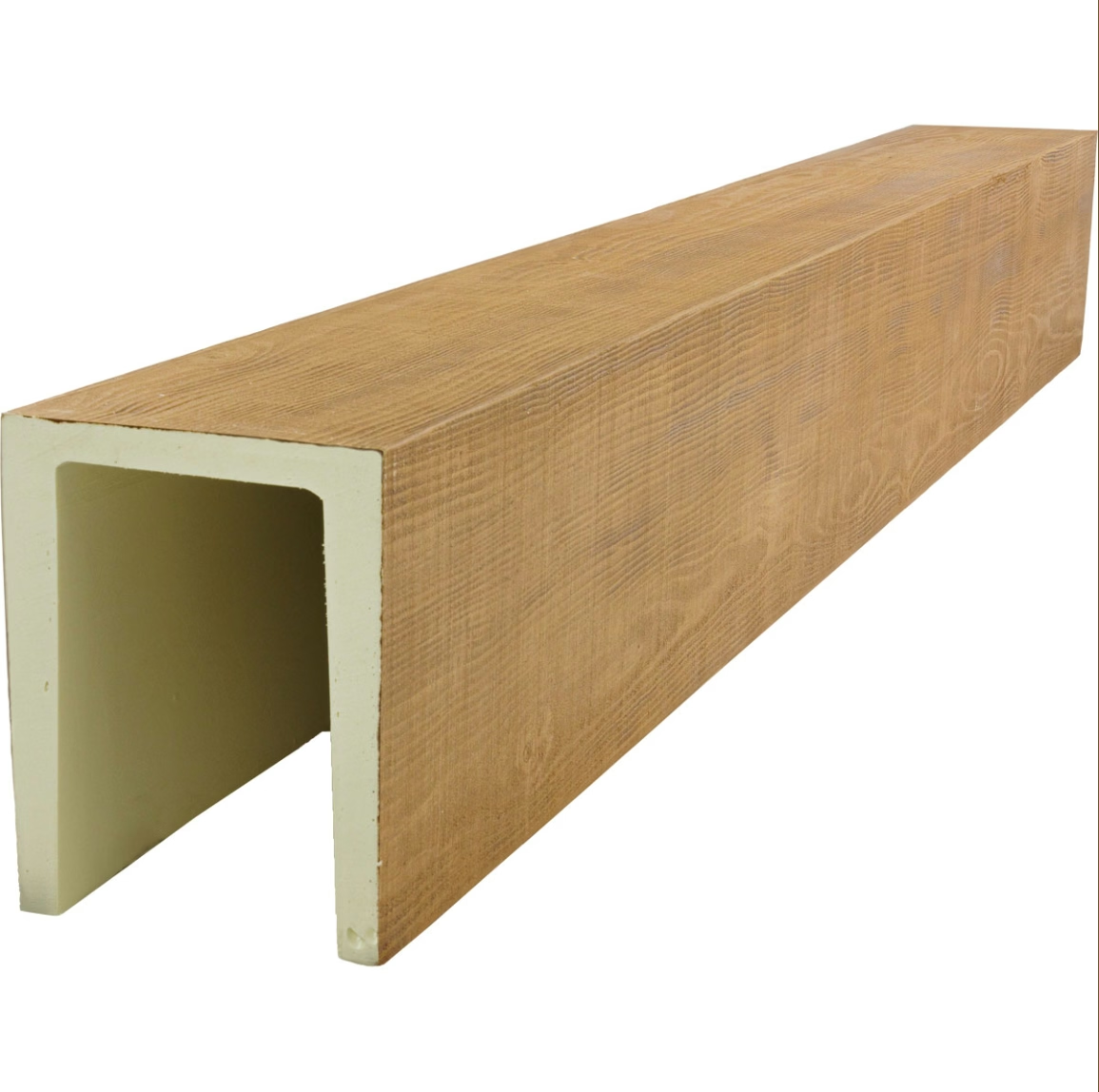
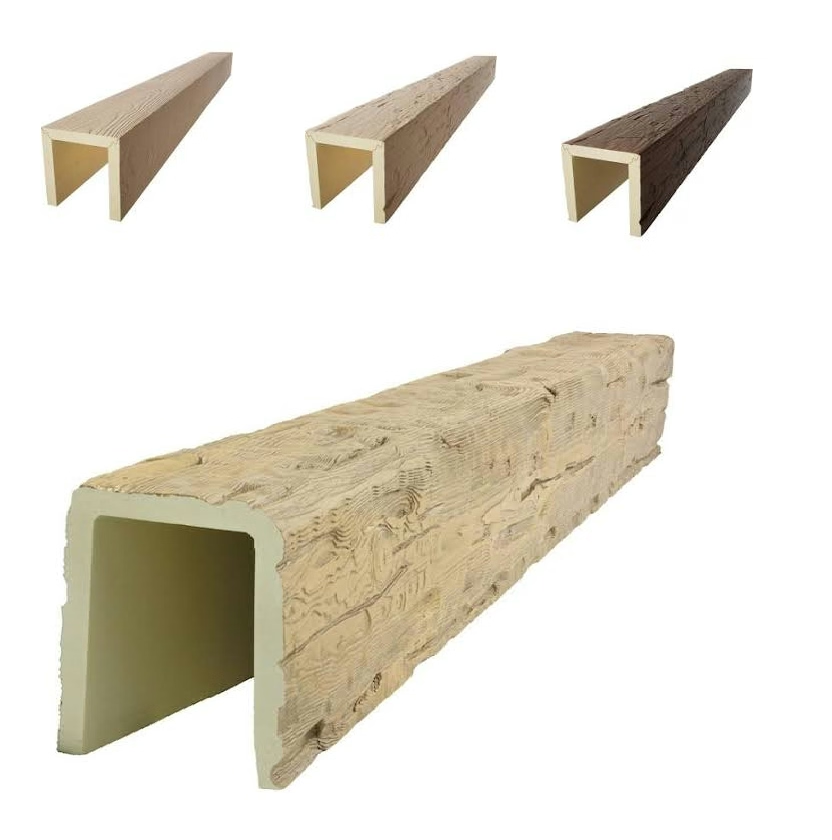
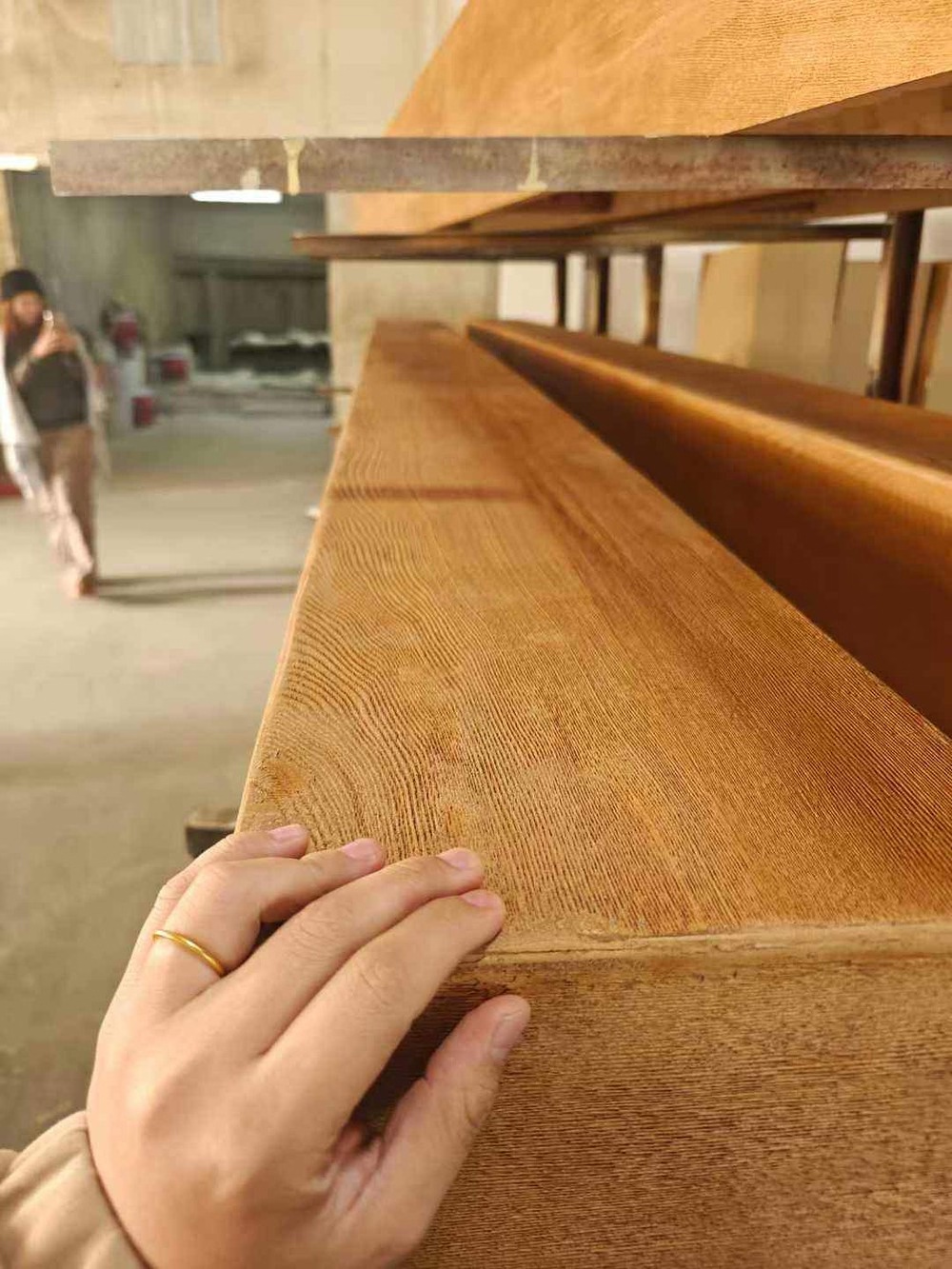
The phrase high-density in the polyurethane beam world refers to a specific material specification that has real implications for how long a beam will perform in service. Not all faux wood beams are made from the same formulation, and the density of the foam core is one of the most important variables in determining lifespan. Buyers who understand the difference can make better-informed decisions about which beam product to specify for a project that is expected to last.
The density specification matters because it relates directly to how the beam handles stress, how it resists impact, how it maintains dimensional stability, and how the finish holds up over decades of exposure. Higher density foams have more material per cubic foot, which translates into better mechanical performance in nearly every category that matters for a long service life.
What High-Density Polyurethane Means in Practice
Polyurethane foam is measured in pounds per cubic foot. A low-density foam might be in the 1 to 2 pound range, suitable for packaging and insulation. A medium-density foam in the 4 to 8 pound range is used for furniture and cushioning. A high-density foam in the 12 to 20 pound range is used for structural applications where strength and durability are required.
Faux wood beams at the premium end of the market are typically made from foams in the 12 to 18 pound range, sometimes higher for specialized applications. This density provides the mechanical properties that allow a beam to handle installation stresses, hold screws and fasteners securely, and resist impact damage over years of service.
The density is not the only factor that determines performance. The cell structure, the resin formulation, the additives, and the curing process all contribute to the final product. But density is the easiest specification to verify and the most reliable proxy for overall quality. A buyer who knows the density specification of a faux beam can predict a great deal about its performance.
Mechanical Properties That Drive Longevity
High-density polyurethane foam has several mechanical properties that contribute to long-term durability. The most important are compressive strength, flexural strength, impact resistance, and screw retention.
Compressive strength is the ability of the foam to resist crushing forces. A high-density beam can support significant weight without permanent deformation. This property matters during installation, when the beam may be clamped or pressed into position, and during service, when the beam may carry the weight of light fixtures or other ceiling-mounted hardware.
Flexural strength is the ability of the beam to resist bending under load. A long beam hung between two supports experiences flexural stress from its own weight and from any additional load. High-density beams maintain their shape under this stress, while lower-density beams may develop a visible sag over time.
Impact resistance is the ability of the beam to absorb sudden forces without damage. A ladder leaned against the beam, a piece of furniture moved into contact with it, or a child throwing a toy can all create impact forces. High-density beams resist these forces better than low-density beams, which may dent or chip.
Screw retention is the ability of the beam to hold screws securely over time. This property matters during installation, when the mounting screws are driven into the beam, and during service, when the screws may be subjected to vibration or thermal cycling. High-density foam grips screws more tightly and holds them more securely.
Dimensional Stability Over Decades
One of the most important performance characteristics of high-density polyurethane is its dimensional stability. Unlike real wood, which expands and contracts with humidity changes, polyurethane maintains its dimensions within tight tolerances over decades of service.
This stability is a function of the closed-cell structure of the foam. The cells are not connected to each other, so moisture cannot migrate through the foam. The result is a material that does not absorb water, does not swell with humidity, and does not shrink as it dries. A beam that is 8 inches wide at installation will still be 8 inches wide twenty years later.
The thermal expansion of high-density polyurethane is also low. The material does expand slightly with temperature, but the coefficient of thermal expansion is much smaller than that of real wood. A beam installed in a conditioned interior will not move appreciably as the seasons change. The mounting hardware stays in adjustment, and the joints between beams remain tight.
For applications where the beam is exposed to outdoor temperature swings, the formulation can be adjusted with additives that further reduce thermal expansion. Suppliers can provide high-density formulations specifically engineered for exterior use, with additives that prevent brittleness at low temperatures and softening at high temperatures.
Finish Durability and UV Resistance
The lifespan of a faux wood beam depends not only on the structural integrity of the foam core but also on the durability of the surface finish. A beam that remains structurally sound but shows finish degradation is not performing as expected. Premium high-density beams are paired with finishes engineered for long-term performance.
The finish system typically includes a primer, a base coat, and a UV-resistant topcoat. The primer bonds to the foam and provides a stable surface for the base coat. The base coat provides the color and texture of the beam. The topcoat provides the protection against UV, abrasion, and chemical exposure.
UV resistance is particularly important for beams near windows or in exterior applications. UV inhibitors in the topcoat absorb or reflect UV radiation before it can damage the underlying layers. Without UV protection, the color would fade over time and the finish would become chalky. With proper UV protection, the finish maintains its color and sheen for many years.
Abrasion resistance is important for beams that may be touched or brushed against during service. The topcoat is formulated to resist minor abrasion without showing wear. For high-touch applications, an additional layer of clear protective coating can be specified during production.
Chemical resistance is important for beams in commercial settings where they may be exposed to cleaning chemicals, smoke, or other airborne contaminants. The topcoat resists these substances without staining, etching, or discoloring.
Color Stability Across Decades
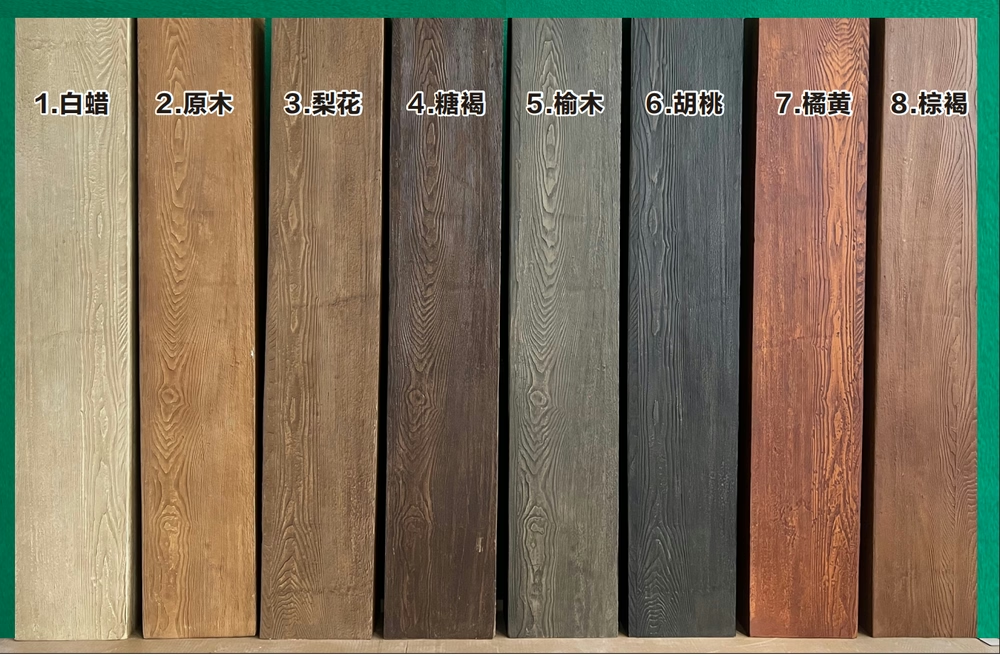
Color stability is a separate but related property. Even with UV protection, some color shift is inevitable over many years of exposure. Premium high-density beams are formulated with pigments that resist this shift. The color stays true to the original specification for longer than commodity products.
Buyers who are concerned about color matching across multiple beams in a project can request factory color samples that are aged artificially under accelerated UV exposure. These samples show how the color will change over time, which helps the buyer decide whether the expected shift is acceptable.
For projects that require absolute color stability over decades, the supplier can provide pigments with the highest UV resistance available. The cost is slightly higher, but the color stability is significantly better. This option is particularly valuable for high-end residential and hospitality projects where the appearance of the beams is critical.
Real-World Lifespan Data
Manufacturers and suppliers have accumulated decades of field data on the lifespan of high-density polyurethane faux beams. The data shows that beams in interior applications typically maintain their appearance and structural integrity for 20 years or more. Beams in exterior applications typically maintain their appearance for 10 to 15 years, depending on the climate and exposure.
These numbers are averages. Some beams perform better than the averages. Some beams, particularly those in harsh exterior environments, may perform somewhat worse. But the trend is clear: high-density polyurethane beams last significantly longer than the warranty period in most installations.
The data also shows that the most common failure modes are not catastrophic. The finish may show some wear in high-touch areas. The color may shift slightly in exterior applications. The foam may develop minor surface marks in heavy-use areas. None of these issues affect the structural integrity of the beam or require replacement of the entire product.
For applications where the appearance is critical, touch-up kits and refinishing services can restore the original appearance without removing the beam. For applications where the structural integrity is the primary concern, the foam core continues to perform even when the surface finish shows some wear.
Comparing Lifespan to Real Wood
Real timber beams have a different lifespan profile than faux wood beams. Solid timber that is properly maintained can last for centuries, as evidenced by the historic buildings that still stand around the world. However, the maintenance required to achieve that lifespan is significant. Real timber beams need periodic inspection, refinishing, and sometimes repair of cracks, splits, or insect damage.
Faux wood beams require essentially no maintenance beyond occasional dusting and cleaning. They do not need refinishing on a schedule. They do not develop cracks or splits. They are not susceptible to insect damage. The total cost of ownership over a 20-year period is significantly lower than for real timber, even though the initial cost may be similar.
The lifespan comparison also depends on the environment. In a dry, conditioned interior, real timber can last indefinitely with proper care. In a humid or exterior environment, real timber can deteriorate quickly, while faux wood maintains its appearance for many years. The advantage of faux wood is most pronounced in challenging environments.
Factors That Can Reduce Lifespan
While high-density polyurethane beams are durable, certain factors can reduce their lifespan. Understanding these factors helps buyers avoid situations that could compromise performance.
Improper installation is the most common cause of premature failure. Beams that are mounted with inadequate support, with the wrong fasteners, or in conditions that exceed the product specifications may fail earlier than expected. Following the manufacturer's installation guidelines is essential.
Exposure to incompatible chemicals can damage the finish. Some cleaning products, solvents, and adhesives can soften or discolor the topcoat. Buyers should confirm with the supplier which cleaning products are safe to use on the beams.
Physical damage from impact or abrasion can shorten the lifespan of the finish. While the foam core typically survives impact undamaged, the surface finish may show marks that require touch-up. Avoiding unnecessary impact during service life is the best protection.
Exceeding the design specifications can also reduce lifespan. Beams specified for interior use should not be installed in exterior applications. Beams specified for ceilings should not be used as structural load-bearing members. Operating within the design specifications ensures the expected lifespan.
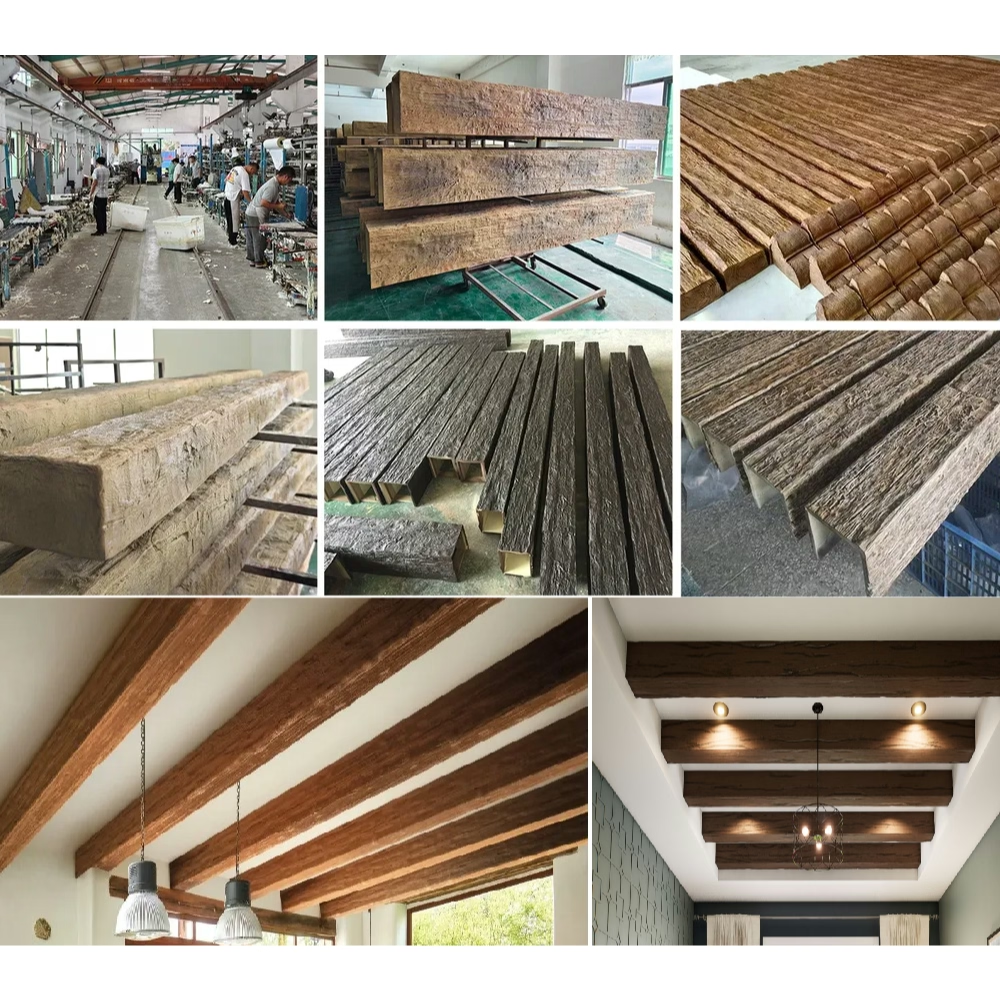
Specifications to Request From Suppliers
Buyers specifying high-density polyurethane beams should request detailed specifications from the supplier. The specifications should include the foam density, the resin formulation, the cell structure, the finish system, and the UV protection level. Suppliers should be willing to provide this information in writing.
Independent test reports add credibility to the specifications. Reports from recognized testing laboratories confirm that the product meets the claimed performance levels. For commercial projects, these reports are often required as part of the project documentation.
Sample beams are also valuable for evaluating lifespan characteristics. A sample that has been aged artificially under accelerated UV exposure can show how the color and finish will change over time. A sample that has been subjected to impact testing can show how the beam will handle physical stress.
Long-Term Value of High-Density Construction
The long-term value of high-density polyurethane beams is substantial. A beam that lasts for 20 years without requiring replacement, refinishing, or significant maintenance represents a strong return on the initial investment. The cost per year of service is low compared to real timber or lower-density faux products.
For commercial property owners, the long-term value includes reduced maintenance budgets, predictable replacement schedules, and consistent appearance across decades of service. For residential homeowners, the long-term value includes the peace of mind that comes from knowing the beams will continue to perform without requiring attention.
The lifespan of high-density polyurethane beams is one of the strongest arguments in their favor. The material has proven itself in installations around the world, in every climate, and across every type of project. The track record supports the claim that these beams deliver decades of reliable service, which is exactly what most buyers are looking for.
Technical References
ASTM standards cited in every specification
Test Data
Lab results from internal testing program
Updated 2026
Reviewed against current product specs