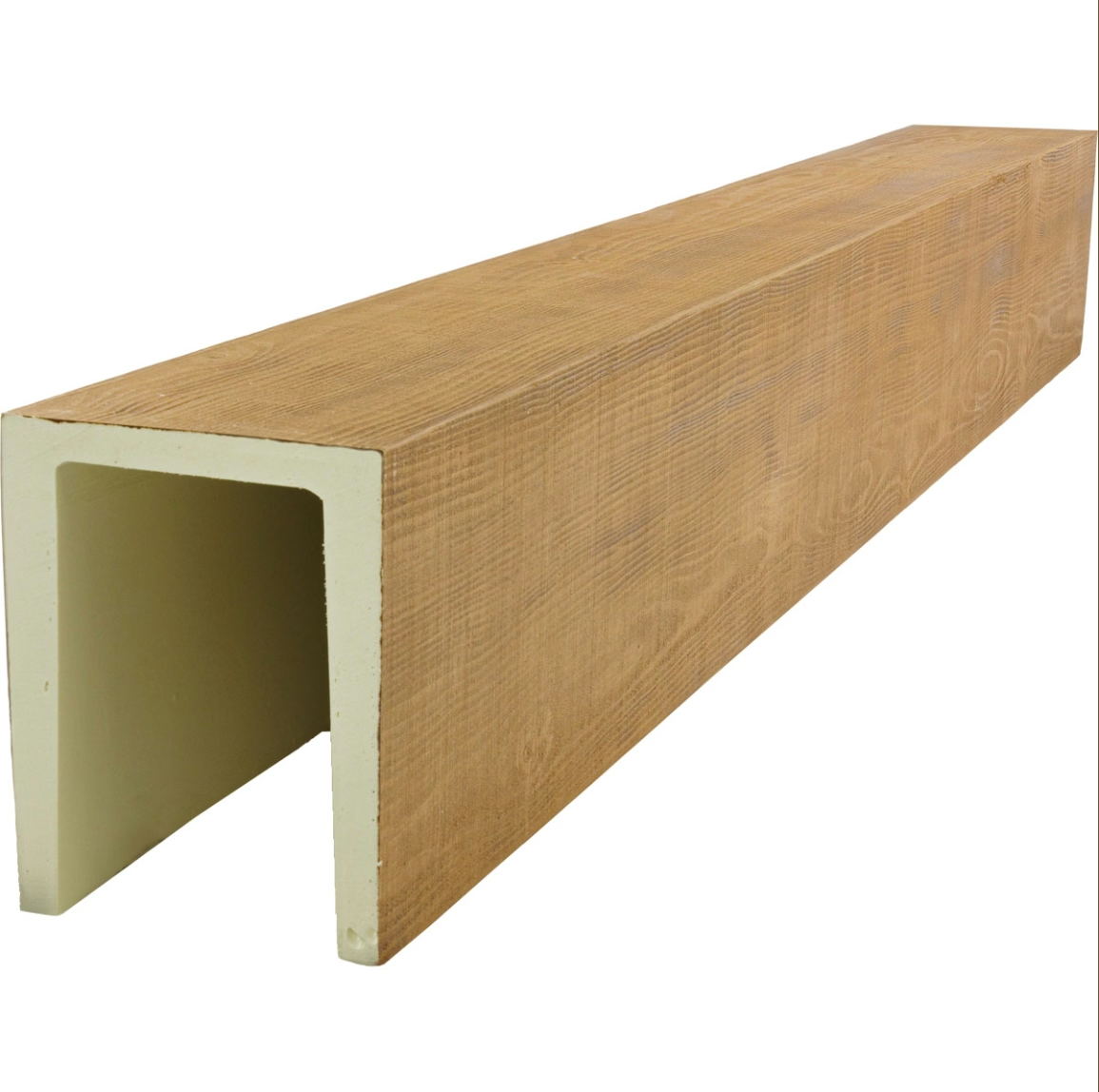
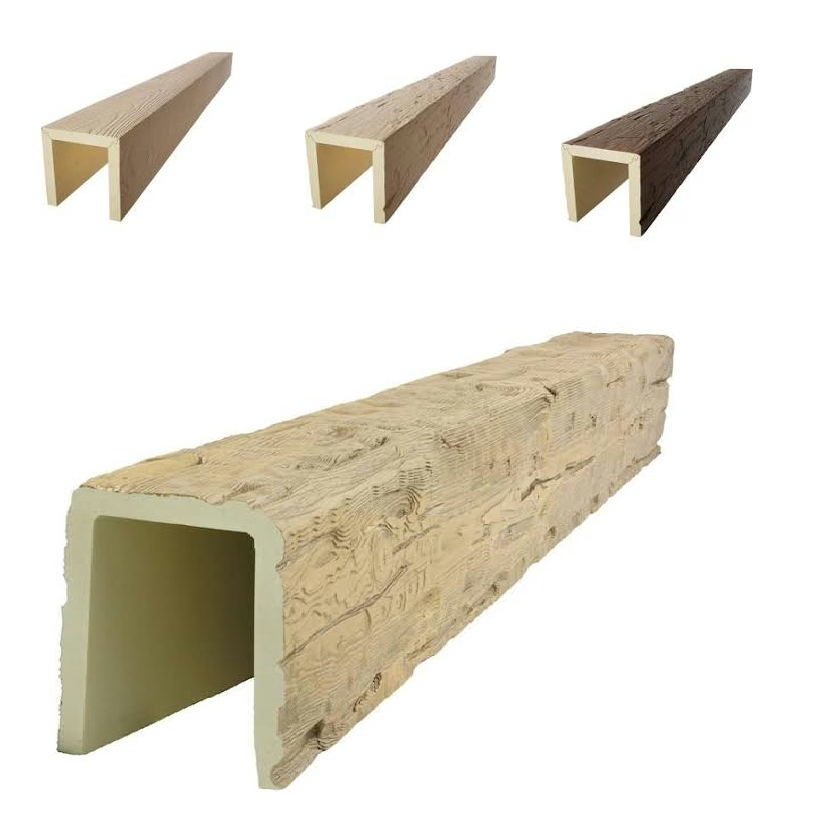
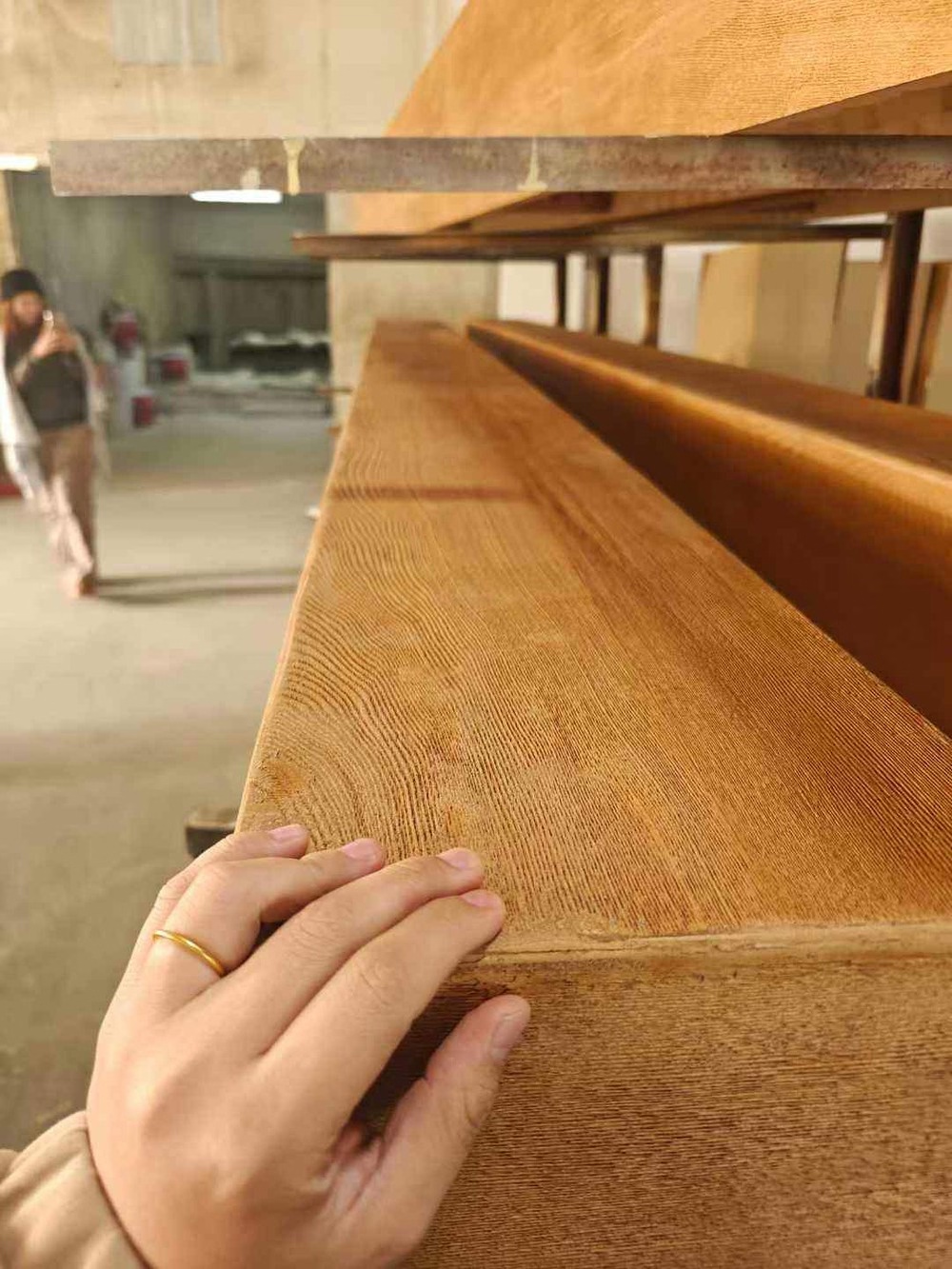
The lifespan of a faux ceiling beam is not a fixed number. It depends on the formulation, the manufacturing process, the installation, and the environment. A commodity beam from an unknown supplier may show significant degradation in a few years. A high-quality beam from a reputable manufacturer can remain in excellent condition for decades. The difference between these two outcomes is worth understanding before any procurement decision is made.
Specifiers who take the time to understand what drives long service life can avoid the disappointment of premature failure and the cost of replacement. The information is widely available from suppliers, testing laboratories, and the growing body of case study data from installations around the world.
The Anatomy of a Long-Lasting Beam
A faux ceiling beam that delivers decades of service has to perform in several dimensions simultaneously. The foam core has to maintain its structural integrity. The surface finish has to resist UV, abrasion, and chemical exposure. The mounting hardware has to stay secure. The color has to remain stable. Any weak link in this chain can shorten the lifespan of the entire product.
High-quality beams are designed with each of these dimensions in mind. The foam is formulated for high density and closed-cell structure. The finish is applied in multiple layers with UV protection. The mounting hardware is selected for compatibility with the foam and the expected service conditions. The pigments are chosen for lightfastness and chemical resistance.
When all of these elements are properly specified and combined in a well-controlled manufacturing process, the result is a beam that can perform for many years. The investment in quality is reflected in the price, but the return comes through decades of service without significant maintenance or replacement costs.
The Role of Material Density
Density is the most important physical property of a faux ceiling beam. Higher density means more material per cubic foot, which translates into better mechanical properties, better screw retention, better impact resistance, and better long-term stability.
High-quality beams are typically made from foam in the 12 to 18 pound per cubic foot range. This density provides the structural integrity needed for ceiling installation and long-term service. The foam holds screws securely, supports the weight of light fixtures, and resists impact from accidental contact.
Lower density foams may be acceptable for purely decorative applications where the beam is not touched and not loaded. But for ceiling beams that may carry light fixtures, be touched by occupants, or be subjected to incidental contact, the higher density is worth the additional cost.
The density specification should be confirmed in writing by the supplier. Verbal claims about density are difficult to verify. A written specification that states the density in pounds per cubic foot is a clear commitment that the buyer can rely on.
Cell Structure and Moisture Resistance
The closed-cell structure of high-quality polyurethane foam is critical to long service life. Closed-cell foam does not absorb water, which means that moisture cannot migrate into the beam and cause damage. This property is particularly important in humid environments, in exterior applications, and in any installation where condensation or water exposure is possible.
Open-cell foam, by contrast, can absorb water and hold it within the structure of the material. Over time, this can lead to swelling, degradation, and failure of the foam. Open-cell foams are sometimes used in decorative applications where moisture exposure is not expected, but they are not suitable for the demanding environments where faux ceiling beams are often installed.
The cell structure is determined by the resin formulation and the blowing agent used in the foam production process. Suppliers who specialize in high-quality beams use formulations that produce consistent closed-cell structure batch after batch. The consistency is verified through quality control procedures during production.
Finish Systems That Protect for Decades
The surface finish of a faux ceiling beam is the first line of defense against the environment. A high-quality finish system protects the foam from UV radiation, abrasion, chemical exposure, and the daily wear of service life. The finish is also responsible for the visual appearance of the beam, so it has to maintain its color and texture over time.
Premium finish systems typically include four layers. The primer bonds to the foam and provides a stable surface for subsequent layers. The base coat provides the color and texture. The glaze layer adds depth and character to the finish. The topcoat provides the final protection against UV, abrasion, and chemicals.
Each layer is applied in a controlled environment using calibrated equipment. The thickness of each layer is monitored to ensure that the finish system meets specifications. The curing time between layers is managed to allow proper bonding without delays in production.
The topcoat is the most important layer for long-term protection. High-quality topcoats include UV inhibitors that absorb or reflect UV radiation before it can damage the underlying layers. The topcoat also resists abrasion from incidental contact and chemical exposure from cleaning products or airborne contaminants.
UV Protection and Color Stability
UV radiation is the primary cause of finish degradation in faux ceiling beams. UV breaks down the chemical bonds in pigments and resins, leading to fading, chalking, and loss of gloss. Without UV protection, a beam installed near a window would show visible fading within a few years.
High-quality beams include UV inhibitors in the topcoat. These inhibitors work by absorbing UV radiation and converting it to heat, which is then dissipated without damaging the finish. The inhibitors are gradually consumed by the UV exposure, so the protection level decreases over time. But high-quality inhibitors can provide effective protection for 10 years or more in typical interior applications.
The pigments used in the base coat are also selected for UV resistance. Some pigments are inherently more lightfast than others. Premium suppliers use pigment systems that have been tested under accelerated UV exposure and have demonstrated excellent color stability.
For applications with extreme UV exposure, such as exterior installations in tropical climates, additional UV protection can be specified during production. The cost is higher, but the color stability is significantly better. This option is recommended for any installation where the beams will receive direct sunlight for significant portions of the day.

Installation Practices That Extend Lifespan
The installation process has a significant impact on the long service life of a faux ceiling beam. Even the highest quality beam will fail prematurely if it is installed incorrectly. Specifiers and contractors should follow the manufacturer's installation guidelines precisely.
The mounting hardware must be appropriate for the beam weight, the ceiling structure, and the expected service loads. Undersized hardware can fail under load, leading to beam collapse. Oversized hardware can damage the foam and reduce the beam's ability to hold fasteners.
The mounting location must be verified before installation begins. The blocking or backing in the ceiling must be sufficient to support the beam. Where blocking is inadequate, additional support must be installed before the beam is mounted.
The beam must be handled carefully during installation. Dropping the beam, dragging it across a rough surface, or applying excessive force during mounting can damage the foam or the finish. Proper handling procedures should be followed throughout the installation process.
The environmental conditions during installation should also be considered. Installing beams in extreme cold or extreme heat can affect the foam and the finish. Most manufacturers recommend installation within a specific temperature range for best results.
Acclimation and Storage Before Installation
Beams should be acclimated to the installation environment before they are mounted. This is particularly important for beams that have been stored in a warehouse or transported in a cold truck. Allowing the beam to reach room temperature before installation prevents thermal stress on the foam and the finish.
Beams should be stored in a dry location away from direct sunlight before installation. Prolonged exposure to moisture or UV before installation can damage the finish and reduce the lifespan of the beam. Proper storage practices are part of the manufacturer's recommendations.
The storage area should be secure and free from hazards that could damage the beams. Stacking beams in a way that causes them to bend or flex can damage the foam structure. Beams should be supported along their length during storage to prevent any sagging or distortion.
Environmental Factors That Affect Lifespan
The environment in which a beam is installed has a major impact on its service life. Interior beams in conditioned spaces typically last longer than beams in unconditioned spaces or exterior applications. Beams in dry climates typically last longer than beams in humid climates. Beams away from direct sunlight typically last longer than beams in sunny locations.
For interior applications in conditioned spaces, the expected lifespan is 20 years or more. The controlled environment protects the beam from temperature extremes, humidity fluctuations, and UV exposure. The finish maintains its appearance, and the foam maintains its structural integrity.
For interior applications in unconditioned spaces, the expected lifespan depends on the specific conditions. Beams in unconditioned spaces may experience temperature extremes, humidity fluctuations, and other stresses that can shorten their lifespan. Premium beams with appropriate formulations can still provide many years of service in these environments.
For exterior applications, the expected lifespan is typically 10 to 15 years, depending on the climate and exposure. Exterior beams require specialized formulations with additional UV protection and weather resistance. The cost is higher, but the lifespan is significantly better than using interior beams in exterior applications.
Climate Considerations for Specific Regions
Different climates present different challenges for faux ceiling beams. Hot, dry climates can cause thermal stress on the foam and the finish. Cold climates can cause brittleness in formulations that are not designed for low temperatures. Humid climates can promote mold and mildew growth on surfaces that are not properly protected.
Premium suppliers offer formulations specifically designed for challenging climates. Cold-climate formulations include additives that prevent brittleness at low temperatures. Hot-climate formulations include additives that resist softening at high temperatures. Humid-climate formulations include biocides that prevent mold and mildew growth.
For projects in challenging climates, the additional cost of specialized formulations is usually justified by the extended service life. The buyer should consult with the supplier about the specific climate conditions and the appropriate formulation for the project.
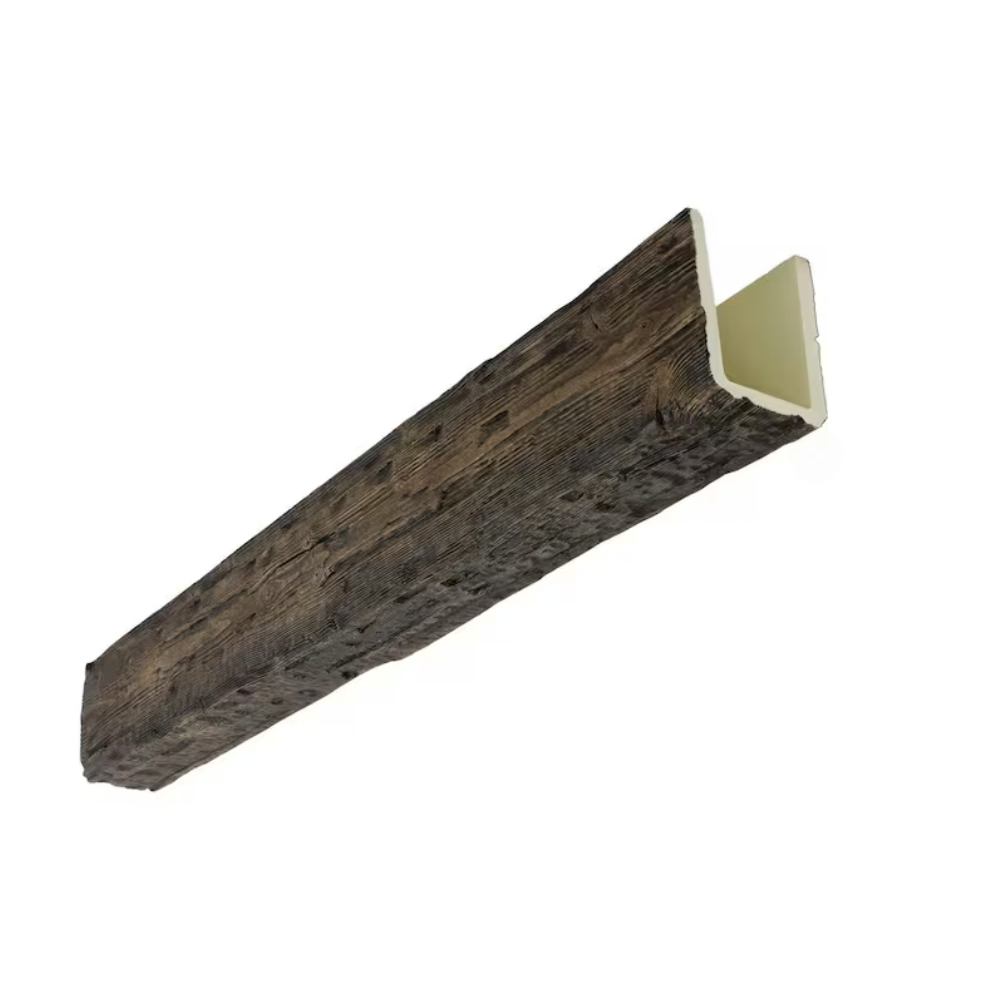
Maintenance Practices That Preserve Performance
High-quality faux ceiling beams require minimal maintenance, but some basic practices can extend their lifespan even further. Periodic dusting with a soft cloth removes abrasive particles that could damage the finish over time. Occasional cleaning with a mild soap solution removes oils and contaminants that could stain the finish.
Touch-up kits from the manufacturer allow minor damage to be repaired before it becomes a larger problem. A small chip or scratch that is left unrepaired can grow over time as the exposed foam absorbs moisture or contaminants. Prompt touch-up prevents this kind of progressive damage.
For exterior beams, more frequent maintenance may be required. Annual cleaning removes dirt and biological growth that can accumulate on exterior surfaces. Periodic inspection identifies any damage that needs repair. Recoating may be necessary every few years to refresh the UV protection.
Warranty as a Signal of Expected Lifespan
The manufacturer's warranty is a useful proxy for expected lifespan. A supplier that offers a 10-year warranty is committing to performance for at least 10 years under normal conditions. A supplier that offers a 15-year or 20-year warranty is signaling even longer expected performance.
The warranty should be read carefully to understand what is covered and what is excluded. Coverage for fading, cracking, and structural failure is standard in premium warranties. Exclusions for improper installation, abuse, and acts of nature are also standard.
The warranty is most meaningful when the supplier has the financial strength and reputation to honor it. A long warranty from a financially weak supplier is less valuable than a shorter warranty from a strong supplier. The reputation of the supplier is an important consideration when evaluating warranty terms.
The Long-Term Value Proposition
High-quality faux ceiling beams offer a strong long-term value proposition. The initial cost is higher than commodity products, but the extended service life, the reduced maintenance requirements, and the consistent appearance over time justify the investment. For projects that are expected to last for decades, the cost per year of service is very favorable.
The lifespan of a high-quality beam is not infinite, but it is long enough to outlast most other building components. The finish may eventually need to be refreshed. The foam may eventually show some surface wear in high-touch areas. But the structural integrity of the beam will remain for many decades under normal service conditions.
For specifiers, the challenge is to identify the high-quality products that will deliver on the long-term value proposition. Working with reputable suppliers, requesting detailed specifications, evaluating samples, and reading warranties carefully are all part of the process. The effort pays off in decades of reliable performance from the installed beams.
Technical References
ASTM standards cited in every specification
Test Data
Lab results from internal testing program
Updated 2026
Reviewed against current product specs