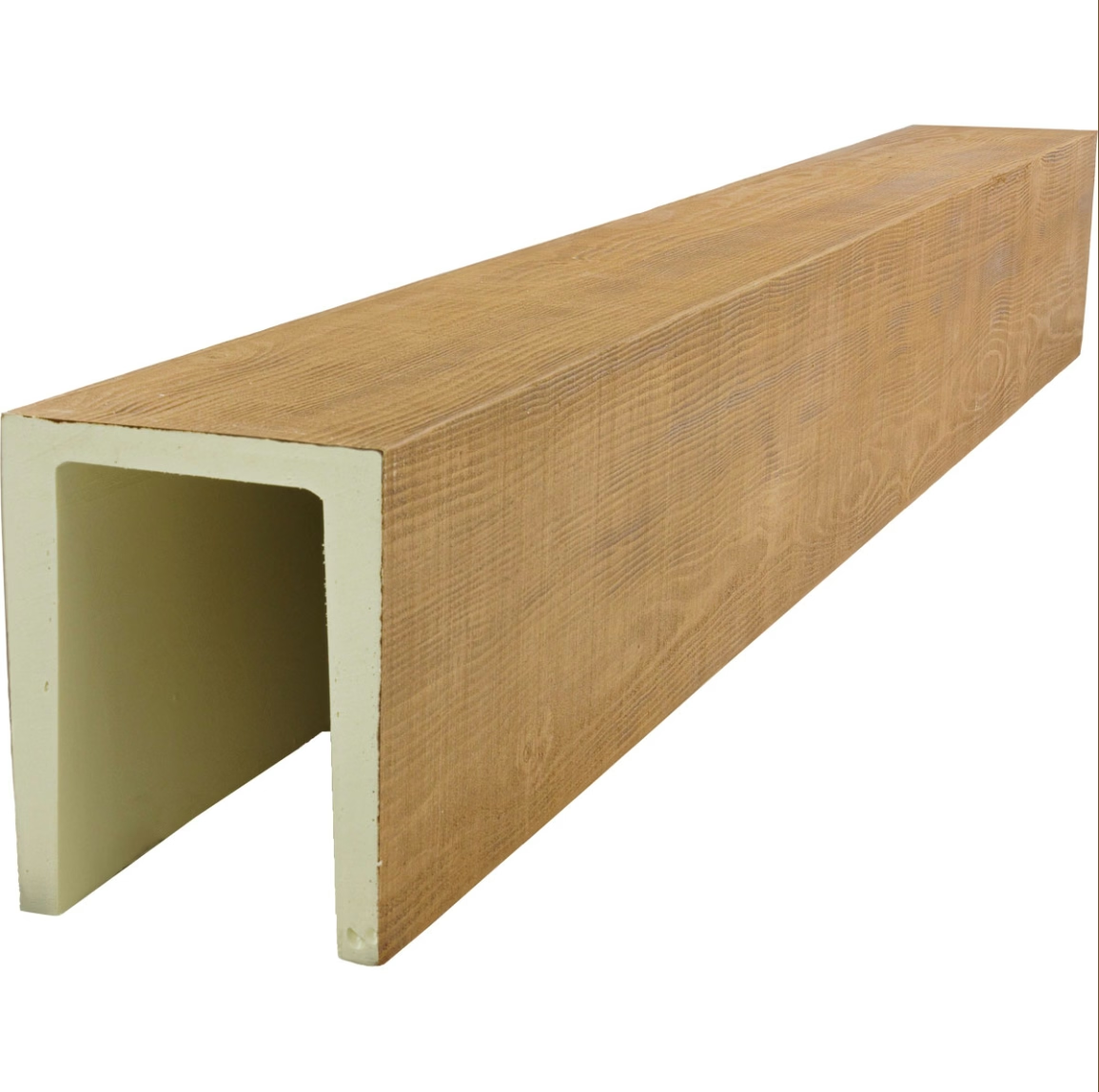
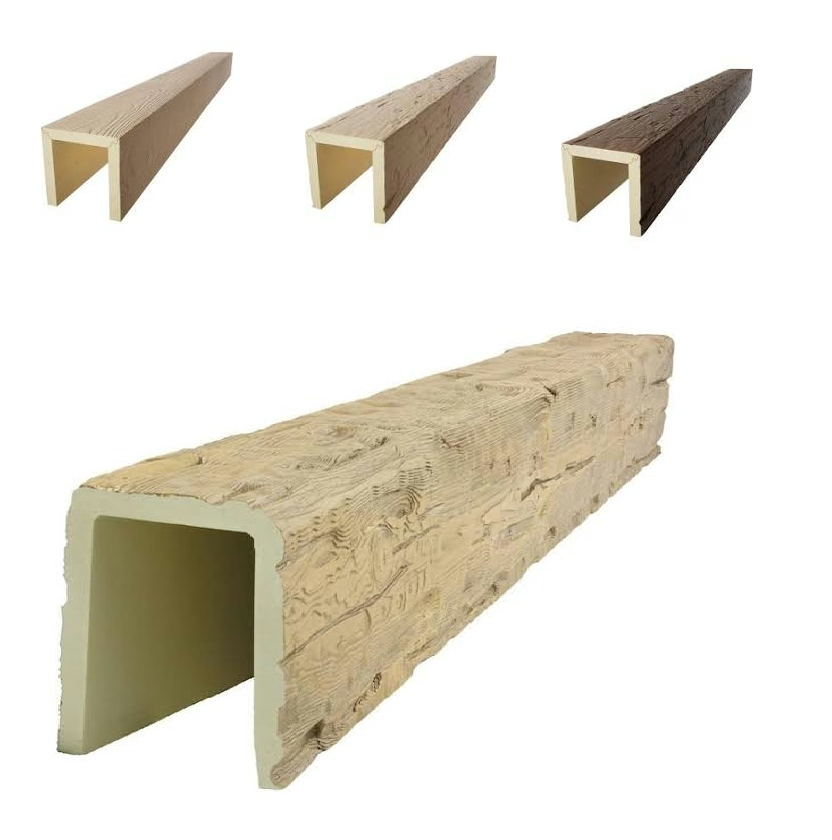
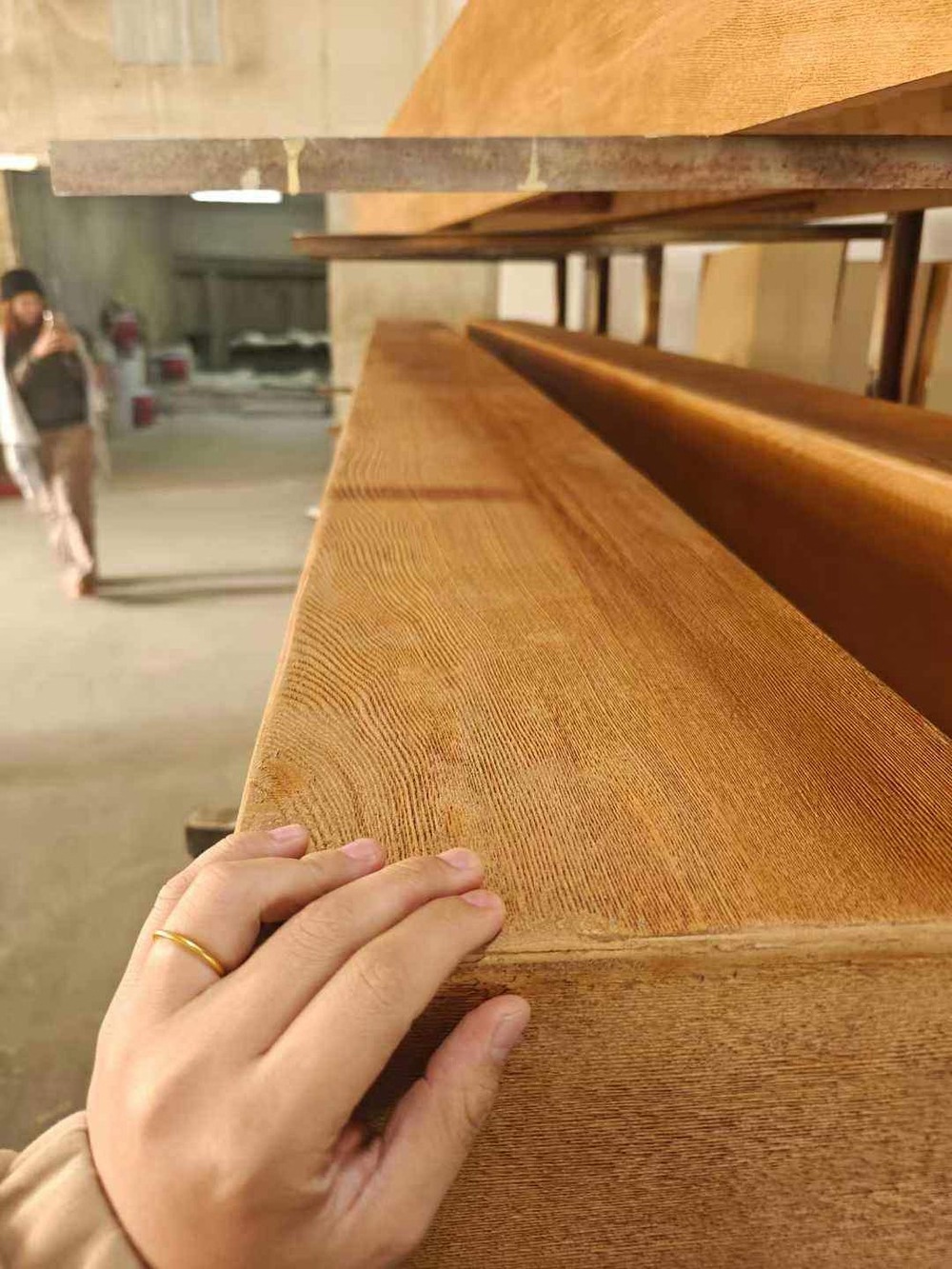
Soffit ceilings occupy a specific niche in residential and commercial architecture. They are the ceilings of overhangs, covered porches, bay windows, entry canopies, and similar architectural features that project outward from the main building. Unlike the interior ceilings of a home, soffit ceilings are exposed to the same weather as the exterior walls, but they are finished to a higher standard than typical exterior surfaces because they are constantly visible from below.
Faux wood beams in soffit applications face particular challenges. The beams are exposed to sun, rain, and temperature cycling, but they are also a prominent visual feature that sets the tone for the entry or the covered outdoor space. Polyurethane resin beams formulated specifically for soffit use have become the standard choice for this demanding combination of appearance and performance requirements.
What Makes a Soffit Ceiling Different
A soffit ceiling is essentially an outdoor ceiling. It has to look as finished as an interior ceiling because it is always in view, but it has to perform as an exterior surface because it is exposed to the elements. The materials used in soffit applications have to bridge this gap between interior quality and exterior durability.
Traditional soffit materials include plywood, fiber cement, vinyl, and aluminum. These materials provide weather protection but lack the visual interest that homeowners and designers want from a covered entry or porch. Painting can add color but cannot add the warmth and character of timber. Real timber can provide the appearance but requires significant maintenance in exterior applications.
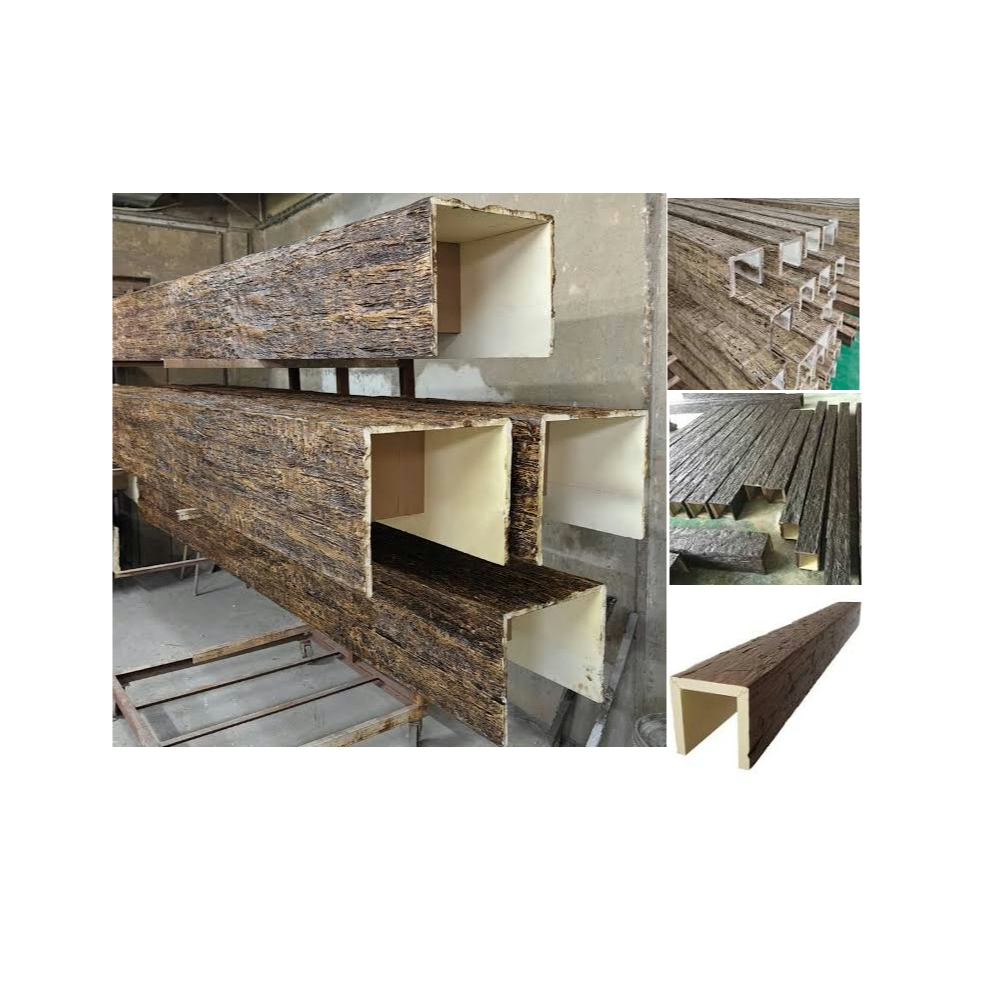
Polyurethane resin faux wood beams solve this problem by providing the timber appearance with the weather resistance of exterior-grade materials. The beams are lightweight, dimensionally stable, and factory-finished to a standard that meets interior-quality expectations while delivering exterior-grade performance.
The Visual Demands of Soffit Applications
A soffit ceiling is the first thing many visitors see when approaching a home or commercial building. The ceiling establishes the quality of the entry, the character of the architecture, and the attention to detail that the owner has invested. A plain, flat soffit ceiling feels utilitarian. A soffit ceiling with timber-look beams feels substantial and welcoming.
The visual demands of soffit applications are actually higher than for some interior applications because there is less competition for the eye's attention. A soffit ceiling is often the dominant visual element in an entry or porch, and the beams are the dominant element of the ceiling. Any flaw in the beam finish, any inconsistency in the color, or any imperfection in the texture is more noticeable than it would be in a more complex interior space.
Premium suppliers address these demands by producing soffit-grade beams with the highest levels of finish quality. The surface texture is consistent from beam to beam. The color is matched to the specified standard with tight tolerances. The factory finish is applied in multiple layers under controlled conditions. The result is a beam that meets the visual demands of the most demanding soffit application.
Material Composition for Soffit Service
Soffit-grade polyurethane resin beams are formulated for the specific demands of exterior ceiling applications. The base resin is selected for its weather resistance and dimensional stability. Additives are included to prevent brittleness at low temperatures, softening at high temperatures, and degradation from UV exposure.
The foam density is typically in the 12 to 18 pound per cubic foot range, providing the structural integrity needed for soffit installation. The closed-cell structure of the foam prevents water absorption, which is critical in soffit applications where the beams may be exposed to driving rain or snow.
The surface finish is the most important element for soffit performance. The finish system includes a primer that bonds to the foam, a base coat that provides color and texture, and a topcoat that provides UV protection and weather resistance. The pigments are selected for outdoor lightfastness. The topcoat is formulated for the specific climate conditions of the installation.
Premium soffit-grade beams also include additional features that address the specific challenges of soffit applications. The finish may include mildew resistance for humid climates. The finish may include enhanced UV protection for installations with significant sun exposure. The finish may include salt-spray resistance for coastal installations.
Comparing Soffit-Grade to Standard Exterior Beams
Soffit-grade beams are a step above standard exterior beams in terms of finish quality and material specification. The differences are not always obvious from a distance, but they become apparent when the beams are examined closely or when they are subjected to the demanding conditions of soffit service.
The finish quality of soffit-grade beams is typically higher than standard exterior beams. The number of finish layers is greater. The pigments are of higher quality. The application process is more controlled. The result is a finish that maintains its appearance for longer under soffit conditions.
The material specification of soffit-grade beams is also typically higher. The foam density may be at the higher end of the standard range. The resin formulation may include additional additives for weather resistance. The cell structure may be more tightly controlled for consistency.
The price difference between soffit-grade and standard exterior beams reflects these enhanced specifications. The difference is usually modest compared to the overall project budget, but the performance benefits are significant for soffit applications where the beams are a prominent visual feature.
Common Soffit Applications
The most common soffit applications for faux wood beams are covered entries and porches. The beams run perpendicular to the house, parallel to the roof slope, or in a grid pattern across a flat soffit. The specific layout depends on the architecture and the desired visual effect.
Covered porches with deep overhangs benefit from substantial beams that create a sense of shelter and quality. The beams define the outdoor living space and provide a visual ceiling for furniture arrangements. Faux wood beams allow the porch ceiling to feel as finished as an interior ceiling while withstanding the weather exposure of an exterior application.
Entry canopies and porte-cochères use soffit beams to create a sense of arrival and importance. The beams over the entry are often larger in cross-section than the beams elsewhere on the building, creating a hierarchy of scale that emphasizes the entry. Faux wood beams are ideal for these applications because they can be produced in large sizes that would be impractical in real timber.
Bay windows and projecting architectural features use soffit beams to finish the underside of the projection. The beams tie the projection visually to the rest of the building while providing a finished ceiling for the window seats or other features that may be incorporated into the projection.
Garage door openings sometimes use soffit beams to create a more substantial appearance for the opening. The beams above the garage door can make the opening feel more like a porte-cochère than a utilitarian garage entrance. Faux wood beams provide the timber appearance without the maintenance burden that real timber would impose.

Installation in Soffit Applications
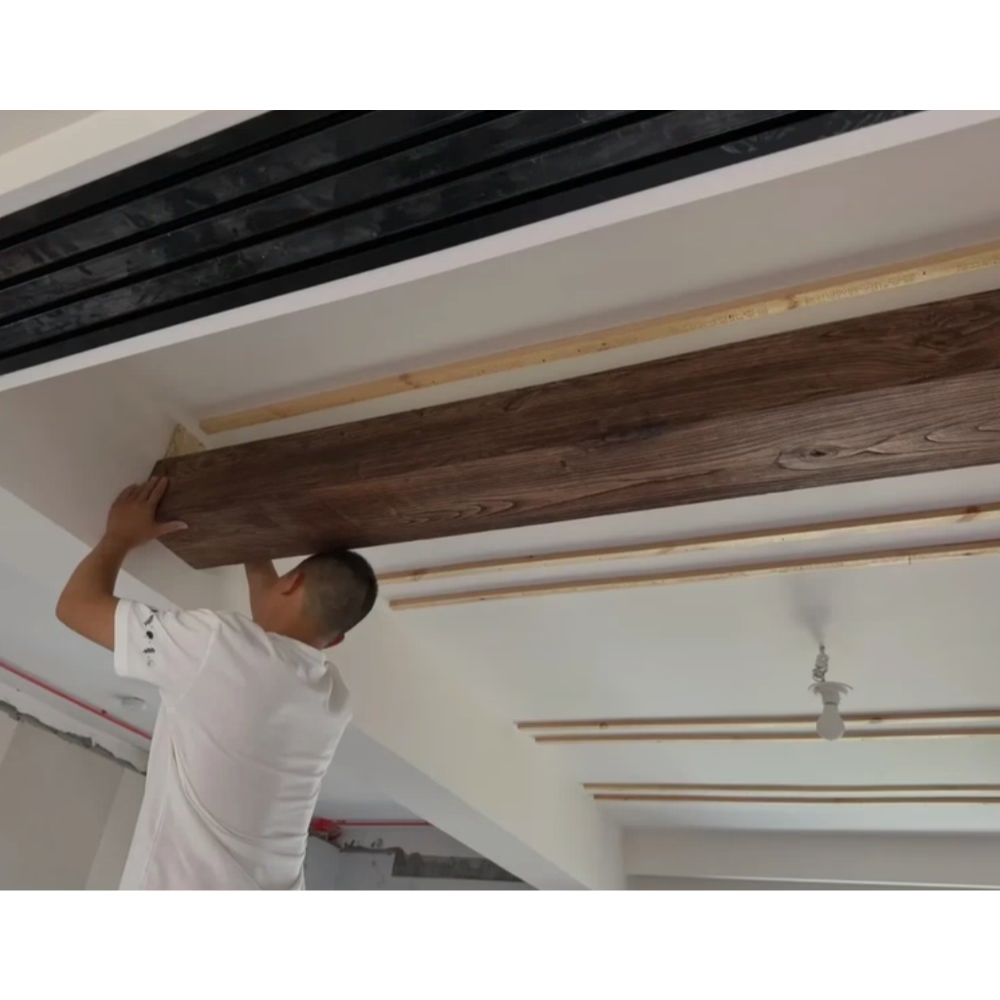
The installation of soffit beams follows the general principles of exterior beam installation, with some specific considerations for soffit applications. The mounting hardware must be appropriate for the soffit structure, which is typically wood framing but may also be steel or concrete in commercial applications.
The mounting height is critical in soffit applications because the beams are a prominent visual feature. The beams should be level across the entire soffit area. Variations in height create an uneven appearance that is more noticeable in a soffit ceiling than in many other applications. The installer should check the level frequently during the installation.
The transition between the beam ends and the adjacent walls or structure should be finished carefully. The visual quality of the soffit ceiling depends on these transitions being clean and consistent. End caps, trim pieces, or color-matched filler should be used as appropriate for the specific installation.
The integration of lighting, fans, speakers, and other ceiling-mounted elements should be coordinated during the installation. The hollow interior of polyurethane beams provides a clean way to route wiring for these elements. The beam surface provides a mounting point for fixtures. The result is a finished ceiling with all systems integrated cleanly.
Weather Considerations During Installation
Soffit beams are installed outdoors, so the installation weather affects the process. Dry conditions are preferred for adhesive applications and for the curing of any sealants. Moderate temperatures are preferred for the foam and the finish. Extreme heat or cold can affect the installation process.
Most manufacturers recommend installation within a temperature range of 50 to 90 degrees Fahrenheit. Below this range, the foam becomes more brittle and the adhesive may not cure properly. Above this range, the foam becomes softer and the finish may be more susceptible to damage during handling.
The installation should be scheduled to avoid rain during the critical mounting and sealing phases. Most manufacturers recommend at least 24 hours of dry weather after the installation is complete to allow sealants to cure. The installer should monitor the weather forecast and adjust the schedule as needed.
Coordination With Adjacent Materials
Soffit beams rarely exist in isolation. They are part of a larger composition that includes the adjacent walls, the columns or supports, the fascia and trim, and any adjacent ceiling surfaces. The beam treatment should be coordinated with these elements to create a unified appearance.
The beam finish should match or complement the finish of adjacent timber elements such as columns, brackets, railings, and trim. Factory color matching ensures that all of these elements are produced with identical finish, eliminating the risk of mismatched pieces.
The beam profile should be consistent with the architectural style of the building. Craftsman-style homes typically use substantial rough-sawn beams. Colonial-style homes typically use smoother beams with classical proportions. Modern homes typically use simpler beam profiles with cleaner lines. The beam profile should match the overall architectural intent.
The transition between the beams and the adjacent soffit surface should be clean and consistent. If the soffit surface is painted, the paint color should be coordinated with the beam finish. If the soffit surface is a different material, the transition should be finished with appropriate trim or molding.
Long-Term Performance Expectations
Soffit-grade faux wood beams are designed for long-term performance in exterior applications. The expected service life in soffit applications is typically 15 to 25 years, depending on the climate and exposure. The finish may show some gradual change over this period, but the structural integrity of the beams is maintained throughout.
The most common performance issue is finish fade in direct sun exposure. Even with UV protection, some color shift is possible over many years. The shift is gradual and may not be noticeable until compared to a new beam. Touch-up kits from the manufacturer can address localized fading.
Dirt accumulation is another common issue. Soffit beams accumulate dust, pollen, and other airborne contaminants over time. Periodic cleaning with mild soap and water restores the appearance. The cleaning frequency depends on the environment, with annual cleaning being typical for most residential applications.
Damage from impact or abrasion is possible but uncommon. Soffit beams are typically out of reach of most activities, so physical damage is rare. When damage does occur, touch-up kits can repair minor issues, and replacement sections can address more serious damage.
Selecting Soffit-Grade Beams
Soffit-grade beams are not the lowest-cost option in the faux wood beam range, but they provide the best combination of appearance and performance for soffit applications. The additional cost compared to standard exterior beams is usually justified by the demanding visual requirements of soffit installations.
Sample evaluation is important for soffit-grade beams. The sample should be viewed in the actual installation conditions, including the lighting and the viewing angle. The sample should be compared to the adjacent materials to confirm coordination. The sample should be evaluated over several days to confirm the color stability.
Supplier reputation is also important. Soffit-grade beams should be sourced from suppliers with experience in soffit applications and a track record of quality production. The supplier should be able to provide references from similar projects and detailed specifications for the proposed beams.
The Future of Soffit Beam Applications
Soffit applications continue to be a growing market for faux wood beams. New construction increasingly specifies faux wood for soffit ceilings rather than relying on real timber. Renovation projects frequently replace aging timber soffits with faux wood alternatives that provide better performance with less maintenance.
The trend toward outdoor living spaces has expanded the role of soffit ceilings. Covered patios, outdoor kitchens, and other outdoor rooms require finished ceilings that match the quality of the interior spaces they connect to. Faux wood soffit beams provide the appearance and performance that these applications demand.
As the technology continues to evolve, soffit-grade beams will likely offer even better performance. Enhanced UV protection, longer-lasting finishes, and improved material formulations are all areas of ongoing development. The result is a beam that maintains its appearance for longer and delivers better value over the life of the installation. For homeowners and designers who want the best possible performance from their soffit ceiling, faux wood beams remain the practical and attractive choice.
Technical References
ASTM standards cited in every specification
Test Data
Lab results from internal testing program
Updated 2026
Reviewed against current product specs