Most faux wood beams are designed to look like timber, not act like it. They hang from a ceiling, frame a room, and otherwise stay out of the way. But there are projects where the beam has to do more than decorate. Warehouses with overhead equipment, retail spaces with heavy signage, hospitality venues with elaborate lighting rigs, and exterior applications exposed to weather all need a beam that can handle real loads without compromising the timber look. Extra rigid high-density PU faux beams were developed for exactly those situations.
The Limits of Standard Faux Beams
Standard polyurethane faux beams are engineered for appearance first and structural performance second. They are light enough to install without lifting equipment, soft enough to cut with common tools, and flexible enough to wrap slightly out-of-plane surfaces when needed. Those properties make them ideal for typical residential and decorative commercial use, but they create problems in environments where the beam has to carry weight or take abuse.
When Loads Become a Concern
A beam that supports a heavy chandelier, a row of pendant lights, or a banner-mounted lighting truss puts real stress on its mounting hardware and internal structure. Standard faux beams in those applications can deform around the attachment points, develop hairline cracks where loads concentrate, or even pull away from their blocking if the fasteners weren't sized for the load. None of these failures are dramatic, but they show up as sagging fixtures, ceiling gaps along the beam edge, or finish cracks that reappear no matter how often they're patched.
When Impact Becomes a Concern
Warehouse aisles, loading docks, gymnasiums, and similar industrial or commercial spaces see plenty of contact. Forklifts bump into things. Ladders lean against ceilings during maintenance. Equipment gets hoisted overhead without much thought for what's below. Standard faux beams in those environments dent, scratch, or chip at contact points, and the damage reveals the foam-like core material beneath the surface finish. Once that happens, repairs are difficult to make invisible.
When Weather Becomes a Concern
Exterior applications, including covered porches, porte-cochères, and outdoor entertainment structures, expose beams to humidity, temperature swings, and direct weather. Standard polyurethane tolerates those conditions reasonably well, but the surface is softer than the installer might expect, and the underlying material can degrade over years of UV exposure if the finish isn't maintained.
What Makes a High-Density Beam Different
Extra rigid high-density PU beams are a different product category from standard faux beams. They use denser polyurethane formulations, often with embedded reinforcement cores, and they are manufactured to a tighter specification that prioritizes structural performance alongside the timber look.
Density Ratings and Their Meaning
Faux beam density is typically measured in pounds per cubic foot or kilograms per cubic meter. Standard decorative beams fall in the range of 6 to 12 pounds per cubic foot. High-density beams start around 18 pounds per cubic foot and can exceed 30 pounds per cubic foot in the heaviest formulations. That extra density translates directly into impact resistance, fastener pull-out strength, and load-bearing capacity. A beam that resists a hammer blow without denting will also hold a heavy light fixture without flexing.
Internal Reinforcement Cores
Most extra rigid beams include some form of internal reinforcement. Steel channels, aluminum extrusions, composite lumber, or high-density foam cores run the full length of the beam during manufacture. The reinforcement connects directly to the integrated mounting hardware and provides a continuous load path from the attachment point through the beam to the structural framing. This is what allows the beam to support chandeliers, lighting trusses, or even modest structural loads in applications where a fully structural member would be overkill.
Surface Hardness and Finish Durability
Higher density means harder surfaces. A high-density beam resists scratches, scuffs, and dents far better than a standard faux beam. The factory-applied finish bonds more tightly to the denser substrate and holds up to cleaning, abrasion, and UV exposure over years of service. Many high-density products carry finish warranties measured in decades rather than years.
Where Extra Rigid High-Density Beams Earn Their Place
The decision to specify a high-density beam usually comes from a specific performance requirement. Some applications demand it consistently.
Heavy Lighting and Equipment Loads
Spaces with elaborate chandeliers, theatrical lighting, audio equipment, or decorative installations need beams that can support the weight without flexing or cracking. High-density faux beams with embedded steel channels provide that support while keeping the timber aesthetic the design calls for. They're commonly used in churches, ballrooms, theaters, and restaurants where the lighting is part of the experience.
Commercial and Industrial Environments
Warehouses, manufacturing facilities, retail stockrooms, and distribution centers don't typically feature decorative beams, but they sometimes need a beam that looks like timber to soften the industrial feel of the space or to match a brand identity. High-density PU beams handle that role better than standard products because they stand up to the bumps, scuffs, and contact that are inevitable in a working environment.
Hospitality and High-Traffic Areas
Hotel corridors, resort porte-cochères, conference centers, and similar high-traffic spaces take more abuse than residential ceilings. Luggage carts bump into beams. Maintenance crews lean ladders against them. Constant cleaning wears down surface finishes. High-density beams handle all of that without showing the kind of wear that would require refinishing after a few years.

Exterior and Semi-Exterior Applications
Covered porches, loggias, porte-cochères, and outdoor entertainment structures expose beams to weather that standard faux products handle less gracefully. High-density formulations resist moisture absorption, hold their shape through temperature swings, and maintain surface integrity under UV exposure when finished with exterior-rated coatings.
Comparing High-Density to Standard Faux Beams
Choosing between standard and high-density faux beams is a question of performance requirements versus budget. Both products share the same basic manufacturing approach and finish options. The difference shows up in the details that matter for demanding applications.
Weight and Handling
A high-density beam is heavier than a standard beam of the same size. That's expected given the denser material, and it affects handling on site. Where a standard faux beam might be lifted by one installer, a high-density beam often requires two. The weight difference also affects shipping and mounting hardware, with crews needing more substantial fasteners and brackets to secure the heavier product.
Cost Considerations
High-density beams cost more per meter than standard faux beams. The additional material, reinforcement cores, and tighter manufacturing tolerances all contribute to a higher unit price. For projects where the beam is purely decorative, that additional cost is hard to justify. For projects where the beam has to carry loads or stand up to abuse, the premium pays back through longer service life and reduced maintenance.
Finish Compatibility
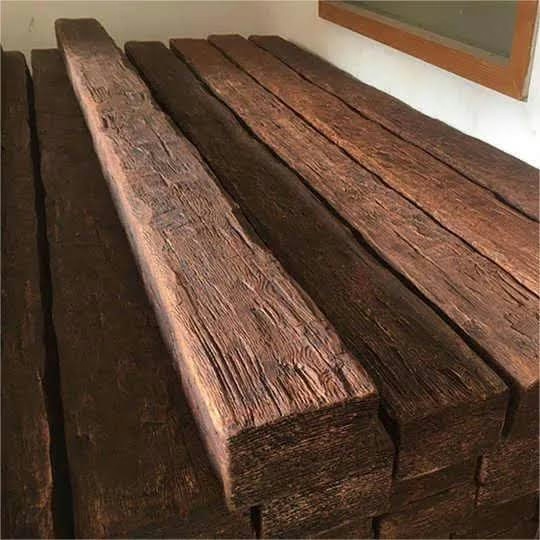
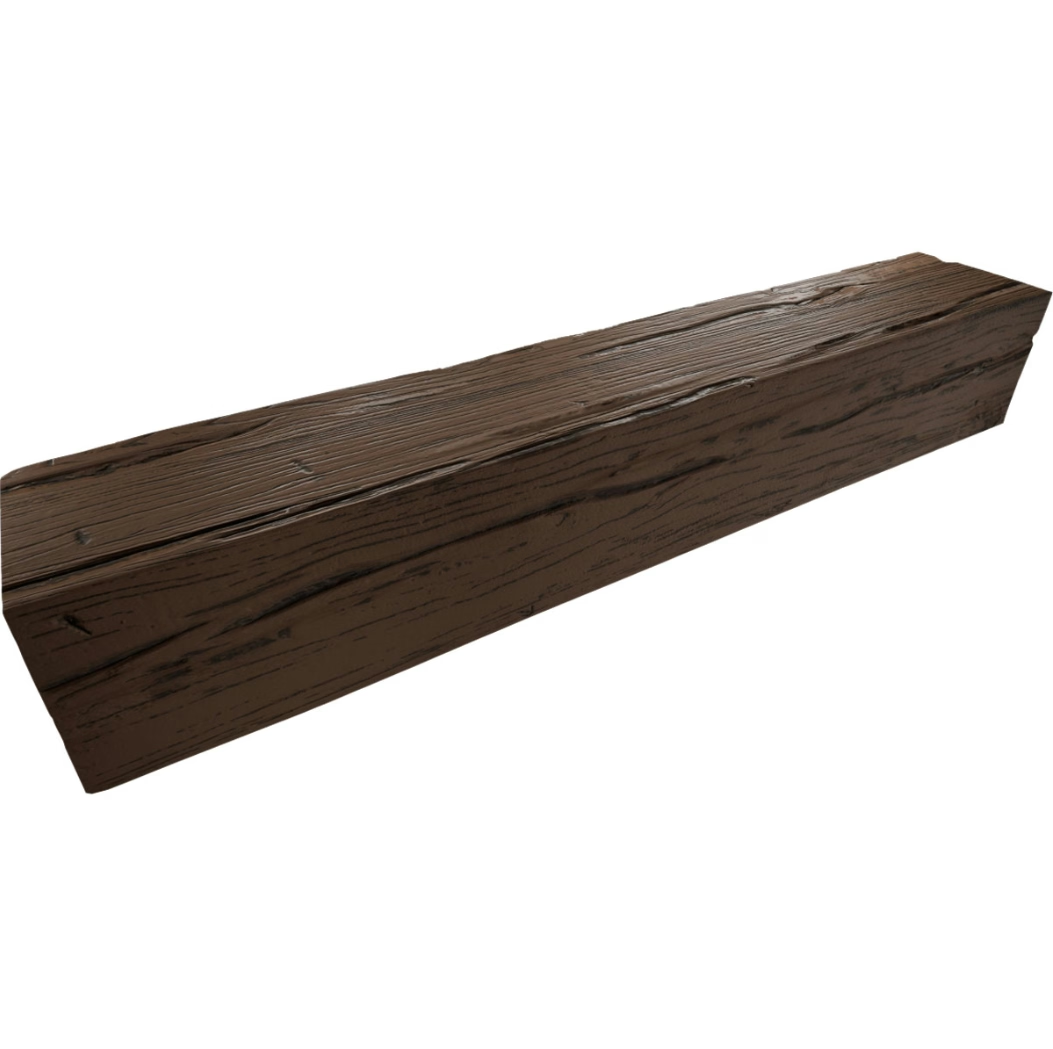
Most finish options available on standard faux beams are also available on high-density products. Hand-hewn, rough-sawn, wire-brushed, and smooth profiles all transfer directly to the denser material. Stain colors and weathering effects replicate without modification because the finish process is similar. The denser substrate actually holds the finish better over time, so the same color choice tends to last longer in service.
Installation Notes for Heavy-Duty Applications
Installing a high-density beam follows the same general workflow as a standard faux beam, but with a few important differences that reflect the heavier product.
Mounting Hardware Upgrades
Standard L-brackets and light-duty blocking give way to heavier gauge brackets, structural screws, and through-bolted connections. Where the beam is supporting significant loads, the mounting hardware may need to engage directly with structural framing rather than just ceiling finish materials. Many manufacturers offer engineered mounting kits specifically designed for their high-density products, and engineers often review the hardware specifications before approving an installation.
Crew Size and Lifting
Two installers can typically handle most high-density beams without mechanical assistance, but very long or very deep sections may require additional crew or a small lifting frame. Pre-planning the lift path and staging area keeps the installation efficient and safe. For overhead work at significant height, scaffold or lift equipment may still be required regardless of beam weight.
Coordination with Other Trades
In commercial projects, the beam installation often coordinates with electrical, mechanical, and finish trades. Surface-mounted conduit, low-voltage wiring, and lighting fixtures can all be specified to integrate with the beam's profile and reinforcement channels. Early coordination prevents clashes and reduces the chance of field modifications that delay the project.
A Beam Engineered to Do More
Extra rigid high-density PU faux beams occupy a specific niche in the faux wood product spectrum. They give designers the aesthetic of solid wood while delivering the structural performance that demanding applications require. For projects where the beam has to carry weight, take abuse, or stand up to weather, they provide a level of confidence that standard products cannot match. The premium cost is real, but for the applications where performance matters most, that premium buys a beam that does its job for decades.
Technical References
ASTM standards cited in every specification
Test Data
Lab results from internal testing program
Updated 2026
Reviewed against current product specs