Buying faux wood beams used to mean calling a local distributor, paying their markup, and hoping they had the size you needed in stock. That model is changing fast. More importers, contractors, and even homeowners are now sourcing straight from the factory, cutting out every layer between the production line and the job site. The result is a noticeably lower per-unit price, especially on larger orders, and a more direct line of communication when something needs to be customized.
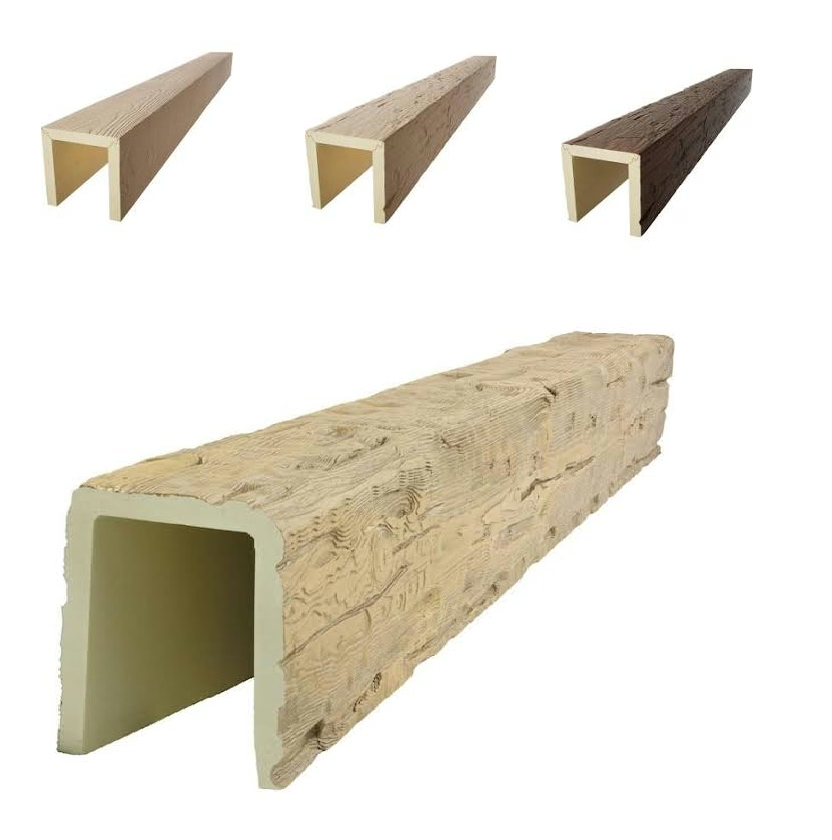
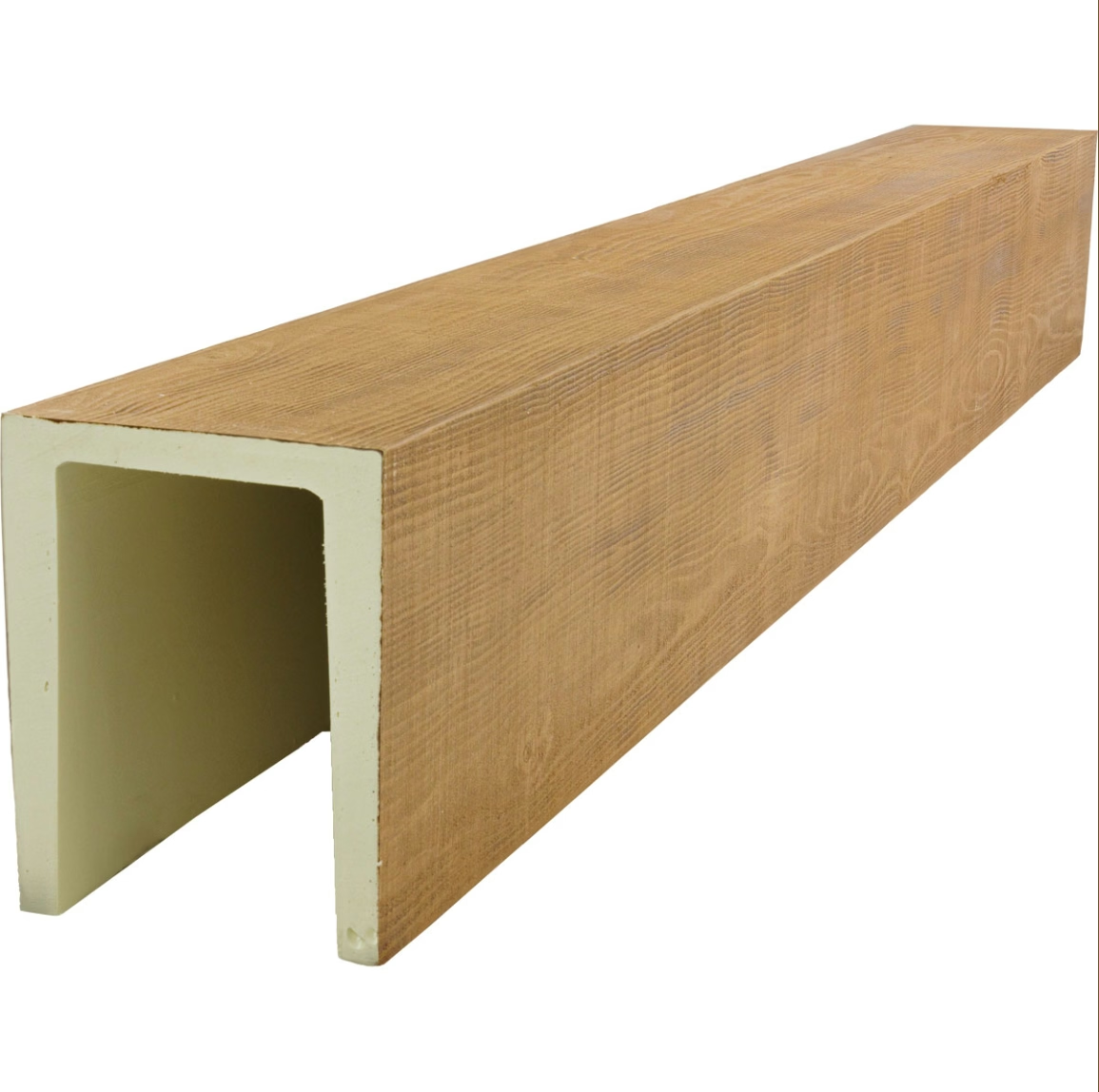
A faux wood beam is a hollow or semi-hollow decorative element made primarily from high-density polyurethane foam. The foam is molded from real timber, giving it grain texture, knots, and color variation that look convincingly like aged lumber. Because it is foam rather than solid wood, it weighs a fraction of the real thing, which lowers shipping costs and makes ceiling mounting a one-person job in many cases.
How factory direct pricing actually works
When a beam is sold through a distributor, the price you pay includes the manufacturer's cost, the manufacturer's margin, the distributor's margin, sometimes a regional rep's commission, and freight from the distributor's warehouse. Each of those layers adds 15 to 40 percent on top of the previous one. Buying factory direct removes most of those steps.
In practice, factory direct usually involves one of three setups. The first is the manufacturer's own export team, which handles international orders from the factory floor in China, Vietnam, or Mexico. The second is a trading company that owns or contracts the production line and sells under its own brand. The third is an OEM arrangement where a factory makes beams branded with your company's name, packed in your boxes, and shipped under your paperwork. All three can be considered factory direct if there is no independent distributor between you and the production line.
What you save, and where the numbers come from
A typical 5-inch by 8-inch by 12-foot polyurethane beam might retail through a U.S. distributor for $180 to $240. The same beam from a factory direct source in Asia commonly lands between $45 and $75 landed cost, depending on the finish, order volume, and current freight rates. For a contractor finishing a 20-beam ceiling, that gap translates into thousands of dollars, often enough to fund the labor or the lighting upgrade.
The savings are not purely in the unit price, though. Lead time often improves because you are dealing with the production schedule rather than a warehouse's existing inventory. If the factory has capacity, a custom run can sometimes ship in two to three weeks. If they don't, you'll know quickly and can plan accordingly. With a distributor, the answer is often "let me check" followed by silence for days.
What "no middlemen" really means in 2026
The phrase gets used loosely. A truly middleman-free transaction typically means you communicate directly with someone at the factory who can confirm raw material specs, mold availability, lead time, and quality control procedures. You receive the factory's own proforma invoice, and payment goes to the factory's bank account, not a third-party reseller. Shipping is quoted by the factory's freight forwarder or your own.
Some "factory direct" offers are actually still going through one or two layers. A factory's website might accept your inquiry, then route it to a domestic sales agent in California who takes a 10 percent cut before passing the order to Asia. That is not, strictly speaking, factory direct, even if the listing says so. Asking who issues your invoice and which bank receives your payment is the fastest way to clarify the relationship.
Common buyer concerns with direct-from-factory orders
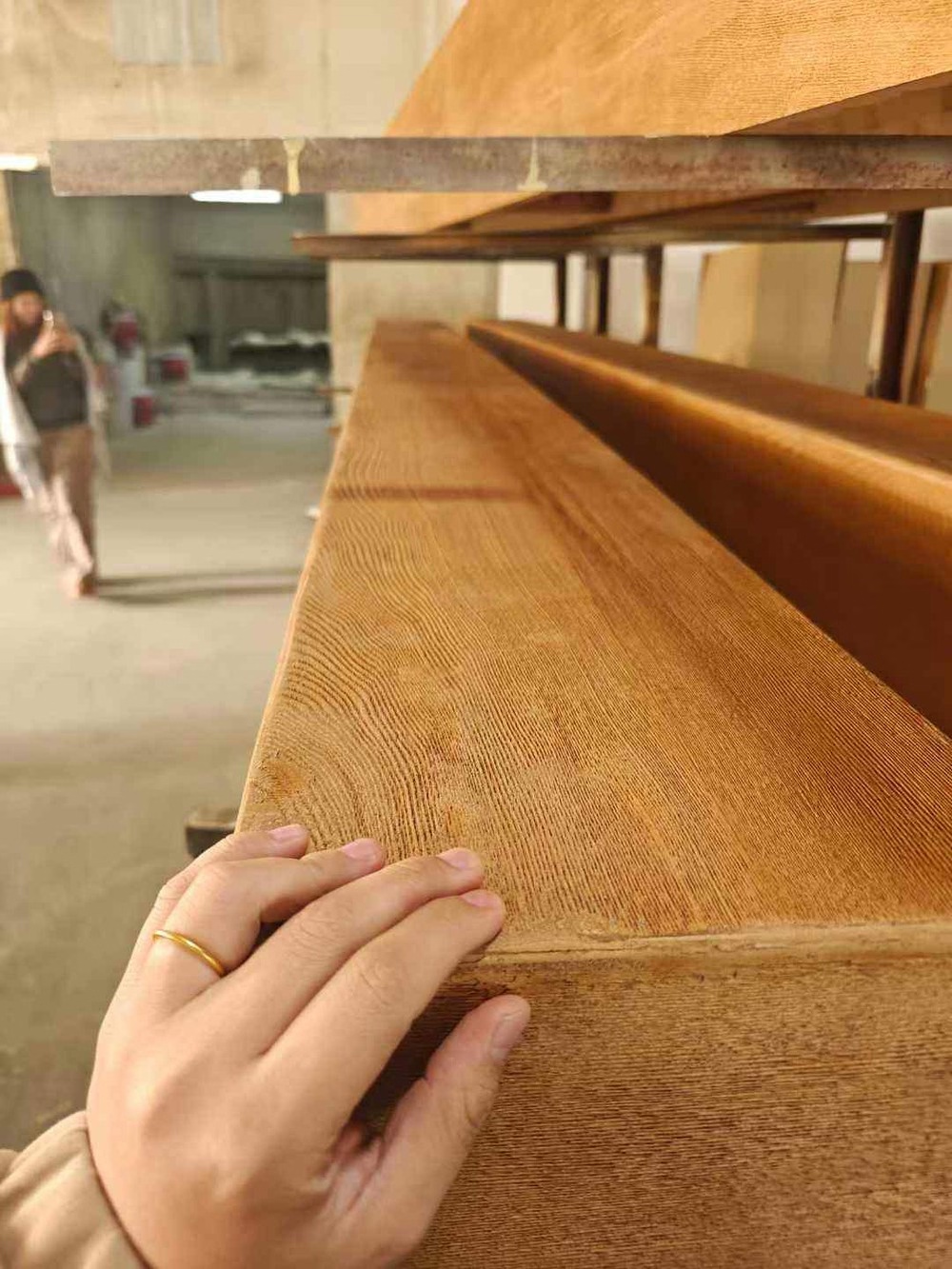
The most frequent hesitation is quality. Without a distributor who can vouch for the product, the buyer has to do some of the verification themselves. This is solvable. Reputable factories will send pre-shipment samples, share QC reports, and allow video calls showing the production line in real time. Third-party inspection services like SGS or Bureau Veritas can be hired for a few hundred dollars to check goods before they leave the factory, which is standard practice for first-time orders of any meaningful size.
Shipping is the second concern. A 40-foot container of faux beams sounds impressive until you realize it has to clear customs, get fumigated if packed in untreated wood crates, and arrive at a port you can receive from. Working with the factory's freight forwarder simplifies this, but you still need a customs broker on your end to file the entry. Some buyers choose to use a U.S.-based consolidator who imports in bulk, breaks the container down, and delivers LTL to your warehouse. The price goes up a little, but the logistics headache shrinks significantly.
Then there is the question of finishes and color matching. Polyurethane beams come in a wide range of faux finishes, from raw white through stained oak, walnut, barnwood gray, and even hand-painted distressing. The factory's color cards are usually accurate enough for sampling, but a real production run can shift tone slightly from lot to lot. For projects that require absolute color consistency across many beams, it is worth ordering 10 to 15 percent extra so the installer can select and sort pieces on site.
How to verify a factory before sending money
A few simple checks go a long way. Ask for the factory's legal name, business registration number, and the address that appears on the invoice. Cross-check the registration on the local commerce bureau's website. Look for evidence of past export shipments to your country; many governments publish import records that can be searched by HS code. Request a video walk-through of the production floor showing your specific product being made.
Communication quality matters more than people give it credit for. If the factory's sales team is slow, vague, or evasive during the quoting phase, that pattern will continue after you've wired 30 percent deposit. Fast, clear answers now are a reasonable predictor of how the rest of the order will go. Conversely, a team that anticipates your questions about HS codes, fumigation certificates, and pallet specifications is probably one that has shipped internationally many times before.
What about warranty and after-sales support?
A distributor traditionally absorbs warranty claims, taking the hit on shipping and replacement. When you buy factory direct, that responsibility shifts. The factory should still stand behind its product, but resolution involves international shipping, which is slow and costly. For this reason, serious direct buyers build a small buffer stock of 5 to 10 percent on top of their project requirement, so a replacement beam is already in the warehouse if something goes wrong.
Documentation also matters more in a direct relationship. Every email, every signed sample approval, every revision to the proforma invoice creates a paper trail that resolves disputes later. A factory that resists putting commitments in writing is a red flag. A factory that writes everything down is usually one that plans to honor those commitments.

Who factory direct pricing works best for
The model is not ideal for everyone. A homeowner finishing one room is usually better off buying from a domestic retailer, even at a higher price, because the order volume doesn't justify the logistics effort. A contractor doing one custom home might also find the freight minimums and inspection costs too high relative to the savings.
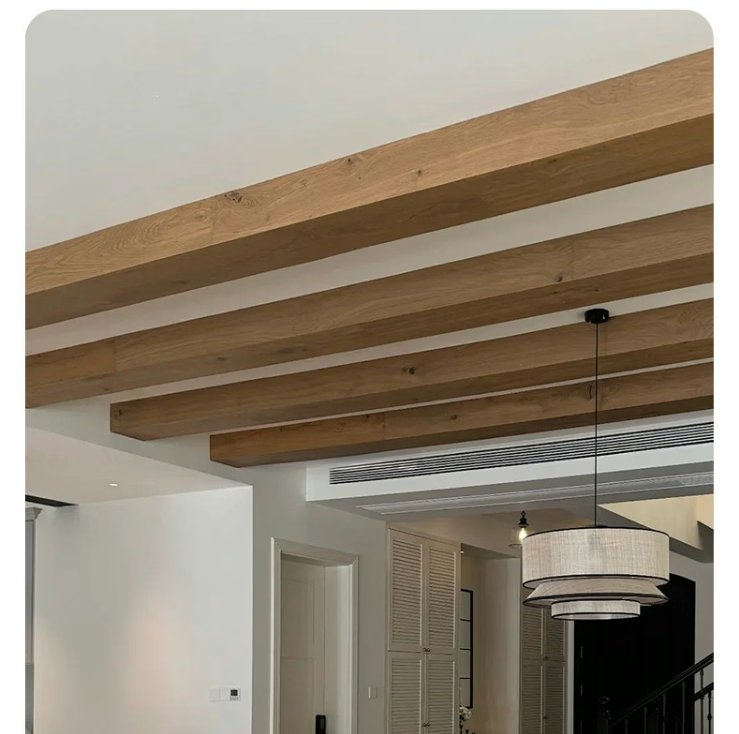
Where factory direct really pays off is at volume: developers, builders working on subdivisions or multi-unit projects, hotel and resort renovation crews, and resellers who want to put their own brand on the product. Anyone buying 50 or more beams at a time, or anyone who wants a private-label product, will find that the factory direct route saves real money and gives real flexibility.
For B2B buyers building a faux beam catalog or supplying a regional construction market, factory direct is essentially the only sustainable pricing model. Distributor markups make it impossible to compete on price while maintaining quality. Building a direct relationship with one or two reliable factories becomes a long-term competitive advantage rather than just a one-time cost saving.
Practical first steps if you are considering the switch
Start with a small sample order. Pick two or three finishes and three or four sizes that cover most of your needs. Order samples, inspect them, and put them through a stress test in your own shop if possible. Check how they cut, how they accept stain touch-up, how they handle mounting brackets, and how they react to outdoor humidity if that is a use case.
Once you have a shortlist of factories, ask for formal quotes on a 500 or 1000-unit mixed order. Compare pricing, lead time, payment milestones, shipping terms (FOB, CIF, DDP), and warranty language. Choose the factory that scores best on the combination of price, communication, and documented quality control, not just the lowest number.
The direct-to-factory model is not a shortcut to skip due diligence. It is, however, a way to get significantly more beam for your budget once that diligence is done. For buyers willing to invest a little extra time upfront, the savings and the flexibility are hard to beat.
Technical References
ASTM standards cited in every specification
Test Data
Lab results from internal testing program
Updated 2026
Reviewed against current product specs