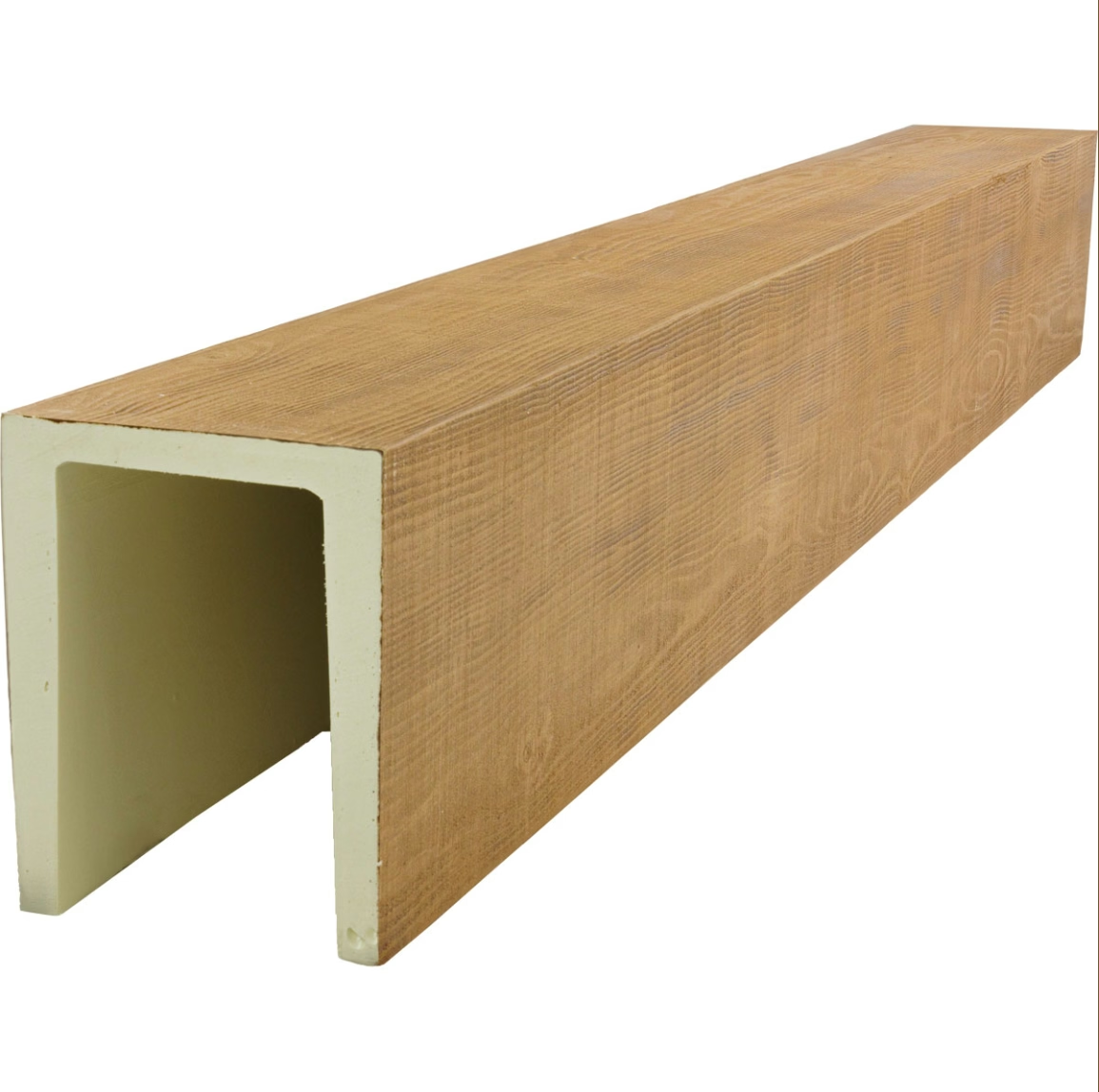
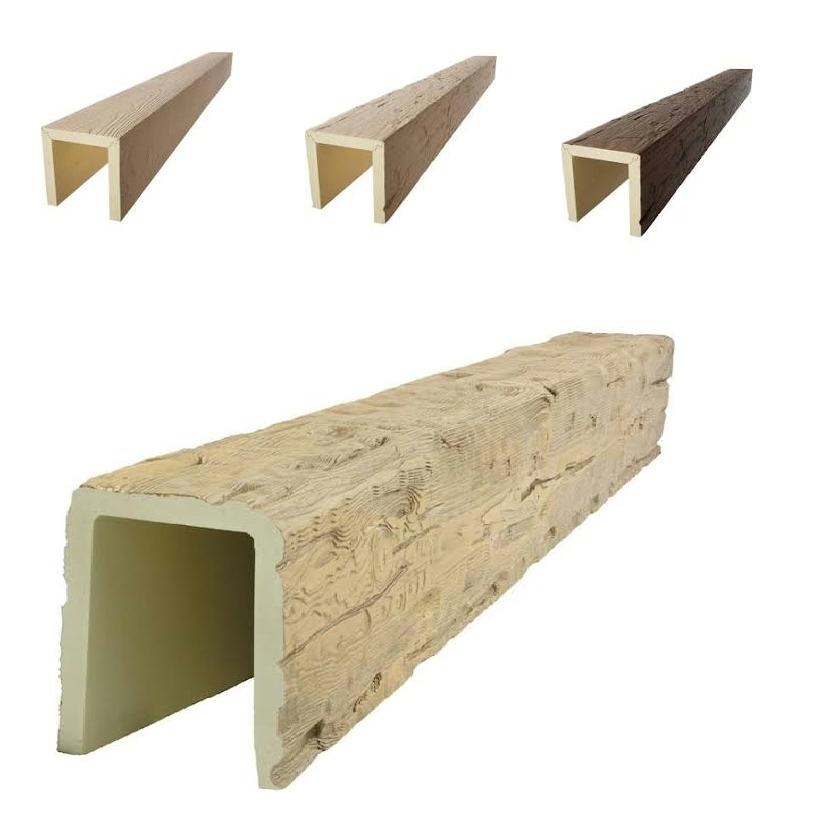
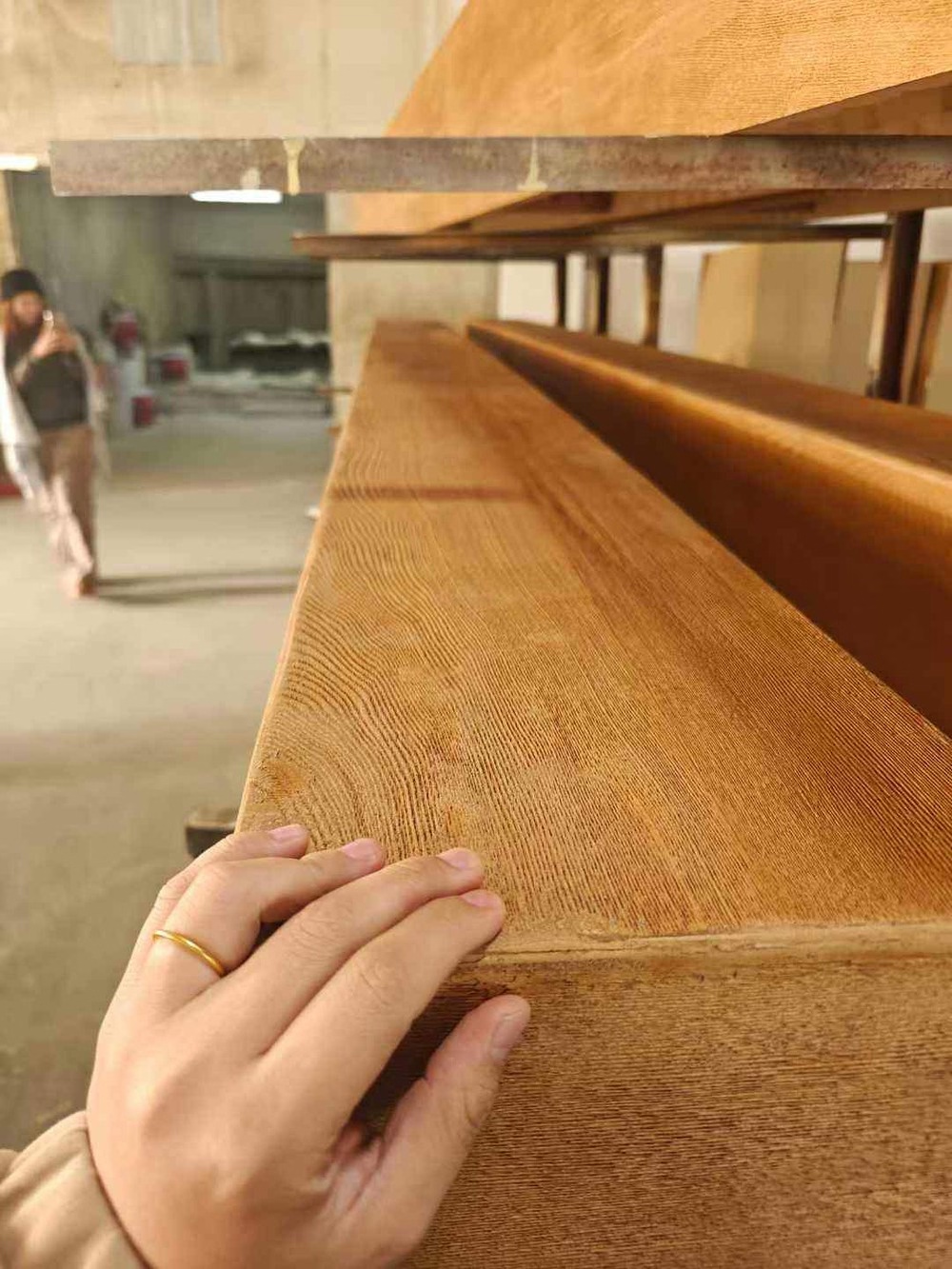
Premium faux wood ceiling beams are a category that has grown rapidly as the quality of polyurethane manufacturing has improved. Ten years ago, faux wood beams were widely seen as a compromise product, acceptable only when budget constraints ruled out real timber. Today, premium faux beams are specified by architects and interior designers on projects where real wood would be impractical, including high-end residential and commercial spaces.
The shift is largely a result of better molds, better foam chemistry, and much more sophisticated finishing techniques. The result is a product category where the visual quality can rival real timber at a fraction of the cost, weight, and installation complexity. Factory direct wholesale pricing makes this category accessible to a broader range of buyers.
What separates premium faux wood beams from the rest
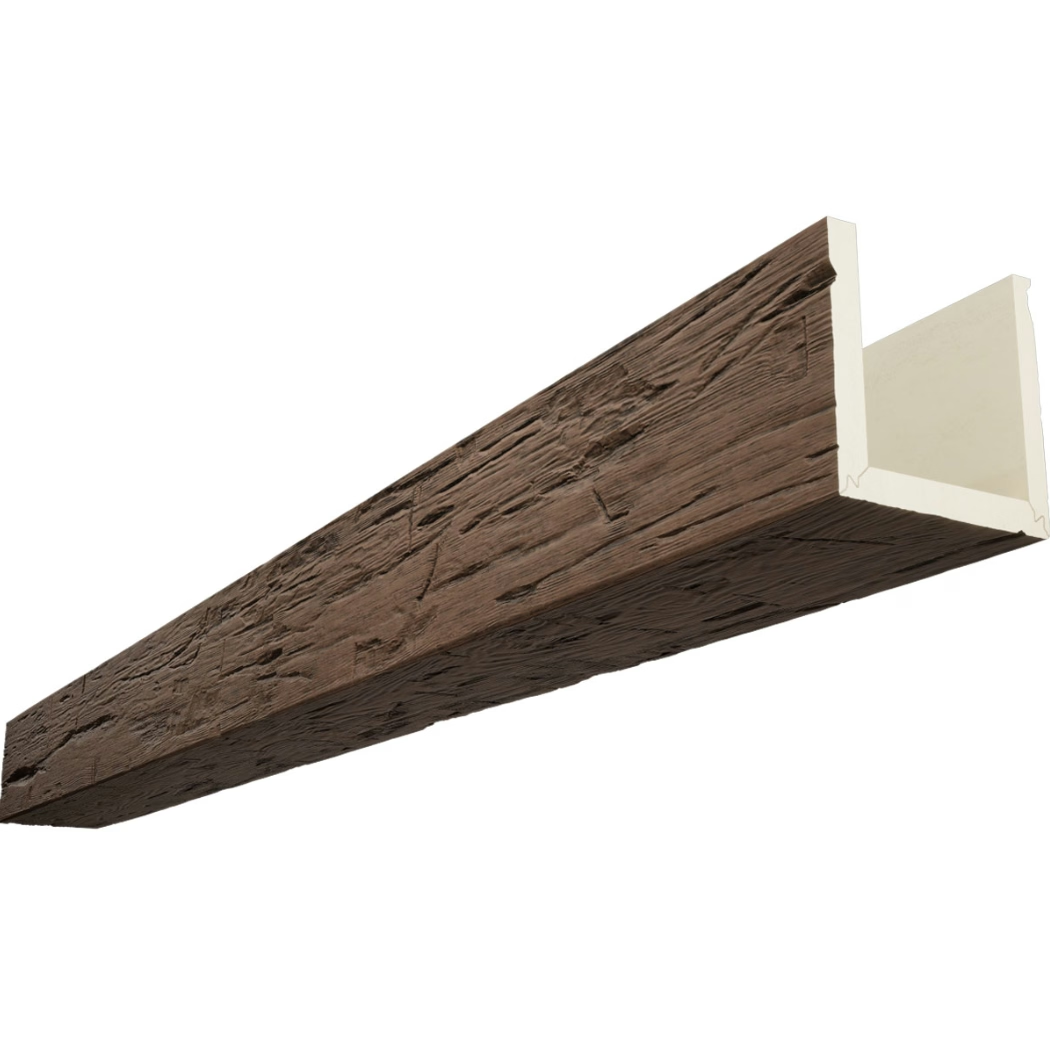
A premium faux wood ceiling beam looks like a specific species of aged timber. The grain pattern, knot distribution, color variation, and surface texture all read as authentic even when the beam is examined closely. This is the result of three things working together: the original wood master used to make the casting mold, the polyurethane formulation, and the finishing process.
The original wood master is the most important. Factories that invest in high-quality masters taken from actual pieces of barn wood, weathered oak, hand-hewn timber, or reclaimed chestnut produce beams with realistic character. Factories that use generic digital patterns produce beams with repeating grain that looks artificial under scrutiny.
The polyurethane formulation determines the physical properties of the beam. Higher density formulations resist denting, hold mounting hardware securely, and maintain dimensional stability across temperature and humidity cycles. Lower density formulations are cheaper but show wear faster and are harder to work with during installation.
The finishing process is where the visual character emerges. A premium beam might receive a base stain that establishes the overall tone, a glaze wash that adds depth and variation, hand-applied highlights that bring out the grain, and a protective topcoat that seals the finish. Each step adds labor cost but produces a beam that looks like it was cut from an actual tree and aged by decades of weather.
How the premium tier affects the buyer's pricing
Premium tier beams cost more at every stage of the supply chain. The factory's raw material cost is higher because the foam formulation is more expensive. The labor cost per beam is higher because the finishing takes longer and requires more skill. The factory's wholesale price reflects both of these inputs.
A buyer purchasing premium beams factory direct still captures the same percentage discount as a buyer purchasing economy beams, but the absolute savings per beam are larger. A $30 discount on a $200 beam is more meaningful than a $30 discount on a $80 beam. For trade buyers working on projects where the beam is a focal design element, the wholesale pricing on premium product makes the difference between viable and non-viable project budgets.
The structure of factory direct wholesale pricing
Factory direct wholesale pricing for premium faux wood ceiling beams is built on a tiered system that rewards volume and commitment. The tiers usually step at predictable quantities, and the discounts widen as the buyer commits to larger or longer-term purchases.
The entry tier is for buyers placing their first order or testing a new product. Pricing is closer to the factory's standard catalog rate, with modest quantity discounts. This tier is appropriate for small retailers, design professionals specifying for a single project, or new importers testing market response to a product line.
The middle tier is for established wholesale buyers placing regular orders. Discounts widen meaningfully, lead times become more reliable, and payment terms often loosen. This is the tier where most B2B buyers operate once they have a stable relationship with a factory.
The bulk tier is for high-volume buyers and committed partners. Discounts reach their maximum, lead times are shortest, and the factory often allocates production capacity to ensure the buyer is prioritized during peak season. This is the tier for large importers, regional distributors, and developers placing ongoing bulk orders.
How tier pricing differs across factories
Different factories structure their tiers differently. Some publish clear price lists with quantity breaks at 50, 250, 1000, and 5000 pieces. Others quote project by project and apply discounts based on a holistic view of the buyer's potential. A few offer subscription-style pricing where the buyer commits to a monthly or quarterly spend in exchange for a fixed discount and dedicated production capacity.
For buyers evaluating factories, the tier structure itself reveals something about the factory's business model. A factory that publishes clear tiers is confident in its pricing consistency and is comfortable with transparent comparison shopping. A factory that resists publishing tiers is usually trying to maintain flexibility to charge different buyers different prices, which can work against smaller buyers.
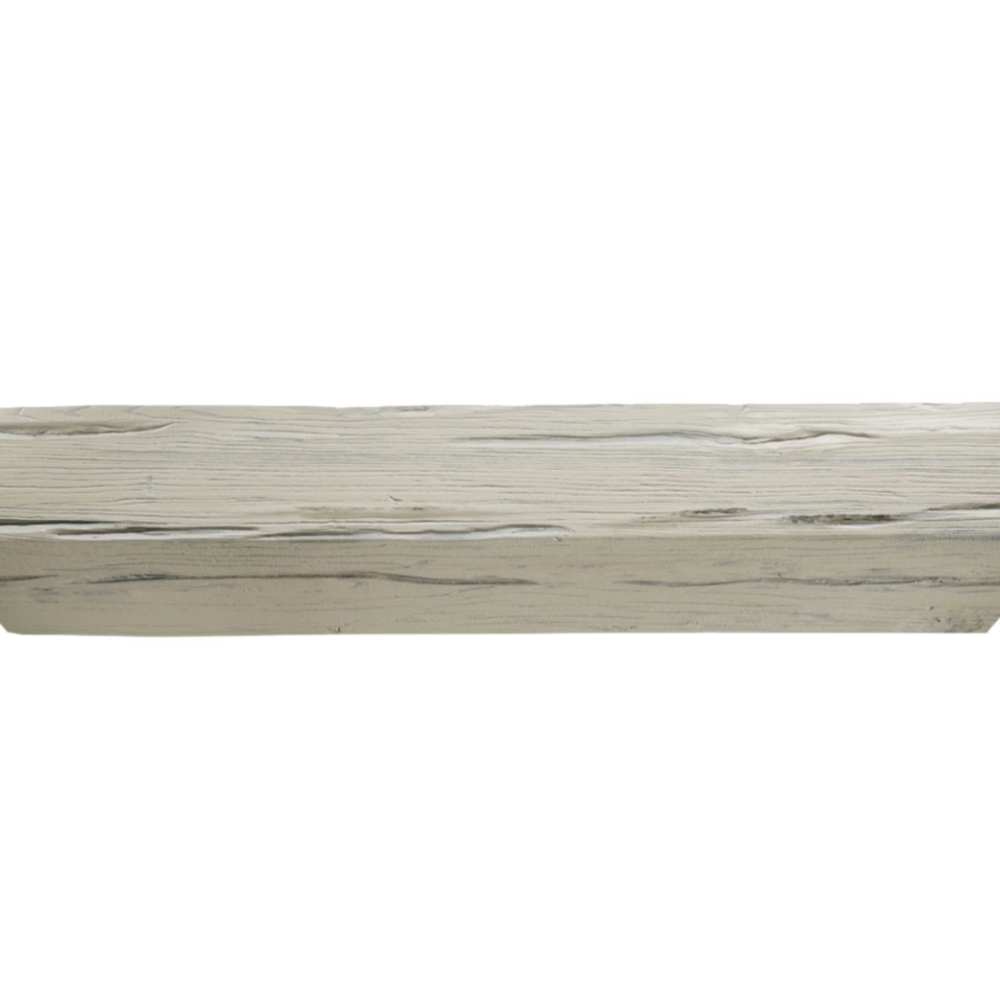
Quality verification at the wholesale level
Quality verification is the buyer's responsibility, not the factory's. Even the best factories ship occasional defects, and a wholesale order large enough to qualify for tier pricing is large enough to have meaningful defect exposure.
The first verification step is sample approval. The buyer should request production samples of the specific profile and finish being ordered, then sign off in writing on the sample as the reference standard. This creates a clear benchmark that the factory can use during production and that the buyer can reference during incoming inspection.
The second verification step is pre-shipment inspection. A third-party inspector visits the factory when production is complete and checks a random sample of the packed goods. Defects found at this stage can be corrected before the container is sealed and loaded. The inspection cost is a few hundred dollars, but it can catch thousands of dollars in latent quality issues.
The third verification step is incoming inspection at the buyer's warehouse. The buyer or a representative checks the goods as they are unloaded. Even with pre-shipment inspection, transit can cause damage that was not present at the factory. Catching this damage at receiving time allows the buyer to file claims with the freight carrier before the container is emptied.
What "consistent quality" actually means
Consistent quality does not mean every beam is identical. Wood is naturally variable, and a beam that looks exactly like every other beam reads as artificial. Consistent quality means the variation across beams is within an agreed range, the colors are within the agreed tolerance, and the structural quality is uniform.
A good factory maintains color cards, finish specifications, and dimensional tolerances that the buyer agrees to in advance. A 2 percent dimensional tolerance is standard. A color tolerance expressed in delta E units is appropriate for serious buyers. Density and structural properties can be specified numerically and verified by spot testing.
Common wholesale buyer mistakes
The most common mistake is underestimating total cost by focusing only on the factory's unit price. Freight, duty, inspection, packaging, and storage all add to the landed cost. A quote comparison that ignores these line items produces misleading conclusions.
The second most common mistake is failing to build a buffer stock. Every project has some overage, breakage, and replacement need. A buyer who orders exactly the quantity needed for a project has no margin for error. A buyer who orders 10 percent extra has margin and avoids the cost of emergency small-quantity reorders.
The third most common mistake is treating all factories as interchangeable. The faux wood beam market has high variance in production quality, finishing capability, and business reliability. A factory that produced excellent samples might be unable to replicate that quality at scale. A factory with strong references might have changed ownership or management since those references were earned. The relationship with the factory matters as much as the product itself.
How to evaluate a new factory for wholesale premium product
Start with the factory's certifications, length of operation, and export history. A factory that has been exporting for 15 years has weathered multiple market cycles and built systems that survive changes in ownership or management. A factory that started exporting two years ago is still learning.
Request references from current buyers in markets similar to yours. A factory that serves well the U.S. residential market might not serve well the Middle Eastern commercial market, even if both are technically premium buyers. References in your segment are far more informative than general references.
Visit the factory in person if at all possible. A video call is helpful but a physical visit lets you see the production floor, meet the management, examine the raw material storage, and judge the overall professionalism of the operation. A factory that welcomes visits is usually confident in its operation. A factory that discourages visits is often hiding something.
The total value of factory direct wholesale premium sourcing
For trade buyers who move enough product annually, factory direct wholesale pricing on premium faux wood ceiling beams produces a structural cost advantage that compounds over time. The savings on each order fund better marketing, larger inventory, faster delivery, or improved margin. Over multiple orders across multiple years, the cumulative effect is substantial.
The advantage is not just financial. Direct relationships give buyers earlier access to new products, more influence over customization, and better service when problems arise. A factory that knows a buyer well will bend its standard processes to accommodate a special request. A factory that knows the buyer only as an order number will quote standard rates and standard lead times on everything.

Where the premium market is heading
Premium faux wood ceiling beams are gaining market share against both economy faux beams and real timber. The visual quality has reached a point where even experienced contractors sometimes cannot tell the difference without close inspection. The cost gap with real timber remains substantial, and the installation gap is even larger because faux beams weigh a fraction of the real product.
The factories producing the best premium product are investing in better masters, better foam chemistry, and more sophisticated finishing. Some are exploring digital printing as a way to put unique grain patterns on each individual beam, eliminating the repeating-pattern problem that has historically been a giveaway for faux products. The next few years are likely to bring further improvements that push the premium category even closer to visual parity with real timber.
For wholesale buyers, this means now is a good time to establish direct relationships with the leading premium factories. As the category matures and becomes more widely specified, the factories will become more selective about which wholesale partners they support. Buyers who built relationships early will benefit from priority access, favorable terms, and input into product development.
Getting started with factory direct premium wholesale
Define your target market clearly. The product positioning, pricing strategy, and volume expectations should be clear before approaching factories. A buyer who knows they are selling to mid-range residential contractors should source differently than a buyer selling to luxury custom home builders.
Identify candidate factories based on the criteria discussed above. Request pricing, samples, and references. Compare the options honestly and select the factory that best fits your business model.
Place a small initial order that exercises the entire process. Use this order to validate the factory, the freight forwarder, the customs broker, and your own internal receiving and QC procedures. Once the entire chain works smoothly on a small order, scale up to a wholesale-tier purchase. Build the relationship from there, with patience and clear expectations on both sides.
Technical References
ASTM standards cited in every specification
Test Data
Lab results from internal testing program
Updated 2026
Reviewed against current product specs