
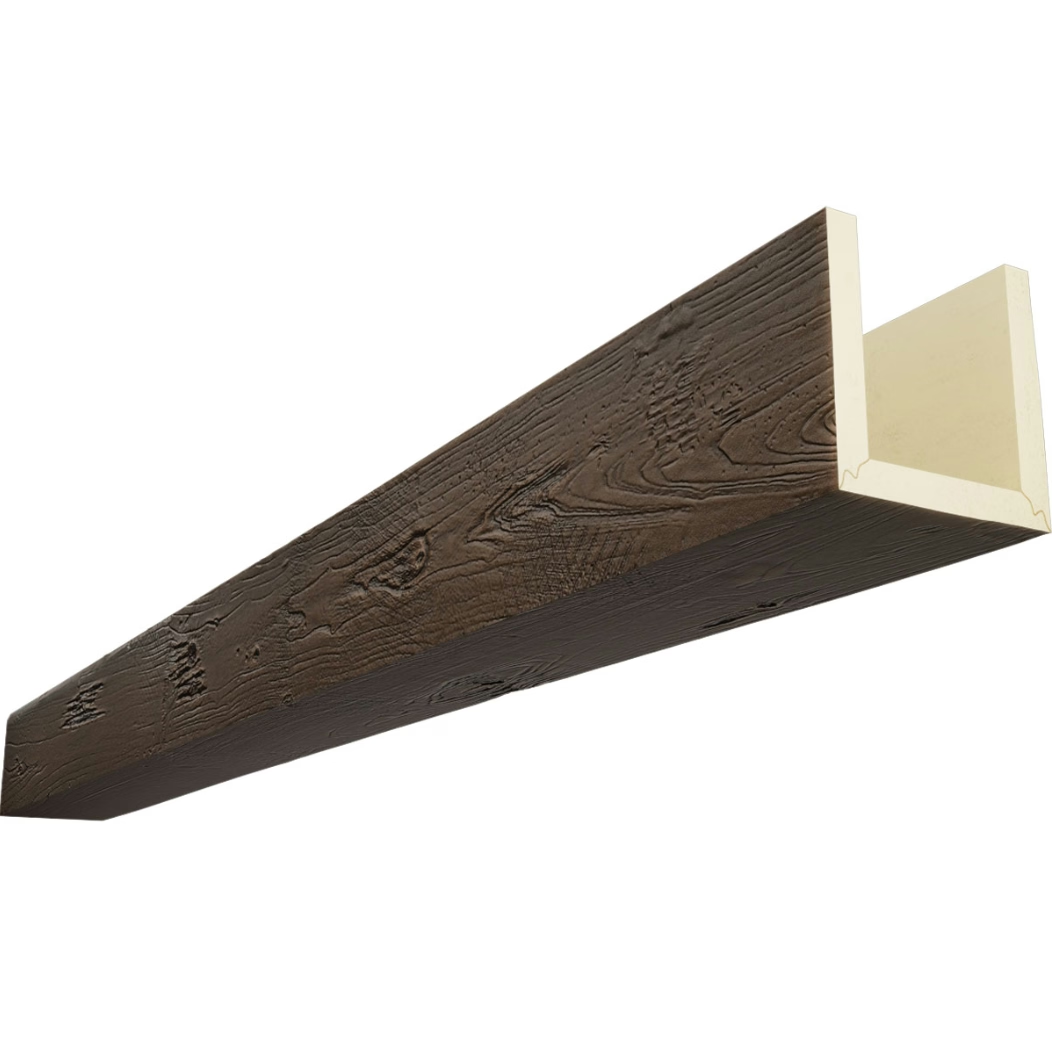
Some projects span both interior and exterior spaces. A covered patio that flows into a great room, a pergola attached to a sunroom, an outdoor kitchen under a roof extension that opens onto an interior dining area. In these hybrid layouts, specifying one beam product for outdoor use and another for indoor use creates tonal mismatches that become obvious at the threshold. UV-grade polyurethane beams are engineered specifically to solve this problem.
Understanding UV-Grade Polyurethane Formulation
UV-grade polyurethane is not a single product. It's a designation that signals a particular combination of resin, additives, and pigment selected to withstand extended ultraviolet exposure without the chemical breakdown that degrades standard polymers. The base resin is typically an aliphatic polyurethane, which resists yellowing far better than aromatic grades that were common in earlier generations of faux beam products.
On top of that base, formulators add a layered protection package. UV absorbers in the 300 to 400 nanometer range intercept incoming radiation before it can initiate photochemical reactions. Hindered amine light stabilizers, often abbreviated HALS, scavenge the free radicals that do form and interrupt the degradation chain. Antioxidants prevent oxidative breakdown that UV exposure accelerates. Together, these additives work synergistically to slow aging across multiple pathways simultaneously.
Pigment Selection Beyond Aesthetics
Pigment choice in UV-grade beams is dictated by lightfastness as much as by the desired final color. Iron oxide pigments, which produce the warm earth tones common in faux wood finishes, score in the highest lightfastness categories on standardized wool scale testing. Carbon black, used for the darkest tones, is similarly stable. Titanium dioxide, the workhorse white pigment, also rates well and provides both color and a measure of UV reflection.
Organic pigments are sometimes used for brighter accent tones, but they're carefully screened for lightfastness before inclusion. A UV-grade beam that includes any organic pigment will carry only those pigments that meet elevated weathering standards. The result is a beam that can be specified for an outdoor ceiling with confidence that the appearance will hold for many years.
Indoor Performance Carries Forward
What makes UV-grade products particularly valuable is that the same additive package that protects against outdoor UV radiation also protects against the lower-intensity UV that passes through window glass indoors. So a beam rated for outdoor use will perform at an even higher level when installed in a conditioned interior space.
This consistency simplifies project specification considerably. An architect designing a resort with indoor-outdoor pavilions, a contractor renovating a lakeside home with covered porches, or a builder working on a hospitality venue with both lobby and terrace spaces can specify one product across all those zones and expect matching performance and matching appearance. No transition zone requires special accommodation.
Real-World Color Drift Expectations
In accelerated xenon arc weathering tests calibrated to represent several years of Florida or Arizona sun exposure, premium UV-grade polyurethane beams typically show Delta E values below 2.0, often below 1.5. For reference, the human eye generally cannot distinguish color differences below a Delta E of 1.0, and differences below 2.0 are visible only when samples are placed side by side under controlled lighting.
In actual installations, this translates into decades of stable appearance. A UV-grade beam installed on a covered patio in 2026 will look essentially identical to a UV-grade beam of the same batch installed on the matching interior ceiling in 2036. For property owners and design professionals, that predictability is what justifies the modest price premium over standard indoor-only products.
Where UV-Grade Beams Make the Biggest Difference
The most demanding environments for UV exposure are those at altitude, near water, in tropical latitudes, or facing south or west with minimal shading. UV intensity increases roughly 10 to 12 percent for every 1,000 meters of elevation, and water surfaces reflect significant additional UV back onto nearby structures. A lakefront pergola in Colorado, for example, faces UV loads far higher than a sheltered patio in Seattle.
For these locations, UV-grade beams aren't an upgrade but a necessity. Standard indoor-only products in such environments will show noticeable color shift within a few years. UV-grade beams are formulated precisely for this category of conditions and provide the only realistic way to maintain intended appearance without committing to a refinishing cycle every few years.
Mixed Indoor-Outdoor Design Coherence
Design coherence across indoor and outdoor zones is a real practical challenge in residential and commercial projects. Even when architects select the same nominal wood species for both zones, the outdoor portions age differently from the indoor portions because of differential UV exposure. By the time a project is five years old, the interior beams may still look fresh while the outdoor beams have shifted in tone, and the visual disconnect is obvious every time someone walks through the door.
UV-grade polyurethane beams eliminate this disconnect by aging at the same imperceptible rate on both sides of the threshold. The indoor ceiling and the outdoor pergola carry matching color from installation through decades of service. For projects where this coherence matters to the design intent, the choice is essentially made for the specifier.
Installation Notes for UV-Grade Outdoor Beams
Even UV-grade products benefit from sensible installation practices. Mounting height and orientation affect UV exposure, with horizontal upward-facing surfaces receiving significantly more radiation than vertical faces. Beams installed as ceiling members under a roof structure receive far less UV than beams installed as open pergola rafters with full sky exposure.
Where possible, design the installation so that the most exposed surfaces receive some shading. Deep eave overhangs, pergola slats above the beams, partial roof coverage, or simply orienting primary beam runs east-west rather than north-south can all meaningfully extend the perceived life of the beam color. These decisions are made at design stage and cost essentially nothing compared to the long-term benefit.
For cleaning, UV-grade beams tolerate standard mild soap and water without affecting color. Avoid harsh solvents, abrasive cleaners, and pressure washing at close range, all of which can damage surface texture regardless of UV protection. A simple annual rinse is generally sufficient to keep the beams looking fresh.
Matching New Beams to Existing Construction
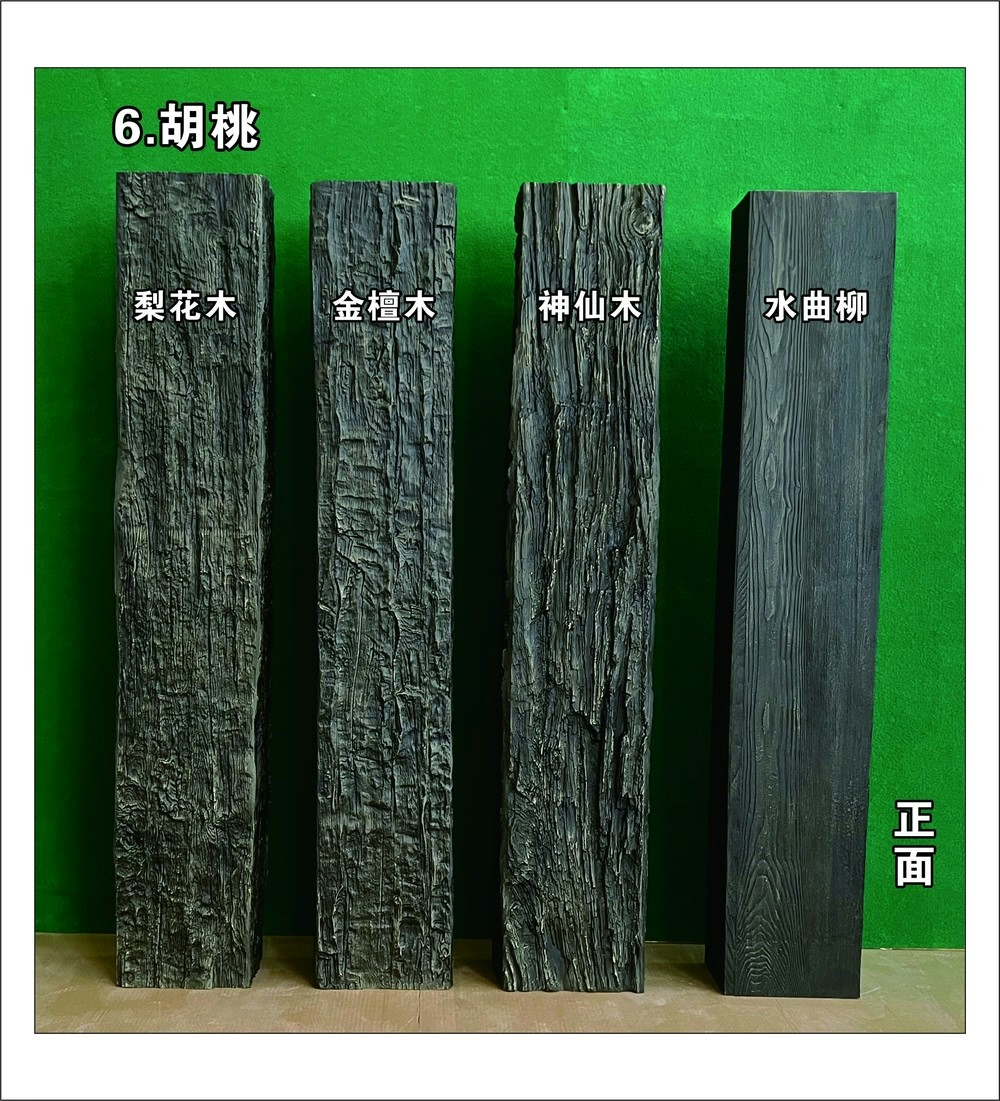
When extending or renovating an existing structure that has original UV-grade polyurethane beams, the new beams will likely look subtly different from the originals even if they came from the same product line. Manufacturing batches vary slightly, and even the most color-stable products show some batch-to-batch variation. The solution is to order all replacement or extension beams from a single production batch, ideally with the original order reference if available.
If matching old and new installations is unavoidable, request physical color swatches or sample chips from the manufacturer for both batches and compare them under daylight conditions before installation. Many suppliers will work with contractors to blend batches or provide a small quantity of original-color touch-up pigment to harmonize any minor differences. This kind of supplier support is one of the practical benefits of sourcing UV-grade beams from established manufacturers rather than generic importers.
Technical References
ASTM standards cited in every specification
Test Data
Lab results from internal testing program
Updated 2026
Reviewed against current product specs


