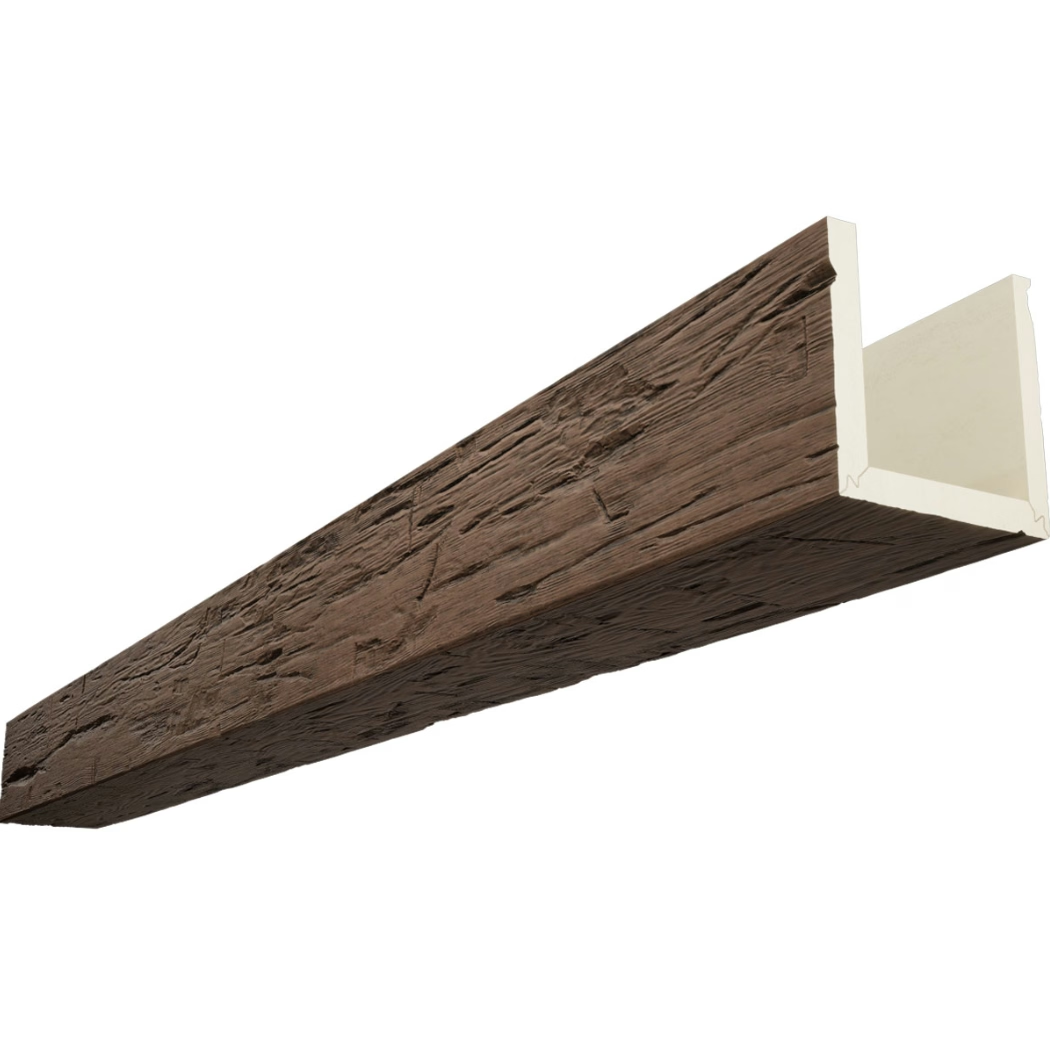
Not every faux beam order needs to move by ocean. Small bulk orders that need to arrive quickly, orders filling in for delayed ocean shipments, and orders supporting time-sensitive project deadlines can all benefit from air freight. Understanding how air shipment works for faux beam orders, what it costs, and when it makes sense helps buyers make informed logistics decisions.
When Air Shipment Becomes the Right Choice
Air shipment becomes the right logistics choice when the project cost of waiting for ocean freight exceeds the cost premium of air transport. This calculation depends on several factors that vary by project, but some common scenarios make air freight clearly worthwhile.
A small replacement order for a renovation project that's been delayed by an earlier shipping issue is one common case. The contractor needs the beams to finish the work, the client is waiting, and every day of delay costs the contractor money. Air freight in this scenario might cost more than ocean, but it's less expensive than the labor and overhead of an idle crew waiting for material.
Another common case is a small new construction project on a tight timeline. A boutique commercial build, a high-end residential project with scheduled completion, or any project where the opening date is fixed and the construction schedule has no buffer can justify air freight to keep the project on track.
Size Thresholds for Air Shipment Feasibility
Air shipment pricing is based on dimensional weight and actual weight, whichever is greater. Polyurethane faux beams are relatively light compared to their volume, so dimensional weight often drives the cost calculation. Understanding where air freight becomes prohibitively expensive helps buyers plan order sizes appropriately.
For typical residential beam sizes, air shipment becomes economically viable for orders up to approximately 20 to 40 beams depending on dimensions. Beyond that threshold, the cost premium over ocean freight becomes substantial enough to require serious justification. Some projects with very tight timelines still choose air freight above this threshold because the project cost of delay exceeds the freight premium.
The exact threshold varies based on current air freight rates, fuel surcharges, and destination country fees. Working with a freight forwarder or shipping service that provides current quotes helps buyers understand their specific options for each shipment.
Packaging Considerations for Air Freight
Air freight handling differs from ocean freight in several ways that affect packaging requirements. Air cargo is loaded and unloaded more frequently than ocean containers, with more handling events between origin and destination. The packaging needs to withstand more individual handling impacts.
Beam packaging for air freight typically uses more robust crating than ocean freight packaging. Wooden crates or reinforced cardboard cartons sized to the beam dimensions prevent movement during handling. Internal bracing supports the beams at multiple points along their length, preventing the flex and vibration that can damage long products during air transport.
For shorter beams, standard palletized packaging with adequate wrapping and bracing works well. The pallet size should match standard air cargo pallet dimensions to optimize loading and minimize handling complexity. For longer beams that exceed standard pallet dimensions, custom crating may be needed.
Transit Times and Service Options
Air freight transit times for faux beam orders typically range from three to seven business days depending on origin, destination, and service level. Express services with priority handling deliver at the faster end of this range, while standard air freight services deliver at the slower end.
The total transit time includes pickup at origin, processing at the carrier's facility, the actual flight, customs clearance at destination, and final delivery to the receiver. Each step contributes to the total time, and experienced freight services optimize each step to minimize the overall transit duration.
For urgent shipments, same-day or next-day services are sometimes available from major origin airports. These services cost significantly more than standard air freight but can be worthwhile when a single day of delay would cascade through a project schedule. Most projects don't require this level of urgency, but it's worth knowing it exists for the occasional critical situation.
Cost Factors and Pricing Structures
Air freight pricing depends on several variables. The base rate per kilogram varies by route and current market conditions. Fuel surcharges fluctuate with global fuel prices. Security surcharges apply to most international air cargo. Destination handling fees cover the costs of unloading, customs processing, and final delivery.
For small beam orders, the minimum charges often apply even when the actual shipment is small. This means the per-kilogram cost for a small air shipment can be substantially higher than for a larger shipment. Buyers should understand these minimum charges when evaluating air freight for small orders.
Some carriers offer all-inclusive pricing that covers all surcharges and fees in a single quoted rate. This pricing structure simplifies budget planning and eliminates the surprise charges that can affect shipments billed on individual line items. For project budgeting purposes, all-inclusive pricing is often preferred.
Documentation Requirements for Air Freight
Air freight documentation is similar to ocean freight documentation but typically processed more quickly due to the faster transit times. Commercial invoices, packing lists, and certificates of origin are standard requirements. Material safety data sheets may be requested for polyurethane products, particularly for shipments to countries with strict chemical import regulations.
Customs declarations for air freight typically need to be filed earlier in the shipping process than for ocean freight because of the compressed timeline. The documentation needs to be accurate and complete before the shipment is tendered to the carrier, because there's less time to correct errors after the cargo is in transit.
For shipments to countries with free trade agreements with the origin country, certificates of origin can reduce or eliminate duty costs. These certificates need to be issued by the appropriate authority in the origin country and included with the shipping documentation. Experienced freight services know which agreements apply to specific routes and ensure the documentation supports preferential treatment when available.
Insurance and Risk Management
Air freight insurance rates are typically lower than ocean freight insurance rates because of the shorter transit time. The cargo is exposed to fewer risks during a three-day air shipment than during a thirty-day ocean voyage. For high-value beam orders, insurance is still recommended to protect against damage during handling.
Most carriers include basic liability coverage in their standard pricing, but this coverage is usually limited. Declared value coverage, which provides full protection for the shipment's actual value, is available for an additional fee. For orders with significant value, declared value coverage is typically worth the modest additional cost.
Theft and damage during handling are the most common risks for air freight. Quality packaging that prevents both damage and easy access to the cargo provides the most practical protection. Sealed containers with tamper-evident closures discourage theft during the multiple handling events in air transit.
Coordinating Air Freight With Project Schedules
Successful air freight coordination requires close communication between the buyer, the supplier, and the freight service. The buyer provides the required delivery date, the supplier prepares the shipment to meet that date, and the freight service handles the actual transport.
For projects where the delivery date is critical, building in a buffer of two to three days beyond the carrier's quoted transit time protects against unexpected delays. Customs holds, weather events, and handling complications occasionally add time to shipments, and the buffer ensures these delays don't push the delivery past the critical date.
Some freight services offer guaranteed delivery services with refund provisions if the shipment arrives later than the promised date. These services cost more than standard air freight but provide financial protection against delays. For projects with contractual completion deadlines, guaranteed delivery services can be a worthwhile investment.
Technical References
ASTM standards cited in every specification
Test Data
Lab results from internal testing program
Updated 2026
Reviewed against current product specs