
The question of real timber versus faux polyurethane comes up in almost every beam conversation. Homeowners want to know which is better. Contractors want to know which to recommend. Designers want to know which to specify. The honest answer is that neither is universally better. Each has genuine advantages and genuine limitations, and the right choice depends on the project, the budget, and what the homeowner values. This article lays out a complete comparison so the decision can be made on facts rather than assumptions.
Material Comparison
The most fundamental difference between real and faux beams is the material itself.
Real Timber
Real timber beams are sawn from harvested trees. The wood species, growing conditions, sawing pattern, and drying method all affect the beam's appearance and performance. Common species for structural and decorative beams include Douglas fir, Southern yellow pine, white oak, red oak, reclaimed oak, reclaimed barn wood, and cedar.
Polyurethane Faux Beams
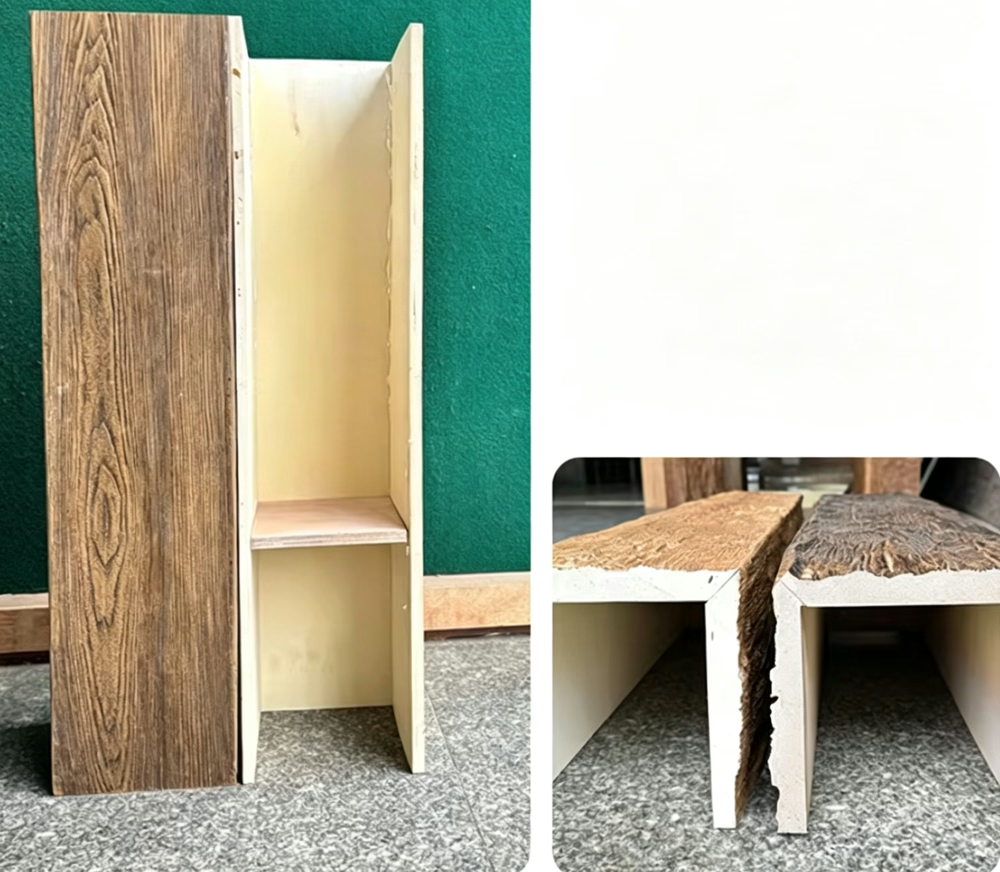
Faux polyurethane beams are molded from liquid polyurethane foam into a rigid form with a embossed wood-grain texture. The finish is applied in the factory — stained, painted, or glazed — and sealed with a durable top coat. The result is a lightweight, dimensionally stable beam that reads as wood from normal viewing distances.
Pros of Real Timber Beams
Real timber beams have genuine advantages that cannot be fully replicated.
Authentic Natural Character
Real timber beams have natural character that faux cannot fully replicate: grain patterns that formed over the tree's lifetime, knots that mark where branches once grew, checks and cracks that develop as the wood dries, and color variation that reflects natural growth patterns. This character is genuine. It is not simulated or embossed.
Long-Term Durability
With proper maintenance, real timber beams can last the lifetime of the structure. They can be sanded, refinished, and repaired. They age gracefully, developing patina and character over decades of use.
Environmental Story
For homeowners who value the environmental story of their materials, real timber beams have an advantage. Reclaimed beams reuse existing lumber, avoiding new harvesting. New timber beams come from sustainably managed forests that plant more trees than they harvest.
Structural Capability
Real timber beams can serve as actual structural members. If a load-bearing wall needs to be removed, a real timber beam or engineered beam can span the opening and carry the load. Faux beams are decorative only.
Cons of Real Timber Beams
Real timber beams have genuine limitations that should not be overlooked.
Weight
Real timber is heavy. A 6x8 beam in 12 feet can weigh 120–140 pounds. The weight makes installation difficult, requires more workers, and may require structural support analysis.
Moisture Sensitivity
Real timber absorbs and releases moisture with changes in humidity. This causes expansion and contraction that can lead to:
- Cracks and checks in the wood surface
- Warping or twisting of the beam over time
- Gaps at joints and connections
- Finish failure in humid environments
In bathrooms, kitchens, basements, and coastal regions, real timber beams require careful attention to moisture control and finish maintenance.
Inconsistent Appearance
Real timber beams vary from piece to piece. Grain patterns, color, and character differ. For a room with multiple beams, the variation may be desirable (natural character) or problematic (inconsistent appearance).
Cost
Real timber beams are expensive. Reclaimed beams command a premium. Specialty species (white oak, walnut, cedar) are expensive. The cost of materials alone often exceeds the total installed cost of comparable faux beams.
Installation Complexity
Real timber beams require structural support analysis, potentially engineered connections, and skilled installation. The installation cost is significant.
Lead Time
Sourcing specific timber beams — particular species, particular dimensions, particular character — can take weeks or months. Specialty reclaimed beams may need to be located, salvaged, and milled.
Pros of Faux Polyurethane Beams
Faux polyurethane beams have genuine advantages that make them the right choice for many projects.
Lightweight
A polyurethane faux beam weighs 75–80% less than a comparable real timber beam. A 6-inch by 8-inch by 12-foot faux beam weighs about 25 pounds. The same real timber beam weighs 120–140 pounds. The weight difference makes installation accessible to DIY homeowners and dramatically reduces labor time.
Dimensional Stability
Polyurethane does not absorb moisture, does not expand or contract with humidity changes, and is not susceptible to rot or decay. The beam maintains its dimensions and appearance over decades. There are no checks, cracks, or gaps developing over time.
Consistent Appearance
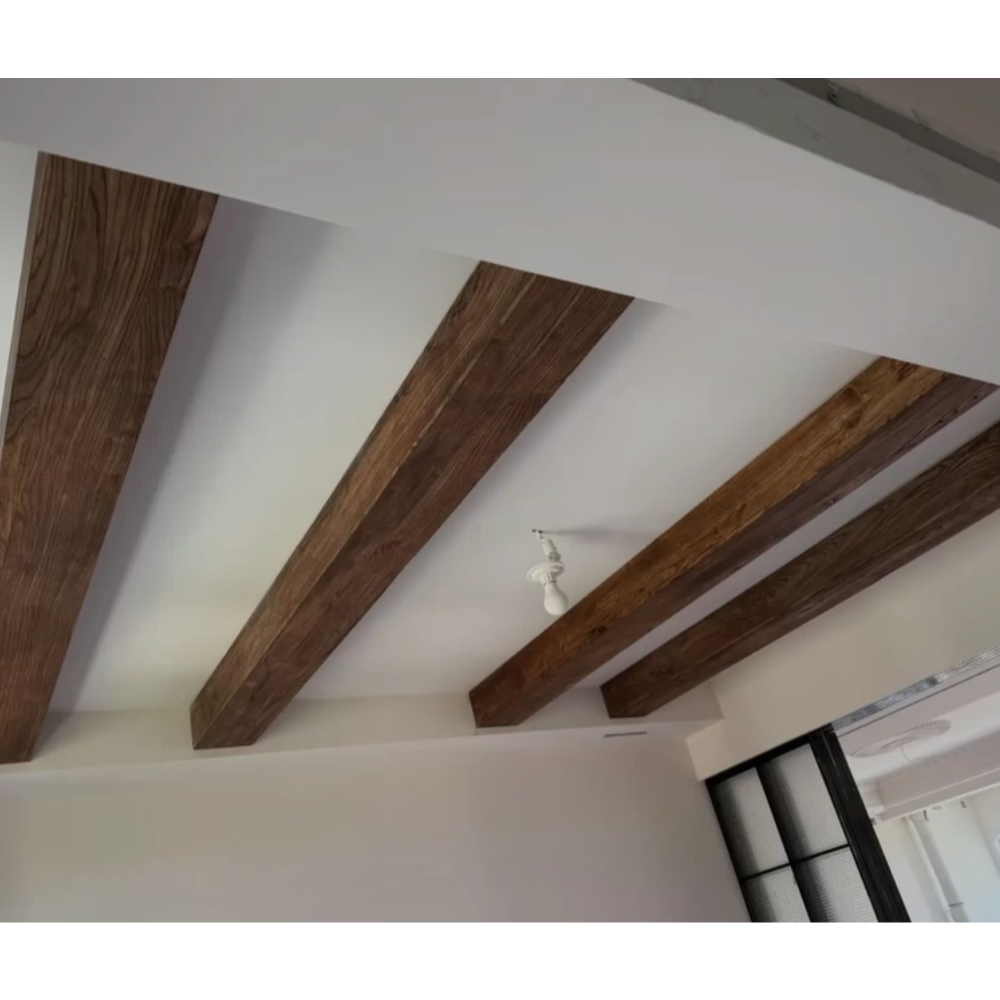
Every beam in an order is identical. The embossed grain texture is consistent. The stain color is consistent. The dimensions are consistent. Multiple beams installed in a room look like they belong together.
Easy Installation
Faux beams install with basic tools: drill, saw, adhesive. No structural engineering is required. No heavy lifting equipment is needed. A single person can install most residential faux beams. A room can be completed in a day.
Wide Finish Selection
Faux beams can be finished in any color in the factory. Standard finishes include driftwood gray, dark walnut, natural oak, whitewash, classic pine, and deep espresso. Custom colors are available. The finish is durable and consistent.
Cost
Faux beams cost a fraction of real timber beams. Materials, labor, and installation combined are typically 20–30% of the cost of comparable real timber beams.
Fast Availability
Stock faux beams ship within days. Custom faux beams ship within weeks. There is no months-long sourcing process for specialty species or dimensions.
Moisture Resistance
Faux beams are appropriate for any room in the house, including humid bathrooms and kitchens. They are not affected by moisture and do not require special finishes for humid environments.
Cons of Faux Polyurethane Beams
Faux beams have limitations that are real and should be acknowledged.
Perceived Authenticity
From close range, faux beams can be distinguished from real timber. The embossed grain is not identical to natural grain. For homeowners who specifically want authentic natural wood, faux does not fully deliver.
Not Structural
Faux beams are decorative only. They cannot carry structural loads and cannot replace a load-bearing element. If the beam needs to serve a structural purpose, real timber or engineered wood is required.
Temperature Sensitivity
Polyurethane can be damaged by sustained exposure to high temperatures. Beams should not be installed directly above high-heat sources like some types of commercial kitchen equipment.
Repair Limitations
If a faux beam is damaged — gouged, cracked, or chipped — the repair is more complex than sanding and refinishing a real timber beam. The repair may involve filler, repainting, and blending, which requires some skill.
Long-Term Aging
Faux beams maintain their appearance consistently over decades. Some homeowners appreciate this stability. Others feel that real timber's natural aging and patina development adds character that faux cannot replicate.
Cost Comparison
The cost comparison is significant and often decisive.
Real Timber Beam Cost
For a room with four 12-foot beams, 6 inches wide:
| Item | Cost |
|---|---|
| Materials (Douglas fir) | $3,200–$6,000 |
| Materials (reclaimed oak) | $6,000–$12,000 |
| Structural support | $800–$2,000 |
| Installation labor | $1,600–$3,000 |
| Finishing | $400–$800 |
| Permits and engineering | $500–$2,000 |
| Total (Douglas fir) | $6,500–$13,800 |
| Total (reclaimed oak) | $9,300–$19,800 |
Faux Polyurethane Beam Cost
For a room with four 12-foot beams, 6 inches wide:
| Item | Cost |
|---|---|
| Materials (premium faux) | $600–$1,200 |
| Adhesive and fasteners | $100–$200 |
| Installation labor (contractor) | $400–$800 |
| DIY installation | $0 |
| Total (contractor) | $1,100–$2,200 |
| Total (DIY) | $700–$1,400 |
The cost difference is substantial: $5,000–$17,000 depending on the real wood species chosen.
When to Choose Real Timber Beams
Real timber beams are the right choice when:
- The beam is serving a structural purpose and must carry a load
- The homeowner specifically values authentic natural wood character and is willing to pay a premium for it
- The project budget comfortably accommodates real timber
- The room's design direction calls for natural materials as a deliberate aesthetic choice
- The installation environment is controlled and dry enough for timber to perform well
When to Choose Faux Polyurethane Beams
Faux polyurethane beams are the right choice when:
- The beam is decorative and does not carry a structural load
- The project budget is a significant consideration
- The installation timeline is compressed
- The installation is being done by a DIY homeowner or a general carpenter rather than a specialist
- The installation environment is humid, variable, or challenging for real wood
- Consistent appearance across multiple beams is important
- The finish needs to be a specific color or custom match
Combining Real and Faux
The either/or framing misses an important option: combining real and faux beams in the same project.
Real Mantel, Faux Ceiling
A common and effective combination: a real reclaimed timber mantel beam above the fireplace (the most visually prominent beam location) paired with faux ceiling beams in the rest of the room. The real timber provides authentic character in the focal point. The faux beams provide consistent, affordable coverage throughout the rest of the ceiling.
Real Accents, Faux Primary
Some designers use real timber accent pieces — corbels, beam ends, iron straps — with faux primary beams. The real accents provide authentic character at key visual points while the faux beams provide the bulk of the coverage.
Common Questions About the Comparison
Q: Can you tell the difference between faux and real beams from across the room? From normal viewing distances in a furnished room, premium faux beams are very difficult to distinguish from real timber. The grain texture, color, and shadow play all read as wood.
Q: Will faux beams add value to my home like real timber beams? Both faux and real beams add perceived value to a home. Studies of home buyer preferences consistently show that beamed ceilings are desirable features. The material (real vs. faux) is less important than the visual impact.
Q: How long do faux beams last compared to real beams? Premium polyurethane faux beams have an expected lifespan of 20–30+ years. Real timber beams can last the life of the structure with proper maintenance.
Q: Can faux beams be used in outdoor applications? Some polyurethane faux beams are rated for covered outdoor use (patios, covered porches). They should not be exposed to direct weather or sustained UV exposure. For fully exposed outdoor use, real timber or specially rated materials are required.
Q: Are faux beams fire-rated? Many faux beam products can be manufactured with fire-retardant additives that meet building code requirements for interior use. Verify the fire rating with the manufacturer for your specific application.
The Decision Framework
The real-versus-faux decision is not a judgment of value. Both products have genuine merit. The decision framework is straightforward:
- Does the beam need to be structural? If yes, choose real timber or engineered wood.
- Is the budget a significant constraint? If yes, faux beams deliver more visual impact per dollar.
- Is authentic natural wood character a priority? If yes, real timber is the right choice.
- Is the installation environment challenging for wood (humid, variable)? If yes, faux is more reliable.
- Is the installer a DIY homeowner? If yes, faux is dramatically more accessible.
For most residential decorative beam applications, faux polyurethane beams deliver the visual result the homeowner wants at a fraction of the cost and complexity. For applications where structural function, authentic character, or natural material values are paramount, real timber is the right choice. The decision should be made on the actual project requirements, not on assumptions about which material is "better."
Technical References
ASTM standards cited in every specification
Test Data
Lab results from internal testing program
Updated 2026
Reviewed against current product specs


