
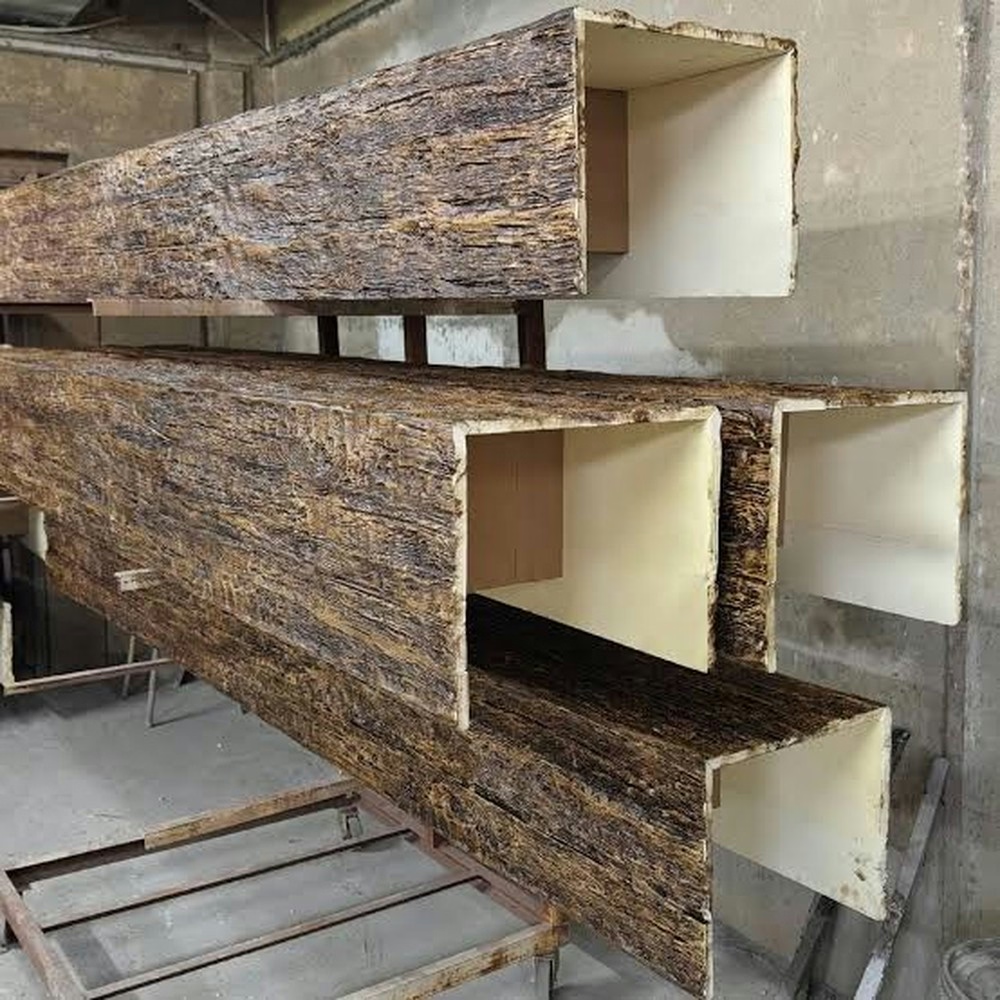
The same PU faux wood beam, finished in the same way and tested to the same fire standard, can go into a hotel lobby in Singapore or a living room ceiling in suburban Toronto. The product is identical. What changes is the regulatory context, the documentation requirements, and the way the certification is presented to the building inspector.
That unified product approach is one of the quiet advantages of fire-safe certified PU beams. The manufacturer can produce one formulation that satisfies the fire performance requirements across multiple markets and applications. The finish options, sizes, and profiles are the same. The certification documentation varies by destination, but the underlying product is consistent.
What certification means across applications
Fire-safe certification in the PU beam industry typically means the product has been tested by an accredited third-party laboratory and the test report is current. The specific certification depends on the market. A beam sold in North America carries an ASTM E84 classification. A beam sold in Europe carries an EN 13501-1 classification. A beam sold in multiple markets carries multiple certifications based on testing to multiple standards.
The certification is more than a test report. It is a verified claim that the specific product being shipped matches the product that was tested. This is typically confirmed through batch testing during production, with random samples pulled and tested to verify consistency. The documentation package that accompanies each shipment includes the test report, a letter of compliance confirming formulation match, and sometimes individual batch test results.
For architects and contractors, the practical implication is that a certified beam can be specified with confidence across a wide range of project types. The documentation satisfies code officials. The finish satisfies designers. The installation process satisfies contractors. The certification ties all three together.
Residential applications where certification matters
Most single-family residential projects do not require fire-rated decorative beams. The local building code typically does not regulate the fire performance of ceiling beams in single-occupancy dwellings. Homeowners can install standard untreated faux beams without documentation.
There are exceptions. Some jurisdictions require fire-rated materials in attached garages, basement ceilings adjacent to mechanical rooms, and multifamily dwellings. Custom home builders working in jurisdictions with stricter requirements often specify certified beams as a baseline, even when the code does not strictly require it. The modest cost premium is justified by the peace of mind and the documented performance.
For high-end custom homes, certified beams are sometimes specified simply because the homeowner wants the assurance that comes with documented testing. The same homeowner who insists on certified electrical components and low-VOC finishes may also want certified fire performance on the decorative ceiling materials. In these cases, the certification is a value-add rather than a code requirement.
Multi-family residential, including condominiums, apartments, and townhouses, typically requires fire-rated materials in common areas and sometimes within individual units. The specific requirements vary by jurisdiction and by building type, but certified beams are standard in this segment. The documentation is straightforward to provide, and the building inspector expects to see it as part of the permit review.
Public applications where certification is mandatory
Most public buildings require certified fire performance for decorative ceiling materials. The specific requirements depend on the occupancy type and the local code, but the principle is consistent: materials in public assembly spaces, healthcare facilities, educational buildings, and government facilities must meet documented fire performance standards.
For these projects, certified beams are not optional. The building inspector will not approve an installation that uses non-certified materials in a regulated application. The documentation package is part of the permit submittal, and the inspector verifies at the final inspection that the installed product matches the approved documentation.
The certification requirement extends beyond the beam itself to the installation system. A certified beam mounted on non-rated blocking may not perform the same way as a beam mounted on a certified blocking system. For sensitive applications, the entire ceiling system may need to be documented as a tested assembly. Working with the project's fire protection engineer during the design phase helps identify whether assembly-level documentation is required.
How the same product serves different applications
The versatility of fire-safe certified PU faux beams comes from the way the certification is structured. A manufacturer that produces beams to ASTM E84 Class A can ship those same beams to a hotel project in the United States, a residential tower in Canada, and a government building in Australia, with the documentation package customized for each destination's requirements.
The underlying product does not change. The foam formulation, the mold, the finish system, and the quality control procedures are identical. What changes is the paperwork. The test report references the appropriate standard for each market. The letter of compliance is addressed to the relevant project. The MSDS may be translated into the local language. The certificate of origin may be apostilled for use in the destination country.
This unified approach simplifies inventory management for manufacturers and distributors. A single production run can supply multiple markets. The same beam that ships to a residential customer in California can ship to a commercial customer in Dubai, with appropriate documentation for each.
Sourcing certified beams for a specific project
For a project that requires certified fire-safe beams, the sourcing process starts with identifying manufacturers that hold current certifications. The major PU beam factories all have fire-safe product lines, but the specific certifications and the freshness of the documentation vary.
Requesting documentation before placing an order is essential. A reputable manufacturer will provide the test report, the compliance letter, the MSDS, and any other documents the project requires without hesitation. For sensitive projects, requesting references from previous installations with similar documentation requirements is also worthwhile.
Lead times for certified beams are typically two to four weeks longer than for non-certified equivalents. The additional time reflects the production scheduling, the documentation assembly, and the quality control procedures that come with certified production. For projects with tight timelines, planning ahead and engaging the supplier early in the design phase is essential.
Quality assurance on certified production runs
The quality assurance procedures for certified beam production are more rigorous than for non-certified products. Batch testing, traceability documentation, and periodic re-testing of the formulation are all standard parts of the process. Some manufacturers also maintain third-party certification of their quality systems, with periodic audits by accredited certification bodies.
For buyers, the quality assurance documentation provides assurance that the certified product will perform as expected. The certification is only as good as the quality system behind it, and a manufacturer that maintains rigorous quality assurance is more likely to deliver consistent product than one that cuts corners on production controls.
Fire-safe certified PU faux wood beams serve a valuable role in the decorative beam market by unifying aesthetic ambition with safety requirements. Whether the application is a single-family home, a high-rise condominium, or a major public facility, the same product can be specified with the documentation to back it up. For buyers, the key is engaging a manufacturer with current certifications, verifying the documentation matches the project requirements, and building the slightly longer lead time into the project schedule.
Technical References
ASTM standards cited in every specification
Test Data
Lab results from internal testing program
Updated 2026
Reviewed against current product specs


