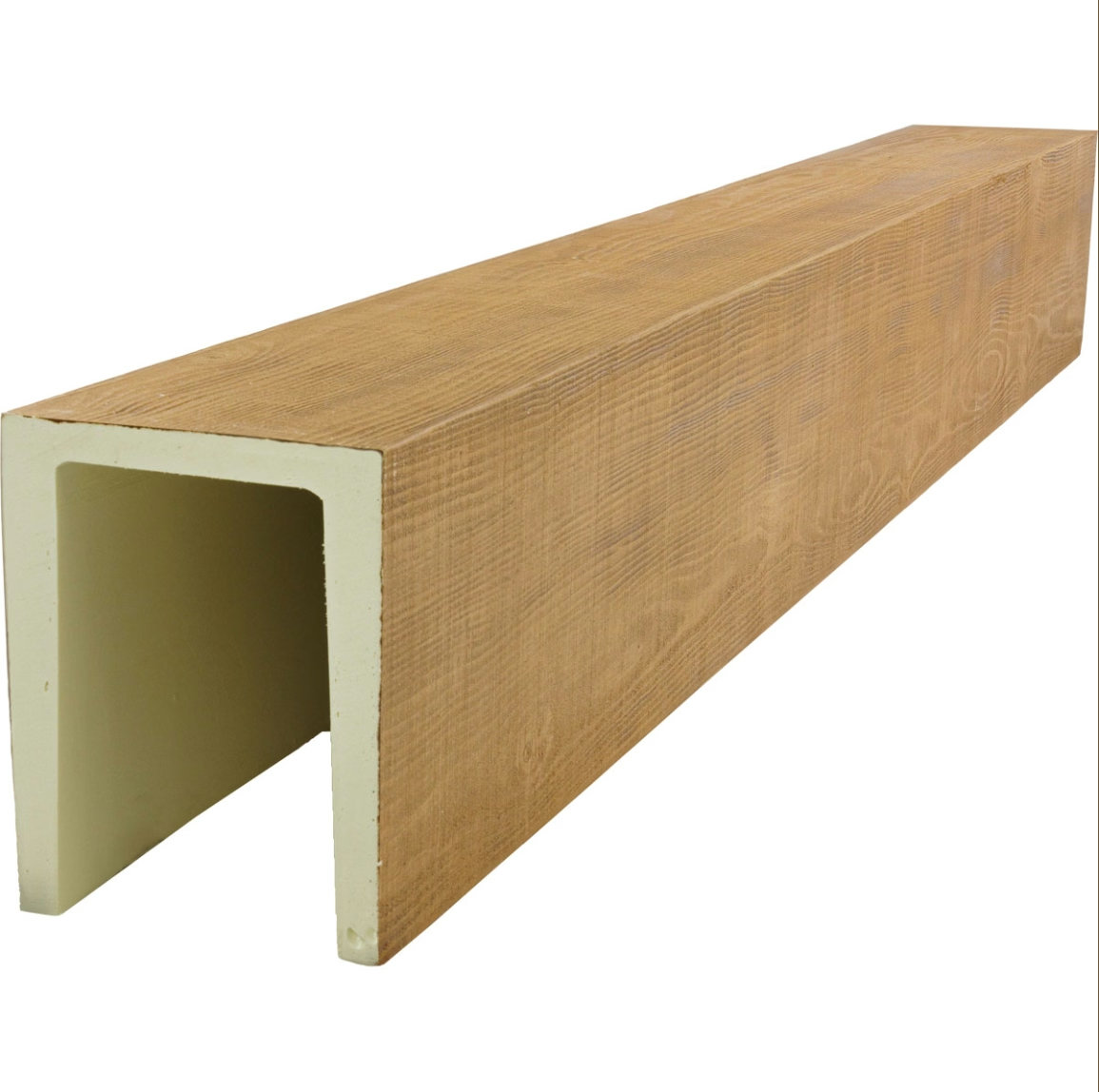
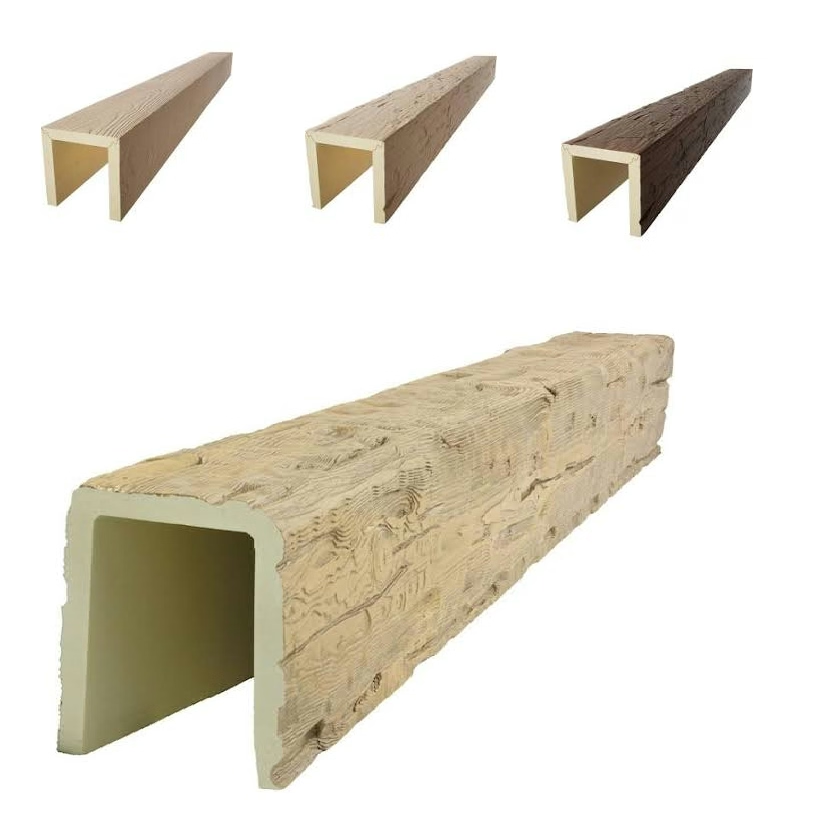
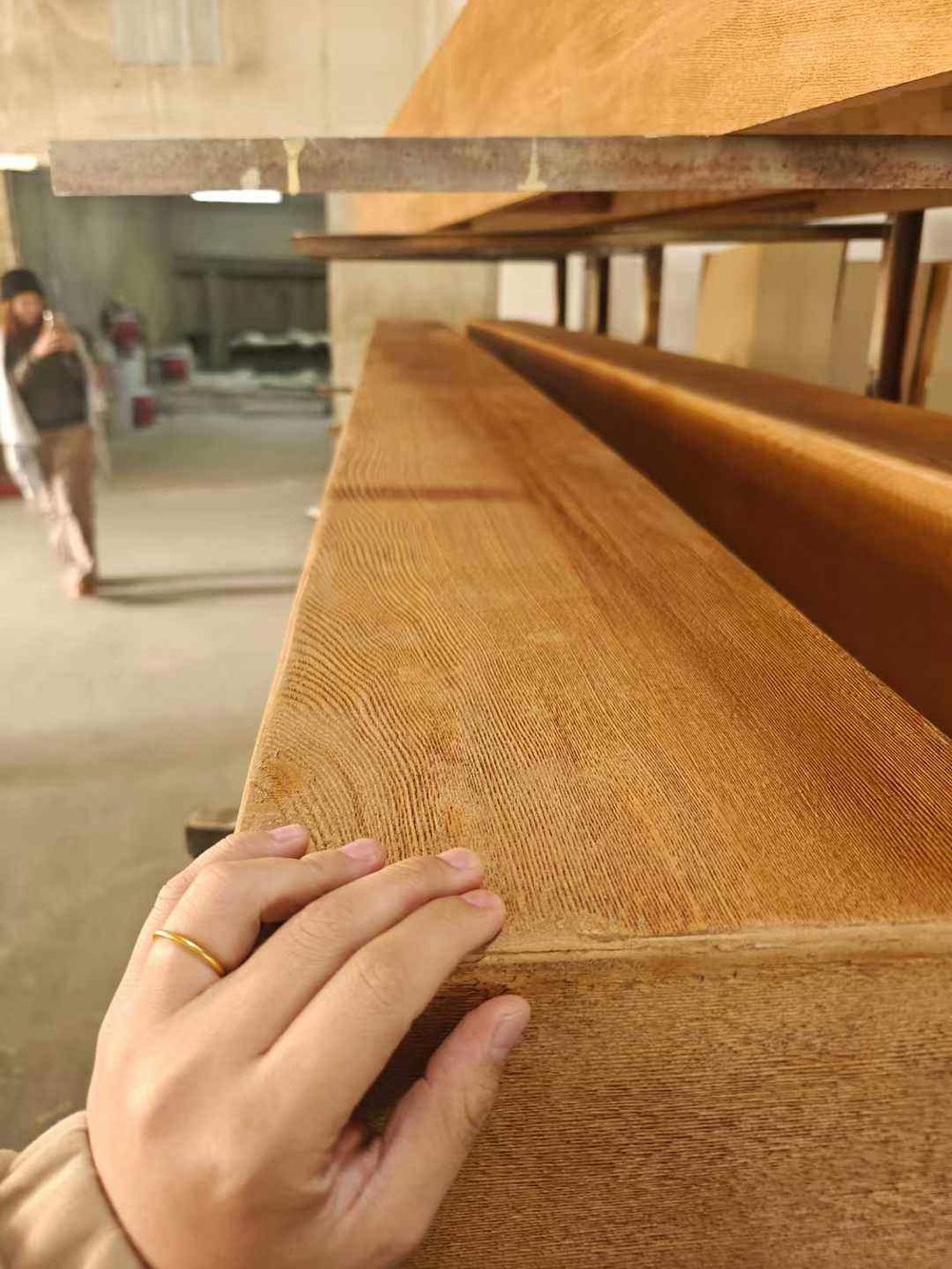
The short answer to whether polyurethane faux wood beams are fire rated is: some are, and some are not. The longer answer, which actually matters for project decisions, involves understanding what fire rating means in practice, which standards apply to your project, and how to verify that the specific beam you are ordering actually carries the certification it claims to.
A surprising number of decorative beams on the market are sold as "fire rated" without the documentation to back up the claim. The phrase gets used loosely in catalogs and on websites to mean anything from "the foam has some fire retardant additive" to "this product has been tested to ASTM E84 Class A by an accredited lab." Those two extremes are not equivalent, and the difference shows up at the building inspection.
What "fire rated" means in the beam industry
In the decorative beam industry, the term "fire rated" usually refers to a foam formulation that has been tested to a recognized standard for surface burning characteristics. The most common standard in North America is ASTM E84, which produces a flame spread index and a smoke developed index. A beam rated Class A under this test has flame spread of 0 to 25 and smoke development of 0 to 450.
Outside North America, the equivalent standards are EN 13501-1 in Europe, BS 476 in the UK, AS/NZS 1530 in Australia and New Zealand, and GB 8624 in China. Each system uses its own classification letters and numbers, but the underlying intent is the same: measure how fast flame travels across the surface and how much smoke the material produces when it burns.
A fire-rated beam is not fireproof. It will still burn under sustained flame exposure. What the rating measures is how the material behaves in the early stages of a fire, which is the critical window for occupant evacuation and fire suppression. A Class A beam buys time. It does not eliminate the fuel load.
The difference between integral and topical treatment
The fire retardant in a treated beam is either integral to the foam or applied as a topical coating. The distinction matters for long-term performance and on-site handling.
Integral treatment mixes the fire retardant into the polyurethane formulation before the foam is poured into the mold. The retardant is distributed throughout the entire cross-section of the beam. Cutting, sanding, or drilling the beam on site does not compromise the fire performance because the retardant is present throughout the material.
Topical treatment applies a fire retardant coating to the surface of the finished beam after molding. It is cheaper to produce but less durable. Scratches, abrasion, and field cuts can expose untreated foam underneath. Some topical treatments also degrade with UV exposure over time, particularly if the beam is used in an area with high natural light.
For commercial projects, integral treatment is strongly preferred. The documentation usually specifies the treatment type, and the difference between integral and topical should be confirmed before placing an order.
How to verify a fire rating claim
The first step is to ask for the actual test report. Not a summary, not a certificate of compliance, but the full test report from the lab that conducted the test. The report should include the testing laboratory's name and accreditation, the date of the test, the specific product tested (including part number or formulation code), the test method used, and the results.
A report from an accredited third-party laboratory is what carries weight. Names like UL, Intertek, SGS, Bureau Veritas, and TÜV are recognized internationally. A report from a factory's in-house lab is useful for quality control but is not accepted as code compliance documentation in most jurisdictions.
The second check is the date of the test. Most code officials want a test report from within the past three to five years. Foam formulations change as raw material suppliers update their products, and a test report from a decade ago may not reflect the current production formulation. Some manufacturers hold standing test reports that they update every few years, which is the ideal scenario.
The third check is the formulation match. The product that was tested should be the same product being shipped. A factory may have a tested "FR-200" formulation that earned a Class A rating but currently produces beams under a different formulation code that has not been tested. Asking the factory to confirm in writing that the supplied product matches the tested formulation is standard practice for commercial orders.
Common documentation requests from building inspectors
When a fire marshal or building inspector reviews a decorative beam submittal, they typically ask for several specific documents. The test report from an accredited lab is the primary one. A letter from the manufacturer confirming formulation match is the second. The material safety data sheet is the third, particularly for projects in jurisdictions that follow OSHA or equivalent workplace safety standards.
Some inspectors also request a sample of the actual beam for retention. They file it with the project record in case there is a post-occupancy question about the material. This is more common in healthcare, education, and government projects where documentation trails are particularly thorough.
For international projects, an Apostille or consular legalization of the test report may be required. This is a formality that confirms the document is genuine for use in another country's legal system. Some countries also require the test report to be translated by a certified translator. The beam supplier should be familiar with the requirements for the destination country and able to provide appropriately legalized documents.
When a fire rating is actually required
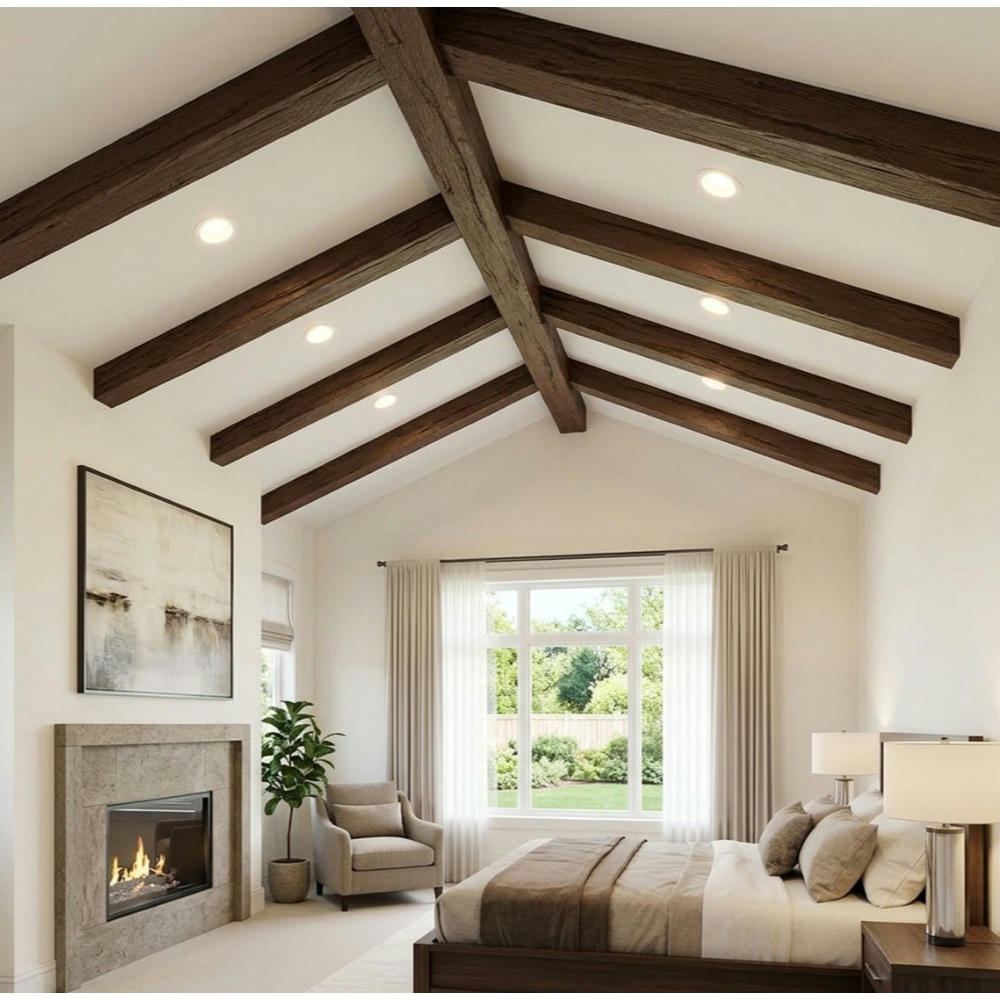
Residential homes are usually exempt from fire rating requirements for decorative ceiling beams, with limited exceptions in some jurisdictions for attached garages, basement ceilings near mechanical rooms, and multifamily dwellings. Most homeowners buying faux beams for a single-family remodel do not need a fire-rated product.
Commercial projects are a different matter. Restaurants, hotels, conference centers, retail spaces, healthcare facilities, and educational buildings typically require fire-rated finishes based on the local code and the specific occupancy type. The required classification varies: some occupancies require Class A, others accept Class B or Class C.
The bid documents for a commercial tender usually specify the required fire classification explicitly. Reading those documents carefully before sourcing the beam is essential. A bid that specifies "ASTM E84 Class A or equivalent" gives the supplier some flexibility to substitute a beam tested to EN 13501-1 with equivalent performance. A bid that specifies "ASTM E84 Class A" without the "or equivalent" clause is more restrictive and excludes beams that have only been tested to other standards.
What to ask the beam supplier
Before placing an order, a competent supplier conversation should cover several specific points. Ask which fire standard the beam has been tested to. Ask for the test report and review it. Ask whether the treatment is integral or topical. Ask whether the formulation currently in production matches the tested formulation. Ask whether the documentation package includes a letter of compliance and an MSDS.
If the project requires certified fire-rated beams, the supplier should be able to answer all of these questions confidently and provide the documents on request. A supplier who is vague about fire ratings, or who sends marketing collateral in place of test reports, is one to avoid for commercial work. The documentation will be required at inspection, and a beam that arrives without it can hold up an entire project's occupancy permit.
What if a non-rated beam is already installed
In an existing commercial space where non-rated decorative beams have been installed, the situation depends on the local code enforcement. Some jurisdictions require remediation if non-rated materials were used in occupancies that require rated materials. Others allow a performance-based fire engineering analysis to demonstrate equivalent safety. Still others turn a blind eye to existing installations unless a complaint triggers an inspection.
For new construction, the simplest and safest path is to source rated beams from the start. The cost premium is real but manageable, and the documentation is straightforward. For existing installations where the question arises, consult a fire protection engineer or the local authority having jurisdiction for guidance specific to the situation.
A fire-rated polyurethane faux wood beam is a thoroughly engineered product at this point, with mature testing regimes, accredited lab reports, and reliable supply chains. The key to using it correctly is understanding what the rating means, what documentation supports it, and how it fits into the broader fire safety strategy of the building. With those pieces in place, a rated beam is no harder to specify than any other building material.
Technical References
ASTM standards cited in every specification
Test Data
Lab results from internal testing program
Updated 2026
Reviewed against current product specs