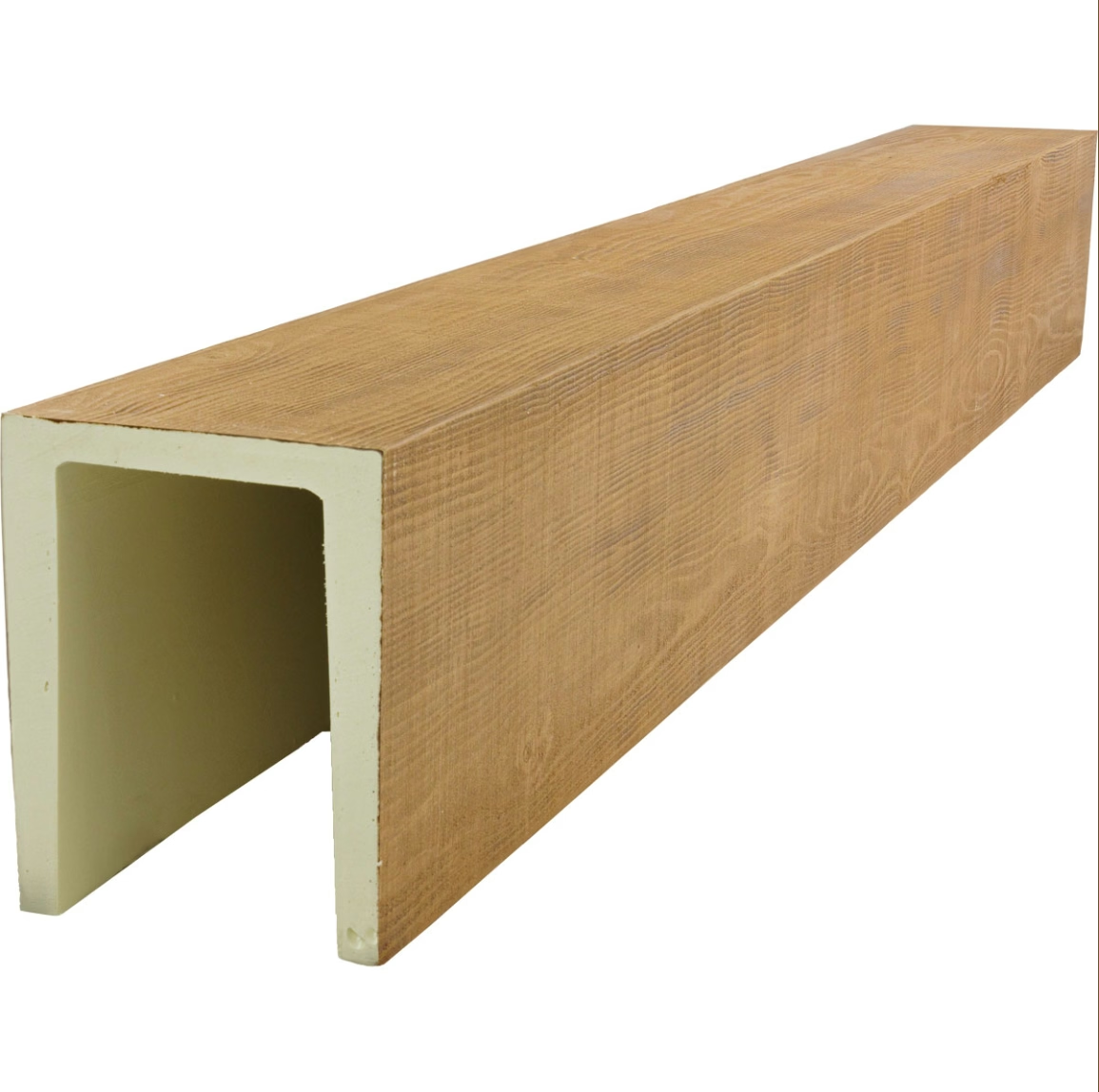
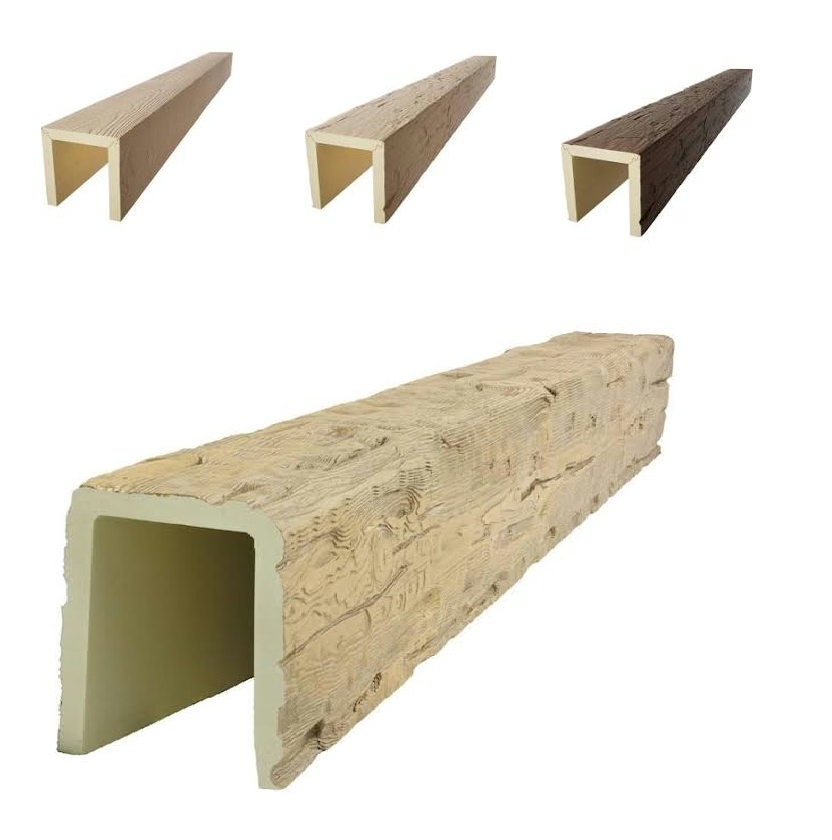
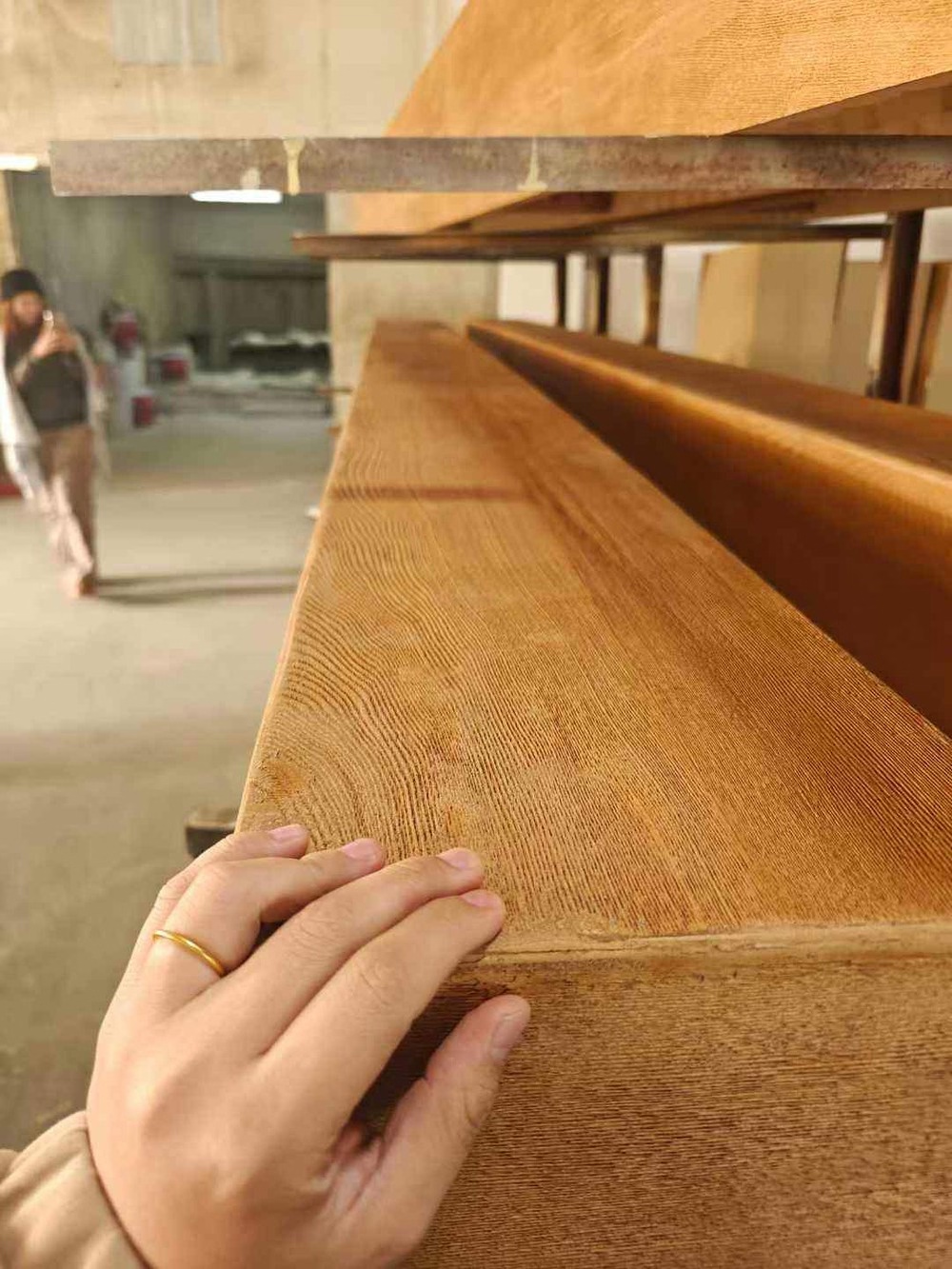
The hollow shell construction of most polyurethane faux wood beams is one of the defining features of the product category. It makes the beams light enough for one-person handling, simple to ship in volume, and practical to install without specialized equipment. It also allows wiring and small mounting hardware to be hidden inside the beam for a clean finished appearance.
The fire performance of a hollow shell is different from a solid beam of the same material, and the difference matters for commercial code compliance. A hollow shell has less mass to absorb heat, and the air cavity inside can affect how flame spreads across the surface. Flame retardant treatment addresses these differences by slowing ignition, reducing flame spread, and limiting smoke development.
How hollow shell construction affects fire behavior
A hollow PU beam has two surfaces: the visible exterior and the concealed interior. In a fire, both surfaces are exposed to heat, though the interior surface is shielded from direct flame impingement. The thin shell walls heat up quickly compared to a solid section of the same material, which can affect how the beam contributes to a developing fire.
The air cavity inside the beam can also act as a chimney effect, drawing hot gases upward and potentially spreading fire to overhead structure if the beam is mounted directly against a ceiling. This is one reason why proper mounting details, with a small gap between the beam shell and the ceiling, are important for fire-rated installations.
Flame retardant treatment addresses these factors by changing the chemistry of the foam at the molecular level. The treated foam resists ignition, forms a protective char layer when exposed to flame, and produces less smoke than untreated foam. The treatment is effective throughout the shell thickness because it is integral to the foam formulation, not just a surface coating.
Why integral treatment matters for hollow shells
Topical fire retardant treatments, applied as a coating to the surface of a finished beam, have limited effectiveness on hollow shells. The coating protects the visible exterior surface, but the interior surface of the shell is untreated. If a fire reaches the interior cavity through a penetration or a joint, the untreated interior foam can ignite and propagate flame inside the beam.
Integral treatment eliminates this failure mode. The fire retardant is distributed throughout the foam, so both the exterior and interior surfaces of the shell have the same fire performance. A penetration or joint does not expose untreated material because the retardant is present throughout the cross-section.
For commercial projects where the documentation must confirm that the entire beam meets the fire classification, integral treatment is the only acceptable approach. A topical treatment may satisfy the test conditions of an ASTM E84 test, but the result only applies to the tested configuration. The tested beam has the coating on all exposed surfaces. A real installation may have cuts, penetrations, or joint details that expose uncoated surfaces, and the fire performance of those exposed surfaces is unknown.
Performance levels and documentation
Flame retardant treated hollow shell beams are typically rated Class B or Class A under ASTM E84, depending on the formulation and the manufacturer's testing. The documentation package includes the test report, a letter of compliance, and the material safety data sheet.
The test report for a hollow shell beam typically tests the beam in its as-shipped configuration, which means the results reflect the actual product that will be installed. Some manufacturers also test the beam with various mounting configurations to confirm that the installation method does not significantly affect the fire performance. These additional tests provide useful information for the installer and the code official.
For projects with specific code requirements, requesting the test report before placing the order is standard practice. The report should be current, from an accredited laboratory, and should clearly identify the product tested. A test report that lists only the foam formulation without identifying the specific beam profile is less useful than one that includes the part number, dimensions, and configuration of the tested beam.
Common applications for flame retardant hollow shell beams
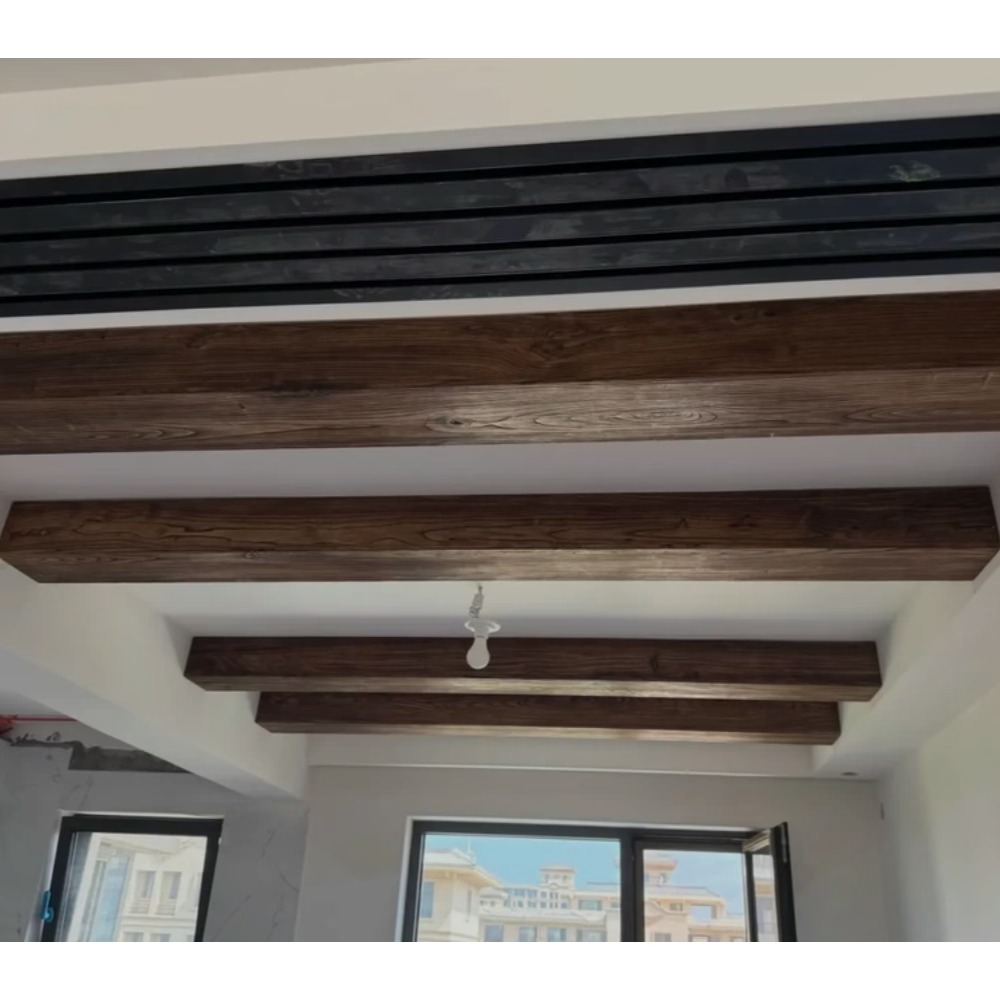
Restaurant ceilings are a major application. The lightweight construction makes installation practical even in spaces with limited structural capacity, and the fire rating satisfies the code for commercial assembly occupancies. The hollow shell also accommodates wiring for pendant lights and other fixtures, which is common in restaurant design.
Hotel lobby and corridor ceilings benefit from the same combination of characteristics. The fire rating is essential for these occupancies, and the lightweight construction simplifies installation in active hotels where renovation work is scheduled around guest stays.
Office building lobbies, conference rooms, and executive suites use flame retardant hollow shell beams to create warm overhead treatments that satisfy the commercial code. The pre-finished surface eliminates on-site finishing work, which is particularly valuable in office fit-outs with tight construction timelines.
Retail spaces, particularly in the boutique and lifestyle segments, use these beams to create heritage aesthetics that would be difficult or expensive to achieve with solid timber. The fire rating allows the design to be realized in commercial occupancies where untreated decorative materials would not be permitted.
Installation details that preserve fire performance
The fire performance of a hollow shell beam depends partly on how it is installed. Mounting details that trap heat, restrict airflow, or create stress concentrations can compromise the fire rating even if the beam itself is properly rated.
A continuous mounting cleat that runs the length of the beam provides good support without trapping excessive heat. The cleat should be sized to fit inside the hollow shell with a small gap above and below, allowing air circulation that prevents heat buildup. Wood blocking is typical for residential and light commercial installations, while metal strutting is common for commercial and industrial applications.
For beams mounted directly to the ceiling without a gap, the lack of airflow can create a heat trap that affects fire performance. In these installations, the ceiling assembly as a whole may need to be tested and rated, not just the beam. Working with the manufacturer to confirm the appropriate mounting details for the specific installation is worthwhile.
Penetrations in the beam shell for wiring or fixtures should be kept as small as practical and should be sealed with fire-rated caulk or expanding foam if required by the local code. Large penetrations can compromise the fire performance of the shell and may require additional fire protection measures.
Field modifications and their effect on fire rating
Cutting the beam to length, drilling holes for wiring, or trimming the shell to fit a corner are common field modifications. With integral fire retardant treatment, these modifications do not significantly affect the fire performance because the retardant is present throughout the foam. A cut edge or a drilled hole has the same fire rating as the original molded surface.
With topical fire retardant treatment, field modifications can expose untreated foam underneath. A cut beam or a drilled hole may not meet the same fire classification as the tested product, even if the modification is small. For commercial projects where the fire rating must be preserved, integral treatment is strongly preferred specifically because it tolerates field modifications.
For integral treated beams, the modifications should still be done cleanly with appropriate tools. A ragged cut or an oversized hole can affect the structural integrity of the beam or the appearance of the installation. But the fire performance is preserved as long as the foam substrate remains intact.
Sourcing flame retardant hollow shell beams
Sourcing these beams follows the same process as other fire-rated commercial beam products. The key steps are identifying manufacturers with current test reports, requesting documentation before placing the order, confirming that the formulation matches the tested product, and verifying the lead time.
Most major PU beam manufacturers offer flame retardant hollow shell beams as a standard product line. The price premium over non-treated equivalents is typically 15 to 30 percent, reflecting the cost of the fire retardant additives, the additional quality control requirements, and the documentation maintenance.
For projects with specific fire performance requirements, working with a manufacturer that has experience in similar projects is worthwhile. The manufacturer should be able to provide references and example documentation from previous installations. They should also be able to advise on installation details that preserve the fire rating in the specific application.
Flame retardant treated hollow shell beams have become a standard offering in the commercial beam market. The combination of lightweight construction, fire safety documentation, and design flexibility makes them a natural choice for restaurants, hotels, offices, and retail spaces. For specifiers, the path forward is to identify the required fire classification, source from a manufacturer with current documentation, and follow the manufacturer's installation guidelines to preserve the fire performance in the finished installation.
Technical References
ASTM standards cited in every specification
Test Data
Lab results from internal testing program
Updated 2026
Reviewed against current product specs