For international buyers of polyurethane faux timber beams, ocean shipping is typically the single largest cost after the product itself. A 40-foot container from Asia to North America can run anywhere from $3,000 to $12,000 depending on the route, the season, and current freight rates. The cost is driven primarily by the volume the cargo occupies in the container, not by the weight of the cargo, since PU beams are light.
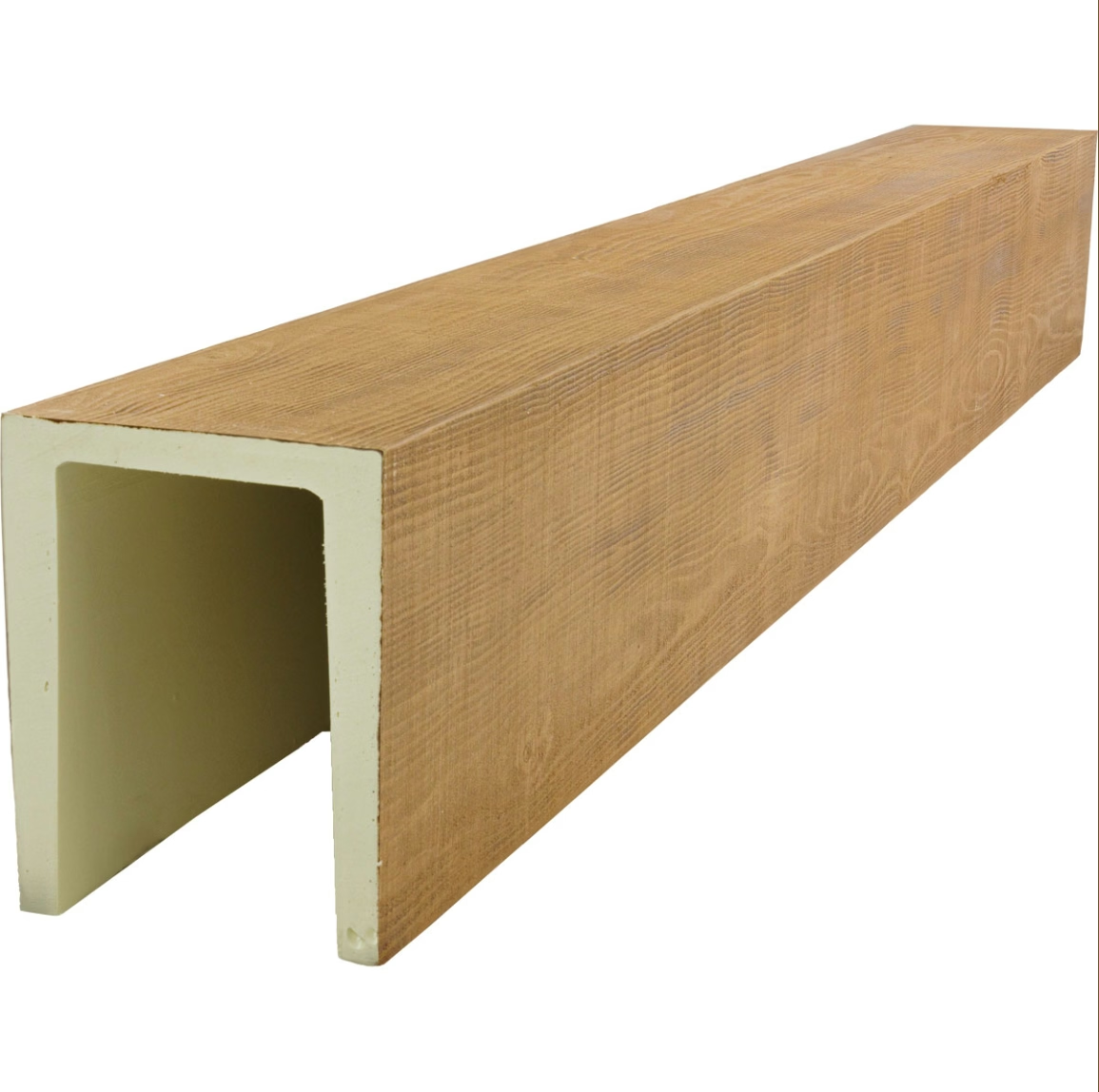
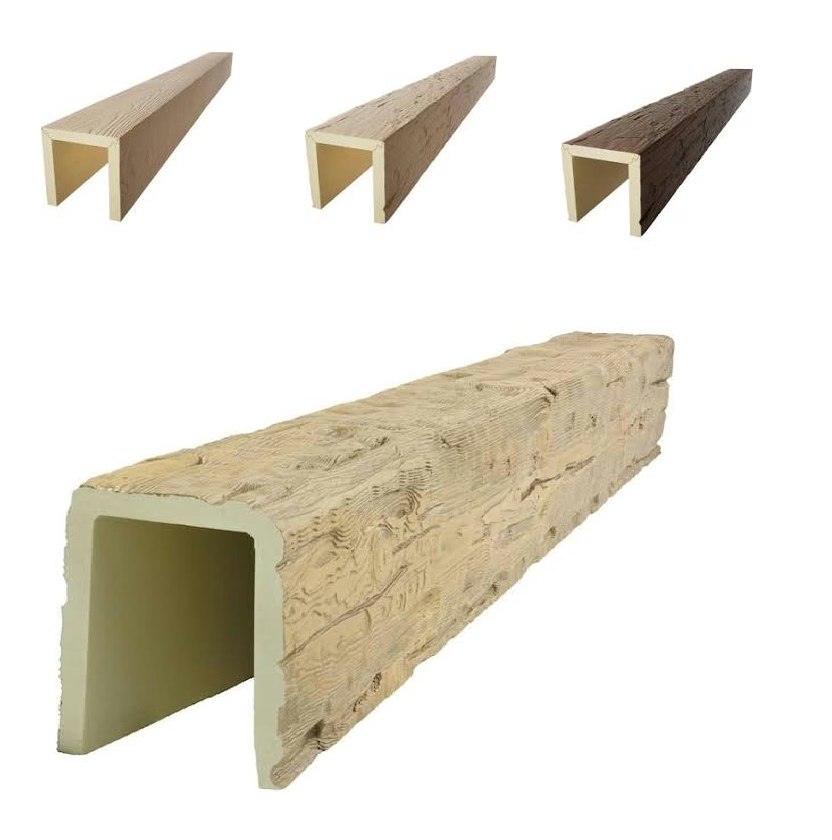
Flat-pack hollow construction takes advantage of this dynamic by nesting the beam shells inside each other during shipping. A finished U-shaped beam has an open cavity that can hold another beam's profile, and when the beams are designed with compatible cross-sections, they nest together in a way that dramatically reduces the shipping volume.
The savings are substantial. Depending on the beam profile and the packaging configuration, flat-pack nesting can reduce the shipping volume by 60 to 70 percent compared to fully assembled beams. For a typical 40-foot container shipment of 200 beams, this can mean the difference between one container and three containers, with corresponding savings on ocean freight, port handling, customs brokerage, and domestic delivery.
How flat-pack hollow construction works
The flat-pack concept relies on the U-shape cross-section of most faux timber beams. The open cavity in the U-shape provides space for another beam's profile to nest inside. When beams are stacked with their cavities aligned, each beam adds only the thickness of its shell walls to the overall stack height, rather than the full height of the beam.
For beams with compatible cross-sections, the nesting is even more efficient. Two beams with the same width and depth can nest together with no wasted space beyond the shell thickness. For beams with different sizes, the nesting may be partial, with smaller beams nesting inside larger ones but with some unused cavity space.
The nesting efficiency depends on the specific beam profiles being shipped. A homogeneous order of beams all the same size can achieve the highest nesting efficiency. A mixed order with many different sizes will have lower nesting efficiency, but even mixed orders typically see 40 to 50 percent volume reduction compared to non-nested shipping.
Packaging for maximum nesting
The flat-pack packaging is designed to protect the beams during shipping while maintaining the nesting efficiency. The beams are typically wrapped in protective film or foam sheeting before nesting, which prevents the finish from being scratched by contact with adjacent beams. Edge protectors are added to the corners and ends to prevent damage during handling.
The nested beams are then strapped or banded together into bundles that are easy to handle with a forklift or pallet jack. The bundle size is typically designed to match standard pallet dimensions, which simplifies handling at both ends of the shipping journey. Some manufacturers use custom-sized bundles that are optimized for specific container dimensions.
The bundles are loaded into the container in a way that maximizes the use of the container's interior volume. The loading pattern is planned to fill the container from floor to ceiling, with the bundles arranged to minimize wasted space. Experienced loading crews can achieve container fill rates above 90 percent with flat-pack nested beams, compared to 50 to 60 percent with fully assembled beam shipments.
Volume reduction translates directly to cost savings
The cost savings from flat-pack nesting come from multiple sources. The most obvious is the ocean freight itself, which is charged by container or by cubic meter depending on the shipping terms. Fewer containers or lower volume means lower freight cost.
Port handling charges are also reduced. Each container that moves through a port incurs handling fees for loading, unloading, and storage. Fewer containers mean lower handling fees. Customs brokerage fees are often charged per container or per shipment, so reducing the number of shipments also reduces these costs.
Domestic transportation from the port to the final destination is similarly reduced. A full container can be delivered directly to the buyer's warehouse, while multiple containers require multiple trips or coordination with a deconsolidation warehouse. Both scenarios add cost compared to receiving a single container.
For buyers importing beams regularly, the savings compound over time. A buyer who imports 10 containers per year using flat-pack nesting might save enough on freight and handling to fund a part-time logistics coordinator or to invest in inventory management systems.
The limits of flat-pack efficiency
Flat-pack nesting works well for U-shaped and three-sided hollow beams, which make up the majority of the faux timber beam market. It works less well for solid faux beams or for beams with irregular profiles that cannot nest efficiently. Buyers specifying unusual profiles should ask the manufacturer about the shipping volume impact.
The nesting efficiency also depends on order homogeneity. An order of 200 beams all the same size can be nested much more efficiently than an order of 200 beams in 20 different sizes. For mixed orders, the manufacturer can still achieve meaningful volume reduction, but the savings will be lower than for homogeneous orders.
Lead time for flat-pack shipments is typically similar to fully assembled shipments, since the production process is the same. The flat-pack packaging is done at the end of production, just before container loading, so it does not add significant time to the overall lead time.
Impact on product damage rates
A common concern with nested beam packaging is whether the nesting increases the risk of product damage during shipping. The answer depends on the packaging quality, but well-designed flat-pack systems actually have similar or lower damage rates than fully assembled beam shipments.
The reason is that the nested configuration protects the visible surfaces of the beams. The interior cavity of each beam faces the exterior surface of the nested beam, with protective film or foam between them. The exterior surfaces of the outermost beams in each bundle are protected by additional packaging material. This configuration prevents the kind of surface-to-surface contact that causes scratches in fully assembled shipments.
The ends of the beams are the most vulnerable area, and these are protected by edge protectors and end caps. The straps or bands that hold the bundles together keep everything in position during the rough handling that can occur during container loading and unloading. Quality flat-pack systems include internal bracing that prevents the bundles from shifting during ocean transit.
Damage claims and resolution
Despite the best packaging, occasional damage does occur during international shipping. The most common issues are corner dings from impact, finish scratches from contact with adjacent beams, and cracked ends from rough handling. Most of these are cosmetic and can be repaired on site with touch-up kits provided by the manufacturer.
For damage that affects more than 5 to 10 percent of a shipment, a claim should be filed with the shipping insurance carrier. Most international beam shipments include marine cargo insurance, which covers damage during transit. The claim process requires documentation of the damage at the time of receipt, so a thorough inspection at the port or warehouse is essential.
Working with a manufacturer that has experience shipping flat-pack beams internationally reduces the risk of damage claims. The packaging design is refined over many shipments, and the loading crews know how to handle the bundles to minimize damage. Newer manufacturers may not have this experience, and the damage rates can be higher until they refine their packaging.
Sourcing flat-pack beams
For buyers interested in flat-pack beam sourcing, the conversation with the manufacturer should cover several specific points. What is the expected nesting efficiency for the specific beam profiles being ordered? What packaging materials are used, and how are the beams protected during nesting? What is the damage rate for flat-pack shipments compared to fully assembled shipments? And what is the container fill rate that can be achieved with the order as specified?
Reputable manufacturers will have detailed answers to these questions, supported by data from previous shipments. They should be able to provide a shipping volume calculation that shows the expected cubic meters for the order, and a comparison to the volume if the beams were shipped fully assembled. The savings should be quantified, not just claimed.
For first-time buyers, starting with a smaller order to evaluate the flat-pack system is a reasonable approach. A single container shipment with a few dozen beams allows the buyer to assess the packaging quality, the damage rate, and the savings compared to fully assembled sourcing. If the results are positive, larger orders can follow with confidence.
Flat-pack hollow PU faux timber beams represent one of the most significant cost optimization opportunities in international beam procurement. The technology is mature, the packaging systems are well-developed, and the savings are real. For buyers importing beams in volume, working with a manufacturer that offers flat-pack options is one of the most effective ways to reduce total landed cost without compromising on product quality.
Technical References
ASTM standards cited in every specification
Test Data
Lab results from internal testing program
Updated 2026
Reviewed against current product specs