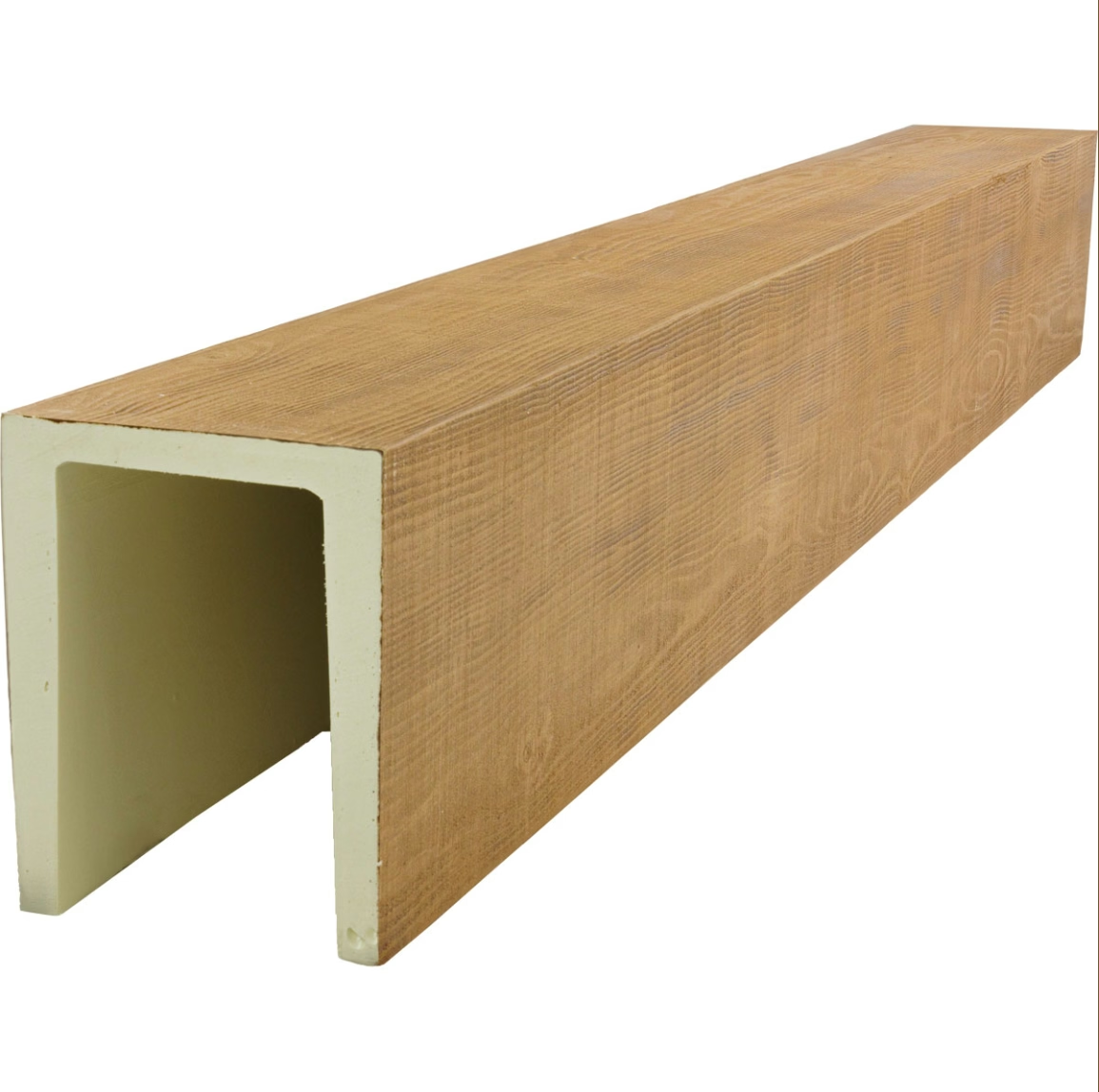
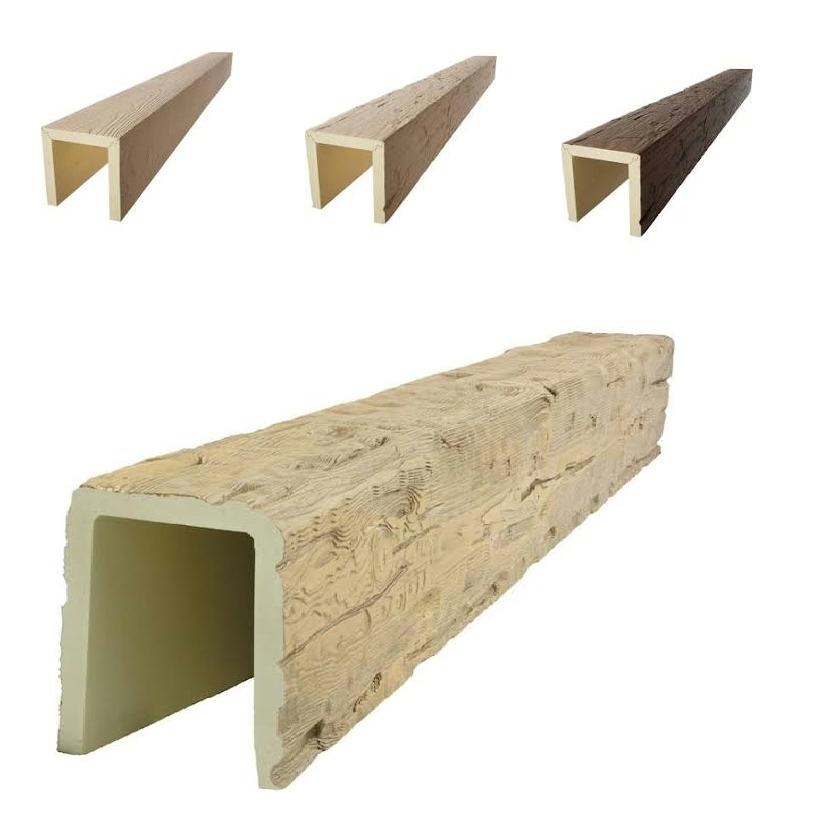
Anyone who has loaded a 40-foot container with traditional decorative beams knows the pain of watching usable space evaporate into thin air. Solid timber beams consume cubic meters at an alarming rate, and even conventional polyurethane sections often ship in their finished rectangular form, leaving gaps and unused corners throughout the container. Flat-pack hollow PU faux wood beams solve that problem at its root, collapsing the geometry of each beam into a slim profile that nests tightly inside standard export packaging.
The flat-pack concept borrows directly from the furniture industry, where unassembled components have shipped efficiently for decades. A hollow faux beam designed for flat-pack export typically separates into a U-shaped channel and a flat back panel, or splits lengthwise into two L-shaped halves that interlock. When disassembled, the resulting pieces stack flat against one another, reducing the volumetric footprint of each beam by 40 to 60 percent compared with its assembled state. For a buyer ordering several hundred linear meters of beams, that compression translates directly into fewer containers, lower port handling fees, and reduced carbon charges tied to vessel capacity.
How the Hollow Design Supports Flat-Pack Efficiency
The hollow cross-section is what makes flat-packing feasible. A solid polyurethane beam of the same visual dimensions would weigh significantly more and resist any attempt to compress its profile. Hollow beams, by contrast, already have wall thicknesses that range between 5 and 15 millimeters, leaving enough structural integrity to handle stacking pressure without deforming while remaining light enough to ship economically. The internal void also provides a natural cavity that packaging engineers can use for cable routing, mounting cleats, or simply additional flat-pack components nested inside.
The resin formulation matters as much as the geometry. Polyurethane systems used in faux timber production typically cure into a rigid foam structure with a closed-cell surface skin. That skin resists compression during stacking, while the cellular interior absorbs minor shocks without cracking. Export-grade beams usually incorporate a small percentage of impact modifier in the resin blend, allowing the flat-packed sections to flex slightly during handling rather than shatter. The result is a product that survives ocean transit in compressed form and snaps back into shape once assembled on site.
Container Math That Matters to Buyers
To understand the savings, consider a typical export scenario. A standard 40-foot high-cube container offers roughly 76 cubic meters of usable volume. Solid oak beams at 200 by 200 millimeters in a 3-meter length might consume 0.12 cubic meters per linear meter, fitting perhaps 600 linear meters per container. Hollow PU faux beams in their assembled rectangular form might already improve that figure to 900 linear meters per container. Flat-pack the same hollow beams and the count can climb above 1,400 linear meters, depending on profile size and packaging density.
That increase has cascading effects across the entire landed-cost calculation. Fewer containers mean fewer bills of lading, fewer terminal handling charges at the destination port, fewer customs entries to process, and lower insurance premiums because the declared value per shipment can be split across more frequent but smaller consignments. For distributors who maintain regional warehouses, flat-pack beams also allow larger buffer stocks to occupy the same warehouse footprint, which improves reorder flexibility during seasonal demand spikes.
Assembly on Site Without Specialized Tools
Concerns about field assembly often arise when importers first evaluate flat-pack options. The good news is that most modern flat-pack faux beams are designed for crew-level installation without specialty equipment. The two halves typically align using tongue-and-groove edges molded directly into the resin during production, and a bead of construction adhesive along the seam locks the pieces together once positioned. Some designs include internal splines or pre-drilled pilot holes for screws, providing a mechanical interlock that supplements the adhesive bond.
The time penalty for on-site assembly is usually modest. A two-person crew can typically assemble 8 to 12 linear meters per hour, depending on beam length and ceiling access. Once the two halves are joined, the seam disappears once painted or stained, particularly on deeply embossed grain patterns where the joint line falls naturally into a simulated groove or knot feature. End caps and connector pieces ship pre-formed and simply slide or glue into place at terminations and corners.
Quality Control During Flat-Pack Assembly
Buyers should pay attention to how the flat-pack components are matched during manufacturing. The best producers mold both halves of a beam in paired tooling so that the two surfaces align perfectly without shimming or sanding. Inferior products may mix halves from different production runs, leading to visible step-offs at the seam. When evaluating a supplier, request samples of flat-pack beams already assembled and finished, then inspect the seam carefully under raking light to confirm that the joint disappears.
Packaging integrity also deserves scrutiny. Flat-packed beams should arrive with protective foam sheets between each panel to prevent abrasion during transit. Corner protectors and edge guards keep the interlocking features from chipping in transit. For buyers in regions with humid climates, a desiccant sachet inside each bundle helps control moisture during the ocean voyage and reduces the risk of mold forming on any paper-based packaging materials.
Environmental Considerations
The environmental argument for flat-pack beams extends beyond just freight savings. Lower container counts mean fewer vessel trips for the same volume of product, which reduces bunker fuel consumption and associated emissions. Many logistics providers now calculate carbon metrics per shipment, and importers can use flat-pack beam sourcing as part of a documented sustainability program that resonates with architects and end clients.
Additionally, the resin used in polyurethane faux beams is typically inert and does not off-gas harmful compounds during the flat-pack assembly process. Offcuts from field trimming can be collected and either returned to the manufacturer for grinding and reuse or disposed of as standard construction waste. Compared with solid timber beams, which generate sawdust and require chemical treatments to resist pests, polyurethane flat-pack beams offer a cleaner lifecycle profile from production through installation.
Selecting a Reliable Flat-Pack Supplier
Not every faux beam manufacturer offers true flat-pack construction. Some simply ship beams nested in larger cartons without actually reducing the assembled volume. Buyers should request the disassembled dimensions from the supplier and calculate the packed density themselves, comparing it against industry benchmarks for similar profiles. A trustworthy supplier will provide flat-pack drawings, packaging specifications, and assembly instructions in multiple languages to support international distribution.
It is also worth asking about the supplier's experience with specific destination markets. Flat-pack beams for North America often need to meet different fire-rating standards than those bound for the Middle East or Southeast Asia. A producer familiar with regional certification requirements can pre-engineer the resin formulation and assembly method to satisfy local codes without requiring the buyer to commission additional testing on arrival.
Long-Term Cost Impact for Distributors
The savings from flat-pack beams compound over years of steady ordering. A distributor who consistently receives 30 percent more product per container can either pass those savings along to installer clients or retain them as improved margin. Either outcome strengthens the distributor's competitive position in a market where polyurethane faux timber already competes against real wood on price, weight, and installation speed. When combined with other logistical improvements such as regional warehousing and just-in-time delivery, flat-pack sourcing becomes a foundation for a more resilient supply chain that absorbs freight volatility without passing punitive costs downstream.

Technical References
ASTM standards cited in every specification
Test Data
Lab results from internal testing program
Updated 2026
Reviewed against current product specs