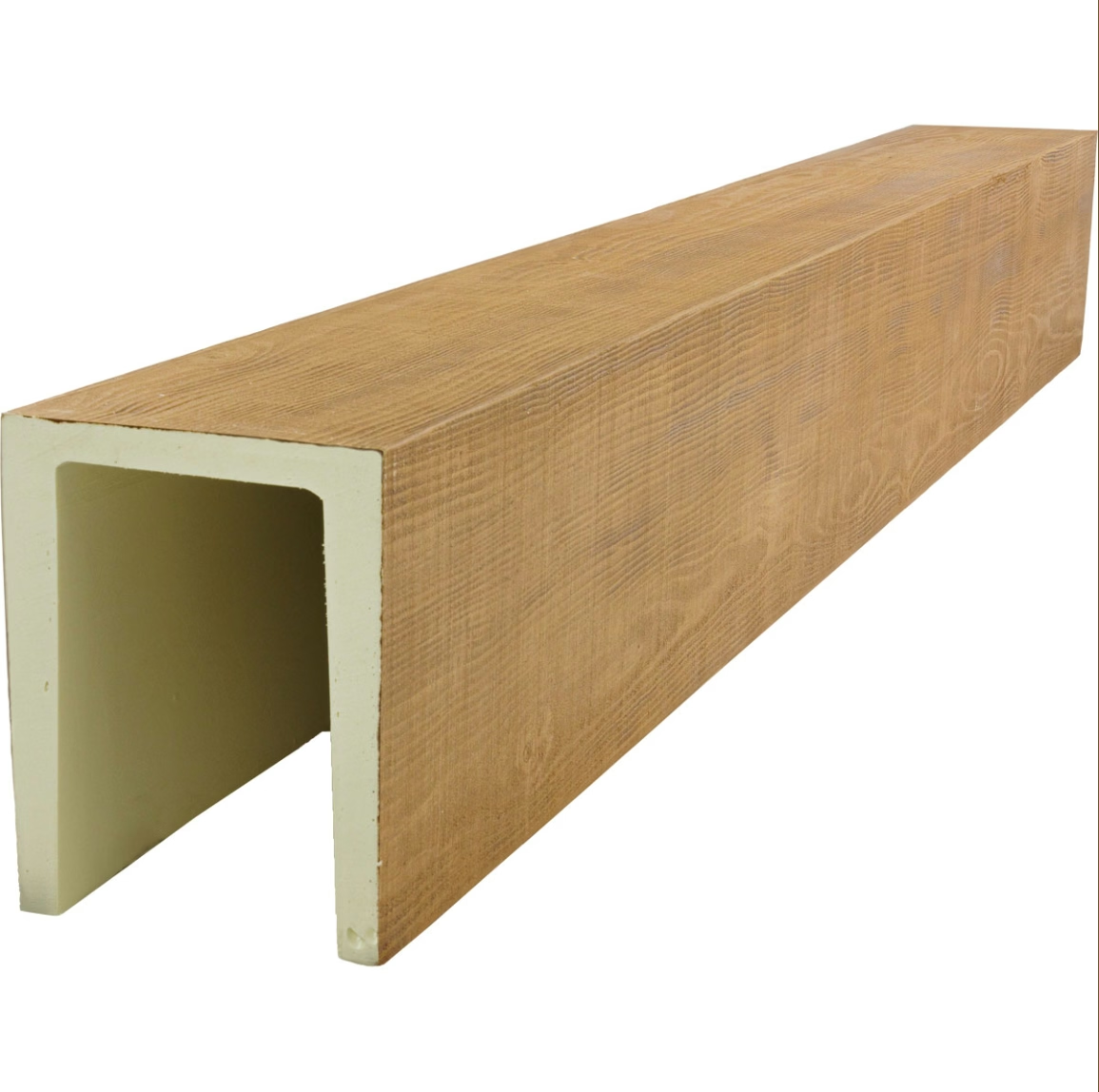
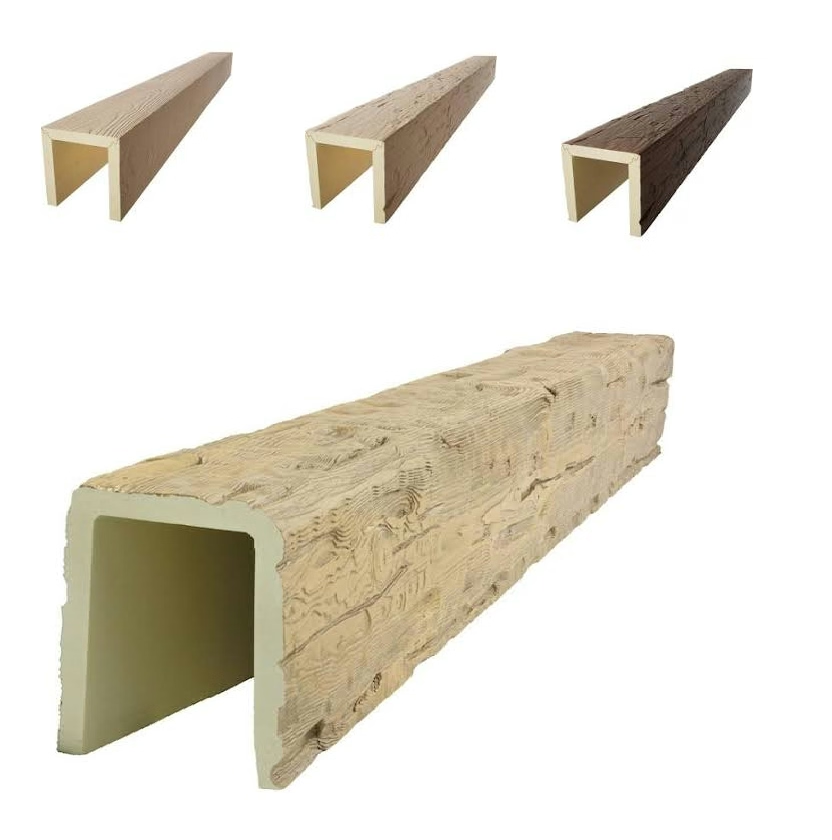
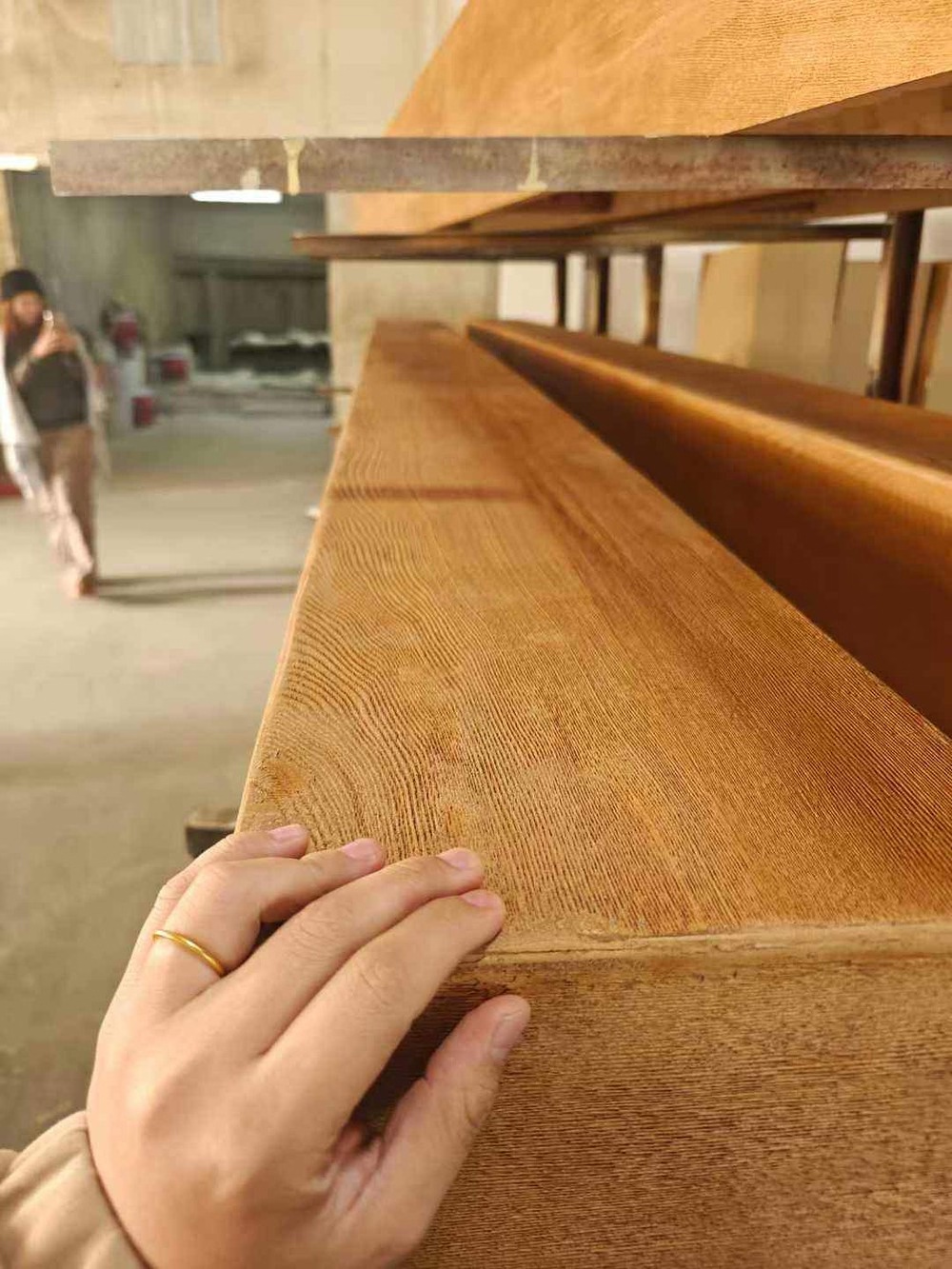
Splitting is the nemesis of real timber beams. It begins at a stress concentration, often at a knot or a place where the grain direction changes abruptly, and propagates along the grain line until it spans the full width of the beam. Once started, a split tends to widen with each seasonal cycle as moisture enters the crack and accelerates the deterioration. The result is a beam that looks damaged and, in severe cases, one that has lost enough structural integrity to require replacement. Non-splitting polyurethane faux timber beams eliminate this failure mode entirely by replacing the anisotropic grain structure of natural wood with a homogenous resin that has no grain lines to split along.
The anti-splitting performance of polyurethane comes down to material science. Natural wood is strongest along the grain and weakest across it, which makes it vulnerable to longitudinal splitting whenever tensile stress acts perpendicular to the grain. Polyurethane has no grain, so its strength is isotropic, meaning it is roughly the same in all directions. When stress is applied to a PU beam, it responds uniformly rather than preferentially along any weakness plane. The result is a material that tolerates stress without developing the cracks and splits that plague wood.
Why Wood Splits and Polyurethane Does Not
The splitting behavior of natural wood traces to its origin as a living tree. The vertical growth of the tree aligns all the wood fibers in the same direction, creating the grain structure that gives wood its strength and beauty. But that same alignment creates planes of weakness between the fiber bundles, particularly where latewood bands with their dense, thick-walled cells meet earlywood bands with their open, thin-walled cells. These transitions create stress concentrations that are prone to splitting when the wood is subjected to rapid drying, thermal shock, or mechanical impact.
The growth rings in a timber cross-section mark the annual boundary between earlywood and latewood, and they represent a series of potential weakness planes arranged in concentric circles around the pith. When a beam is cut from a log, these rings are oriented differently depending on where in the log the beam came from, creating various degrees of vulnerability to longitudinal splitting.
Polyurethane has no rings, no earlywood, no latewood, and no fiber bundles. It is a solid, uniform material throughout its cross-section, manufactured under controlled conditions that produce consistent density and properties from one batch to the next. There are no internal boundaries or weak planes to concentrate stress, so there is nowhere for a split to begin or propagate.
The Role of Flexibility in Split Resistance
Flexibility contributes to split resistance in ways that complement the homogeneous material structure. When a rigid beam is subjected to stress, the stress concentrates at points of geometric discontinuity: corners, notches, fastener holes, and changes in cross-section. These stress concentrations can exceed the local strength of the material, initiating a crack that then propagates through the structure.
A flexible beam responds differently to stress. The material yields slightly under load, distributing the stress more evenly across the cross-section and reducing the peak stress at any single point. The flexibility comes from the polymer chain architecture of the cured resin, which allows individual chains to rotate and slide slightly under load before reaching their breaking point. This yielding behavior absorbs energy that would otherwise go into cracking the material.
The flexibility also helps at connections and joints. Real wood beams at joints experience stress concentrations where fasteners penetrate the surface or where loads transfer from one member to another. The flexibility of polyurethane allows these loads to be distributed more gradually, keeping the stress within safe limits throughout the connection.
Formulation Factors That Affect Split Resistance
The polyurethane formulation determines how much flexibility the finished beam will have and how well it resists splitting. Two manufacturers making nominally similar products can produce beams with very different performance characteristics depending on the specific resin system and additives they use.
The polyol component of the formulation controls the flexibility and impact resistance of the cured polymer. Polyols derived from polyester chemistry tend to produce harder, more rigid foams, while polyether polyols yield more flexible materials. Most manufacturers use a blend that balances flexibility with the stiffness needed to maintain shape, but the exact ratio varies between suppliers.
The isocyanate component affects the cross-link density of the polymer network. Higher cross-link density produces a stiffer, more rigid foam, while lower density yields more flexibility. The manufacturer selects a cross-link density appropriate for the intended application, trading off flexibility against stiffness to achieve the desired balance of performance.
Impact modifiers improve the beam's ability to absorb sudden loads without cracking or splitting. These additives work by creating small rubbery domains within the polymer matrix that can deform under stress, absorbing energy that would otherwise go into fracture. Beams intended for high-traffic or high-impact environments benefit from higher impact modifier content.
Environmental Conditions That Challenge Real Wood
Several environmental conditions accelerate splitting in real timber but have little effect on polyurethane faux beams.
Rapid drying is particularly damaging to wood because it creates moisture gradients across the cross-section. The surface dries and shrinks while the interior remains moist, setting up differential stresses that cause the surface to check and eventually split. Timber that has been dried too quickly in a kiln, or that is exposed to a dry indoor environment after being stored in humid conditions, is especially vulnerable.
Thermal shock from rapid temperature changes can also initiate splits in wood. When a beam's surface temperature changes faster than its interior, differential expansion creates stress that manifests as surface checking and splitting. Beams in attics, near windows, or in buildings with poor climate control are particularly susceptible.
Mechanical impact from dropped objects, moving furniture, or construction activity can initiate splits in vulnerable wood. Once a split starts, it tends to propagate under continued stress, widening with each seasonal cycle until the beam becomes unsightly or structurally compromised.
None of these conditions affect polyurethane beams in the same way. Rapid drying has no effect because the material does not contain moisture. Thermal shock causes no differential expansion because the material expands uniformly. Mechanical impact may dent the surface but rarely initiates a propagating crack because the flexible resin distributes the impact energy throughout the cross-section.
Long-Term Performance Verification
The split-resistant performance of polyurethane faux beams has been verified through years of real-world installations and accelerated laboratory testing. Buildings that installed PU faux beams fifteen to twenty years ago show no evidence of splitting, even in challenging environments where real timber beams would have required replacement long ago.
Accelerated aging tests simulate decades of environmental exposure in weeks or months. These tests cycle the beam through temperature extremes, humidity levels, and mechanical loading to identify weaknesses before the product reaches the market. Beams that pass these tests without developing splits or cracks demonstrate the reliability that buyers need for long-term installations.
Field surveys of existing installations provide the most compelling evidence of split resistance. Trained inspectors examine beams in service, looking for evidence of cracking, splitting, surface degradation, or joint failure. The results are documented and used to improve product formulations and installation guidelines. Products with consistently positive field performance records earn the trust of architects and designers who specify them for high-profile projects.
Selecting Non-Splitting Beams for Your Project
Buyers seeking genuine split-resistant performance should verify the manufacturer's claims before specifying a product. Technical data sheets should include information about the resin formulation, cross-link density, and impact resistance. Independent test reports from accredited laboratories provide third-party verification of performance claims.
Warranty terms indicate how much confidence the manufacturer has in the product. Long warranties against cracking, splitting, and delamination signal that the manufacturer stands behind the product's long-term performance. Products with short warranties or narrow coverage should be evaluated carefully before selection.
Reference projects in similar environments provide real-world evidence of performance. Ask the manufacturer for contact information for architects or property managers who have used the product in comparable applications. Speaking directly with people who have lived with the beams for several years provides insight that no amount of laboratory testing can match.

Technical References
ASTM standards cited in every specification
Test Data
Lab results from internal testing program
Updated 2026
Reviewed against current product specs