International procurement of building materials hinges on a number that is often the largest variable cost in the entire transaction: shipping. Material costs are predictable once a supplier is selected, but freight charges fluctuate with fuel prices, port congestion, carrier capacity, seasonal demand, and the specific route between origin and destination. A buyer who treats shipping as an afterthought often discovers that the final landed cost differs materially from the factory quote.
A free online shipping cost calculator brings transparency to this previously opaque calculation. By entering a few basic parameters, buyers receive realistic freight estimates that they can incorporate into their procurement decisions from the earliest planning stages.
What Goes into a Shipping Cost Estimate
Freight charges for bulk faux beam orders depend on a handful of variables that the calculator must capture accurately. Origin and destination are the primary drivers, because the distance, the route options, and the available carriers all affect the price. Volume and weight come next, with carriers charging based on whichever measure produces the higher revenue, often referred to as chargeable weight.
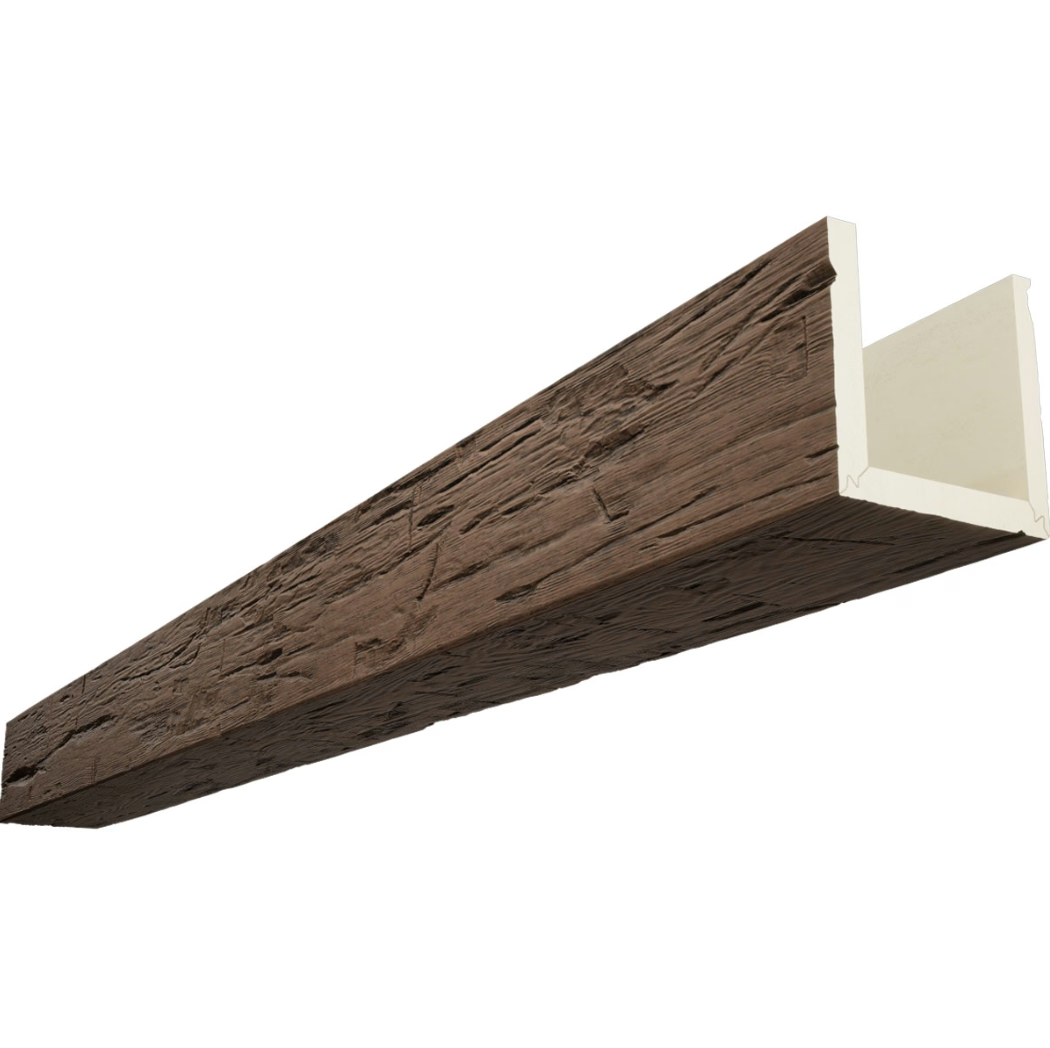
For faux beams, which are light relative to their volume, dimensional weight usually controls the freight calculation. A 20-foot container of hollow polyurethane beams occupies substantial space but does not weigh much compared to solid timber of the same dimensions. Carriers recognize this and apply dimensional weight factors that reflect the space the cargo occupies in the truck, container, or aircraft.
The shipping method is the third major variable. Ocean freight is the most economical for large bulk orders but takes weeks to arrive. Air freight is much faster but costs several times more per kilogram. Express courier services sit between the two on speed and price, and they work well for sample shipments and small orders.
Inputs the Calculator Asks For
A well-designed shipping calculator asks for the information needed to produce a realistic estimate without overwhelming the user with technical details. The basic inputs include the origin port or factory location, the destination port or city, the approximate order weight in kilograms, and the order volume in cubic meters.
Many calculators also ask about the number of packages, the longest piece length, and whether the order requires special handling such as crating or palletizing. These details affect how the carrier loads the cargo and what equipment is needed at each end of the journey. A 6-meter-long beam, for example, requires special container handling that adds to the cost compared to shorter lengths.
The shipping method preference is usually the final input, with the calculator offering a choice between economy ocean freight, standard ocean freight, air freight, and express courier. Selecting an option filters the calculation to that specific method, while leaving the other options available for comparison.
Reading the Calculator Output
The calculator output typically presents a breakdown of the major cost components rather than a single number. The breakdown helps the buyer understand what they are paying for and where they might find savings.
Base freight is the largest component and represents the carrier's charge for moving the cargo from origin to destination. For ocean freight, this is the ocean freight rate per container or per cubic meter. For air freight, it is the rate per kilogram. Fuel surcharges appear as a separate line, often expressed as a percentage of the base freight, and they fluctuate with global fuel prices.
Origin charges cover the costs at the departure port, including documentation fees, terminal handling charges, and export clearance. Destination charges cover the equivalent costs at the arrival port, including customs clearance, port handling, and delivery to the final warehouse. For shipments that include door-to-door service, the destination charges also include the final trucking leg.
Insurance and customs duties are sometimes included in the calculator output, sometimes excluded. When included, they help the buyer see the full landed cost in a single view. When excluded, the calculator notes that these costs are additional and should be considered separately.
Comparing Shipping Methods Side by Side
The most useful feature of an online shipping calculator is the ability to compare methods without contacting multiple carriers. The buyer enters the order details once and sees estimated costs for ocean, air, and express options presented in parallel.
This comparison often reveals surprising relationships between cost and speed. Ocean freight might take 30 days but cost a fraction of air freight, which takes 7 days. Express courier might take 4 days but cost more than air freight for anything beyond a small sample shipment. Seeing these trade-offs clearly helps the buyer choose the method that matches the project timeline and budget.
For project planners working against a deadline, the calculator output sometimes includes estimated transit times alongside the costs. This combined view supports decisions about whether to pay more for faster shipping or to adjust the project schedule to accommodate longer transit.
Limitations to Keep in Mind
A shipping calculator produces estimates based on current rate sheets and historical averages, but actual charges can vary. Carriers adjust rates monthly or quarterly in response to fuel costs, capacity changes, and seasonal demand spikes. A calculator estimate from one month may be off by a meaningful percentage a few months later when the shipment actually moves.
Customs duties and import taxes are particularly difficult to estimate accurately because they depend on the destination country's tariff schedule, the product's HS code, and any applicable trade agreements. The calculator may provide a rough estimate based on common duty rates, but the final customs assessment can differ.
For complex shipments involving multiple ports, transshipment, or unusual cargo, the calculator's accuracy diminishes. These situations usually require a direct conversation with a freight forwarder, who can navigate the specifics in ways that an automated calculator cannot.
Despite these limitations, the calculator provides a valuable planning tool. The estimate it produces is accurate enough for budgeting purposes and comparison shopping, and it gives the buyer a starting point for negotiating with carriers or freight forwarders.
Using Calculator Estimates in Negotiations
Buyers who approach freight negotiations with a calculator estimate in hand tend to get better results than those who negotiate based on guesses. The calculator provides a benchmark against which to evaluate carrier quotes, helping the buyer identify unusually high or low offers.
A quote that is significantly above the calculator estimate may include services the buyer did not request, such as inside delivery or extra insurance. A quote that is significantly below may be missing surcharges that will be added later, or it may indicate a carrier with limited experience handling the cargo type. The calculator helps the buyer ask the right questions to clarify these discrepancies.
For larger orders, the calculator estimate provides a useful baseline when negotiating volume discounts with carriers. Carriers know that price-sensitive buyers have done their homework, and they tend to offer their best rates more readily when the buyer can demonstrate familiarity with the market.
Integrating Shipping Costs into Total Project Budgets
The shipping cost is part of the total project budget, and the calculator helps the buyer understand how it relates to the material cost. For large bulk orders shipped by ocean, the shipping cost is often 10 to 25 percent of the material cost, which is significant but not dominant. For smaller orders shipped by air, the shipping cost can exceed the material cost, which fundamentally changes the economics of the order.
This relationship influences decisions about order quantity and shipping method. A buyer who needs a small quantity quickly may decide that air freight is worth the premium because the project cannot wait. A buyer with more flexibility on timing can take advantage of ocean freight to keep the shipping cost proportional to the material cost.
Designers and contractors who understand this relationship can guide their clients toward procurement strategies that balance speed and cost. The calculator provides the numbers that make these conversations productive.

Technical References
ASTM standards cited in every specification
Test Data
Lab results from internal testing program
Updated 2026
Reviewed against current product specs