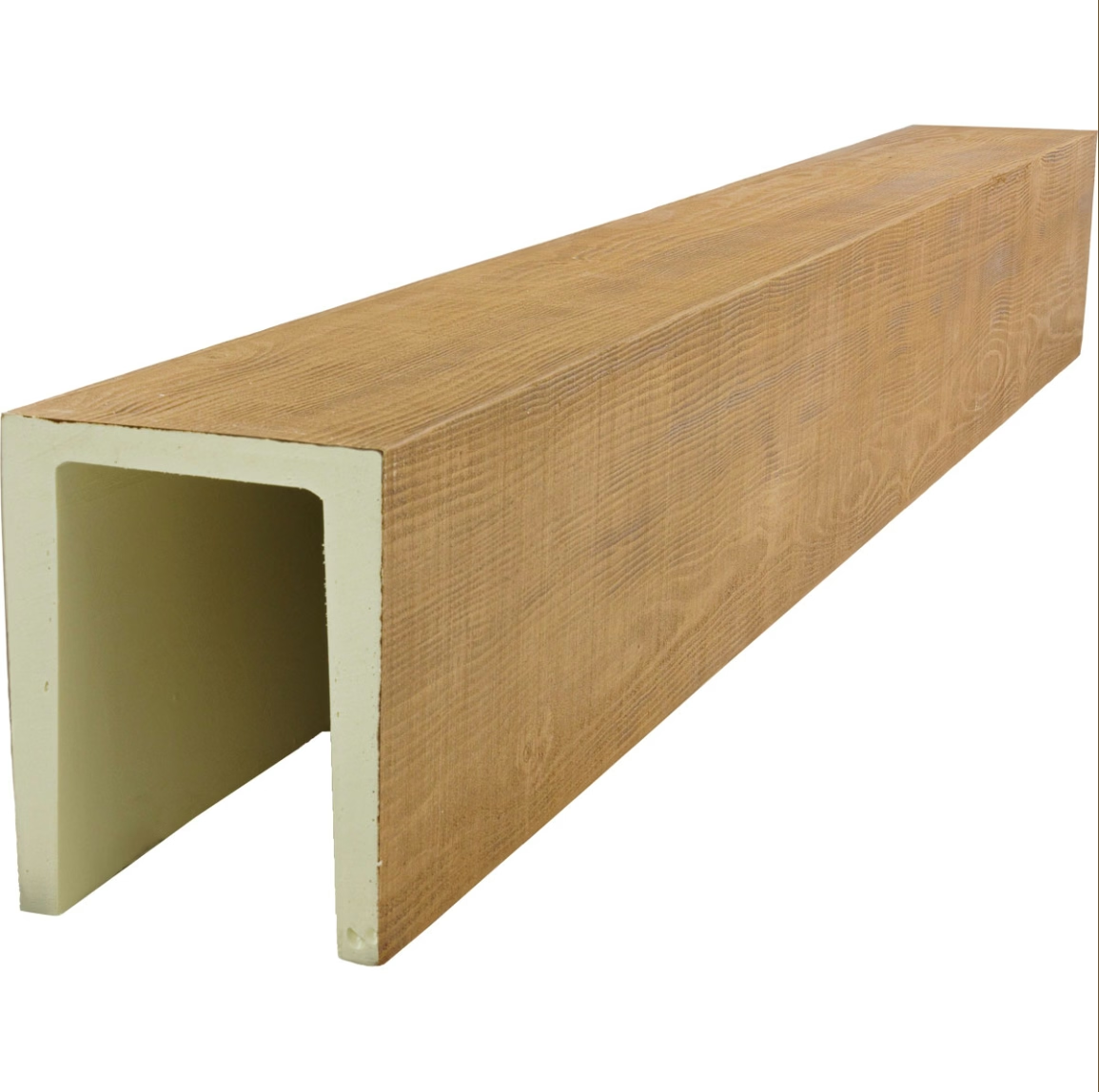
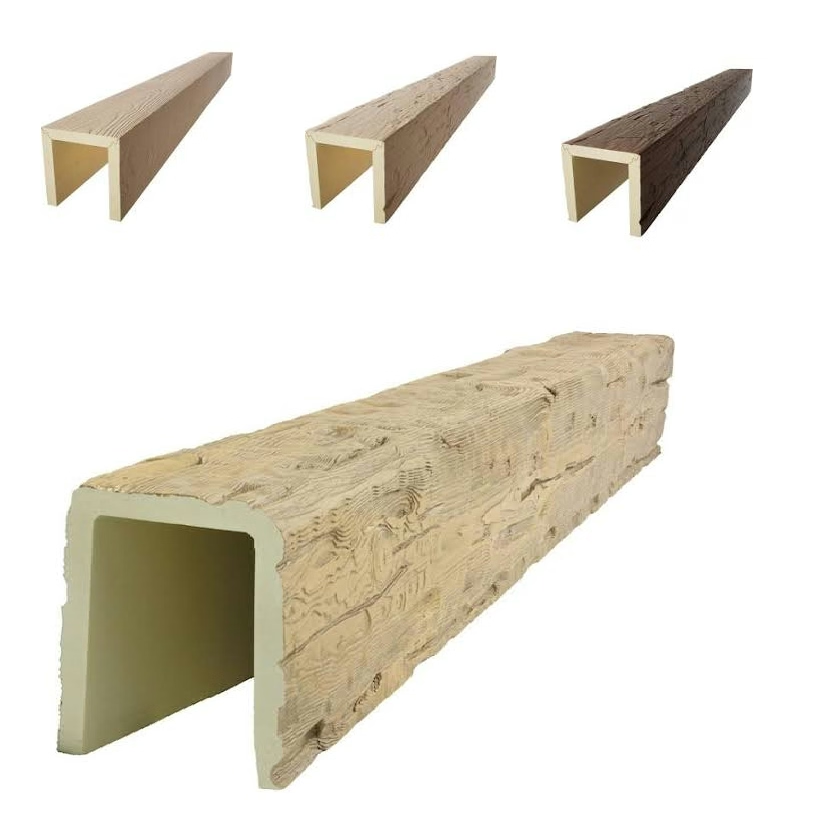
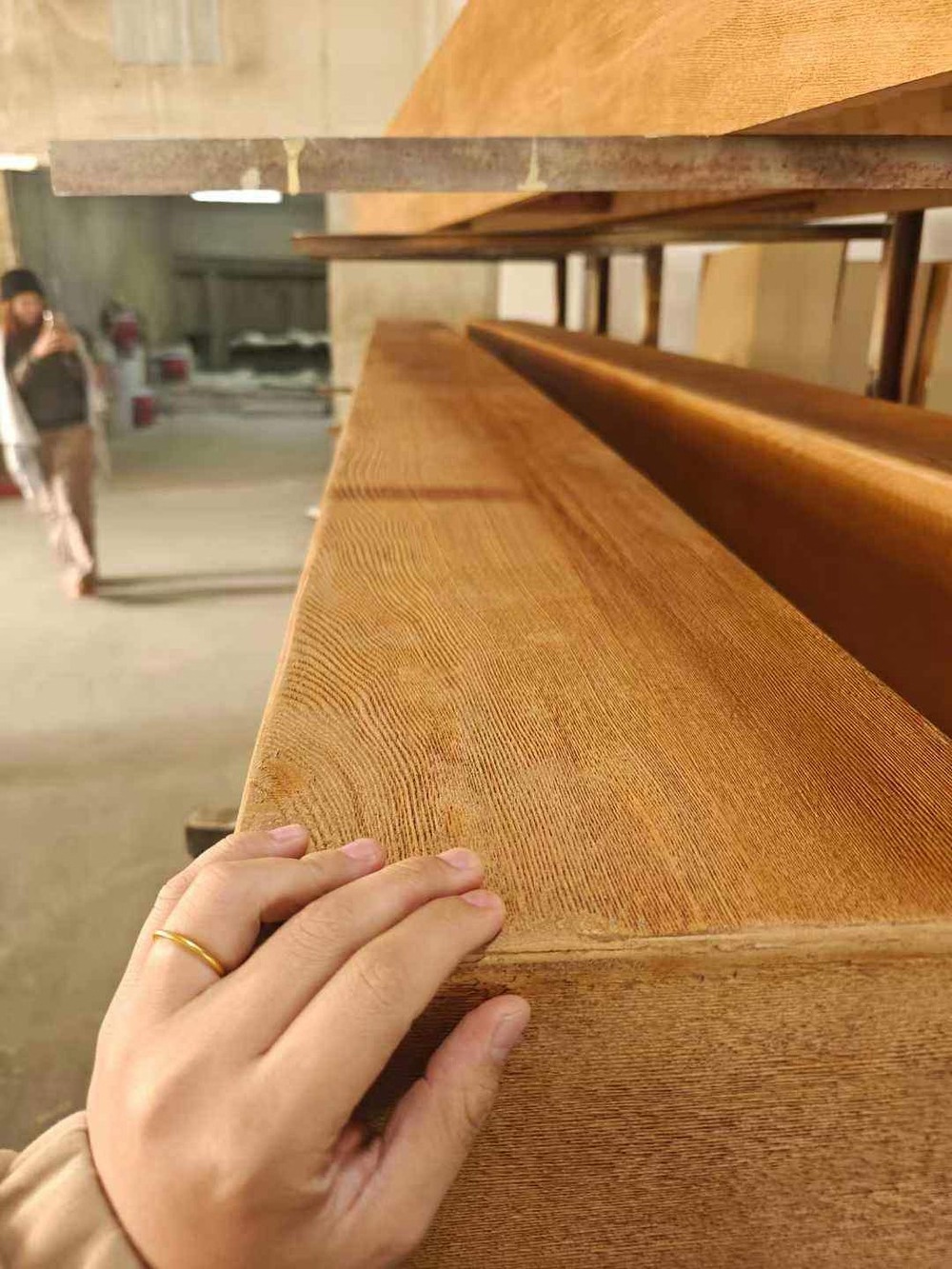
Custom orders introduce uncertainty that standard catalog products do not. When the profile, the finish, or the dimensions differ from anything the manufacturer has produced before, the buyer cannot rely on photos or existing samples to evaluate what they will receive. The sample becomes the only reliable way to confirm that the custom specification will produce the desired result.
Reputable manufacturers understand this dynamic and offer sample services tailored to custom orders. These services bridge the gap between the buyer's vision and the factory's production capability, providing tangible evidence that the two align.
When Custom Samples Are Necessary
Standard catalog samples work well when the buyer is choosing among existing profiles and finishes. The manufacturer has produced these combinations many times, and a small section accurately represents what the full order will look like.
Custom situations are different. A buyer who needs a beam profile that matches an existing architectural element, a finish color that coordinates with specific interior materials, or a length that exceeds the standard catalog range cannot evaluate their specification from standard samples alone. The custom specification may involve mold modifications, finish formula adjustments, or production process changes that affect the final appearance.
In these situations, a custom sample shows what the manufacturer can actually produce given the specific requirements. The sample becomes a proof of concept that demonstrates the manufacturer's ability to meet the specification before the buyer commits to a full production order.
What the Sample Process Involves
Requesting a custom sample typically begins with a detailed conversation between the buyer and the manufacturer's specification team. The conversation covers the project requirements, including the desired dimensions, the finish color, the texture style, and any other characteristics that differentiate the custom beam from the standard catalog.
Based on this conversation, the manufacturer's team creates a sample specification that translates the buyer's requirements into production parameters. The specification includes the profile drawing, the finish formula, the texture style reference, and the dimensions. This document becomes the basis for sample production.
Sample production for custom orders usually requires some level of setup. If the custom requirement is a new finish color applied to an existing profile, the setup involves mixing the finish formula and applying it to a section of the standard profile. If the custom requirement is a modified profile, the setup may involve creating or adjusting a mold, which adds time and cost to the sample production.
Once the sample is produced, it is shipped to the buyer for evaluation. The sample typically arrives with documentation that describes its specifications, so the buyer can verify that it matches the agreed-upon sample specification.
Evaluating Custom Samples
Custom sample evaluation involves the same visual and tactile checks used for standard samples, with additional attention to the specific custom requirements. The buyer confirms that the custom profile matches the reference drawing, that the finish color matches the specification, and that the texture style and density are appropriate for the project.
For custom finishes, the evaluation often includes comparing the sample against other project materials such as flooring, cabinetry, or wall coverings. This comparison ensures that the custom finish coordinates with the broader material palette rather than existing in isolation.
The buyer also evaluates the sample for consistency across its surface. Custom finishes applied for the first time sometimes show subtle variations in color density or texture that the buyer may or may not find acceptable. Identifying these variations during the sample stage gives the manufacturer an opportunity to refine the finish formula before production begins.
For samples that involve profile modifications, the buyer examines the geometry in detail. The depth, width, profile curves, and surface texture all need to match the specification. Any deviation from the spec is documented and communicated to the manufacturer, who determines whether the deviation is acceptable or requires a revised sample.
Common Issues Identified Through Custom Samples
The custom sample process surfaces issues that would otherwise emerge during full production. Some of these issues relate to the manufacturer's capabilities, while others relate to the buyer's expectations.
Finish color matching is a frequent challenge. A buyer who specifies a color based on a digital rendering or a small color chip may not realize how that color will appear when applied to a textured polyurethane surface at full size. The custom sample reveals the actual appearance, and sometimes the buyer decides that a slightly different color would work better. Making this adjustment at the sample stage is far easier than adjusting it during full production.
Texture density is another common surprise. Polyurethane faux beams can be produced with light, medium, or heavy texture density, and the choice significantly affects the visual character. A buyer who envisions a heavy rustic texture may find that a medium density looks better in the actual room. The sample allows this judgment to be made with real materials rather than imagination.
Profile proportions occasionally need adjustment after sample review. A profile that looks correct on paper may appear too slender or too heavy when held as a physical sample. The buyer can request a slight modification, and the manufacturer can usually incorporate the change into the production mold setup.
Sample Costs and Lead Times
Custom samples are typically offered free of charge for serious buyers with confirmed projects, although the buyer may pay for shipping depending on the destination and the sample size. The cost of producing the sample is borne by the manufacturer, who recovers this cost through the production order that follows.
Lead times for custom samples vary considerably. A finish sample on a standard profile can usually be produced within one to two weeks. A modified profile sample may take three to four weeks, depending on whether a new mold is needed or an existing mold can be adjusted. Samples involving both profile modifications and custom finishes can take four to six weeks.
Buyers should request custom samples early in the project timeline, well before the final order needs to be placed. The sample lead time, combined with the time needed for the buyer to evaluate the sample and request any adjustments, can easily consume two months from the initial request to the start of production.
Using Custom Samples in Client Approvals
Design professionals often use custom samples as part of the client approval process. The sample is presented alongside other material selections, such as flooring and paint, and the client evaluates how the custom beam coordinates with the overall design direction.
This presentation approach helps clients understand the value of the custom specification. Rather than choosing from standard options, they see exactly what their custom beam will look like and can request changes before the order is placed. The sample becomes a tangible representation of the design intent.
For projects with formal submittal processes, the custom sample serves as the reference standard for the production run. The submittal package includes the sample, the sample specification, and a photograph showing the sample in the proposed location. This documentation supports the approval process and establishes a clear benchmark for the eventual installation.
From Sample to Production
Once the custom sample is approved, the production order proceeds against the sample specification. The manufacturer uses the approved sample as the reference for quality control during production, comparing each batch against the sample to ensure consistency.
The approved sample is retained by the manufacturer as part of the project record. If questions arise during production or after delivery, the sample provides a reference point for resolving disputes. This retention is a standard practice among serious manufacturers and reflects the importance of the sample in the custom order process.
The clear traceability from sample to production to installation is what makes the custom sample service valuable. Each step in the process links back to the approved sample, ensuring that the finished product matches what the buyer evaluated and approved.

Technical References
ASTM standards cited in every specification
Test Data
Lab results from internal testing program
Updated 2026
Reviewed against current product specs