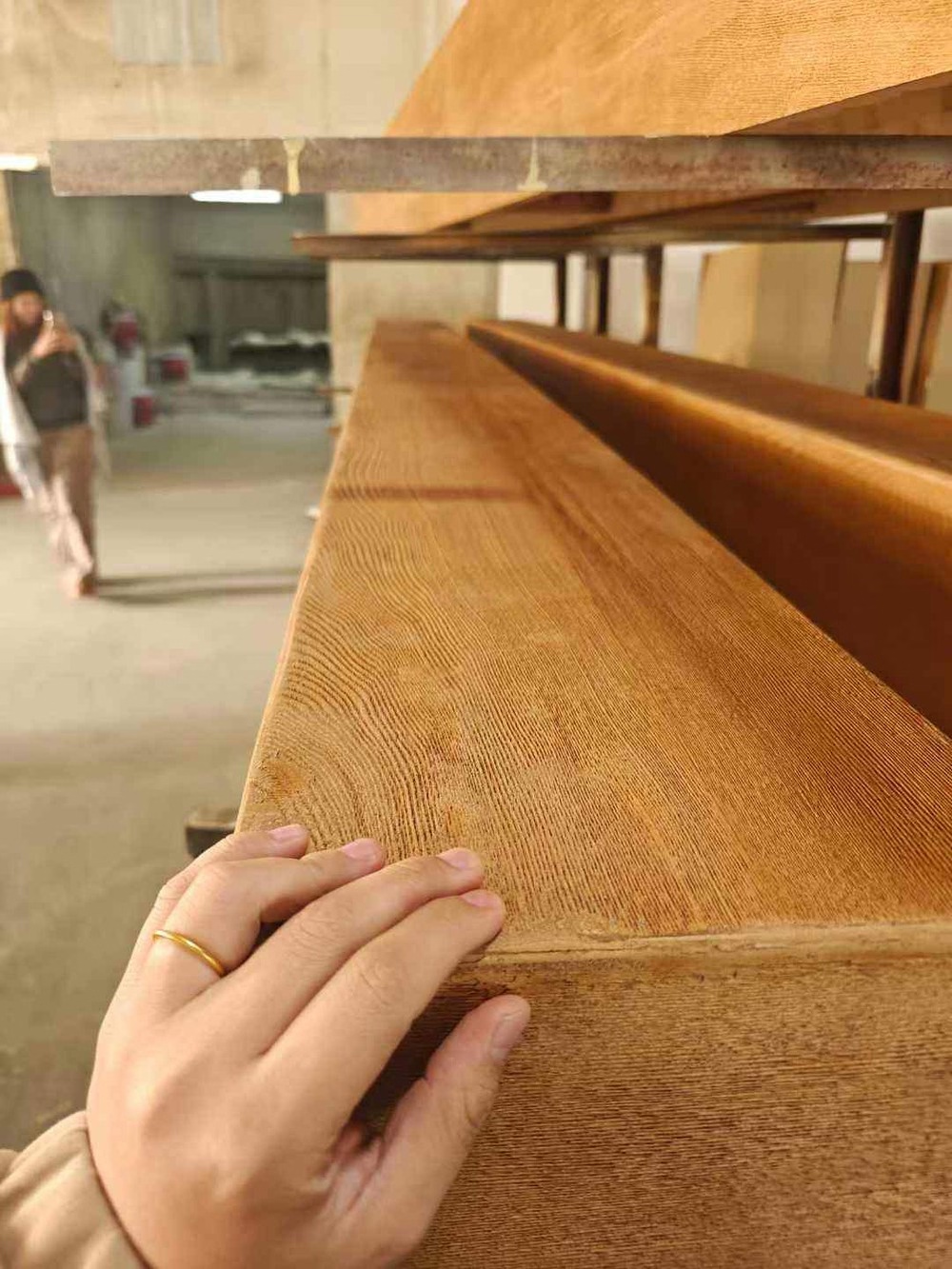
Among all the qualities that define a convincing faux wood beam, texture ranks near the top of the list that buyers need to evaluate in person. Color can be approximated on a screen. Profile geometry can be shown in a technical drawing. But texture, the physical pattern of grain across the surface, communicates through touch and through the way it interacts with light in three dimensions. It is also the characteristic most likely to look different in a finished installation than it appeared in a photograph.
A complimentary texture sample service exists precisely to bridge this evaluation gap. By sending physical sections that demonstrate each available texture, manufacturers let buyers experience the grain patterns under their own eyes and lighting conditions.
Why Texture Matters More Than Buyers Expect
Texture influences the perception of a faux beam in several interconnected ways. The depth of the grain determines how dramatically the surface catches shadows, which in turn affects how realistic the beam appears under raking light. A shallow grain pattern looks flat and printed, while a deeper grain pattern produces the shadow play that makes a real wood surface feel alive.
The pattern of the grain also communicates information about the wood species being imitated. Tight, straight grain suggests one set of wood types, while open, sweeping grain suggests another. Buyers who are trying to evoke a specific wood character, such as reclaimed barn wood or freshly milled oak, need texture samples that demonstrate whether the manufacturer can deliver that character.
Texture also affects how the beam accepts and displays finish. A deep grain pattern holds more finish in the recessed areas, which creates natural color variation between the grain peaks and valleys. A shallow grain pattern produces a more uniform finish appearance, which can look either clean and contemporary or flat and synthetic depending on the project context.
Texture Categories Typically Offered
Manufacturers typically offer several texture categories that represent different aesthetic directions and wood species inspirations. Smooth or lightly textured options suit modern interiors where a clean, refined appearance is desired. These textures show subtle grain detail that becomes visible under close inspection but does not dominate the visual character of the beam.
Hand-hewn textures replicate the appearance of timber that was shaped with hand tools. These textures show irregular gouges, slight variations in surface depth, and an overall sense of craftsmanship. They work well in rustic, farmhouse, or traditional interiors where the beams are meant to evoke historical construction methods.
Reclaimed wood textures simulate the appearance of timber that has been weathered, aged, and possibly reused from older structures. These textures combine grain patterns with simulated wear marks, knots, cracks, and color variations that suggest decades of service. They are popular for industrial, coastal, and eclectic interiors.
Distressed textures add deliberate imperfections to the beam surface, including checks, splits, knots, and irregular edges. These textures work well in projects where the beams are meant to look antique or salvaged, and they provide visual interest that smooth textures cannot match.
Sample Contents for Texture Evaluation
A texture sample kit typically contains several elements that support systematic evaluation. Small swatches or short beam sections represent each available texture, allowing the buyer to compare them side by side. The samples are usually finished in a neutral color that does not distract from the texture itself, though some kits include the same texture in multiple finishes.
Detailed photographs accompany the samples, showing how each texture appears when installed in real spaces. The photographs include both close-up views that reveal the grain detail and wider views that show the overall visual effect. These photographs help the buyer understand how the texture will appear at viewing distances that range from across a room to within arm's reach.
Some texture sample kits include comparison samples that show the texture at different stages of finishing. A raw sample, a primed sample, a base-coated sample, and a fully finished sample allow the buyer to understand how the texture evolves through the finishing process. This information is particularly useful for projects where the finish will be applied on site rather than at the factory.
Evaluating Texture Samples Under Project Lighting
The most important step in texture evaluation is observing the samples under the lighting conditions of the actual project. Texture appearance changes dramatically with lighting direction, intensity, and color temperature. A texture that looks subtle under diffuse office lighting may reveal unexpected depth under raking sunlight, and a texture that looks dramatic under directional lighting may appear flat under ambient illumination.
Designers and contractors who are serious about texture evaluation often bring the samples to the project site and observe them at different times of day. Natural light, interior lighting, and accent lighting each create different impressions, and the texture that works best across all these conditions is the safest specification choice.
For projects with primarily artificial lighting, the evaluation should use the same fixture types and lamp colors that will be installed. LED lighting at 3000K produces different texture impressions than LED lighting at 4000K, and halogen lighting creates yet another appearance. Sampling under the project's actual lighting prevents unpleasant surprises after installation.
Texture Coordination with Other Materials
Texture evaluation should also consider how the beam texture coordinates with other materials in the space. A heavy hand-hewn texture may overwhelm a room with smooth wall finishes and minimal furnishings. A subtle smooth texture may disappear against a wall with rich textural treatments. The texture choice should complement the overall material palette rather than competing with it.
Samples placed against flooring samples, fabric swatches, and paint chips reveal coordination issues that are not apparent when the samples are viewed in isolation. The design professional can observe how the beam texture interacts with these other surfaces and make adjustments if the combination feels visually unbalanced.
For projects that aim for a specific historical period or regional style, the texture should be consistent with the architectural language of that style. A modern interior might use a refined smooth texture, while a Tuscan-inspired interior might use a heavy hand-hewn texture. The sample comparison helps the team verify that the texture supports the intended design direction.
Sample Size Considerations
Texture samples are typically smaller than full beam samples because the texture can be evaluated effectively on a relatively small surface. A sample that is 4 to 6 inches long is usually sufficient to demonstrate the grain pattern, the texture depth, and the surface character. Larger samples add cost without adding meaningful additional information for texture evaluation.
However, samples that are too small may not reveal the larger-scale grain pattern that becomes visible on a full-size beam. A pattern that repeats every 2 inches, for example, looks different on a 4-inch sample than on a full 20-foot beam. Buyers evaluating texture for large projects sometimes request longer samples to see how the pattern flows across a more extended surface.
Some manufacturers offer texture samples in both small and large formats, allowing the buyer to choose the appropriate size based on the level of evaluation needed. The larger samples are particularly useful for projects with extensive beam runs where the pattern continuity across long distances affects the overall appearance.
From Texture Sample to Production Specification
Once the texture sample is approved, the texture specification is added to the project documentation. The specification typically references the manufacturer's texture code or name, which ensures that the production order matches the approved sample exactly. Including a photograph of the approved texture alongside the specification provides additional clarity for the production team.
For projects with phased installations, the approved texture sample serves as the reference for all subsequent production batches. The manufacturer retains the sample as a quality control reference, and texture consistency is verified against the approved sample throughout the production run. This traceability protects the buyer from receiving material that differs from what was originally approved.
The texture sample also supports future maintenance decisions. If a beam section needs repair or replacement years after the original installation, the approved sample helps the maintenance team match the new material to the existing installation. Without the retained sample, matching an aged beam texture becomes considerably more difficult.
Texture Customization Through Sample Review
Texture customization, which is less common than finish customization but available from some manufacturers, often begins with the texture sample service. A buyer who needs a slightly different grain pattern or texture depth can describe the requirement and receive custom samples that demonstrate the manufacturer's ability to meet the specification.
The custom texture sample process involves more back-and-forth than a standard texture sample, but it follows the same logical progression from initial concept to physical verification. The buyer evaluates each custom sample against the specification, provides feedback, and receives revised samples until the texture meets the requirement.
This iterative process produces a texture specification that exactly matches the buyer's vision, which is particularly valuable for projects where standard textures do not quite fit the design intent. The investment in custom texture samples pays off in a finished installation that precisely delivers the intended aesthetic.