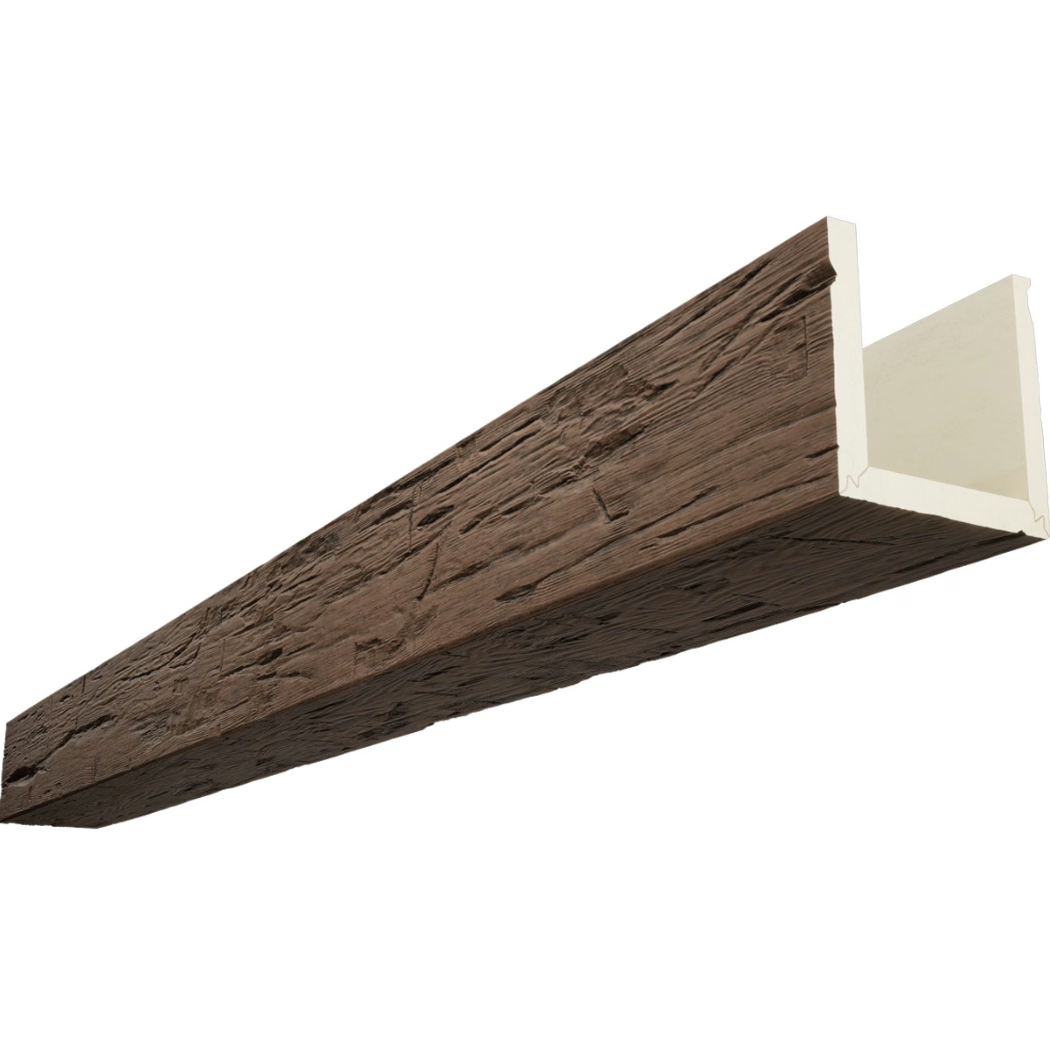
International shipping represents one of the most significant cost components in the landed price of imported building materials. For polyurethane faux beams, which are light relative to their volume, dimensional weight calculations can produce freight charges that rival or even exceed the material cost on smaller orders. A free worldwide shipping program transforms this calculation, allowing buyers to access premium products at domestic-equivalent prices.
These programs are not universal, and they come with qualification requirements that buyers need to understand. The requirements reflect the manufacturer's need to maintain sustainable logistics operations while still providing meaningful benefits to qualified buyers.
How Free Worldwide Shipping Programs Work
Manufacturers who offer free worldwide shipping typically do so through negotiated agreements with international carriers or through their own logistics operations in major export markets. These agreements provide favorable rates that the manufacturer can pass along to buyers in the form of complimentary shipping.
The cost of providing free shipping is built into the manufacturer's pricing structure. Products sold under the free shipping program may carry a slightly higher price than products sold with separate shipping charges, but the total landed cost is typically lower for buyers who would otherwise pay full freight rates. The manufacturer absorbs the shipping cost as a customer acquisition and retention expense, similar to how domestic retailers offer free shipping on e-commerce orders.
The program is usually limited to specific destinations where the manufacturer has established logistics partnerships. Common eligible destinations include North America, Western Europe, Australia, and parts of East Asia. Less common destinations may require direct negotiation with the manufacturer's export team.
Typical Qualification Requirements
Free worldwide shipping programs have qualification requirements that vary by manufacturer but generally fall into several common categories. The most common requirement is a minimum order value, which ensures that the shipping cost the manufacturer is absorbing represents a reasonable percentage of the total order. Minimums typically range from a few thousand to several tens of thousands of dollars, depending on the manufacturer's pricing structure.
A second common requirement is a destination limitation. Free shipping may be available to major commercial ports and airports but not to remote inland locations that require additional transportation arrangements. The manufacturer typically publishes a list of eligible destinations, and buyers in other locations need to arrange their own inland transport or negotiate a separate arrangement.
A third common requirement relates to product mix. Some programs cover only standard catalog products, while others include custom products at an adjusted rate. Very large or very heavy items may be excluded from the free shipping program even when they are part of an otherwise qualifying order.
A fourth requirement, less common but occasionally applied, relates to payment terms. Free shipping may be available only for orders paid by specific methods, such as wire transfer in advance or letter of credit. These payment methods reduce the manufacturer's collection risk, which justifies the additional cost of free shipping.
Benefits for Commercial Buyers
Commercial buyers benefit substantially from free worldwide shipping programs. The savings on a single large order can amount to thousands of dollars, which represents meaningful budget that can be allocated to other project components or retained as margin. For buyers who place regular orders, the annual savings can become a significant component of their overall cost structure.
The predictability of free shipping also simplifies budgeting and quoting. Buyers know that the landed cost of a qualifying order equals the product cost plus any applicable duties or taxes. There is no variable freight charge to estimate and build into the budget. This simplification makes it easier to present clear pricing to clients and to maintain consistent margins across projects.
Free shipping programs also reduce the administrative burden of international procurement. Buyers do not need to obtain separate freight quotes, negotiate with carriers, or arrange for export documentation from their end. The manufacturer handles these arrangements as part of the order, which frees the buyer to focus on the materials themselves.
Benefits for Residential and Small Commercial Buyers
While the qualification thresholds typically favor larger commercial orders, some manufacturers extend free shipping programs to residential and small commercial buyers as well. The minimum order value may be lower for these buyers, or the manufacturer may offer promotional free shipping periods that apply to all orders regardless of size.
For homeowners undertaking renovation projects, free shipping can make the difference between ordering from an overseas manufacturer with a wider product selection and ordering from a local supplier with limited inventory. The expanded product access, combined with the shipping cost savings, often produces a better overall outcome than the local alternative.
Small commercial buyers, including boutique contractors and independent designers, can also benefit from these programs when their order sizes meet the qualification thresholds. Pooling orders across multiple smaller projects can be an effective way to reach the threshold and take advantage of the shipping benefit.
Coordinating with Customs and Duties
Free shipping programs typically cover only the freight cost from origin to destination. Customs duties, import taxes, and destination-side handling charges remain the buyer's responsibility. Buyers should understand these additional costs and build them into their project budgets.
Customs duties on polyurethane faux beams vary by destination country and depend on the product's tariff classification. Some countries classify faux beams under plastic product codes, while others classify them under building material codes. The classification affects the duty rate and the documentation required.
Working with a customs broker simplifies the import process and ensures that the documentation is filed correctly. The customs broker calculates the applicable duties, prepares the import declaration, and handles any inspections or examinations that the customs authority requires. The cost of customs brokerage is typically modest relative to the value of the shipment.
For buyers who import regularly, establishing a relationship with a customs broker in their country provides ongoing benefits beyond any single shipment. The broker becomes familiar with the buyer's typical products and documentation, which speeds up future clearances.
Logistics Considerations for Long Shipments
International shipments of faux beams involve logistics considerations that do not apply to domestic orders. The transit time is longer, which affects project scheduling. The cargo requires appropriate packaging to withstand handling at multiple transfer points. The documentation must satisfy the requirements of both the origin and destination countries.
Most manufacturers experienced in international shipping have refined their packaging and documentation processes to handle these requirements. Beams are typically packed in wooden crates or on reinforced pallets with protective wrapping that prevents surface damage during transit. The documentation includes commercial invoices, packing lists, certificates of origin, and any certifications required by the destination country.
Buyers should confirm the packaging standards with the manufacturer before placing an order, especially for large orders where packaging quality directly affects the received condition of the product. Photographs of the packaging used for previous similar shipments can provide useful reassurance.
Timing Considerations and Project Planning
The longer transit times associated with international shipping require careful project planning. Ocean freight typically takes 25 to 40 days from origin to destination, plus additional time for inland transport and customs clearance. Air freight reduces transit to a week or less but at significantly higher cost.
Buyers who plan their orders well in advance can take advantage of the lower ocean freight rates without compromising project schedules. The lead time between order placement and delivery should be factored into the procurement schedule, with appropriate buffer time built in for unexpected delays.
For projects with phased installations, the first phase can often be ordered well in advance, with subsequent phases ordered as the project progresses. This approach spreads the shipping costs and storage requirements across the project timeline, which can help with cash flow management.
Buyers who maintain standing relationships with manufacturers often benefit from priority production scheduling that ensures their orders ship on the agreed-upon dates. This priority is particularly valuable during peak production periods when standard orders may face extended lead times.
Working with the Manufacturer's Export Team
Most manufacturers with free worldwide shipping programs have dedicated export teams that handle international orders. These teams understand the documentation requirements, the carrier relationships, and the destination-specific considerations that affect international shipments.
Buyers should engage the export team early in the procurement process, particularly for first-time orders. The team can advise on documentation requirements, transit time estimates, and any destination-specific considerations that might affect the shipment. Building a relationship with the export team pays dividends across multiple orders, as the team becomes familiar with the buyer's projects and preferences.
For complex shipments involving multiple destinations or specialized handling, the export team coordinates the logistics arrangements that make the shipment possible. This coordination is often the most valuable service that the manufacturer provides to international buyers, beyond the materials themselves.
The free worldwide shipping program represents a significant value addition for qualified buyers. Understanding how the program works, what it requires, and how to use it effectively allows buyers to maximize the benefit and simplify their international procurement process.