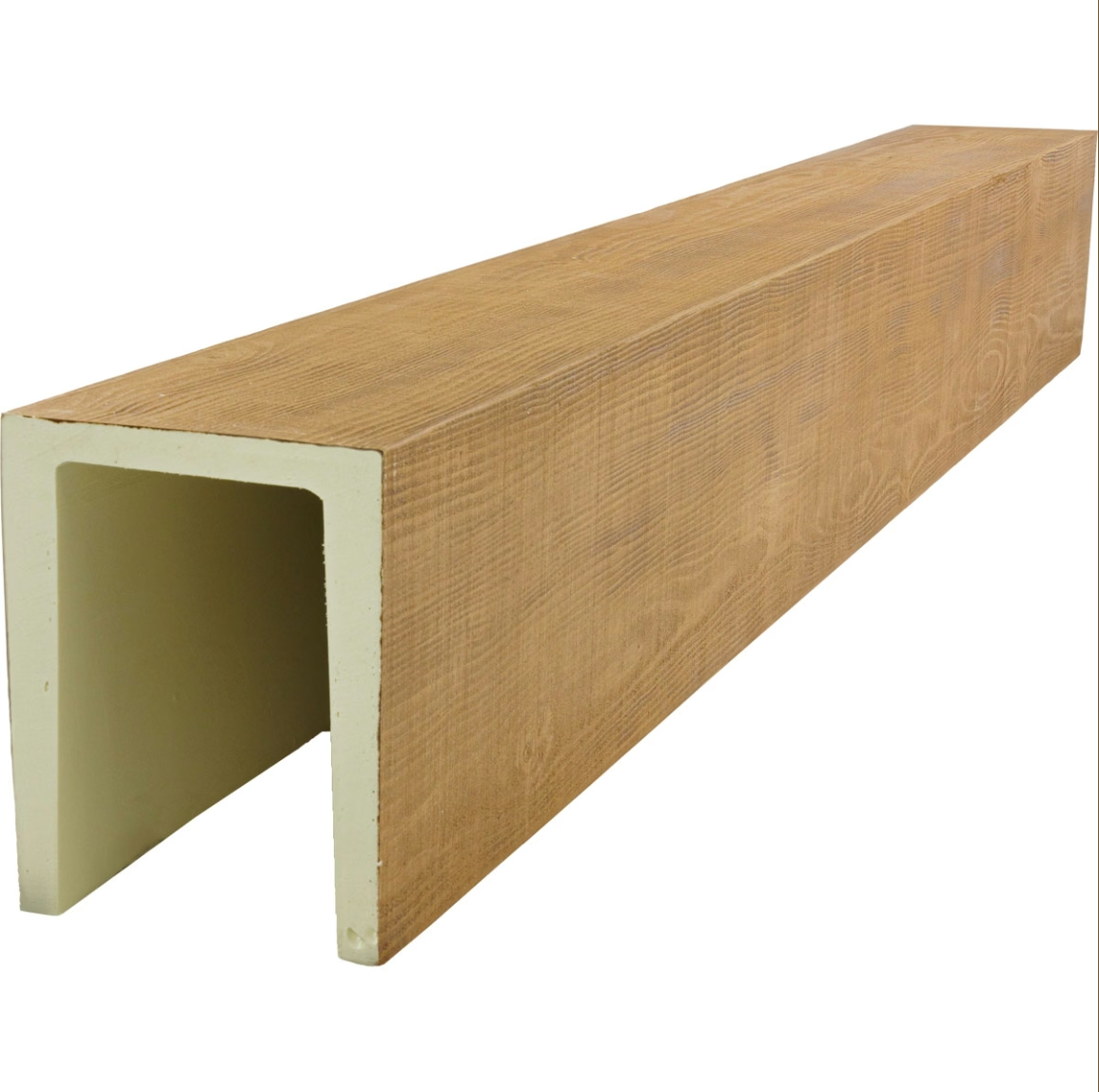
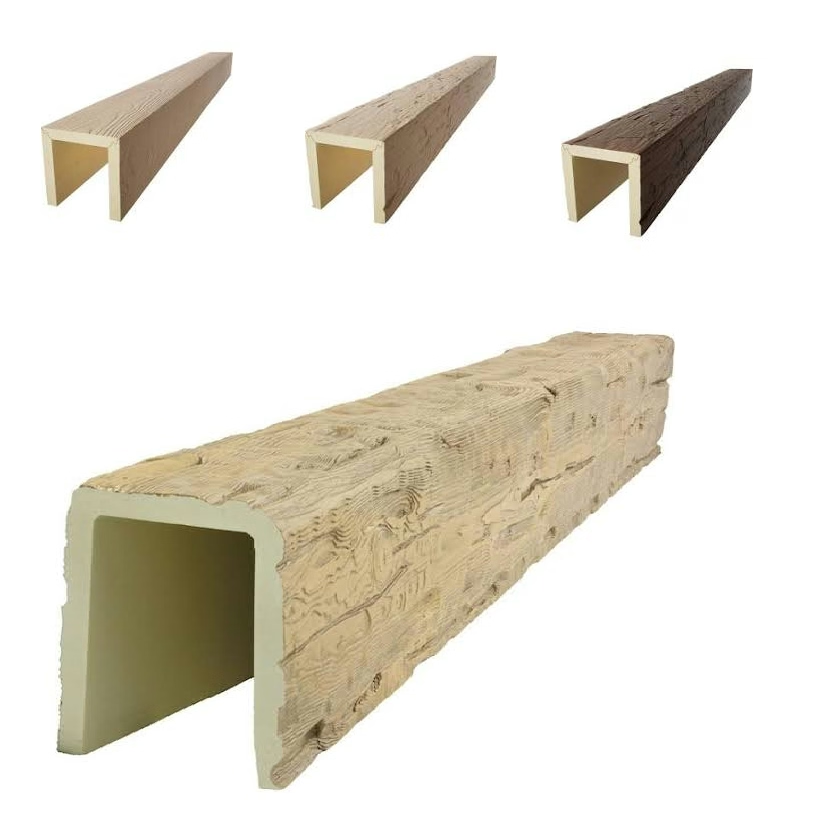
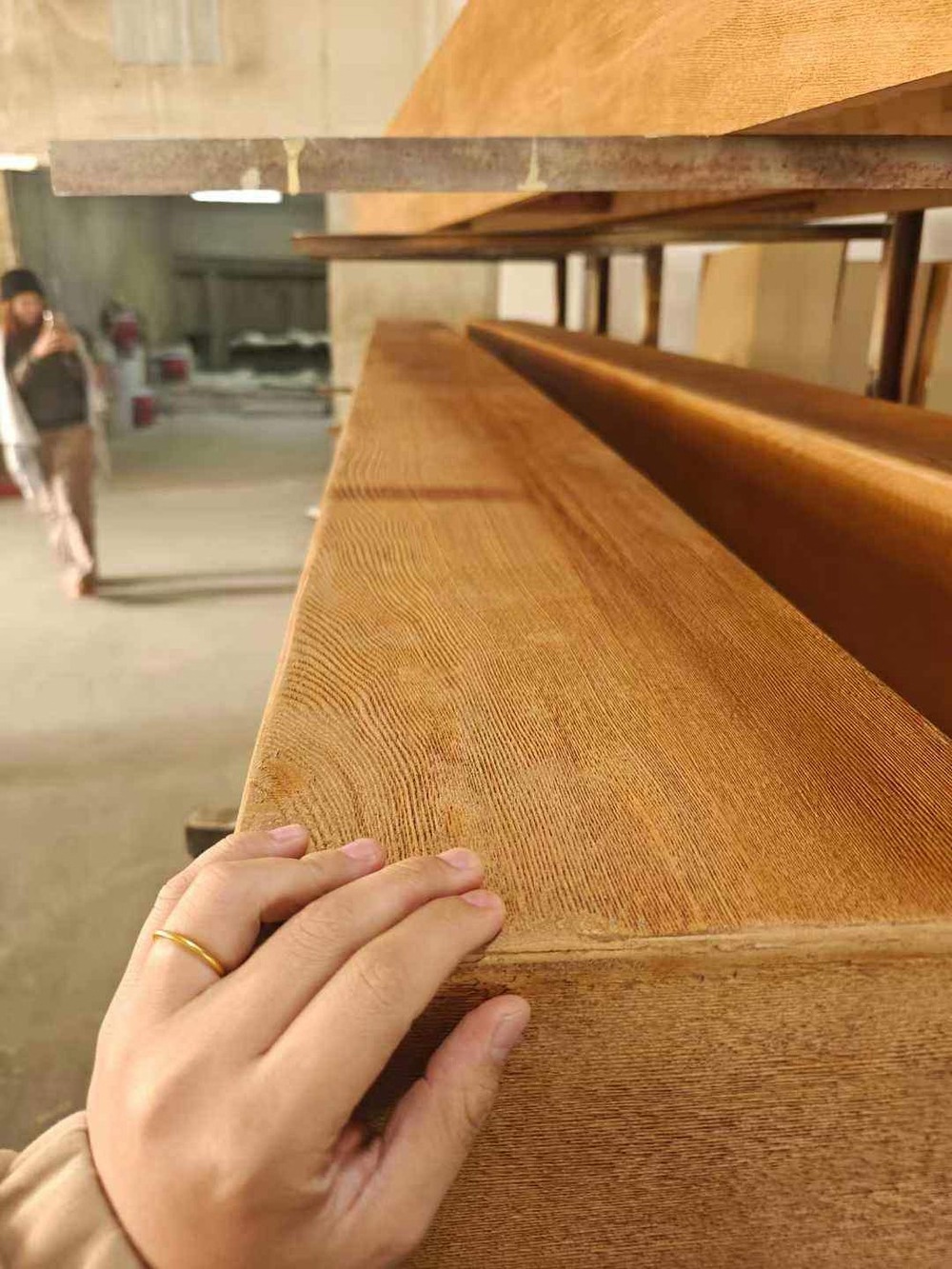
In a market as crowded as polyurethane faux wood beams, brand trust is a rare and valuable asset. A buyer can find dozens of manufacturers willing to ship containers to almost any port in the world. What they cannot find easily is a brand that consistently delivers the quality it promises, that stands behind the product when something goes wrong, and that has earned the trust of the architects, contractors, and distributors who specify and install the beams every day.
Building that kind of trust takes years. It requires a manufacturer to make the same hard decisions over and over again: to reject a production run that does not meet the standard, to delay a shipment rather than ship a flawed product, to invest in better moulds and better coatings when a cheaper option would have sufficed. The customers who experience those decisions become the brand's advocates, and their recommendations do more for the business than any advertising campaign.
The Foundations of Brand Trust
A trusted brand in this category rests on four foundations. The first is product quality, which means the beams look the way they are supposed to look, they perform the way they are supposed to perform, and they last the way they are supposed to last. The second is supply reliability, which means the order arrives when promised, in the quantity promised, and in the condition promised. The third is customer service, which means questions are answered quickly, problems are addressed promptly, and the buyer feels like a valued partner rather than a source of revenue. The fourth is consistency, which means the experience is the same whether the buyer is ordering for the first time or the fiftieth.
A brand that excels on all four of these dimensions earns a reputation that travels by word of mouth. Architects recommend the brand to other architects. Contractors specify it for their clients. Distributors promote it to their retail customers. The cycle reinforces itself, and the brand becomes a default choice in its category.
How Quality Is Verified
A trusted brand does not ask the customer to take the quality on faith. The quality is documented, tested, and verifiable. The beams ship with material safety data sheets, with test reports from accredited laboratories, and with quality control records that document the inspection of each shipment. A buyer who wants to verify the quality can request a sample, commission a third-party inspection, or visit the factory in person.
The most trusted brands also publish their quality standards openly. They state the density range, the fire rating, the VOC emissions, the load-bearing capacity, and the expected service life of their product. They do not hide behind vague marketing language. The data is there for anyone who wants to see it, and it matches the actual product.
The Role of Certifications
Certifications play an important role in building brand trust, particularly in markets where building codes require third-party verification. A trusted brand maintains the certifications relevant to its major markets: ASTM E84 fire ratings for the US, Euroclass ratings for Europe, GREENGUARD or Indoor Air Comfort for low emissions, and any other certifications that buyers in specific regions have come to expect.
The certifications are not just marketing badges. They are evidence that an independent laboratory has tested the product and confirmed that it meets a specific standard. A buyer who is specifying the beams for a commercial project can include the certification in the project documentation, and the building inspector or the client's sustainability consultant can verify it independently.
Supply Reliability as a Competitive Advantage
For a buyer who is planning a project, the most frustrating experience is a supplier who promises a delivery date and then misses it. A trusted brand understands that on-time delivery is not a bonus; it is a basic expectation. The production schedule is planned to allow buffer time for unexpected delays, and the customer is notified immediately if a problem arises that affects the shipping date.
A trusted brand also maintains safety stock on the most popular profiles, so an order can be fulfilled from existing inventory rather than waiting for a new production run. This is a significant investment, but it is the kind of investment that earns customer loyalty. The buyer who knows they can place an order on Monday and have it ship by Friday is a buyer who keeps coming back.
Customer Service That Builds Loyalty
Customer service in this industry is often the difference between a one-time sale and a long-term relationship. A trusted brand invests in customer service because it knows that the cost of acquiring a new customer is much higher than the cost of keeping an existing one.
The customer service team includes people who understand the product, who can answer technical questions, who can advise on installation, and who can resolve problems quickly. The team is reachable by phone and email, and they respond within hours rather than days. They also speak the languages of the major markets the brand serves, which removes a significant friction point for international buyers.
Consistency Across Markets and Time
A brand that is trusted globally is consistent across all of its markets. A buyer in Dubai receives the same quality of product as a buyer in Düsseldorf or Dallas. A buyer who has been purchasing the brand for ten years receives the same quality in the tenth year as they did in the first. The brand does not cut corners when supply is tight, and it does not let quality drift in pursuit of higher volume.
This kind of consistency requires discipline at every level of the organisation. The production team must follow the same processes for every batch. The quality team must apply the same standards to every shipment. The customer service team must provide the same level of attention to every customer. The discipline is what makes the brand trustworthy, and the trust is what makes the brand valuable.
The Long Payoff
A globally trusted brand does not build itself in a quarter or a fiscal year. It builds itself over a decade or more, through thousands of small decisions that add up to a reputation. The payoff comes in the form of customers who choose the brand without shopping around, who recommend it to their colleagues, who pay a premium for the assurance of quality, and who stick with the brand even when a cheaper alternative is available.
For the manufacturer, the long payoff is a business that is more resilient, more profitable, and more enjoyable to run. For the buyer, the long payoff is a supplier that makes their own business easier to run. The relationship becomes a quiet partnership, and the brand becomes a default choice in a crowded market.
Technical References
ASTM standards cited in every specification
Test Data
Lab results from internal testing program
Updated 2026
Reviewed against current product specs