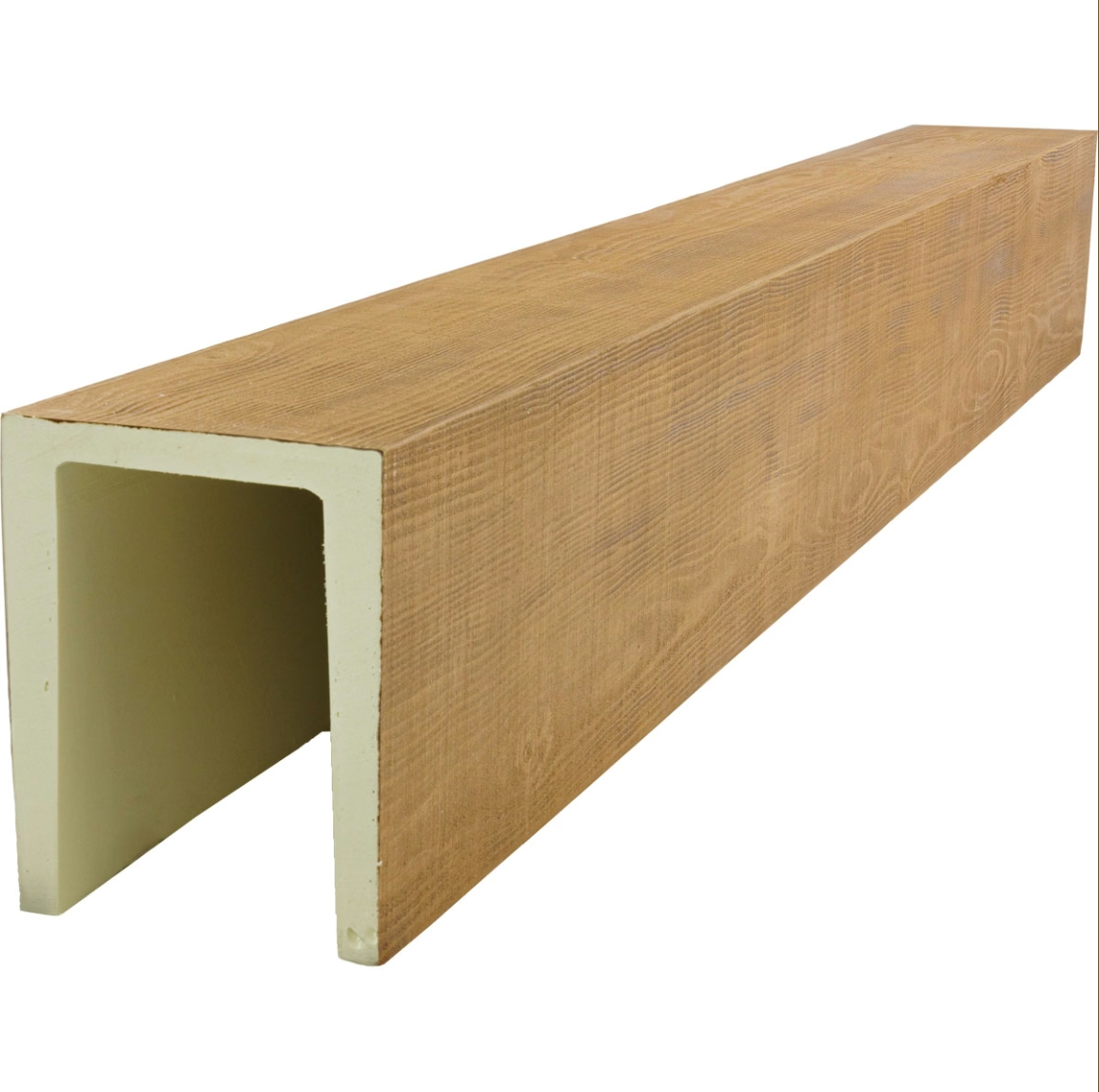
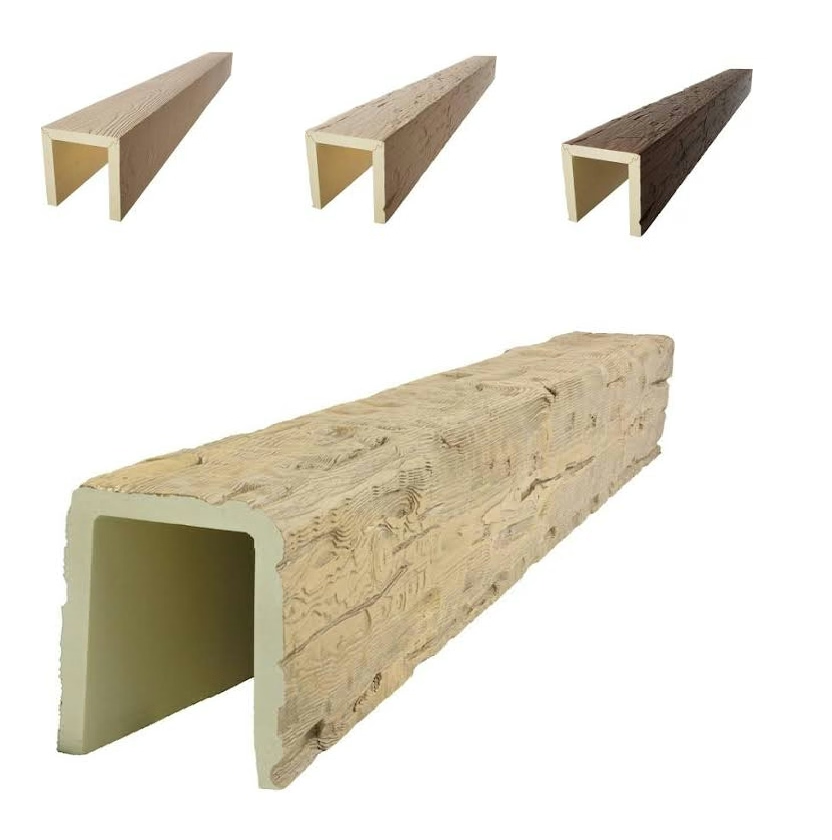
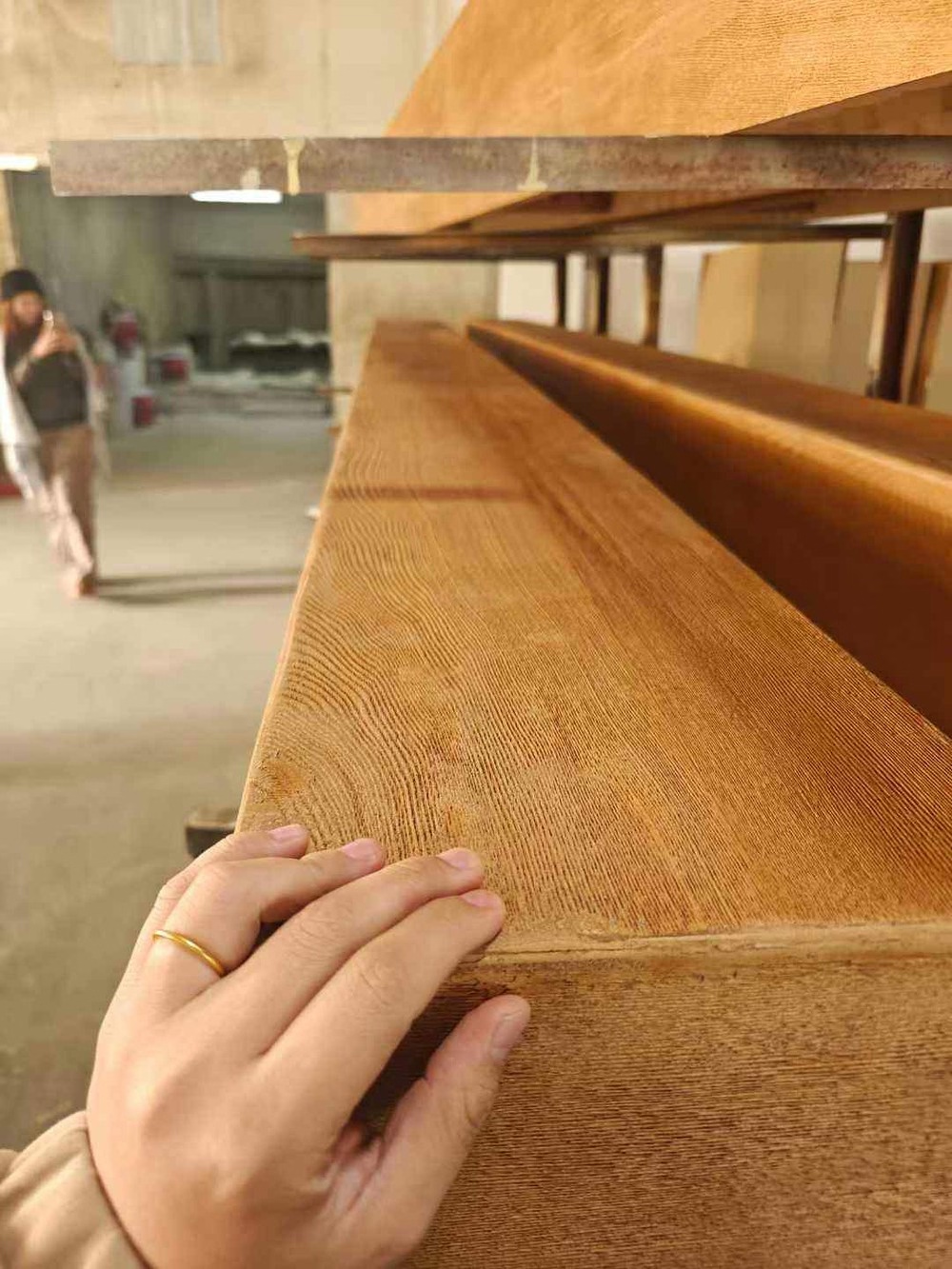
Green Building Council certification has become a baseline expectation for commercial construction in many markets, and the materials specified in certified projects have to meet specific sustainability criteria. Polyurethane faux beams have emerged as one of the more reliable ways to deliver the architectural ceiling presence of solid timber while supporting the certification categories that project teams are pursuing. The materials reduce forest impact, lower transportation emissions, and contribute to several LEED and BREEAM credit categories when properly specified.
The reason PU faux beams are well-positioned for green building work is that the sustainability story extends beyond the wood-substitute aspect. The factory production process, the transportation efficiency, the installation waste, the indoor air quality profile, and the service lifespan all contribute to the overall sustainability picture. A well-specified PU faux beam can contribute to multiple credit categories in a single product specification.

What "Green Building Council approved" actually means
The phrase "approved" gets used loosely in building material marketing, but for Green Building Council certification it has a specific meaning. The certification programs — LEED in the US and internationally, BREEAM in the UK, Green Star in Australia, CASBEE in Japan, and others — don't "approve" individual products. Instead, they establish credit categories that projects earn points toward certification. Materials contribute to those credits based on documented attributes.
For PU faux beams, the relevant credit categories typically include:
- Materials and Resources credits for recycled content, regional materials, and certified wood alternatives.
- Indoor Environmental Quality credits for low-emitting materials.
- Energy and Atmosphere credits in some programs, where the thermal performance of building envelope materials is considered.
- Innovation credits for materials that exceed standard sustainability benchmarks.
Manufacturers of PU faux beams provide documentation — typically Environmental Product Declarations (EPDs), Health Product Declarations (HPDs), and specific credit contribution sheets — that project teams use to claim these credits. The documentation has to be current and from a recognized certification body for the credit claims to be valid.
The recycled content question
Polyurethane faux beams can be specified with varying levels of recycled content. The base material is polyurethane resin, which can include pre-consumer recycled content from manufacturing scrap and post-consumer recycled content from recovered plastic streams. The exact percentage depends on the manufacturer's sourcing and production process.
For LEED Materials and Resources credits, the recycled content threshold is typically 10 percent for one credit and 20 percent for two credits, calculated by weight. PU faux beams can meet either threshold depending on the formulation specified. Project teams should request the recycled content documentation from the manufacturer at the specification phase to verify what threshold is achievable.
A related consideration is the recycled content of any steel or aluminum components in the beam — backing plates, mounting hardware, reinforcement channels. These can be specified with high recycled content, which contributes to the overall beam sustainability profile.
Regional materials considerations
LEED and similar programs have credits for materials sourced within a certain radius of the project site — typically 500 miles for some programs, 100 km for others. PU faux beams are produced in a limited number of factories globally, so the "regional" qualification depends on the project location relative to the factory.
For projects in Asia, regional PU factories are widely available, and the regional materials credit is straightforward to claim. For projects in North America or Europe, the situation is more complex — there are factories in both regions, but the specific product line needed for a project may not be available from the closest factory.
The transportation aspect also affects the embodied carbon calculation, which is increasingly part of green building certifications. PU faux beams are lightweight and flat-packed for shipping, which dramatically reduces the transportation emissions compared to solid timber beams of the same dimensions. A solid timber beam shipped from a North American supplier to a European project carries a substantial transportation penalty; a PU faux beam of the same dimensions carries a much smaller penalty.
Indoor air quality and low-emitting materials
LEED and BREEAM both have credits for low-emitting materials, particularly materials used in interior applications. The relevant standards are typically CDPH Standard Method v1.2 for VOC emissions in the US and similar standards in other jurisdictions.
Quality PU faux beams are tested for VOC emissions and meet the low-emitting materials threshold. The factory provides test reports showing compliance, which project teams use to claim the credit. The testing is done on the finished beam, including the stain and top coat, so the documentation reflects the actual installed product rather than just the base material.
A few specific considerations:
- Field-applied finishes (stains, sealers, top coats) can introduce VOCs after the factory finish. Project teams should specify low-VOC field finishes to maintain the credit.
- Adhesives used during installation can also contribute to indoor air quality. Low-VOC construction adhesives are widely available and should be specified for green building projects.
- Caulks and sealants at beam joints are another potential source. Specify low-VOC formulations throughout.
The credit is straightforward to claim when the entire installation specification is coordinated for low emissions.
The forest impact argument
The most intuitive sustainability argument for PU faux beams is the forest impact reduction. A solid timber beam represents the harvest of a mature tree, often from old-growth forest. A PU faux beam of the same dimensions represents the production of a molded polyurethane part with no forest impact.
For projects pursuing FSC certification of any timber used in the project, the PU faux beams don't contribute to FSC compliance because they're not wood. But they also don't count against the project's timber sourcing, which means the project's FSC-compliant wood can be concentrated on elements where solid timber is essential — structural framing, flooring, cabinetry, and similar applications.
This is a useful framing for project teams. The PU faux beams substitute for timber in the ceiling, where the architectural effect is what matters, and the FSC-compliant timber can be concentrated on structural and finish applications where the material itself is the point.
Embodied carbon considerations
Embodied carbon is becoming a more significant part of green building certifications, particularly in European markets. The embodied carbon of a material is the total greenhouse gas emissions associated with its production, transportation, and installation.
PU faux beams have a specific embodied carbon profile that varies by manufacturer and by formulation. The base polyurethane resin has a higher embodied carbon than solid timber per unit weight, but the lightweight nature of PU faux beams means the per-installed-beam embodied carbon is often comparable to or lower than the equivalent solid timber beam.
The transportation component also matters. A solid timber beam shipped across continents carries substantial transportation emissions. A PU faux beam of the same dimensions, shipped flat-packed from a regional factory, carries a fraction of those emissions.
Project teams pursuing embodied carbon credits should request the manufacturer's EPD, which documents the embodied carbon per unit weight or per installed beam. The EPD allows the project team to calculate the beam contribution to the overall building embodied carbon.
Service lifespan and replacement cycle
LEED and BREEAM both consider the service lifespan of materials in their durability and lifecycle credits. PU faux beams have a service lifespan of twenty years or more for interior applications, which is comparable to or longer than many solid timber applications.
The PU faux beams don't require refinishing on a fixed cycle, and they don't degrade in ways that would force replacement. If the finish does show wear after fifteen or twenty years, the beam can be refinished in place, which extends the service lifespan further. The structural PU core is essentially permanent for interior applications.
This lifespan profile contributes to the Materials and Resources credits for durable materials and to the lifecycle assessment credits where applicable.
Innovation in sustainability
LEED has an Innovation credit category that rewards projects for exceeding the standard sustainability benchmarks. PU faux beams can contribute to Innovation credits when specified with attributes beyond the standard — for example:
- Bio-based polyurethane formulations. Some manufacturers offer polyurethane with bio-based content from plant-derived sources rather than petroleum. This reduces the embodied carbon and the dependency on fossil feedstocks.
- Closed-loop manufacturing. Some factories have closed-loop manufacturing processes where production scrap is recycled back into the production stream, eliminating waste.
- Carbon-neutral production. Some manufacturers have achieved carbon-neutral production through a combination of efficiency measures and offsets. Specifying beams from these manufacturers contributes to the project's overall carbon strategy.
These are typically claimed as Innovation credits rather than as standard credits, but they can make the difference between a Certified and a Silver rating, or between a Silver and a Gold rating.
Documentation project teams should request
For project teams pursuing green building certification with PU faux beams, the documentation typically includes:
- Environmental Product Declaration (EPD) documenting the beam's environmental impact across its lifecycle.
- Health Product Declaration (HPD) documenting the beam's material composition and any health-relevant disclosures.
- VOC emissions test report documenting compliance with the relevant low-emitting materials standard.
- Recycled content documentation showing the percentage of recycled content in the beam.
- Regional materials documentation showing the factory location and the shipping distance to the project.
- Credit contribution sheet from the manufacturer showing which LEED or BREEAM credits the beam can contribute to.
The documentation should be current — most green building programs require documentation dated within a certain window of the project completion.
The argument for PU faux beams in green building
The sustainability argument for PU faux beams in green building work is straightforward: they deliver the architectural effect of solid timber while reducing forest impact, supporting regional production, and contributing to multiple credit categories. They aren't the right specification for every green building project — some projects are committed to solid timber for authenticity reasons, and others are pursuing certifications that prioritize natural materials over manufactured alternatives. But for projects where the ceiling effect is what matters and the credit categories favor manufactured alternatives, PU faux beams are one of the more reliable specifications available.

Working with manufacturers on certification documentation
The documentation that supports green building certification claims has to be coordinated between the project team and the beam manufacturer. Project teams should engage manufacturers early in the specification phase to ensure the required documentation is available and current.
Most major PU faux beam manufacturers have sustainability documentation readily available, and many have dedicated sustainability teams that work with project teams pursuing certification. The documentation is typically provided at no charge as part of the manufacturer's technical support.
A practical note: the documentation should be ordered at the same time as the beam specification is finalized. Lead times for documentation can be one to two weeks, and project teams often need the documentation earlier in the certification process than they expect. Coordinating the documentation timing with the beam production timing is a small detail that prevents certification delays.
A note on the broader sustainability picture
Green building certification is one way to measure sustainability, but it isn't the only way. The broader sustainability picture for PU faux beams includes factors that certifications don't always capture — the longevity of the product, the adaptability to different uses, the recyclability at end of life, and the contribution to indoor environmental quality over the building's life.
PU faux beams perform well on these broader measures too. They last for decades, they can be refinished to extend their service life, they can be recycled at end of life through specialized polyurethane recycling streams, and they don't degrade the indoor environment in ways that would require remediation. The sustainability story extends beyond the certification categories.
Technical References
ASTM standards cited in every specification
Test Data
Lab results from internal testing program
Updated 2026
Reviewed against current product specs