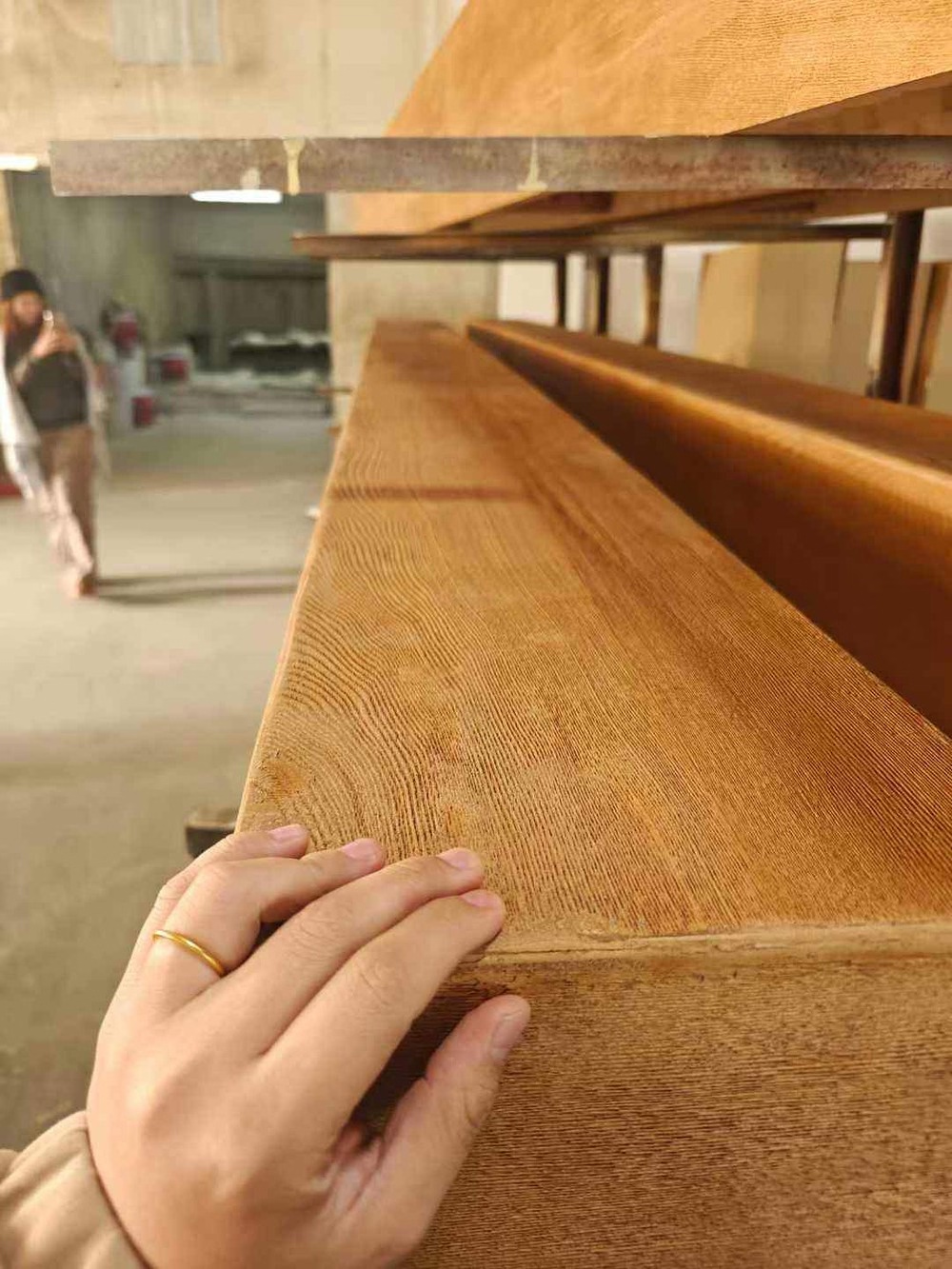
The decorative beam industry has gone through several material evolutions. Plaster gave way to carved foam, which gave way to fiberglass, which has largely given way to polyurethane resin. Each generation improved on the last in different ways — weight, detail fidelity, durability, installability — and PU resin currently sits at the top of that progression.
Why has PU resin won out? The answer is mostly about how well it balances competing requirements. It is light enough to install on standard ceiling structures without reinforcement. It is dense enough to feel solid when handled and to read as real timber from a distance. It holds fine detail from molded textures without the brittleness of plaster or the waviness of fiberglass. And it can be finished, stained, and even painted in ways that give designers complete control over the final appearance.
What polyurethane resin actually is
Polyurethane resin is a polymer formed by reacting a polyol with an isocyanate in the presence of catalysts and additives. For decorative beams, the reaction takes place inside a closed mold where the mixture expands and cures into a rigid foam with a controlled density.
The starting formulation is a liquid that pours easily into the mold, filling every detail of the texture pattern before it begins to foam. The expansion during cure creates internal pressure that pushes the material against the mold surfaces, capturing fine grain detail at sub-millimeter resolution. Once cured, the resulting foam has a closed-cell structure that resists water absorption and provides the dimensional stability that has made PU the material of choice.
Different formulations produce different densities, all the way from low-density packaging foam at 30 kg/m³ to high-density structural foam at 500 kg/m³. Decorative beams typically fall in the 150 to 400 kg/m³ range, with higher density selected for larger beams that need to feel solid.
The same chemistry that produces rigid PU foam can also be adjusted to produce flexible foam, elastomers, and even rigid integral skin foams. The decorative beam industry uses mostly rigid foam because the beam applications need dimensional stability and load-bearing capacity for mounting hardware.
How PU compares to other beam materials
Several materials have been used for artificial timber beams over the decades. Each has advantages and weaknesses relative to PU.
Real timber is the original and is still preferred for some applications because nothing matches its tactile quality and its connection to living trees. But real timber is heavy, dimensionally variable, susceptible to warping and cracking, and increasingly expensive as quality old-growth sources diminish. PU captures the appearance of timber without the structural demands.
Plaster was the dominant artificial beam material for most of the 20th century. It is dimensionally stable and can take fine surface detail. But plaster is heavy, brittle, requires skilled labor to install, and is unforgiving if dropped or bumped during handling. The molds for plaster are expensive and short-lived, limiting the variety of textures available. PU replaced plaster primarily because PU is lighter, tougher, and faster to install.
Carved foam — usually high-density expanded polystyrene (EPS) — is lightweight and inexpensive. It is used for lower-budget decorative beam projects where the texture fidelity requirements are modest. The foam is soft enough that it can be cut and shaped on site, which makes installation flexible. But the surface quality is limited compared to PU, the foam can be damaged by impact, and it does not hold fasteners as well as PU. PU beams cost more but last longer and look better.
Fiberglass reinforced plastic (FRP) beams are strong and dimensionally stable. The texture quality is good when molded correctly. But FRP is more expensive than PU, requires more careful mold design, and the installation is harder because the beams do not flex slightly to accommodate minor irregularities in the ceiling surface.
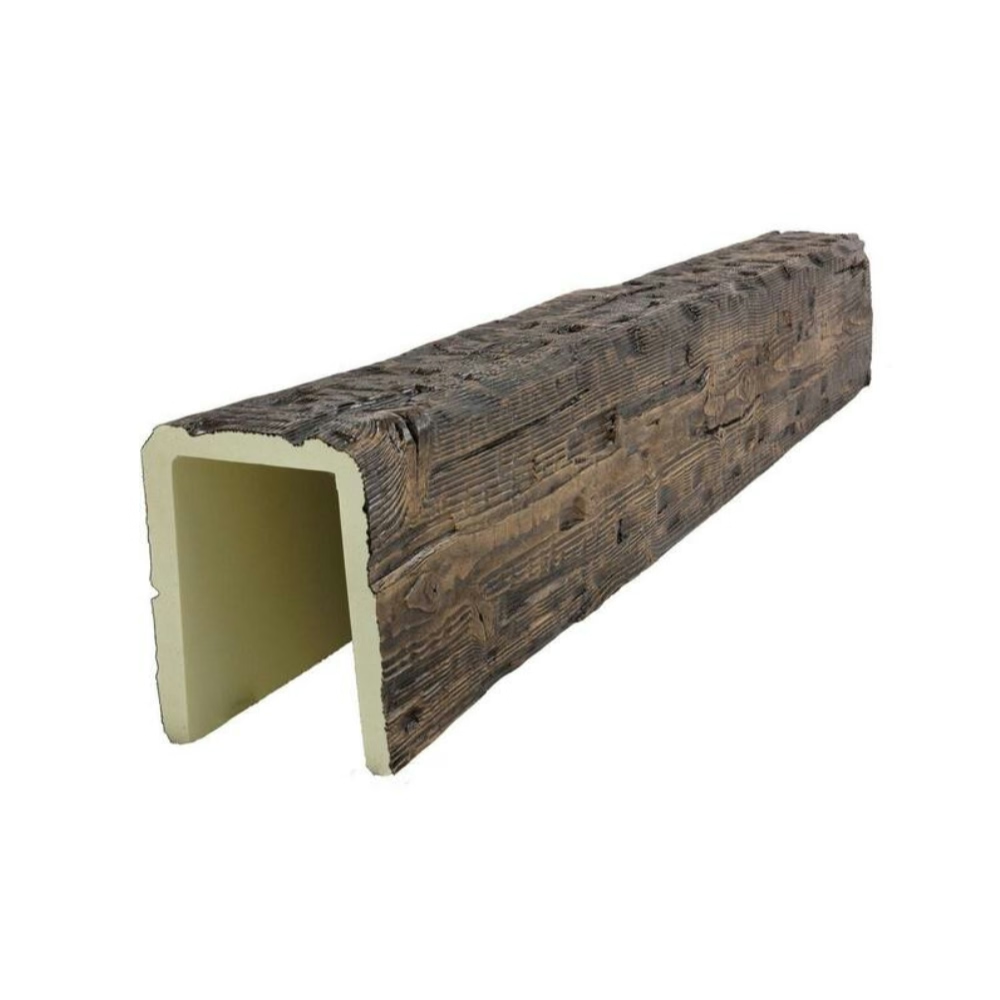
The making of a PU decorative beam
The PU beam manufacturing process has several stages that work together to produce a finished beam with consistent quality.
Mold design starts with capturing the source texture. For grain-only patterns, a CNC-milled mold can work. For hand hewn, adze-marked, or other irregular textures, the source is usually an actual historic timber that has been 3D scanned at high resolution. The scan data is processed to clean up anomalies and create a mold surface that captures the texture without the rough or damaged areas of the original.
Mold fabrication uses either cast aluminum for high-volume production or fiberglass-reinforced plastic for lower-volume or custom work. The mold is built in two halves — one for the front face, one for the back — with internal cores that create the hollow cross-section of the finished beam. Mold surfaces are polished and treated with release agents to allow the cured foam to be removed cleanly.
Material mixing and pouring follows strict formulation controls. The polyol, isocyanate, pigments, and additives are metered precisely into a mix head where they combine. The mixed liquid is poured into the closed mold within seconds of mixing because the reaction starts almost immediately.
Curing typically takes 15 to 45 minutes depending on the formulation and the beam size. The mold temperature is controlled to ensure uniform curing. After curing, the beam is removed from the mold, the flash is trimmed, and the beam is inspected for defects.
Finishing is the final stage where the beam takes on its decorative appearance. Base coats, glaze coats, and topcoats are applied by spray, brush, or roller depending on the desired effect. Some manufacturers do additional surface treatment such as light sanding or application of distressing marks to enhance the character of the texture.

Why PU resin works so well for decorative beams
Several characteristics of PU resin align with the requirements of decorative beam applications.
The surface detail is exceptional. Because PU is molded from a liquid that flows into every texture feature and then expands against the mold surface, the resulting beam carries the full detail of the source timber at high resolution. Fine grain patterns, subtle weathered marks, and textural irregularities all transfer cleanly from mold to beam.
The weight is manageable. A typical decorative PU beam weighs about 2 to 4 pounds per linear foot for small cross-sections and 5 to 10 pounds per linear foot for large cross-sections. This compares to 20 to 50 pounds per linear foot for solid timber at the same dimensions. The weight savings enable installation by a single worker, lighter ceiling blocking, and easier transport.
The handling toughness is good for the material density. PU beams do not crack if dropped a short distance, do not chip during normal handling, and stand up well to the bumps that happen during installation. They do show surface damage from sharp impacts, but the damage is usually localized and repairable.
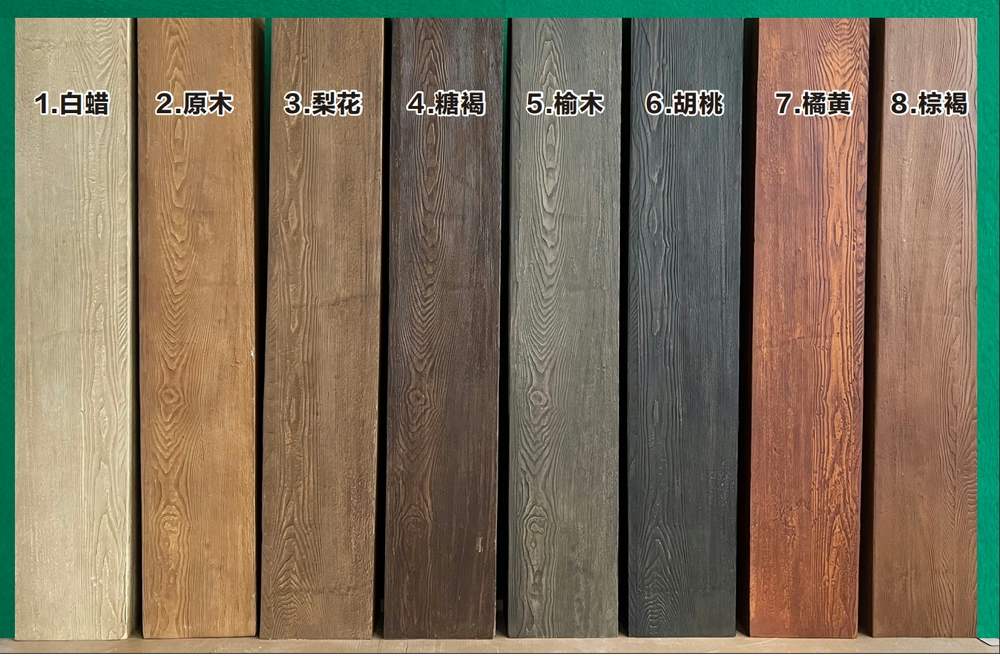
The finish compatibility is excellent. PU takes paint, stain, glaze, and clear topcoats well. Manufacturers apply sophisticated multi-layer finishes that mimic aged timber, fresh timber, or exotic species. Field finishing by a contractor or homeowner is also straightforward with standard wood finishing products.
The dimensional stability is reliable. PU does not respond to humidity the way wood does. It does not expand and contract seasonally, does not warp or cup, and does not develop cracks from internal stresses. Beams installed in climate-controlled interiors or even in unconditioned spaces remain dimensionally stable across years of service.
The fire performance can be formulated. Additives in the PU formulation can improve fire ratings. Many PU beam products meet Class C or Class B fire ratings and some meet Class A for non-combustible construction. The exact rating depends on the formulation and the certification testing.
Limitations of PU resin beams
No material is perfect, and PU resin beams have limitations that buyers should understand.
The heat resistance is limited. PU begins to soften at temperatures above 90 to 110°C and can ignite at higher temperatures. Beams installed near wood stoves, fireplaces, or high-intensity light fixtures need clearances or heat shields. This is rarely a problem in practice because ceiling lighting does not generate enough heat to damage the beam, but it should be considered for applications where the beam might be exposed to elevated temperatures.
The UV resistance is limited unless specifically formulated. Standard PU will degrade, chalk, and yellow when exposed to direct UV over years. Manufacturers add UV stabilizers to formulations intended for use in spaces with significant sunlight exposure. Buyers should specify UV-stable formulations for sun-exposed applications or plan for the beams to be located where direct sun does not reach.
The fastener holding is lower than in solid wood. PU foam compresses around screws and other threaded fasteners, which reduces the holding power compared to wood. High-density PU holds better than low-density PU. For applications requiring heavy loads to be supported from the beam, special mounting methods or wood blocking inside the beam may be required.
The repair of damaged beams can be challenging. Scratches and small chips can be filled and re-finished. Larger damage may require section replacement or full beam replacement. Unlike wood, which can be patched with scarfed-in pieces, PU beams usually need a more substantial repair approach when significant damage occurs.
Working with PU resin as a designer or contractor
Designers specifying PU resin beams for projects should consider the formulation options available from the manufacturer. Different densities, fire ratings, UV stability, and finish options affect both performance and cost. A clear specification at the design stage prevents substitutions that may not meet performance requirements.
Contractors installing PU beams benefit from treating the material somewhat like wood but with adjustments for the lighter weight and softer surface. Standard carpentry tools work for cutting, drilling, and fastening PU beams. Carbide-tipped saw blades last longer than standard steel blades when cutting PU because the abrasive filler in the foam dulls cutting edges.
The cost of PU resin beams varies widely based on size, texture, and finish. Plain grain-pattern beams in stock sizes and finishes are the most affordable. Custom textures, large cross-sections, elaborate multi-step finishes, and matching end caps all add to the cost. Most projects fall in the range of $25 to $80 per linear foot installed, with custom work at the higher end.
Sustainability considerations are increasingly important. PU is a petroleum-derived material and is not biodegradable. Manufacturers have developed recycling streams for PU foam waste, and some formulations incorporate recycled content. End-of-life disposal still requires careful management, but the long service life of PU beams (typically 20+ years in interior use) makes the lifetime environmental impact reasonable compared to some alternatives.

Looking ahead for PU decorative beams
Material innovations continue in the PU beam space. Bio-based polyols, derived from soy or other plant sources rather than petroleum, now make up part of the formulation in many modern PU products. These reduce the carbon footprint of the material while maintaining the performance characteristics that have made PU beams popular.
Improved fire performance formulations are also progressing. Newer PU systems achieve Class A fire ratings with lower smoke and toxic emissions than earlier formulations. This makes PU beams acceptable for an increasing range of commercial and institutional applications that were previously off-limits.
Surface treatment innovations include textures that mimic weathered, charred, or distressed timber at a level of detail that approaches what was possible only with cast bronze or carved stone in earlier eras. The combination of detailed molds, advanced coatings, and skilled finishing enables an expanding visual vocabulary for designers who want the look of old timber without the structural and environmental limitations.
Technical References
ASTM standards cited in every specification
Test Data
Lab results from internal testing program
Updated 2026
Reviewed against current product specs