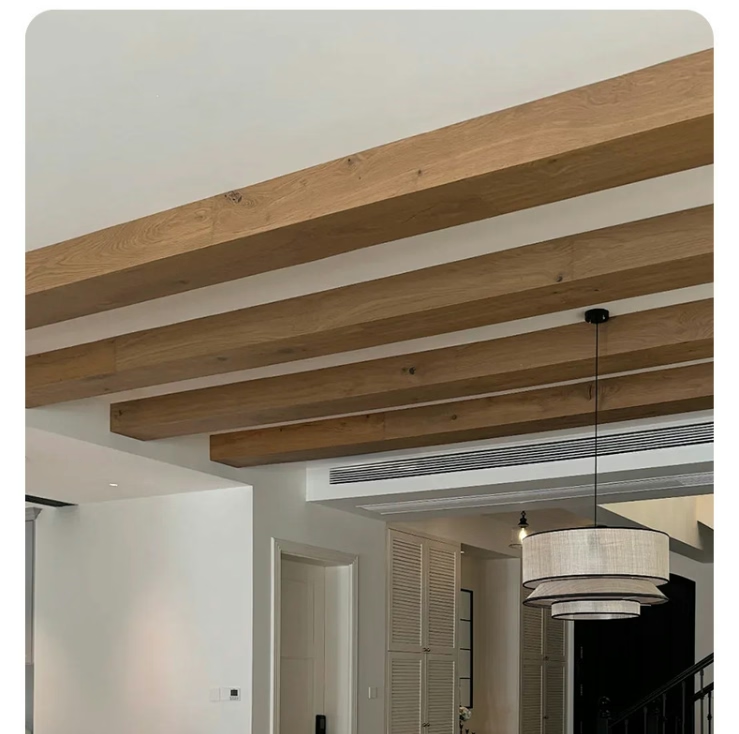
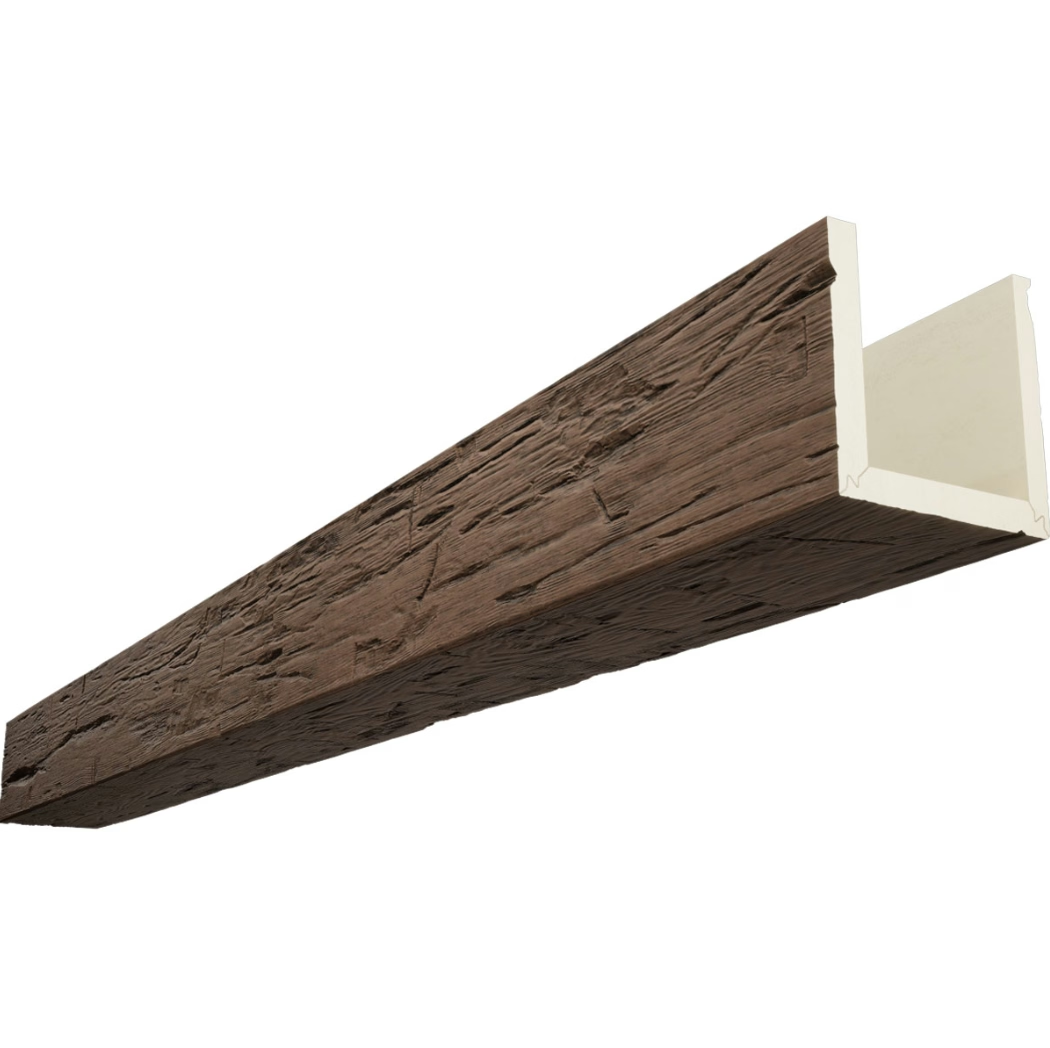
The renovation boom that swept through residential markets created unexpected opportunities for distributors willing to invest in specialized product categories. Among the most attractive emerging opportunities: polyurethane faux wood beams, a product category combining strong demand growth, favorable margin structures, and limited direct retail competition. Early movers establishing position in this space have built profitable businesses serving everyone from national home improvement chains to independent design studios.
Understanding why polyurethane beams attract premium pricing requires examining the value proposition from the customer's perspective. The product solves real problems that natural wood cannot address—moisture resistance, weight reduction, installation simplification, and maintenance elimination. Customers willing to pay for solutions rather than products represent the ideal target market for high-margin resellers.
Market segmentation reveals distinct customer groups with varying needs, purchasing behaviors, and price sensitivities. Tailoring offerings and sales approaches to specific segments enables margin optimization that generic mass-market positioning cannot achieve. Each segment rewards different investments in inventory depth, technical support, and relationship development.
Understanding the Value Chain Economics
Factory-direct sourcing eliminates intermediary margins that compress reseller profitability. Establishing relationships with Chinese manufacturers enables cost structures that support competitive pricing while maintaining healthy gross margins. The investment required to develop these relationships—including sample evaluation, factory auditing, and logistics arrangement—creates barriers that protect established players from new competition.
Volume-based pricing tiers offered by manufacturers reward growing businesses with progressively lower unit costs. As sales volume increases, the margin improvement from volume discounts compounds with reduced per-unit handling costs to accelerate profitability. Strategic inventory positioning that balances stock availability against carrying costs maximizes the benefits of volume commitment.
Operational efficiency determines how much of gross margin translates to net profit. Warehousing configurations optimized for beam products, order processing systems that minimize manual intervention, and logistics arrangements that reduce per-unit shipping costs all contribute to bottom-line performance. These operational advantages often prove more sustainable than pricing strategies that merely cut prices to win business.

Product mix optimization identifies which beam styles, sizes, and finishes deliver the best margin contribution. Slow-moving items consuming warehouse space and management attention may represent false positives when accounting for their full cost of ownership. Data-driven assortment decisions focus resources on genuinely profitable products while rationalizing the tail of underperforming SKUs.
Target Customer Segments and Acquisition Strategies
Home improvement retailers represent the largest potential volume customers, but also impose the most demanding terms. National chains require EDI integration, compliance certifications, and promotional participation that consume significant resources. Regional independents often offer better margins with less administrative burden, though volume potential is correspondingly smaller.
Design professionals—interior designers, architects, and decorators—value the technical support and custom capabilities that differentiate premium resellers. These customers influence purchasing decisions for high-value residential and commercial projects where aesthetic coherence drives budget allocation. Building strong relationships with design professionals creates pull-through demand that flows through your distribution to end customers.
Renovation contractors appreciate reliable availability and competitive pricing that supports accurate project bidding. Contractor-focused resellers maintain inventory of common sizes and styles while offering job-site delivery that simplifies contractor logistics. Technical knowledge about installation methods and code compliance builds contractor confidence in the products they specify.
Hospitality and commercial property managers represent project-based customers whose orders can be substantial but irregular. Understanding project timelines and building relationships with procurement contacts positions resellers to capture significant orders when renovation cycles align with their offerings. Trade show presence and targeted marketing help identify upcoming projects while building brand awareness.
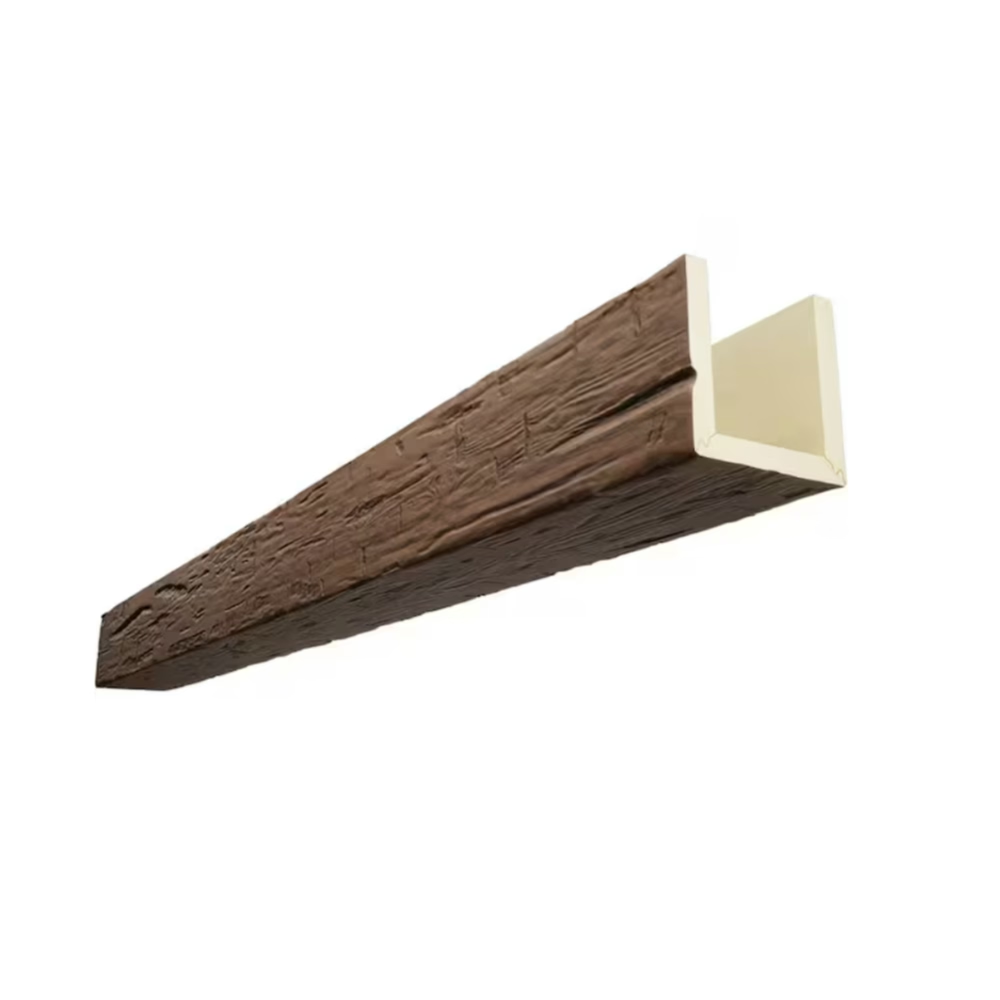
Competitive Positioning and Differentiation
Price competition in commodity product categories erodes margins until none of the competitors profitably survive. Differentiating through product quality, technical support, or service capabilities creates space where margin protection becomes possible. Polyurethane beams offer multiple differentiation vectors that imaginative resellers can exploit.
Technical expertise differentiation positions resellers as consultative partners rather than order takers. Deep knowledge of installation methods, code requirements, and design applications enables sales conversations that add value beyond product delivery. Customers willing to pay for expertise become less price-sensitive, supporting premium pricing that reflects the additional value received.
Inventory depth differentiation serves customers who need immediate availability of non-standard configurations. Maintaining comprehensive inventory of styles, sizes, and finishes positions resellers as one-stop sources that simplify procurement. This capability requires capital investment and carries carrying costs, but the competitive advantage often justifies the investment in markets where lead times frustrate customers.
Service capabilities differentiate resellers who offer value-added services beyond simple product delivery. Cut-to-length services, finish matching, custom finishing, and installation consulting transform product transactions into solutions that customers cannot easily replicate through cheaper alternatives. These capabilities build switching costs that protect accounts from competitive erosion.
Building Sustainable Business Systems
Systematic customer acquisition ensures continued growth rather than dependence on a shrinking base of existing accounts. Marketing investments targeting identified customer segments generate qualified leads that sales efforts convert to active accounts. The lifetime value of acquired customers compared to acquisition costs determines whether growth strategies create or destroy value.
Account management practices nurture existing relationships to maximize account retention and expansion revenue. Regular communication, proactive problem resolution, and consistent order fulfillment build loyalty that resists competitive encroachment. Customer success metrics track satisfaction and identify accounts requiring intervention before problems escalate to disengagement.
Operational scalability determines whether growth amplifies or destroys profitability. Systems designed for current volumes must gracefully accommodate expansion without proportional cost increases. Warehouse management systems, order processing automation, and logistics optimization enable growth without the margin-erosion that ad hoc operations suffer.
Financial management disciplines including margin monitoring, cost control, and cash flow optimization ensure that profitable growth does not create liquidity problems. Rapid growth consumes working capital as inventory and receivable balances expand, potentially constraining growth if not anticipated with adequate financing arrangements.
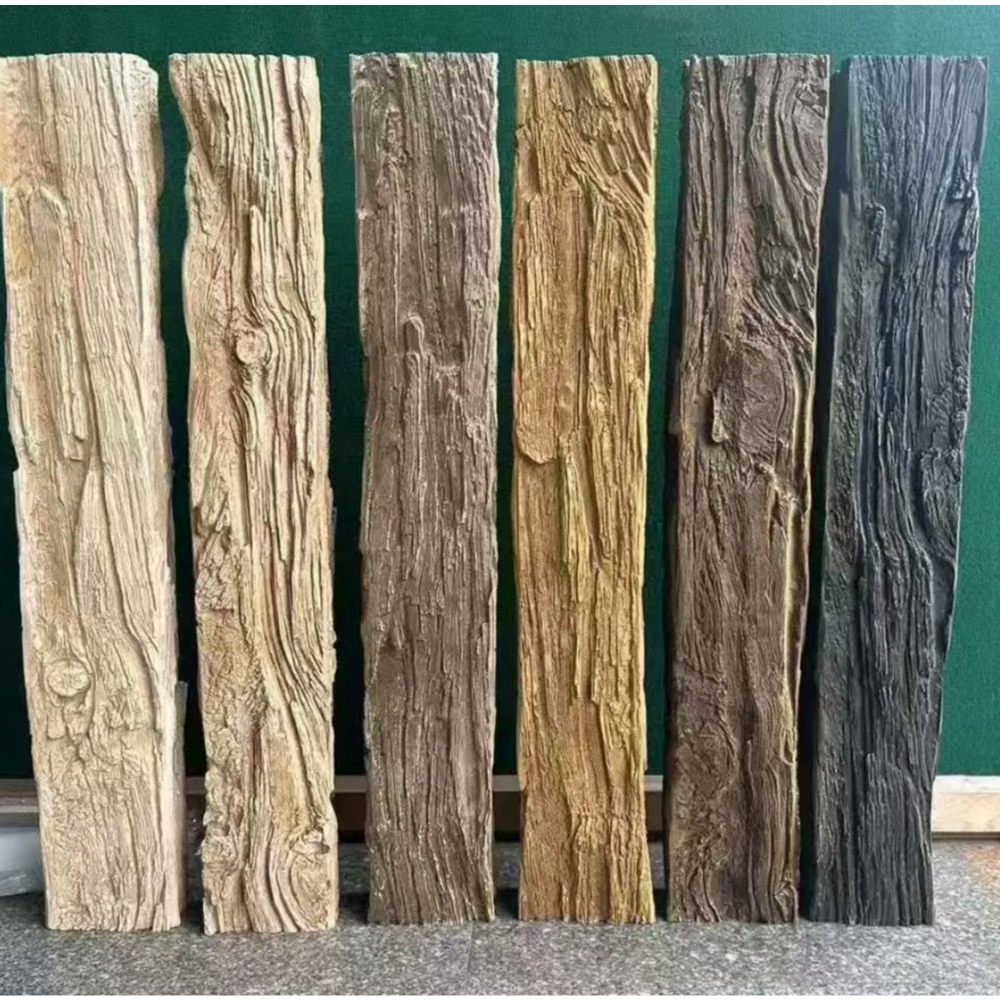
Long-Term Profitability Optimization
Category management principles applied to polyurethane beams help resellers optimize their overall product portfolio contribution. Understanding cross-selling opportunities, promotional effectiveness, and segment profitability enables resource allocation that maximizes total business returns. This analytical approach replaces intuition-based management with data-driven decision-making.
Supplier relationship development creates mutual commitments that benefit both parties over time. Volume commitments换取 preferential pricing and allocation priority during supply constraints. Joint growth initiatives, product development collaboration, and operational improvement partnerships deepen relationships beyond transactional exchanges.
Continuous improvement culture within the reseller organization drives ongoing efficiency gains that protect margins. Employee training, process refinement, and technology adoption compound over time to create sustainable competitive advantages. These advantages accumulate rather than erode, building toward positions of market leadership that generate exceptional returns.
Technical References
ASTM standards cited in every specification
Test Data
Lab results from internal testing program
Updated 2026
Reviewed against current product specs