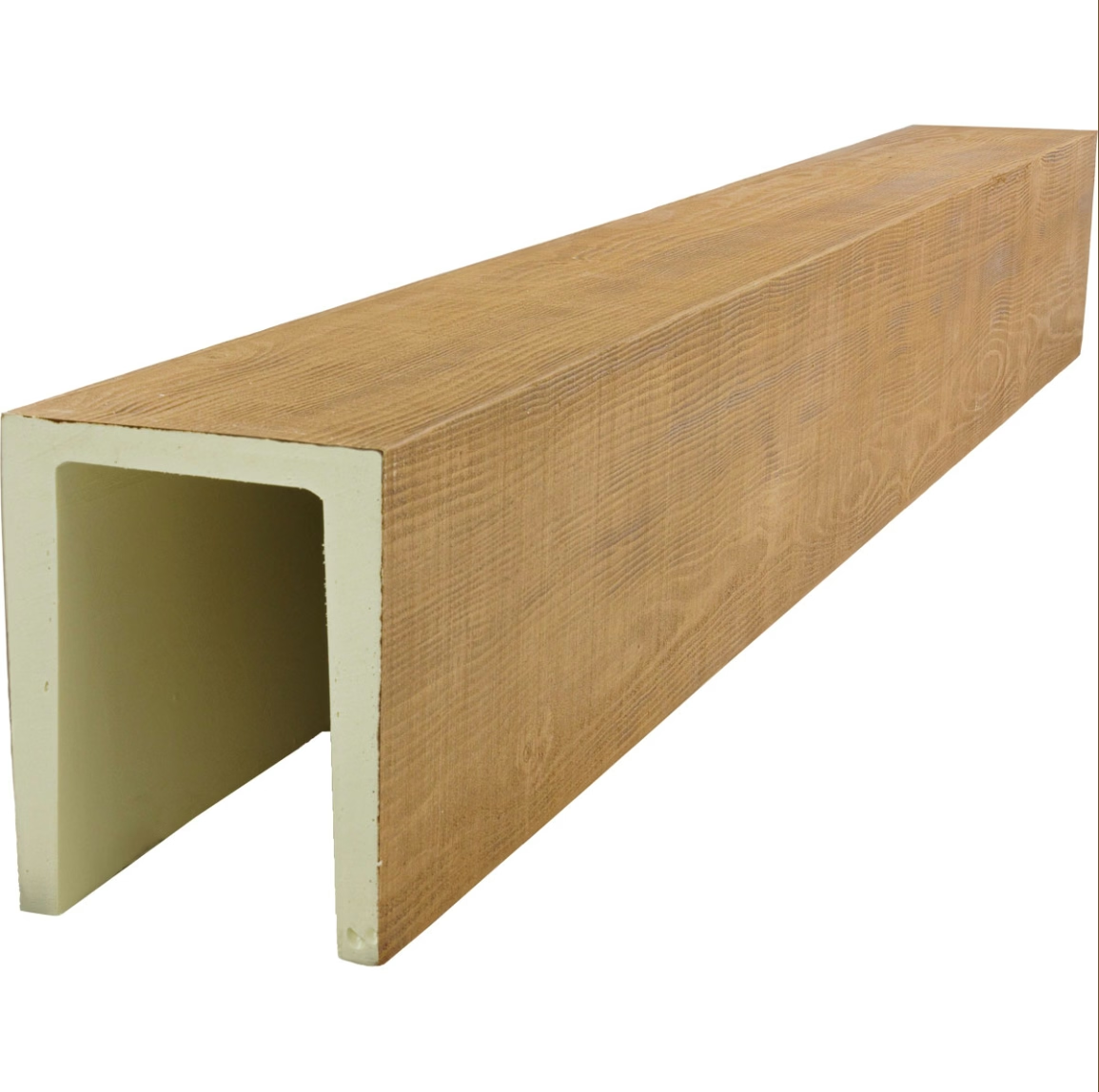
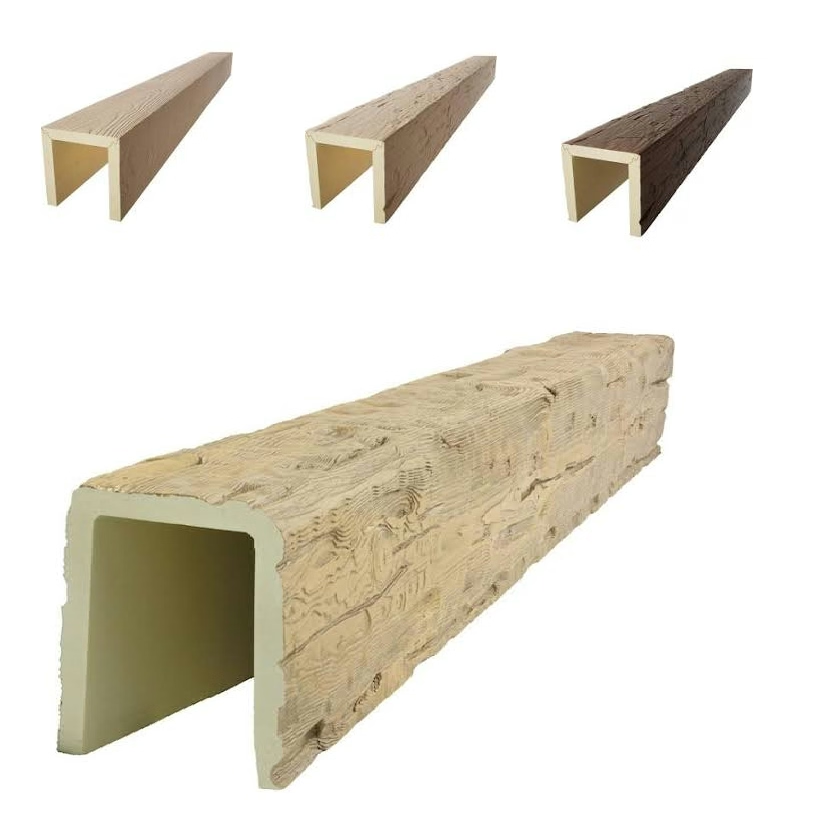
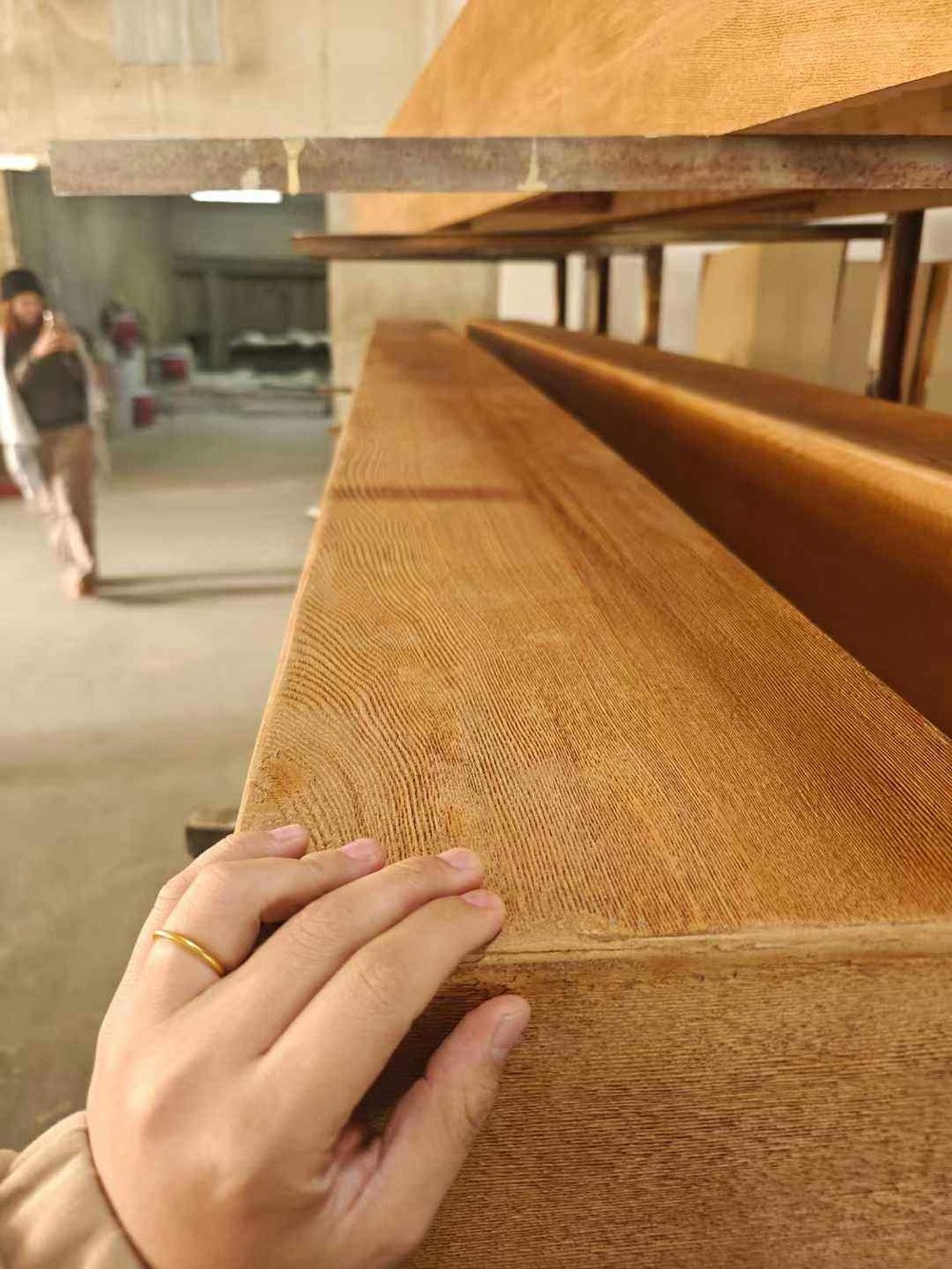
The homeowner had installed beams from the national home improvement chain, following the installation video tutorial and using the recommended adhesive. Within eighteen months, the beams had yellowed unevenly, two had partially detached from the ceiling, and the once-proud homeowner now avoided inviting friends to see his renovation. The tutorial promised easy installation; it failed to mention that the economy-grade materials would not survive the temperature swings that professional formulations handle effortlessly.
Mass-market retailers serve important market functions, providing accessible entry points for DIY enthusiasts and budget-constrained projects. However, the product tier that big-box stores stock necessarily emphasizes affordability over performance. Projects with demanding requirements—whether professional installations, challenging environments, or extended performance expectations—often require sources beyond the familiar retail landscape.
Understanding what distinguishes professional-grade alternatives helps buyers make informed decisions that match product selection to project requirements. The additional investment in quality alternatives frequently proves more economical when lifetime costs rather than just purchase prices guide decision-making.
Limitations of Mass-Market Offerings
Product tier constraints in retail environments limit what's available regardless of buyer needs. Standard sizes, limited profiles, and basic finish options constrain design possibilities that professional products enable freely. When projects require non-standard dimensions or specific finishes, retail availability fails to provide solutions.
Quality tier compromises in retail products reflect cost pressures that mass-market distribution imposes. Products priced to compete on retail shelves cannot include the material quality, manufacturing precision, or finishing attention that premium products incorporate. These compromises may be acceptable for casual applications but prove inadequate for demanding installations.
Stock rotation issues in retail environments mean that products may sit in warehouses and on shelves through multiple temperature cycles before purchase. UV exposure, moisture, and handling contribute to degradation that inferior packaging cannot prevent. Professional suppliers maintain inventory rotation practices that ensure fresher products.
Customer service limitations in retail environments prevent the specification support that complex projects require. Retail employees cannot provide technical guidance on code compliance, structural considerations, or installation methods for unusual conditions. Professional suppliers employ knowledgeable staff who understand product applications and can address technical questions.
Advantages of Professional-Grade Alternatives
Manufacturing quality in professional products reflects different cost structures than mass-market alternatives. Higher material costs, tighter process controls, and more thorough inspection create products that perform as specified over extended service. This quality comes at corresponding prices, but the premium often proves economical when failure costs enter the calculation.
Customization capabilities distinguish professional suppliers from retail alternatives. Non-standard sizes, unique profiles, special finishes, and proprietary configurations all become possible when production runs accommodate customer requirements. These capabilities enable design visions that retail limitations would constrain.

Technical support resources provided by professional suppliers add value beyond product delivery. Installation guidance, code compliance documentation, and troubleshooting assistance help ensure successful installations that reflect well on everyone involved. This support proves particularly valuable for projects with challenging requirements.
Warranty coverage in professional products typically exceeds retail alternatives substantially. Extended warranty periods, comprehensive coverage terms, and responsive claims processing protect buyer investments more effectively than limited retail warranties. This protection matters particularly for commercial installations where failure creates business disruption costs.

Identifying Quality Suppliers Beyond Retail
Industry reputation provides insight into supplier capabilities that marketing claims cannot substitute. Trade professionals who specify products for clients develop preferences based on performance experience across multiple projects. Their recommendations often identify suppliers whose products consistently perform while warning away from those whose products disappoint.
Manufacturer direct purchasing eliminates retail margins that increase consumer prices without improving product quality. Many manufacturers serve professional customers directly, offering the same quality products at lower prices than retail distribution imposes. This direct access requires larger minimum orders and longer lead times but often proves worthwhile for significant projects.
Trade show attendance provides opportunities to evaluate multiple suppliers in person, examining product quality directly and discussing requirements with knowledgeable representatives. Major industry trade shows feature hundreds of exhibitors covering the full range of quality tiers. Direct observation often reveals quality differences that written descriptions cannot convey.
Professional contractor recommendations draw on installation experience that reveals which products perform reliably in actual use. Contractors who work with various suppliers develop preferences based on consistent quality, reliable availability, and responsive support. Their practical insights often prove more valuable than marketing claims.
Making the Transition from Retail Thinking
Expectation calibration helps buyers understand what distinguishes professional products from retail alternatives. Higher prices reflect genuine quality improvements rather than mere marketing positioning. The investment difference often pays for itself through extended service life and reduced maintenance requirements.
Specification development for professional products may require different approaches than retail selection. Working with supplier representatives to identify appropriate products for specific applications ensures that selected items match requirements. This consultative approach takes more time than grabbing products from retail shelves but produces better outcomes.
Budget recalibration acknowledges that professional products cost more than retail alternatives. Projects specified for retail budgets may require increase when quality requirements demand professional alternatives. This adjustment, though uncomfortable, often prevents the false economy of specifying inadequate products.
Vendor relationship building with professional suppliers creates ongoing partnerships that benefit future projects. Establishing accounts with reliable suppliers provides preferred pricing, priority availability, and support access that casual purchasing cannot achieve. These relationships develop through consistent purchasing and respectful interaction.
When Retail Products Remain Appropriate
Simple applications with modest performance requirements may be adequately served by retail products. A guest bedroom where beams will receive no special stress and where replacement would be simple may not justify premium investment. Judgment about application severity guides product tier selection.
First-time DIY projects may benefit from retail availability that enables easy purchase and return. Learning installation techniques on readily available products builds skills that later projects can apply with professional alternatives. This educational approach uses retail accessibility as a training ground for more demanding work.
Emergency replacements for damaged existing beams may require retail availability when professional supply chains cannot deliver within necessary timeframes. The quality compromises of retail products may be acceptable when the alternative is extended damage exposure or professional unavailability.
Budget emergencies where project funds have been exhausted may force retail selection despite quality limitations. When cost constraints are truly binding, retail alternatives provide functionality that prevents project failure even if performance falls short of optimal. This pragmatic approach acknowledges that perfection is not always achievable.
Technical References
ASTM standards cited in every specification
Test Data
Lab results from internal testing program
Updated 2026
Reviewed against current product specs