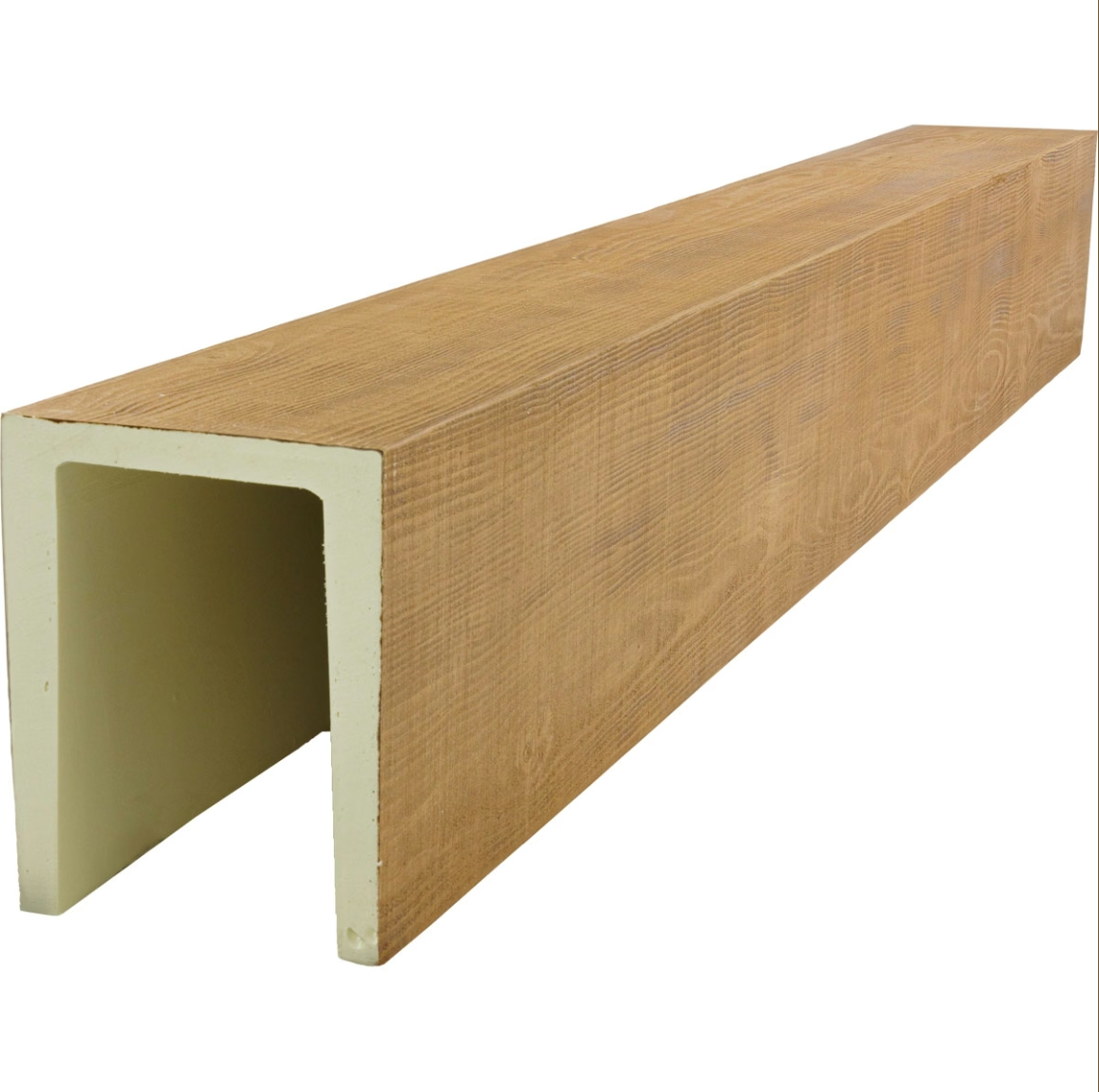
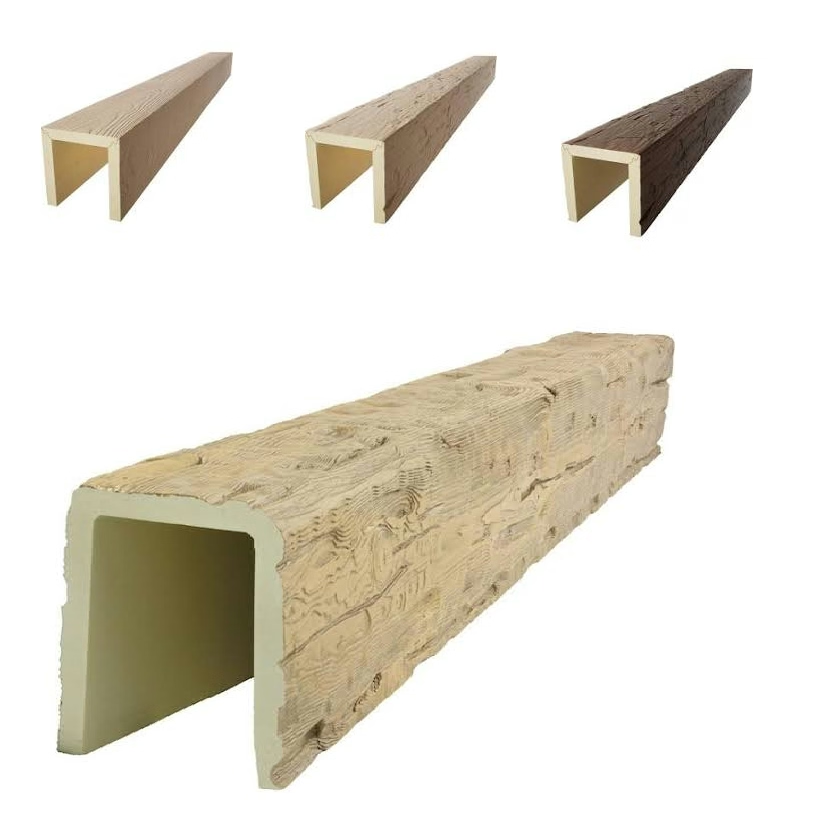
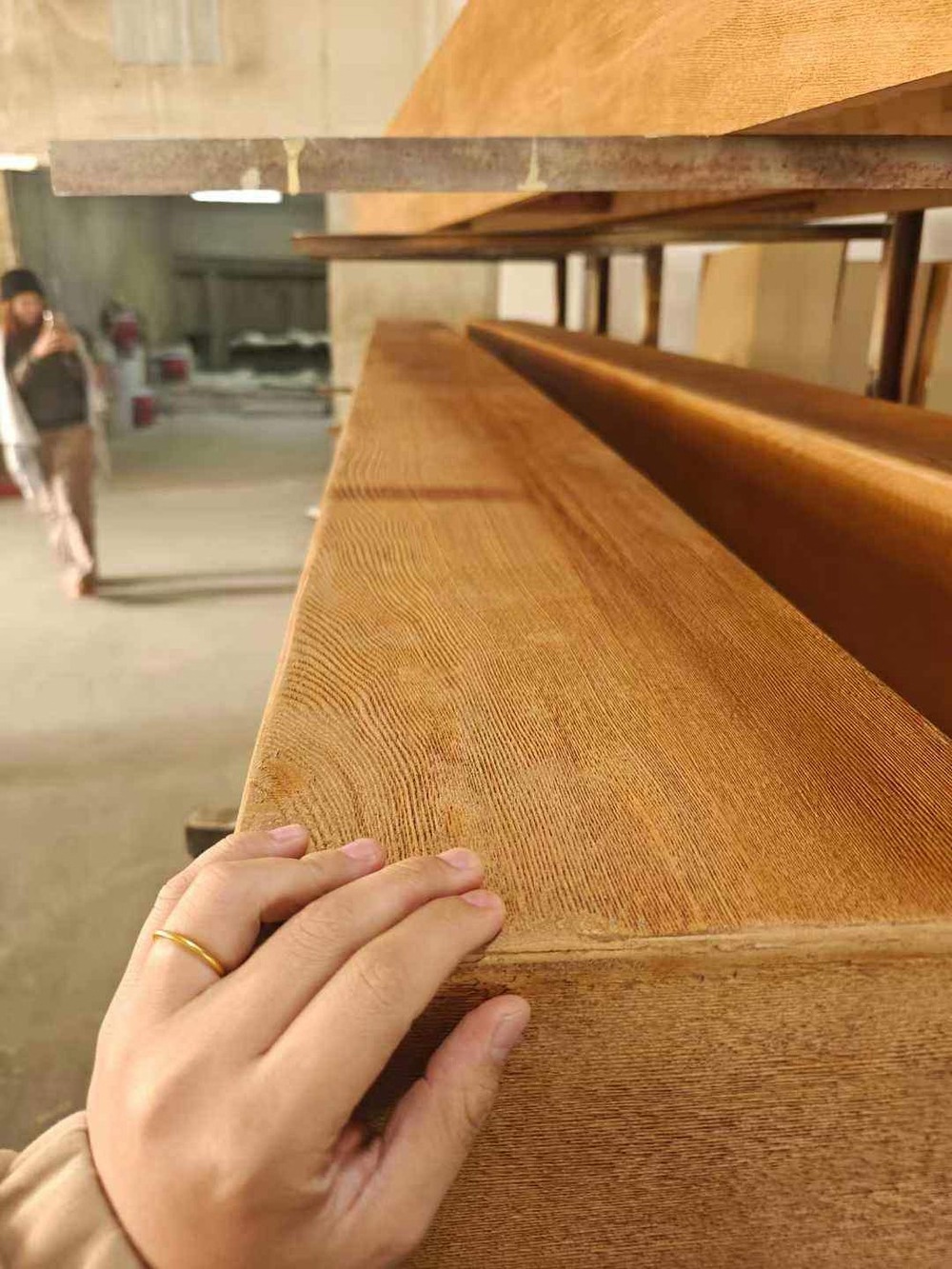
The pursuit of authenticity in imitation timber has driven product development toward increasingly sophisticated solutions. Early synthetic beams sacrificed appearance for economy, resulting in products that looked obviously fake and failed to satisfy design aspirations. Modern composite construction represents a generational advance, achieving visual authenticity while providing performance characteristics that natural timber cannot match.
Material science innovations enable contemporary composite beams to replicate wood's visual complexity more convincingly than earlier generations. Multi-stage manufacturing processes build appearance characteristics progressively, creating depth and variation that casual observation cannot distinguish from natural timber. Premium surface treatments incorporate authentic wood grain patterns generated from actual timber specimens, ensuring that each composite beam carries the unique character of natural material.
The structural advantages of composite construction manifest in applications where traditional timber would struggle. Extended spans that would require expensive engineered timber can be achieved with composite beams at lower cost and weight. Load capacities exceed what equivalent wood sections could support, enabling bolder design expressions. These structural capabilities expand design possibilities rather than merely replicating existing timber applications.

Weight reduction compared to natural timber provides cascading benefits throughout the construction process. Lighter beams reduce structural requirements for supporting elements, potentially eliminating steel reinforcement or additional framing. Installation labor decreases because single workers can handle pieces that would require crews for timber equivalents. Shipping costs decrease proportionally with reduced weight. These factors combine to provide substantial cost advantages beyond material unit prices.
Dimensional consistency throughout composite beam production ensures that every piece matches specifications precisely. Natural timber varies in width, depth, and straightness across and between specimens, creating fitting challenges and appearance inconsistencies. Composite beams maintain exact dimensions regardless of length or quantity, simplifying installation and ensuring uniform appearance across entire projects.
Surface durability improvements from composite construction manifest through resistance to the degradation mechanisms that affect natural timber. Composite beams neither check nor crack from seasonal humidity cycling. They resist impact damage better than wood, returning to original shape after moderate impacts that would dent or scratch timber. Finish adhesion remains consistent because composite surfaces are manufactured rather than grown, without natural oils or extractives interfering with coatings.
Moisture-related problems that plague natural timber disappear with composite beam specification. No swelling occurs when humidity rises; no shrinkage occurs when conditions dry. Joints that would open in timber beams remain tight throughout humidity cycles. This dimensional stability simplifies finish maintenance and eliminates callbacks related to seasonal movement that timber installations inevitably experience.
Pest resistance represents an important advantage for composite beams in regions where termite activity or carpenter ant damage threatens wooden structures. These insects have no interest in polyurethane composite materials, eliminating a significant threat to building longevity. Homeowners appreciate this resistance, particularly for beams installed in crawl spaces or other concealed locations where pest activity might otherwise cause hidden damage.
Design flexibility in composite beam specification accommodates aesthetic requirements that natural timber cannot satisfy. Custom profiles, unusual dimensions, and project-specific details can be manufactured economically rather than requiring expensive custom milling from solid timber. This manufacturing flexibility enables design intentions that budget constraints might otherwise eliminate.
Color consistency across composite beam installations prevents the variation that naturally occurs in stained timber. Every beam matches its neighbors exactly, creating installations that appear precisely coordinated. This consistency proves particularly valuable for large projects where multiple crews install beams over extended periods; all pieces will match regardless of when or where they were installed.
Finish options for composite beams include both factory-applied and site-applied treatments. Factory finishing provides controlled application conditions and cure environments that produce consistent results. Site finishing offers flexibility to match existing woodwork or accommodate design changes during construction. Both approaches work effectively with composite materials, providing specifier choice rather than manufacturing limitations.
Environmental considerations favor composite beams in some contexts despite petrochemical feedstock concerns. Extended service life without replacement reduces cumulative resource consumption. No ongoing finishes or treatments require throughout the beam's life. At end of service, some composite beams can be recycled into other products, avoiding landfill disposal that timber waste generates.
Specification guidance from composite beam manufacturers should address specific project requirements accurately. Custom fabrication capabilities, fire rating options, and installation system compatibility vary among producers. Working directly with manufacturers during design development identifies optimal products and ensures that specifications match available materials.
Technical References
ASTM standards cited in every specification
Test Data
Lab results from internal testing program
Updated 2026
Reviewed against current product specs