Technical specification of hollow polyurethane beams requires understanding how various product characteristics interact to determine overall performance. Wall thickness represents one of the most influential specifications, directly affecting structural rigidity, weight characteristics, and the cost of finished products. This guide explains these relationships to help design professionals and contractors select appropriate beam configurations for their specific applications.
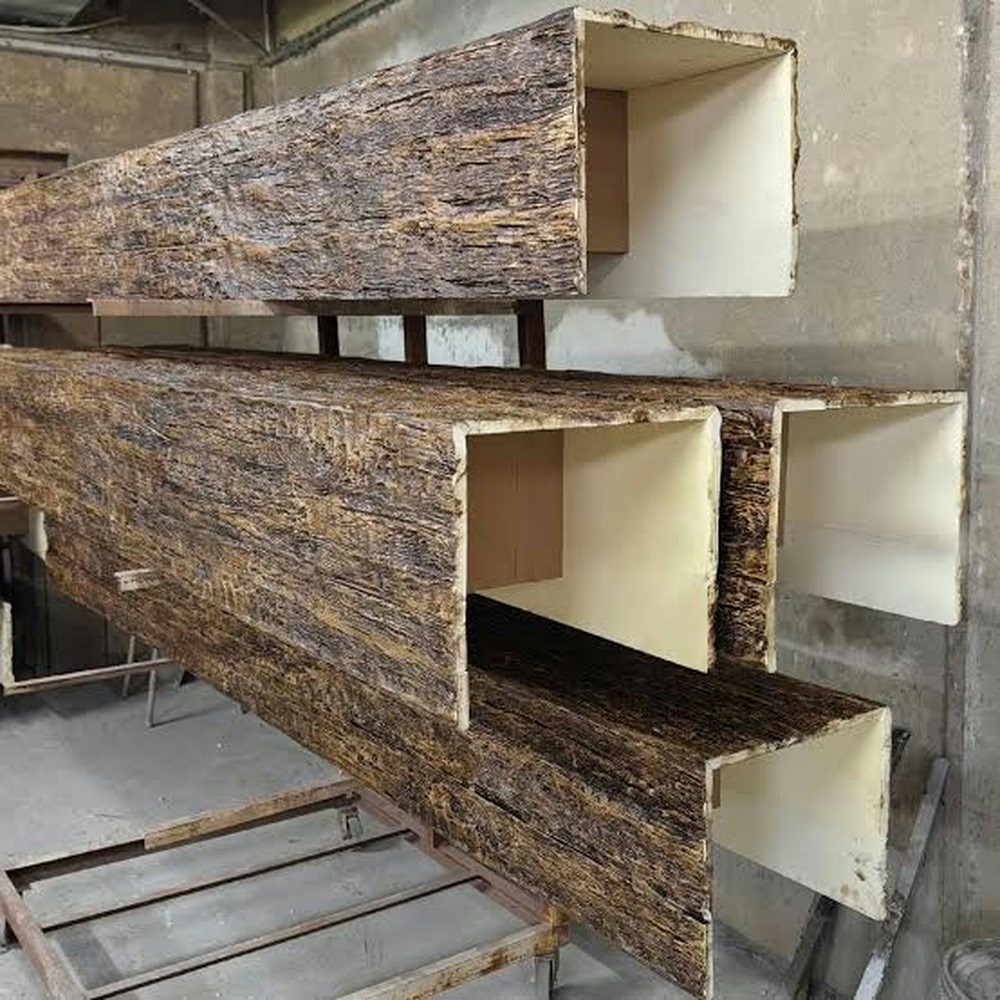
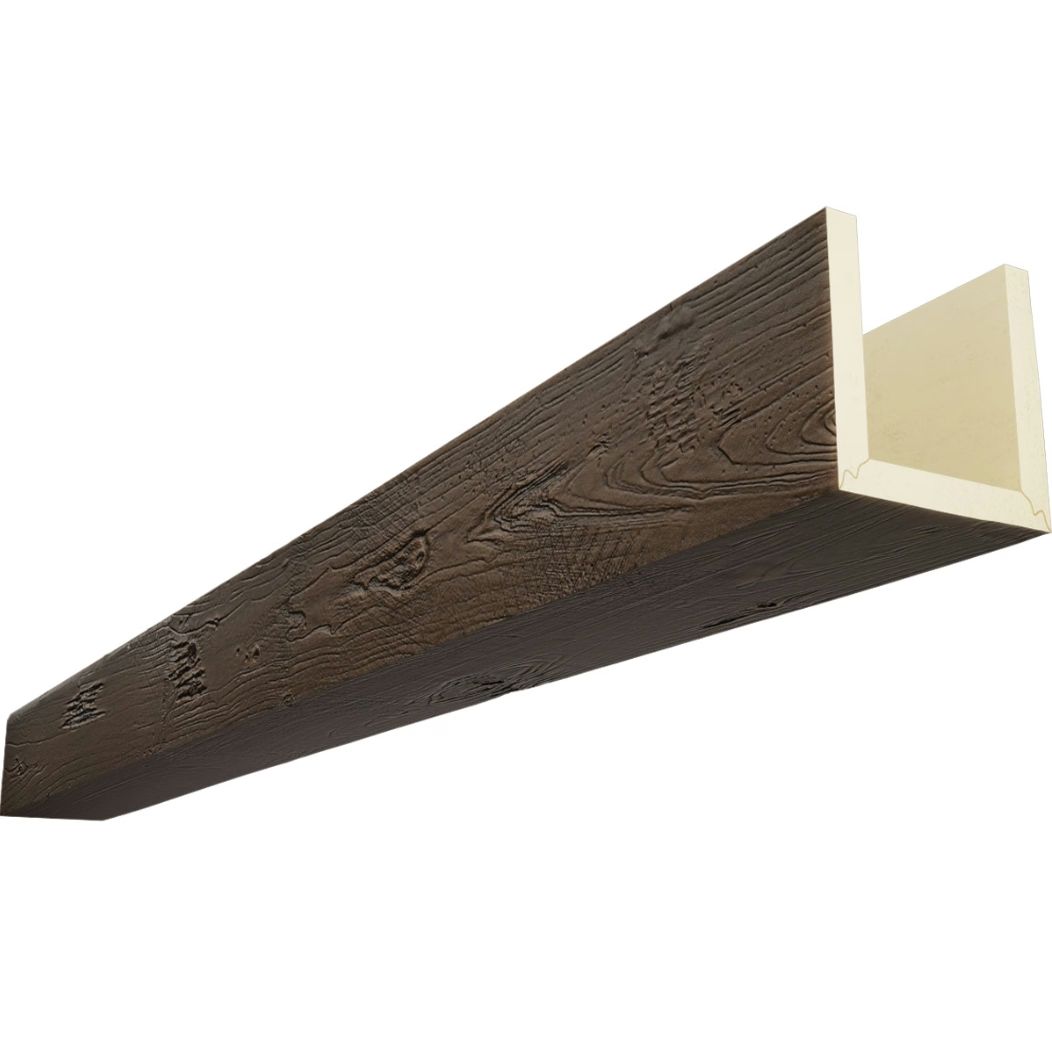
The hollow construction technique creates beams with exterior walls that provide structural performance while eliminating unnecessary interior material. This efficient material distribution achieves substantial visual presence without the weight that solid construction would require. Understanding how wall thickness optimizes this efficiency enables informed product selection that balances multiple performance requirements.
Engineering Principles of Hollow Construction
Structural engineering for hollow beams concentrates material where stress concentrations occur, creating efficient load-bearing sections that minimize weight. The exterior walls of hollow beams function as flanges that resist bending stresses, while the enclosed space contributes primarily to section modulus without adding weight proportional to solid alternatives. This engineering explains why hollow construction achieves impressive rigidity with minimal material.
Wall thickness directly determines the moment of inertia that beams possess, with thicker walls creating more rigid sections that resist deflection under load. However, the relationship is not linear; doubling wall thickness more than doubles rigidity because the material distributes further from the neutral axis where stress concentrates. This geometric relationship informs the thickness specifications that achieve adequate performance without excess material.
Optimal thickness specifications balance multiple factors including rigidity requirements, weight limitations, and cost constraints that specific projects impose. Thicker walls provide greater rigidity and durability but add weight and cost proportionally. Understanding these trade-offs enables selection that achieves project objectives efficiently.
Thickness Categories and Applications
Light-duty thickness specifications in the range of three to five millimeters serve decorative applications where beams carry no functional loads and visual appearance is the primary consideration. These lighter walls create cost-effective products suitable for residential accent applications, covered patio installations, and other scenarios where beams remain purely aesthetic elements. The lightweight handling advantages prove particularly valuable in these applications.
Medium-duty thickness specifications ranging from six to ten millimeters accommodate standard ceiling installations where beams appear structural but serve primarily decorative functions. This thickness range provides adequate rigidity for typical residential and light commercial applications while maintaining manageable weight that standard mounting systems can support. Most off-the-shelf hollow beam products fall within this thickness category.
Heavy-duty thickness specifications exceeding ten millimeters address applications requiring enhanced rigidity, durability, or visual weight. Commercial spaces with higher ceilings, dramatic spans, or proximity to activities that increase impact risk may warrant heavier wall construction. The additional material cost proves worthwhile when performance requirements justify it.
Weight Implications of Wall Thickness
Weight per linear foot increases proportionally with wall thickness, though the relationship varies slightly based on beam size and profile geometry. Understanding weight implications enables accurate load calculations that determine whether existing ceiling structures can support proposed installations. Load-bearing considerations that neglect weight implications may discover problems after installation begins.
Handling characteristics change noticeably between thickness categories, with heavier walls creating beams that require more careful handling during transport and installation. While hollow construction maintains handling advantages over solid alternatives regardless of thickness, installers notice the difference between light and heavy hollow products. This handling consideration influences both labor estimates and installation approach.
Shipping efficiency relates to weight, with heavier beams reducing the quantity that containers and delivery vehicles can accommodate. This shipping consideration affects product availability and delivery costs, particularly for larger projects requiring substantial beam quantities. Project planning should account for these logistics factors that thickness selection influences.
Rigidity and Deflection Performance
Deflection under load depends on beam stiffness, span length, and the load magnitude that installations experience. Wall thickness specifications directly affect stiffness, with thicker walls creating more rigid beams that deflect less under equivalent loading. This reduced deflection maintains appearance quality and prevents the sagging that might develop over time in underspecified products.
Span limitations for hollow beams relate to wall thickness through the stiffness that longer spans require. Beams spanning greater distances experience higher bending moments that demand more robust section properties. Appropriate thickness selection based on span requirements prevents deflection problems that might compromise installed appearance.
Support spacing recommendations from manufacturers provide guidance for specific products, indicating maximum spans between support points for various thickness categories. Following these recommendations ensures that installations perform adequately under anticipated loading. Exceeding recommended spans risks performance problems that warranty coverage may not address.
Sound and Thermal Properties
Acoustic performance of hollow beams relates partially to wall thickness, with thicker walls providing more effective sound blocking between spaces. The mass that additional thickness adds contributes to sound transmission loss that improves acoustic separation. This acoustic benefit may justify heavier wall construction in applications where sound isolation matters.
Thermal conductivity through hollow beam walls varies with thickness, though the enclosed air space provides insulation that reduces overall heat transfer. The thermal resistance that hollow construction provides creates some insulation value, particularly relevant in exterior applications or spaces with significant temperature differentials. This thermal performance may influence specification in energy-conscious projects.
Vibration characteristics in hollow beams differ from solid alternatives, with enclosed air potentially creating resonance effects under certain excitation conditions. Thicker walls reduce this tendency by increasing beam mass and stiffness, improving vibration performance in sensitive applications. Acoustic consultants may specify thickness requirements based on vibration criteria.
Thickness Selection Guidelines
Project application analysis determines the performance requirements that thickness specifications must satisfy. Purely decorative applications permit lighter wall construction, while beams receiving lighting fixtures, ceiling fans, or other attachments may require heavier sections to support these additional loads. Understanding actual requirements prevents both under-specification that risks performance and over-specification that wastes resources.
Budget considerations influence the trade-off between thickness benefits and cost implications. Heavier walls cost more to manufacture and ship, raising product prices that project budgets must accommodate. Balancing performance requirements against available resources enables selection that achieves optimal value rather than simply maximum specifications.
Aesthetic expectations may favor heavier wall construction even when lighter alternatives would perform adequately. The visual weight that thicker walls create communicates substance and permanence that some design approaches require. This aesthetic consideration sometimes justifies thickness beyond pure engineering requirements.
Quality Verification and Testing
Manufacturing quality control ensures that wall thickness meets specifications consistently across beam production. Premium manufacturers employ statistical process control that maintains thickness within tight tolerances, preventing the variability that might affect installation or performance. Understanding manufacturer quality practices helps buyers evaluate product consistency.
Dimensional specifications including wall thickness should appear on manufacturer documentation that enables verification against order requirements. Physical measurement of received products confirms that specifications match expectations, identifying any discrepancies before installation proceeds. This verification step protects against problems that acceptance of incorrect specifications would create.
Warranty coverage terms may relate to thickness specifications, with certain warranty provisions applying only to products meeting minimum thickness requirements. Reviewing warranty terms during specification ensures that selected products qualify for appropriate coverage. This warranty consideration influences selection when long-term protection matters.
Technical References
ASTM standards cited in every specification
Test Data
Lab results from internal testing program
Updated 2026
Reviewed against current product specs


