
When designing spaces that experience consistent humidity fluctuations, traditional wood beams present significant challenges. The natural cellulose structure of authentic timber absorbs moisture readily, leading to swelling, warping, cupping, and eventually structural compromise. For contractors and interior designers working on projects in kitchens, bathrooms, laundry rooms, and basement conversions, this reality has traditionally meant either accepting the limitations of real wood or compromising on aesthetics. Indoor-grade polyurethane faux wood beams change this equation fundamentally.
Polyurethane foam, when manufactured using high-density closed-cell formulations, creates a material that fundamentally resists moisture penetration. Unlike wood fibers that pull water vapor from the air and expand as they saturate, quality polyurethane beams maintain their dimensional stability regardless of ambient humidity levels. This characteristic makes them exceptionally well-suited for applications in spaces where moisture is a constant presence rather than an occasional concern.
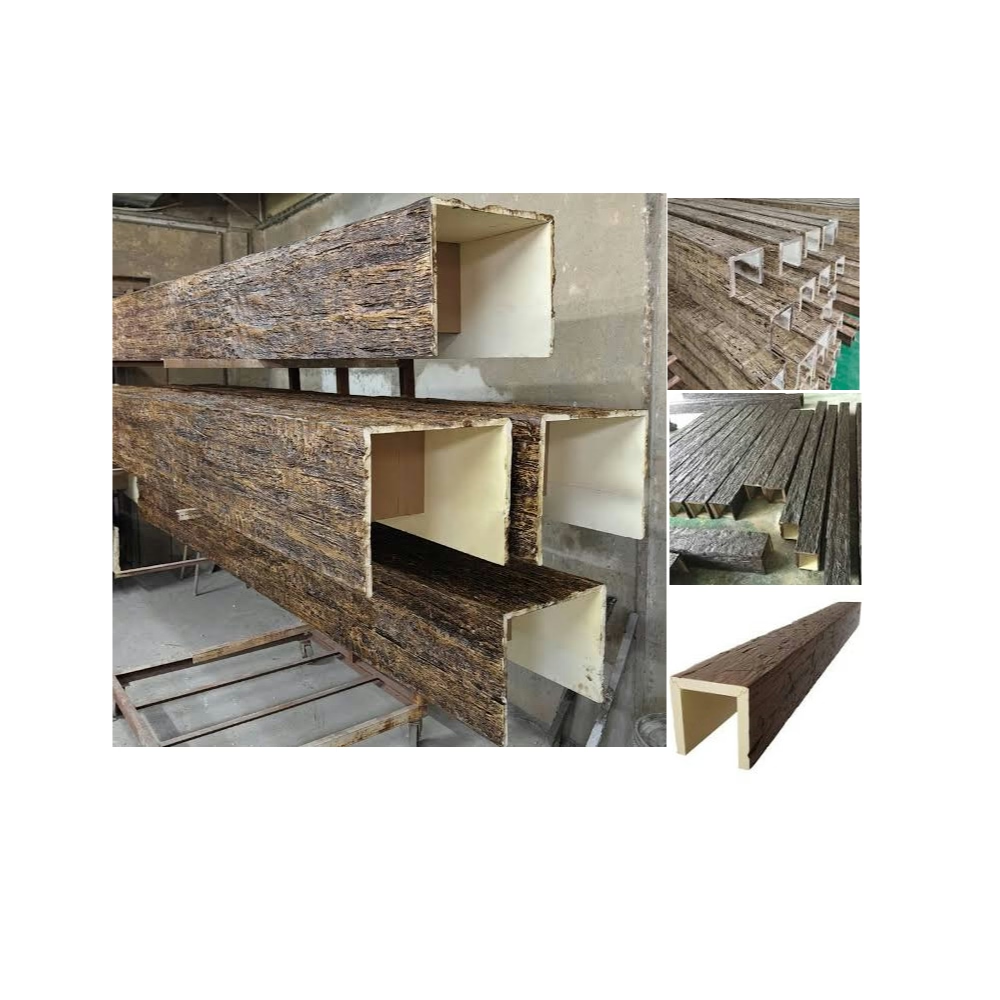
The manufacturing process for humidity-resistant polyurethane beams involves carefully controlled chemical reactions that produce a cellular structure with minimal open pores. This closed-cell architecture prevents water molecules from migrating into the beam's core, effectively creating a moisture barrier that protects the decorative surface and structural integrity simultaneously. Manufacturers typically apply additional protective coatings during production that further enhance this inherent resistance, creating a comprehensive defense system against humidity-related damage.
Performance Characteristics in Humid Environments
High-performance indoor-grade polyurethane beams demonstrate remarkable stability when exposed to humidity levels ranging from 30% to 80% relative humidity, conditions that would cause real wood to expand by 5-10% across its width. The dimensional change tolerance for quality polyurethane products typically stays below 0.5% even under extreme humidity swings, meaning your ceiling beams maintain their precise proportions and seamless joints year after year.
The thermal expansion coefficient of polyurethane also differs favorably from wood in humid environments. Real timber contracts and expands not only with moisture changes but also with temperature fluctuations, creating ongoing stress on installation hardware and finishing materials. Polyurethane's lower thermal mass means it responds more slowly and less dramatically to environmental changes, reducing the cumulative stress that eventually manifests as cracks, gaps, and separation at joint lines.
Color stability represents another significant advantage in humid applications. Wood species containing tannins and natural oils often develop dark spots, discoloration, and uneven patina when exposed to moisture over time. Polyurethane beams, when manufactured with UV-stable pigments and protective topcoats, maintain their original appearance indefinitely without developing the water stains, mildew discoloration, or finish degradation that plague real wood in similar conditions.
Applications in Moisture-Prone Residential Spaces
Bathrooms represent perhaps the most demanding application for any wood-appearing ceiling treatment. Between steamy showers, water splashing from sinks, and condensation on cold surfaces during winter months, bathroom environments subject ceiling beams to humidity levels that would quickly destroy authentic timber. Interior designers increasingly specify polyurethane faux beams for master bathroom renovations precisely because the material handles these conditions without the maintenance demands of treated or engineered wood alternatives.
Kitchen environments present their own unique humidity challenges. Cooking steam, dishwasher moisture, and the temperature differentials near refrigerators and freezers create constant humidity cycling that stresses traditional building materials. Polyurethane beams installed above kitchen islands, along ceiling coffers, or as decorative mantle surrounds maintain their appearance through years of daily meal preparation without requiring specialized cleaning products or periodic refinishing.
Basement conversions have historically presented the greatest obstacles for wood ceiling treatments. Below-grade spaces typically experience higher baseline humidity levels, occasional moisture intrusion through foundation walls, and limited airflow that slows drying after any water event. Polyurethane beams eliminate the concern about hidden moisture damage since the material cannot absorb water regardless of exposure duration or intensity.
Design Versatility and Aesthetic Options
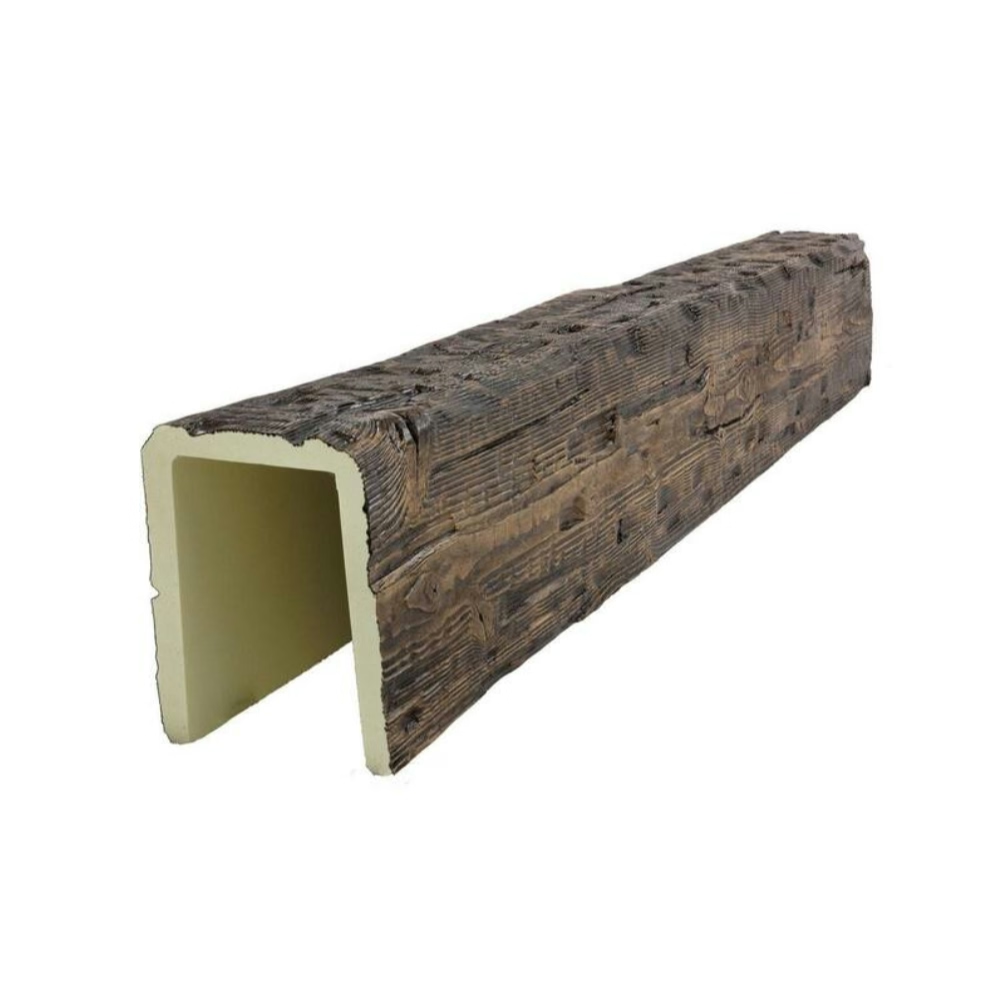
The flexibility of polyurethane as a manufacturing medium enables beam profiles that would be impossible or prohibitively expensive to produce from real wood. Intricate corbels, complex coffered ceiling systems, and multi-piece architectural assemblies can be molded with precision and consistency that hand-crafted timber simply cannot match. This manufacturing capability expands the design possibilities available to interior designers working on humid-space projects.
Surface texture options range from smooth contemporary finishes to deeply-embossed authentic wood grain patterns. The texture options include rough-sawn appearances, weathered barn wood effects, and smooth planed surfaces suitable for modern minimalist interiors. This range ensures that humidity-resistant polyurethane beams can complement virtually any interior design vocabulary without sacrificing performance in challenging environments.
Paint and stain compatibility further extends the aesthetic range. While many polyurethane beams arrive pre-finished in popular wood tones, the material accepts custom painting and staining when project specifications require specific color matching. Unlike real wood that requires careful surface preparation and priming for paint adhesion, polyurethane bonds well with standard interior paints and stains after light sanding to improve surface energy.
Installation Best Practices for Humid Spaces
Successful installation of humidity-resistant beams in moisture-prone areas requires attention to a few key details that differ from standard interior applications. Air circulation behind installed beams should be maintained where possible to prevent any moisture accumulation against the beam backs, even though the polyurethane itself cannot be damaged by such exposure. This practice becomes especially important in basement applications where limited airflow is common.
Fastening methods should account for the slightly different expansion characteristics of polyurethane compared to wood. While the material accepts standard finishing nails, brads, and screws, the fastening schedule should allow for the minimal movement that does occur with temperature changes. Overdriving fasteners risks cracking the polyurethane surface, so pneumatic nailers should be adjusted to seat heads flush without excessive force.
Joint treatment deserves special attention in humid environments. Even though polyurethane won't expand and contract like wood, the surrounding building materials certainly will. Flexible caulking compounds designed for high-movement applications should be used at all joints and seams, with backer rod installation where joint widths exceed one-quarter inch. This approach accommodates building movement without cracking or separation at visible joints.
Long-Term Value and Maintenance Considerations
The total cost of ownership for humidity-resistant polyurethane beams compares favorably with real wood when lifecycle costs are considered. Real wood installations in humid spaces require humidification or dehumidification systems to maintain stability, periodic inspections for hidden moisture damage, and eventual replacement when deterioration becomes severe. Polyurethane beams eliminate these ongoing concerns and expenses.
Maintenance requirements for polyurethane beams in humid applications involve nothing more than occasional dusting and cleaning with mild detergents. The protective coatings applied during manufacture resist staining and can be refreshed with standard furniture polish if needed. Unlike real wood that may require periodic refinishing, sealing, or repair of moisture damage, polyurethane maintains its appearance with minimal intervention throughout its service life.
The environmental profile of polyurethane beams also deserves consideration. While no building material is without environmental impact, the long service life of quality polyurethane beams, combined with their lack of requirement for chemical treatments or periodic refinishing products, results in a relatively modest ongoing environmental burden compared to wood alternatives that require regular maintenance with solvents, stains, and sealers.

Making the Specification Decision
For projects involving bathrooms, kitchens, basements, or any space with persistent humidity concerns, polyurethane faux wood beams deserve serious consideration over traditional materials. The performance advantages in moisture-rich environments are substantial and well-documented through years of successful installations across residential and commercial applications worldwide.
When specifying humidity-resistant indoor-grade polyurethane beams, work with manufacturers who can provide documentation of their moisture resistance testing and offer appropriate warranty coverage for your application. Quality suppliers will share testing data demonstrating performance under sustained humidity exposure and can recommend appropriate installation methods for your specific project conditions.
The combination of authentic wood aesthetics, proven humidity resistance, and minimal maintenance requirements makes polyurethane faux wood beams the practical choice for demanding interior applications. Your clients will appreciate the beautiful result that maintains its appearance regardless of what steam, condensation, or humidity fluctuations occur in their living spaces.
Technical References
ASTM standards cited in every specification
Test Data
Lab results from internal testing program
Updated 2026
Reviewed against current product specs


