
High-moisture indoor rooms represent some of the most challenging environments for interior ceiling treatments. Whether you're designing a tropical conservatory, an indoor aquatic center, or a commercial greenhouse, the constant presence of moisture in the air creates conditions that eliminate most conventional wood options from consideration. Polyurethane faux timber beams have emerged as the definitive solution for these demanding applications, combining visual authenticity with performance characteristics that natural materials simply cannot match.
The science behind polyurethane's moisture resistance lies in its cellular architecture. During manufacturing, chemical reactions create a matrix of closed cells that contain individual gas pockets isolated from one another. This structure makes the material dimensionally stable regardless of ambient humidity because moisture cannot travel through the material as it does through wood fibers. Water droplets bead on polyurethane surfaces and run off rather than soaking in, a behavior fundamentally different from the absorption and release cycle that wood undergoes constantly.
Engineering for Moisture Challenge
Professional designers working on high-humidity projects appreciate understanding why polyurethane outperforms wood so dramatically in these conditions. Wood consists of hollow cellulose fibers arranged in parallel patterns that create natural pathways for moisture movement. When humidity rises, wood fibers absorb water vapor through these pathways and swell. When humidity falls, the moisture evaporates and the wood shrinks. This cycle repeats countless times throughout a beam's service life, with each cycle causing cumulative damage.
The swelling and shrinking never occur uniformly across a wood beam. Different grain orientations, growth ring patterns, and densities across the beam's cross-section cause differential movement that creates internal stresses. These stresses manifest as warping, cupping, twisting, and checking—deformations that compromise appearance long before structural failure occurs. In severe humidity environments, the cycle accelerates dramatically, with significant dimensional changes occurring within weeks rather than years.
Polyurethane eliminates these failure modes entirely. The synthetic polymer matrix contains no cellular fibers, no grain patterns, and no differential densities to create internal stress under humidity cycling. The material responds to temperature changes with minimal expansion or contraction, and humidity changes produce essentially no dimensional response. A polyurethane beam installed in a tropical greenhouse maintains its precise original dimensions indefinitely regardless of how the moisture conditions change.
Applications Across High-Humidity Environments
Indoor swimming facilities represent the most visible application category for humidity-resistant faux timber beams. Commercial aquatic centers, hotel pools, residential indoor pools, and therapy pools all require ceiling treatments that handle sustained high humidity without deterioration. The visual warmth that timber beams provide creates inviting atmospheres that enhance the user experience while maintaining performance through years of chlorine exposure and humidity cycling.
Commercial laundries and industrial cleaning facilities present different humidity challenges characterized by high temperatures combined with elevated moisture. The steam and heat generated by industrial washers and dryers creates demanding conditions near the ceiling where beams are installed. Polyurethane handles these conditions without the thermal stress cracking or finish degradation that might affect other materials, maintaining appearance and performance through demanding operational cycles.
Agricultural facilities including greenhouses, indoor growing operations, and hydroponics centers maintain humidity levels specifically optimized for plant growth. These same conditions prove destructive to natural wood over time. Polyurethane faux timber beams provide the rustic aesthetic that many agricultural interiors require while standing up to the humidity that makes real wood impractical for these applications.
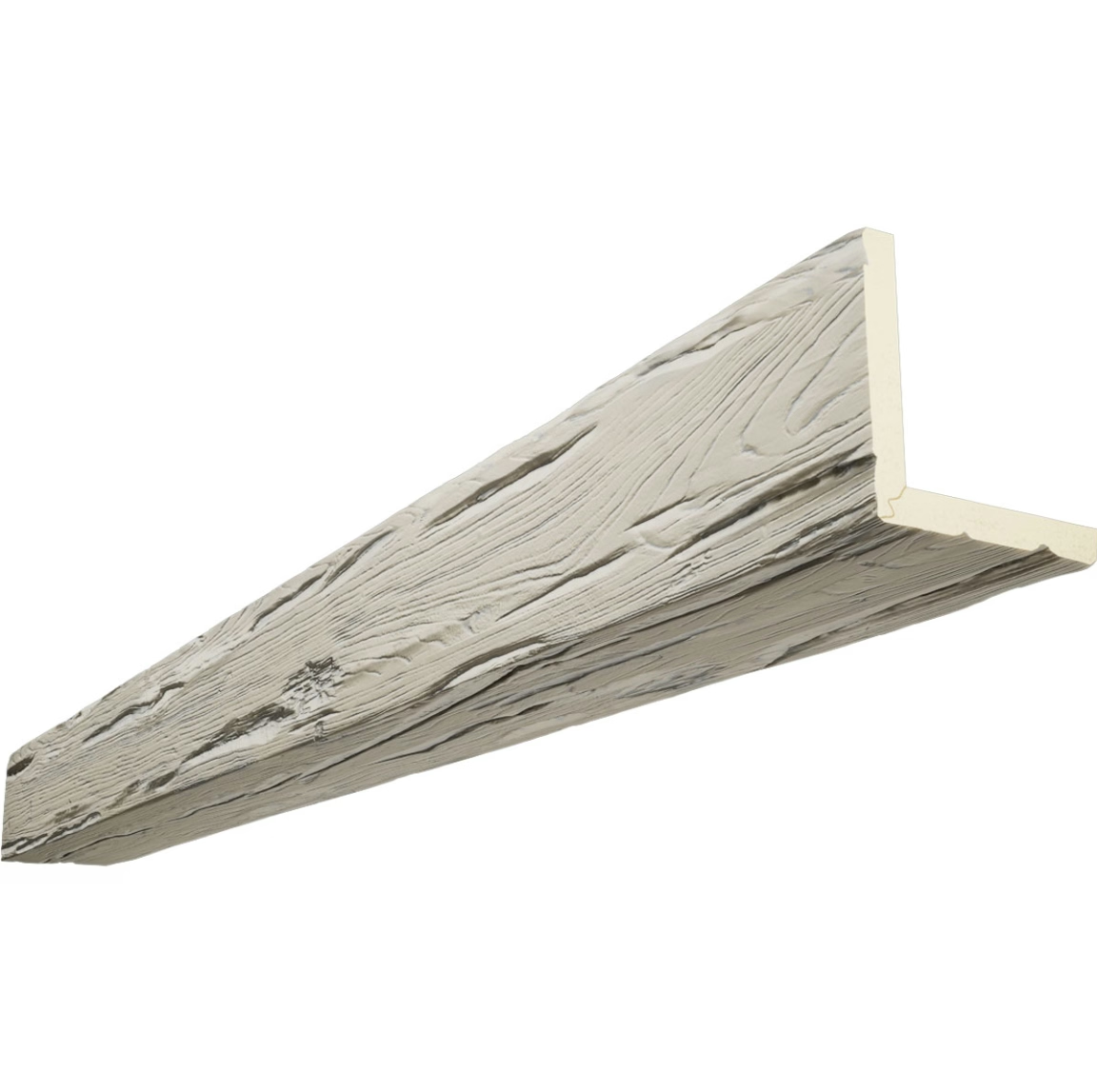
Moisture Tolerance Specifications
Professional specification of humidity-resistant beams requires understanding the actual performance limits of quality products. Premium polyurethane beams typically maintain dimensional stability across relative humidity ranges from 20% to 95%, with minimal measurable expansion or contraction within this span. This range encompasses virtually all indoor humidity conditions that buildings experience, from bone-dry heated spaces in winter to saturated environments in pool halls and greenhouses.
Temperature performance complements humidity tolerance. Quality polyurethane beams function effectively across temperature ranges from below freezing to temperatures exceeding 150 degrees Fahrenheit, with their performance characteristics remaining stable throughout. This thermal stability proves important in facilities where humidity generation coincides with elevated temperatures, such as saunas, steam rooms, and industrial drying areas.
Water exposure tolerance represents the extreme end of moisture performance. Polyurethane beams can withstand direct water contact including pooling without suffering damage or dimensional change. While standing water on ceiling beams indicates building envelope or ventilation problems requiring attention, the beams themselves tolerate such exposure without deterioration—a characteristic that distinguishes them from any wood product regardless of treatment.
Installation Methods for Humid Spaces
Successful beam installation in high-moisture environments begins with appropriate fastener selection. Stainless steel hardware prevents the corrosion that could eventually affect load capacity in humid conditions. The zinc plating on standard fasteners degrades in consistently humid environments, potentially creating cosmetic staining and structural concerns over time. Marine-grade or stainless steel fasteners provide lasting performance without degradation.
Adhesive installation offers excellent results when combined with mechanical fastening for redundancy. Construction adhesives formulated for synthetic materials create strong bonds that remain flexible over the beams' service life. The combination of adhesive bonding and mechanical fastening provides both immediate holding power and long-term security, with neither method dependent on the other for primary support.
Support structure requirements differ somewhat from wood beam installations. While wood beams can be notched, bored, and modified on site to accommodate utilities and structural elements, polyurethane beams arrive from the factory with any required cutouts, hollow sections, and utility channels already incorporated. This approach ensures consistent quality while reducing installation labor and waste.
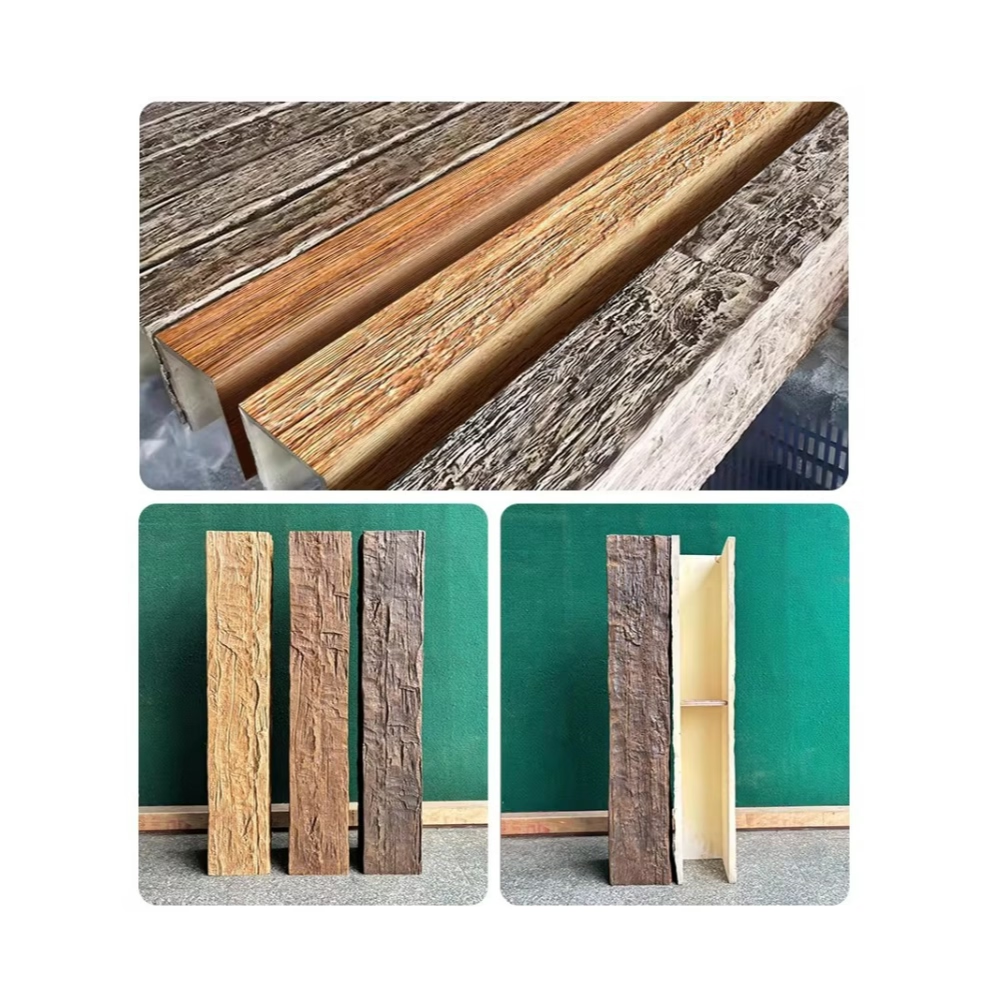
Maintenance in Challenging Environments
High-humidity environments demand maintenance routines appropriate to the conditions rather than the material. Polyurethane beams themselves require minimal attention beyond occasional cleaning, but the surrounding building elements may need more frequent attention. Monitoring ventilation systems, checking condensation management, and inspecting adjacent materials for moisture damage should form the basis of a maintenance routine for humid-space beam installations.
Surface cleaning in humid environments addresses biological concerns that don't apply to standard interior spaces. While polyurethane resists mold and mildew growth, accumulated dust and organic materials on beam surfaces can provide food sources for surface contamination. Periodic cleaning with mild detergents removes these accumulations and maintains the beams' appearance without any specialized treatments or chemical interventions.
Inspection frequency in humid environments should exceed standard intervals. Quarterly visual inspections allow early identification of any issues with adjacent materials, ventilation performance, or condensation management. These inspections require minimal time but provide valuable information about building performance that can prevent more serious problems from developing.
Design Excellence in Practice
The aesthetic achievements possible with humidity-resistant polyurethane beams demonstrate how material performance enables design vision. In high-moisture spaces where wood was previously impractical, designers now create warm, inviting interiors that enhance the experience of swimming, relaxing, or working in challenging environments. The visual authenticity of quality faux timber, combined with proven moisture resistance, makes previously impossible projects entirely achievable.
Custom profile options expand design possibilities beyond standard beam shapes. Curved beams, tapered sections, and compound angles can be molded to specification, allowing architects to create signature ceiling treatments that define their projects. This manufacturing flexibility, combined with the material's performance advantages, positions polyurethane as the definitive choice for high-humidity interior applications.
The business case for humidity-resistant faux timber beams strengthens with every year of maintenance-free service. Building owners appreciate reduced lifecycle costs while occupants enjoy the aesthetic benefits that only wood-appearing ceiling treatments provide. This combination of practical and aesthetic value makes polyurethane the clear choice for demanding moisture applications.
Technical References
ASTM standards cited in every specification
Test Data
Lab results from internal testing program
Updated 2026
Reviewed against current product specs


