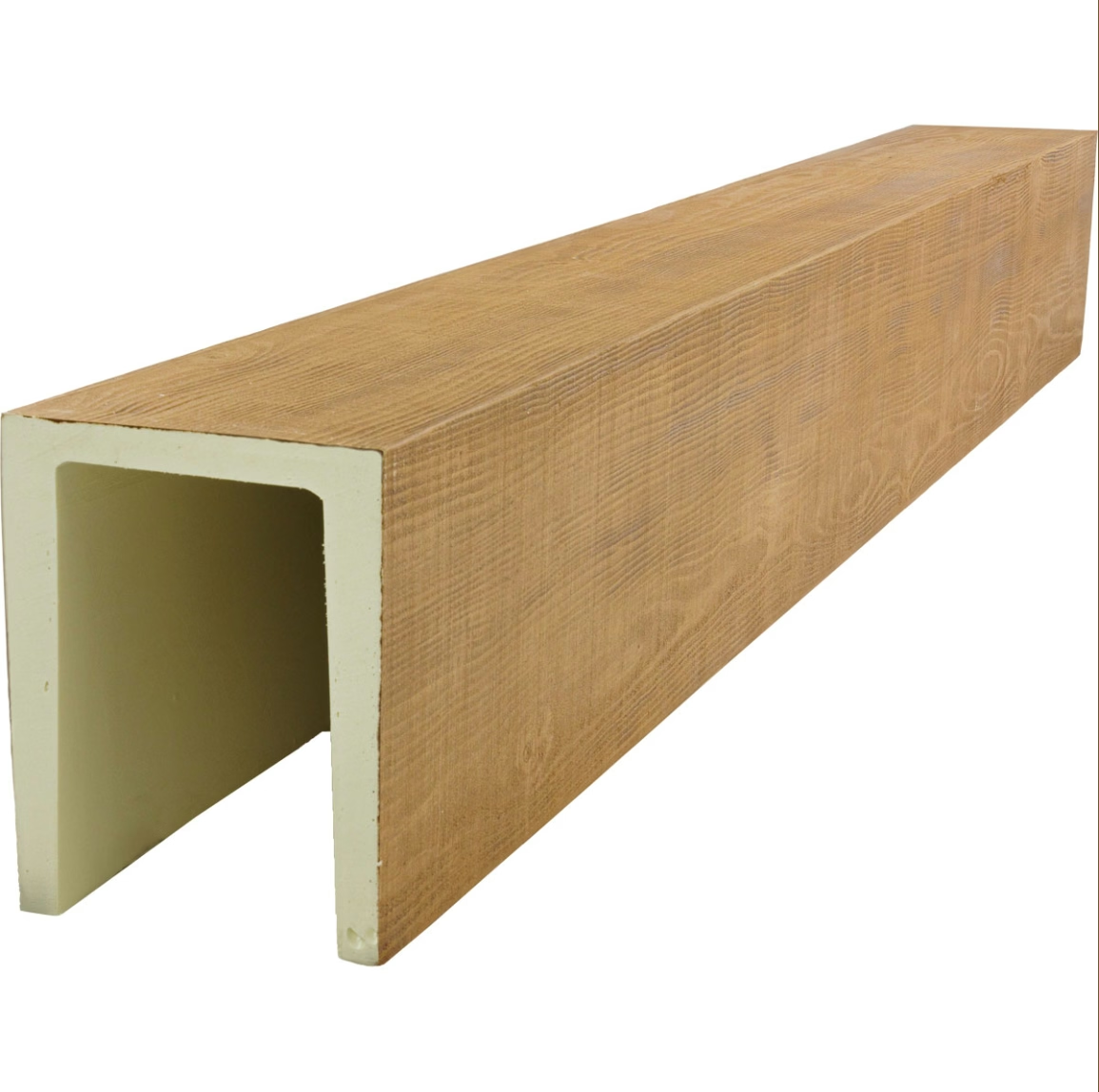
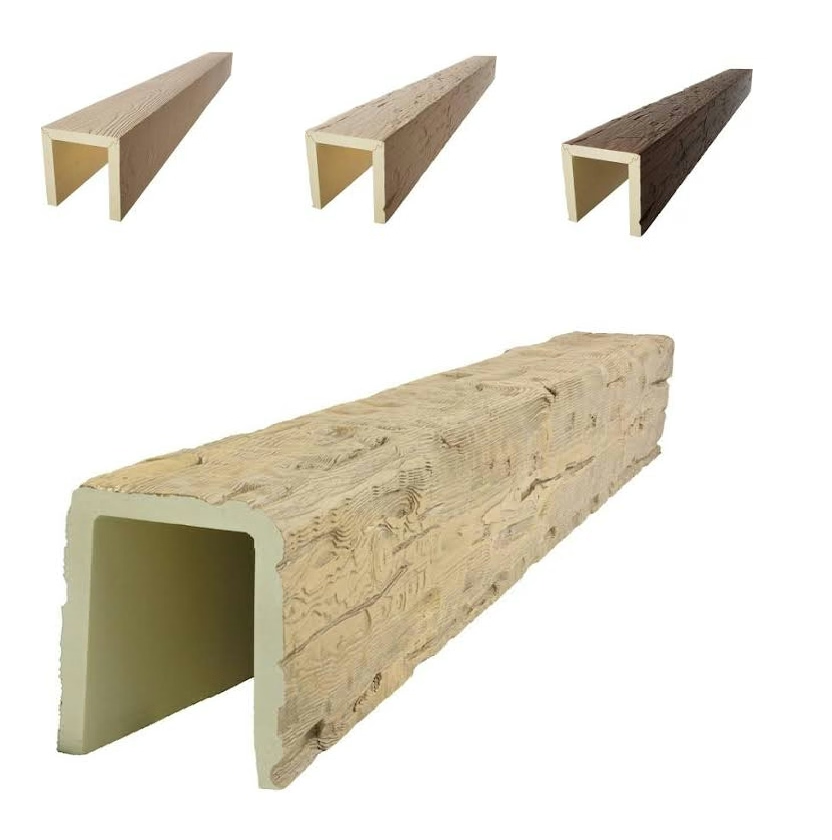
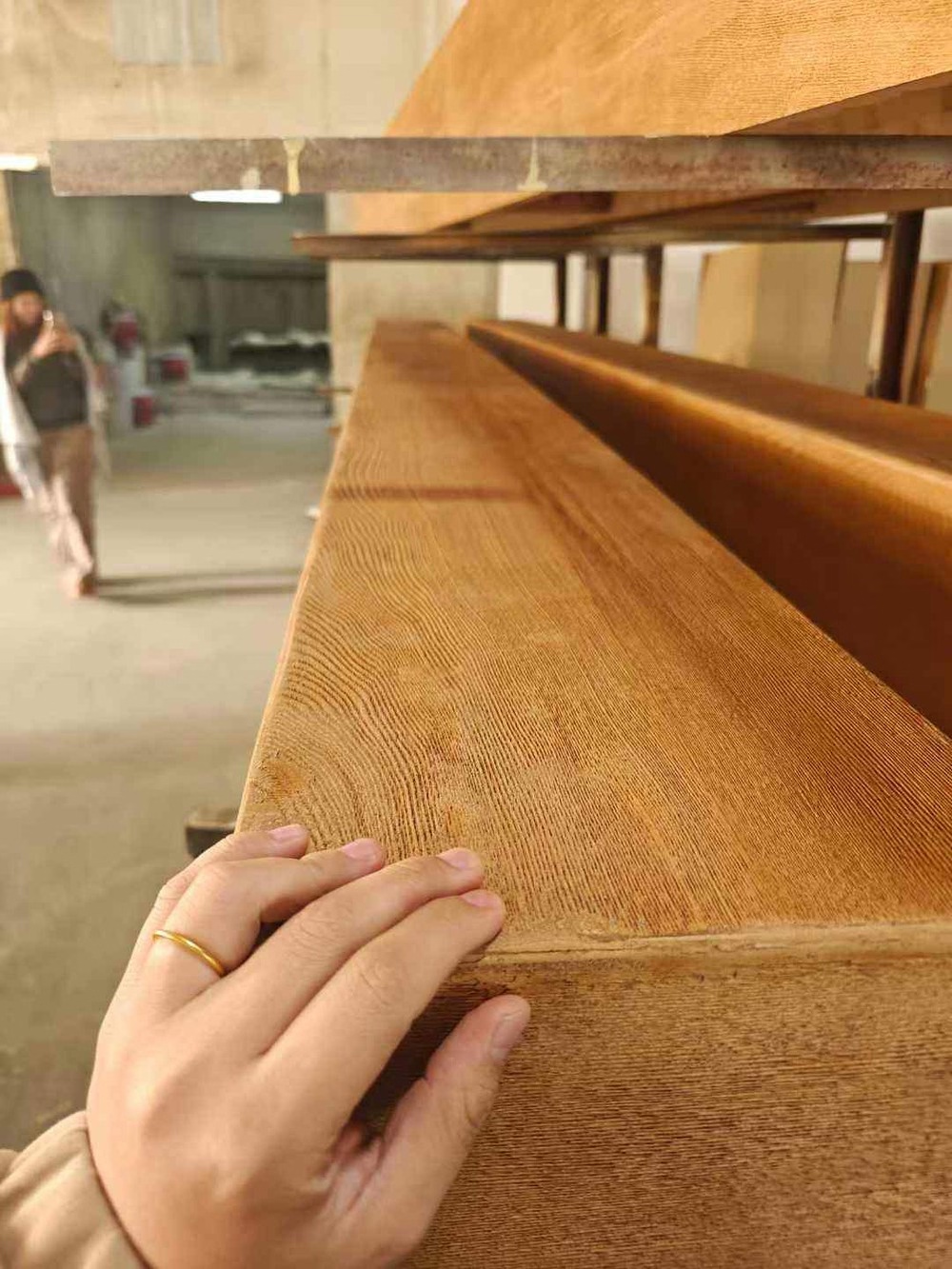
The pursuit of wood aesthetics in moisture-challenged environments has historically ended in disappointment. Despite careful species selection, protective treatments, and meticulous installation practices, natural timber inevitably responds to humidity fluctuations with dimensional changes that manifest as warping, cupping, twisting, and checking. These deformations compromise appearance first but eventually affect structural integrity, requiring costly repairs or complete replacement. The introduction of warp-free faux timber beams represents a fundamental solution to this persistent problem.
Understanding why wood warps requires examining its cellular structure. Wood consists of elongated cellulose cells arranged in parallel patterns that create directional properties throughout the material. These cells absorb and release moisture at different rates depending on their orientation relative to the wood's growth rings, grain direction, and position within the tree. When humidity rises, cells across the beam's cross-section swell at different rates, creating internal stresses that eventually manifest as visible warping.
The word "warp" encompasses several distinct deformation patterns. Bow describes curvature along the beam's length in the direction of the wide face. Crook refers to edge-to-edge curvature along the length. Twist involves spiraling rotation along the beam's axis. Cupping creates concave curvature across the beam's width. Each deformation pattern results from specific differential movement within the wood's cellular structure, and all become more severe as humidity cycling continues.
The Polyurethane Alternative
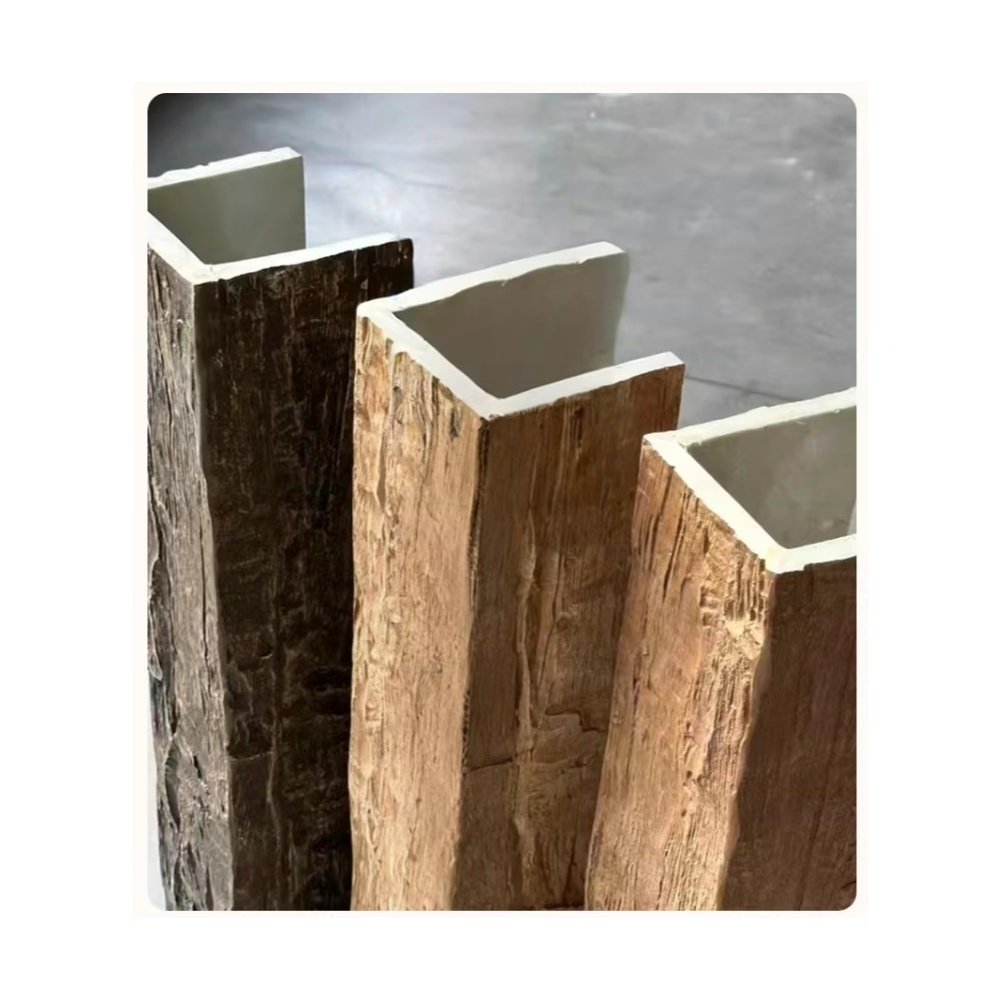
Polyurethane faux timber beams eliminate warping entirely through fundamental differences in their molecular structure. The synthetic polymer matrix contains no directional cellular alignment, no differential absorption rates, and no internal stress patterns waiting to manifest as deformation. Water molecules cannot penetrate this structure regardless of ambient humidity, so no dimensional change occurs regardless of environmental conditions.
The manufacturing process creates uniform density throughout each beam's cross-section. Unlike wood, where earlywood and latewood zones differ significantly in density and permeability, polyurethane foam cures to consistent properties from surface to core. This uniformity means that any environmental influence affects the entire beam identically, producing no internal stresses and no differential movement patterns.
Thermal expansion contributes to warping in natural wood but affects polyurethane minimally. The synthetic material's thermal coefficient of expansion runs roughly one-tenth that of wood, meaning temperature changes produce proportionally smaller dimensional responses. Combined with humidity's complete absence of effect, this thermal stability ensures that polyurethane beams maintain their as-manufactured dimensions through any reasonable environmental exposure.
Performance in Real-World Conditions
Coastal residential construction demonstrates warp-free performance under demanding conditions. Ocean-adjacent homes experience humidity levels that fluctuate dramatically with weather patterns, with marine fog and salt spray adding atmospheric moisture to interior spaces. Timber beams in these environments traditionally required extensive treatment and frequent maintenance to prevent warping, cupping, and salt-related deterioration. Polyurethane faux timber handles these conditions indefinitely without intervention.
Indoor agricultural applications present similar challenges. Greenhouse interiors maintain elevated humidity to support plant growth, with levels frequently exceeding 80% relative humidity. These conditions cause wood to swell noticeably, with seasonal cycling producing cumulative warping that becomes visually apparent over years of exposure. Polyurethane beams maintain perfect straightness regardless of greenhouse humidity cycles, preserving the intended architectural effect indefinitely.
Commercial kitchens and food preparation areas expose ceiling beams to humidity spikes during cooking operations, steam cleaning, and dishwashing. These intermittent but intense moisture exposures cause wood to expand and contract cyclically, with each cycle adding stress and cumulative damage. Polyurethane's immediate humidity resistance prevents any absorption, so the moisture spikes that devastate wood produce no effect on synthetic beams.
Design Implications of Warp-Free Performance
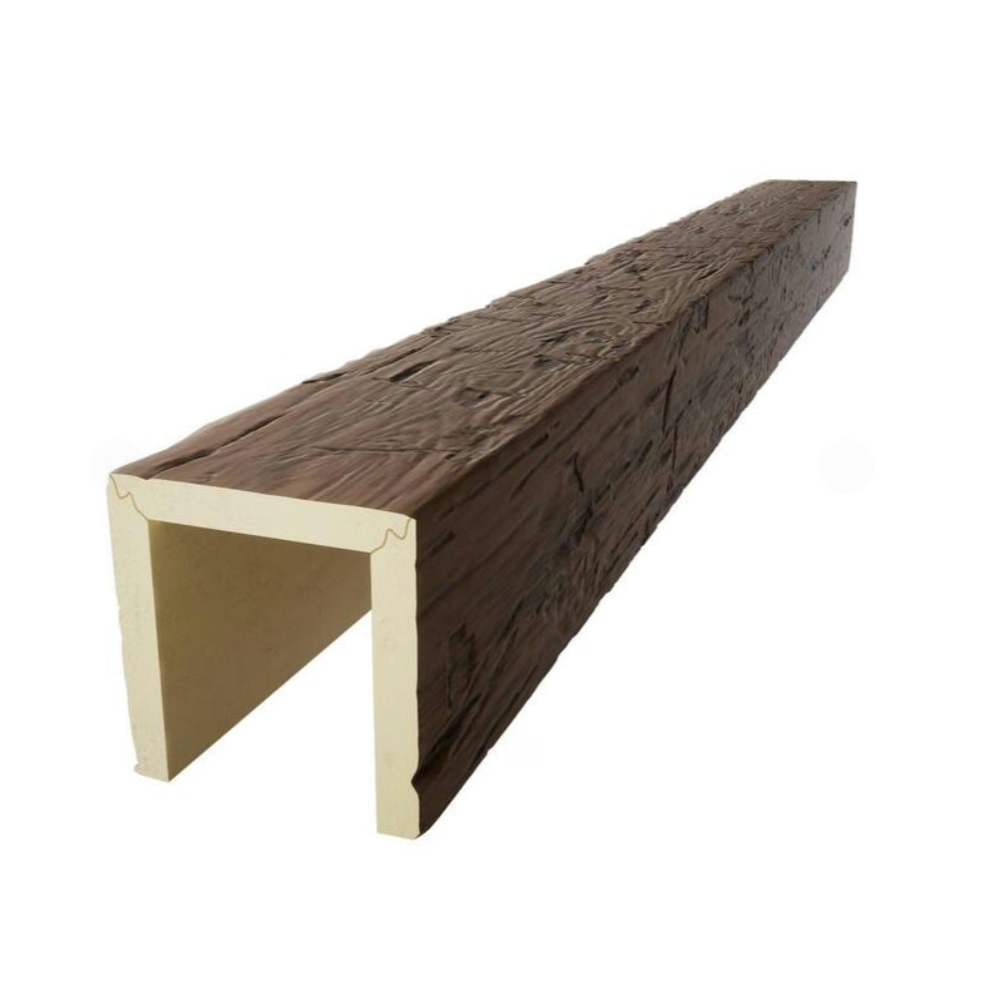
The aesthetic benefits of warp-free performance extend beyond simple dimensional stability. Joint alignments that would eventually gap and separate in wood beam installations remain perfectly flush in polyurethane installations. Corners that might develop visible openings as timber warps stay tight and clean. The architectural intention encoded in the original design survives intact rather than degrading toward chaos over time.
Beam spacing tolerances can be tighter with warp-free materials. Wood beam installations often incorporate larger gaps to accommodate future warping without creating appearance problems. With polyurethane beams, spacing can match the design intent precisely because no future movement will occur. This precision allows more refined visual effects and better alignment with other architectural elements.
Curved and shaped beams benefit particularly from warp-free performance. Gentle curves and compound shapes in natural wood are inherently unstable, with internal stresses waiting to initiate warping along the most visually prominent sections. Polyurethane curved beams, whether manufactured with inherent curvature or formed to shape, maintain their forms permanently without the tendency toward straightening or twisting that affects curved wood elements.
Comparative Analysis: Wood Versus Polyurethane Warp Behavior
Natural wood warps predictably under certain conditions but unpredictably in others. Straight-grain timber in controlled environments may remain stable for years, creating false confidence in wood's suitability for humid applications. The eventual failure, when it comes, arrives without warning after the accumulated stress finally exceeds the wood's ability to contain it. Polyurethane's performance, by contrast, remains consistent and predictable regardless of conditions or exposure duration.
The rate of warping varies with wood species, grain quality, and moisture history. Dense hardwoods warp less than softwoods but still warp significantly under sustained humidity exposure. Reclaimed timber, despite its popular aesthetic appeal, often warps more than new lumber due to the internal stresses released as the wood dries and stabilizes in its new environment. Polyurethane shows no variation in warp resistance based on appearance or history—the material performs identically regardless of surface character or manufacturing batch.
Seasonal humidity patterns create cyclic warping that wood-beating installers learn to expect. Winter heating reduces interior humidity, causing wood to shrink and potentially check or split. Summer humidity rises, wood swells, and joints may compress or push against adjacent materials. These cycles repeat annually, with cumulative damage accumulating until repair or replacement becomes necessary. Polyurethane beams ignore these cycles entirely, maintaining their as-installed appearance through years of seasonal change.
Installation Practices That Enhance Stability
While polyurethane beams cannot warp, installation practices still affect long-term appearance. Adequate fastening prevents any movement that might eventually damage adjacent finishes or create gaps. The material's light weight reduces load requirements compared to genuine timber, but proper engineering ensures that fasteners and support hardware remain secure indefinitely.
Expansion joint treatment accommodates movement in surrounding building materials. Even though polyurethane beams won't move, the structures they attach to certainly will as temperature and humidity change. Flexible joint compounds prevent stress transfer from the building to the beam, protecting both materials while maintaining clean visual lines.
Support spacing affects visual performance even when structural requirements are met. Beams that span excessive distances between supports may sag slightly under their own weight, creating subtle but visible undulation that compromises the straight-line aesthetic. Engineering calculations based on beam profile and anticipated loading ensure that visible straightness matches structural adequacy.
Economic Considerations
The lifecycle cost comparison between wood and polyurethane favors synthetic materials increasingly as time passes. Wood beams require initial treatment, ongoing inspection, periodic refinishing, and eventual replacement. Each maintenance cycle involves labor costs, material costs, and the disruption of occupying the space during work. Polyurethane beams require only occasional cleaning, with no scheduled maintenance and no degradation requiring intervention.
Replacement costs compound over time for wood alternatives. A wood beam installation might require partial replacement within ten years and complete replacement within twenty, depending on exposure severity. The cumulative cost of these replacements exceeds the initial premium for polyurethane many times over. Building owners who calculate lifecycle costs reliably choose synthetic materials for humid environments.
The absence of maintenance requirements also eliminates related concerns. Wood maintenance often involves chemical treatments, stains, or sealants that introduce volatile organic compounds into the indoor environment. For spaces where air quality matters—wine cellars, food preparation areas, healthcare facilities—eliminating these maintenance chemicals provides meaningful benefits beyond appearance preservation.
The Definitive Solution
Warp-free faux timber beams represent the resolution of a centuries-old problem: how to achieve wood aesthetics in demanding environments without accepting wood's inherent limitations. The material science behind polyurethane eliminates the dimensional instability that has frustrated builders and designers since timber became a construction material. This is not improvement over wood—it is a different category entirely, one designed from the molecular level for the performance requirements that real wood cannot meet.
Technical References
ASTM standards cited in every specification
Test Data
Lab results from internal testing program
Updated 2026
Reviewed against current product specs