
The evolution of polyurethane faux wood beams from obvious plastic imitations to hyper-realistic wood replicas represents one of the more remarkable material science achievements of recent decades. Early synthetic wood products betrayed themselves immediately through uniform color, absence of grain variation, and surfaces that reflected light incorrectly for any wood species. Today's premium faux beams, by contrast, achieve authenticity so complete that even woodworkers and forestry professionals find themselves momentarily deceived. Understanding how this authenticity is achieved illuminates both the manufacturing sophistication involved and the genuine value that hyper-realistic beams provide.
The foundation of authentic wood appearance lies in surface texture reproduction. Natural wood surfaces contain features ranging from visible annual growth rings to microscopic cellular structures that affect how light interacts with the surface. Capturing these features in a molded polyurethane product requires careful study of actual wood specimens, skilled craftsmanship in mold creation, and manufacturing processes that reproduce even subtle surface variations consistently across production runs.
Beyond texture, authentic wood appearance requires appropriate color distribution. Natural wood colors vary continuously across any given piece, with darker concentrations along growth rings, lighter zones between rings, and subtle color shifts corresponding to earlywood and latewood density differences. Simulating this variation requires multiple color applications and careful blending techniques that produce the natural randomness of genuine timber.
The Science of Wood Grain Reproduction
Wood grain patterns emerge from the tree's growth process, recording years of environmental conditions in visual form. Drought years produce narrow rings with denser latewood, while favorable years create wider rings with more gradual transitions. Earlywood, produced in spring growth, differs visually from latewood formed during summer dormancy. These natural variations create the characteristic appearance that defines each wood species and makes each piece of timber unique.
Mold creation for hyper-realistic beams begins with extensive photography and measurement of genuine wood specimens. Craftsmen capture the full range of grain patterns typical for the target species, including knot formations, curl patterns, and the irregular variations that characterize authentic wood. This documentation guides the sculpting and machining processes that create the production molds.
Modern CNC machining produces mold surfaces with remarkable precision, capturing features that would be impossible to reproduce manually. Fine detail work at microscopic scales ensures that the resulting polyurethane surfaces interact with light identically to genuine wood. The investment in tooling represents significant cost, but the ability to produce thousands of identical beams from a single mold makes this investment economically viable.
Texture Technologies and Surface Treatments
The tactile authenticity of hyper-realistic beams deserves emphasis equal to visual authenticity. When touched, quality faux beams feel like genuine wood—they exhibit the same slight roughness along grain lines, the same smoothness across growth ring surfaces, and the same subtle texture variations that woodworkers identify as characteristic of each species. This tactile authenticity reinforces visual impressions and completes the illusion.
Embossing technologies produce surface textures through several methods. Steel rule dies cut sharp edges for bold textures, while chemically etched surfaces capture fine detail. Roller embossing applies continuous patterns efficiently, though with less variation than custom hand-work. The best results typically combine multiple techniques, with base textures establishing the overall pattern and secondary treatments adding fine detail.
Surface hardness affects how polyurethane textures age compared to genuine wood. Natural wood surfaces develop patina through use, with slight wear patterns that many find attractive. Polyurethane surfaces maintain their original texture indefinitely, neither developing the character of aged wood nor showing wear patterns. This consistency represents both advantage and limitation, depending on the design intent for each application.
Color Matching and Finish Technologies
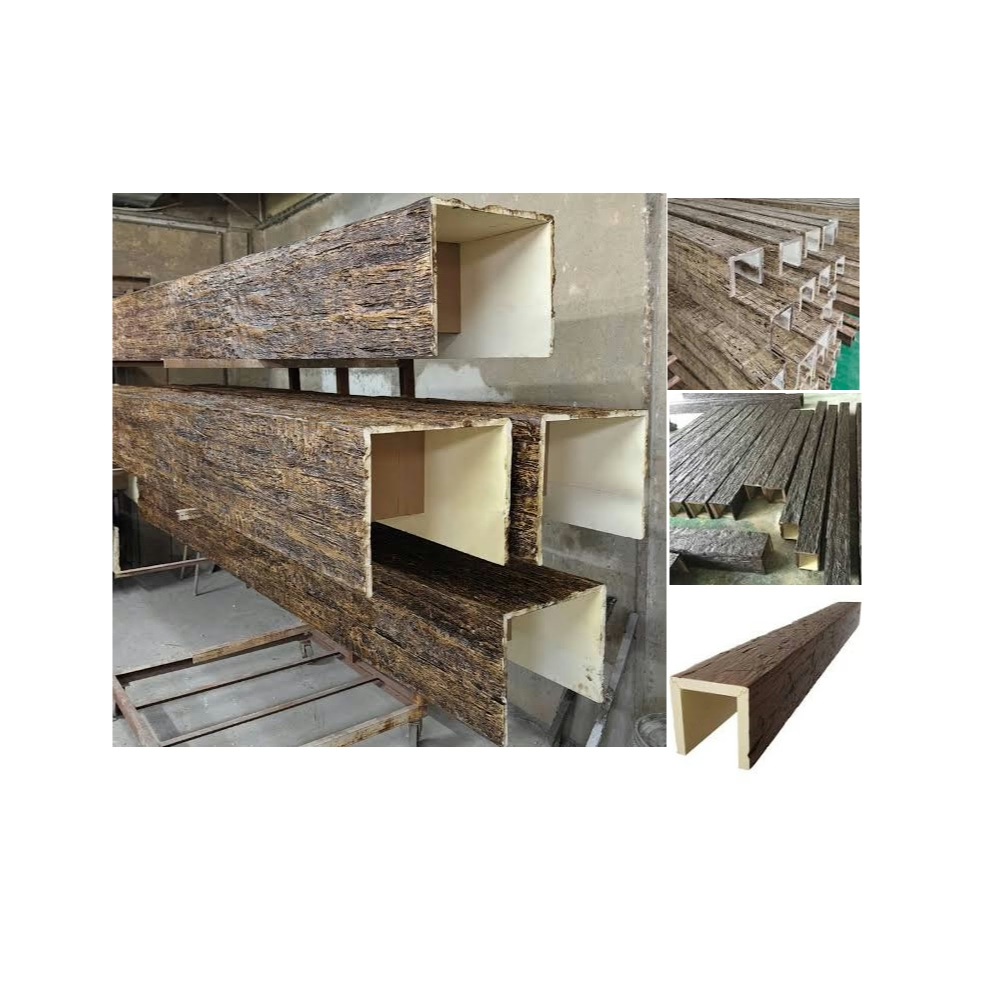
Factory finish application for hyper-realistic beams involves multiple color layers applied with careful attention to wood behavior. Base coats establish the fundamental tone of the target species, while subsequent layers build depth and complexity. These layers interact optically in ways that create the dimensional appearance of genuine wood, with darker tones recessed and lighter tones appearing to catch illumination.
The color range available in polyurethane faux beams spans the full spectrum of commercially significant wood species. From the pale blondes of maple and ash through the warm browns of oak and walnut to the deep reds of cherry and padauk, manufacturer color lines cover the species that designers specify most frequently. Custom color matching extends this range further, accommodating unique specifications or matching to existing wood elements.
Finish sheens for faux beams range from matte through satin to gloss, with appropriate sheens varying by species and design context. Darker wood species typically appear most authentic with lower sheen levels that mimic the light absorption of natural wood. Lighter species can accommodate higher sheens, though excessive gloss betrays the plastic origin regardless of other quality factors.
Species Authenticity Across Applications
Oak grain reproduction demonstrates the challenges of capturing characteristic species appearance. Oak's prominent grain lines, pronounced ray fleck, and distinctive ring patterns create strong visual identity that designers recognize immediately. Quality polyurethane oak beams replicate these features convincingly, with the large pore structure of red oak reproduced through appropriate surface texturing and color concentration.
Reclaimed wood aesthetics present particular reproduction challenges because authenticity includes the character marks of age and use. Salvaged barn beams, industrial timbers, and antique lumber carry surface oxidation, fastener holes, and weathering patterns that distinguish them from new wood. Faux beam manufacturers have developed techniques for incorporating these character marks, including simulated weathering, artificial aging, and strategic distressing.
Exotic wood species create opportunities for premium faux beam products. Brazilian walnut, African ebony, and other difficult-to-source species can be reproduced authentically in polyurethane, providing aesthetic options that would otherwise be unavailable due to cost, sustainability concerns, or import restrictions. This democratization of exotic wood aesthetics represents a meaningful benefit of hyper-realistic reproduction technology.
Installation Factors Affecting Authenticity
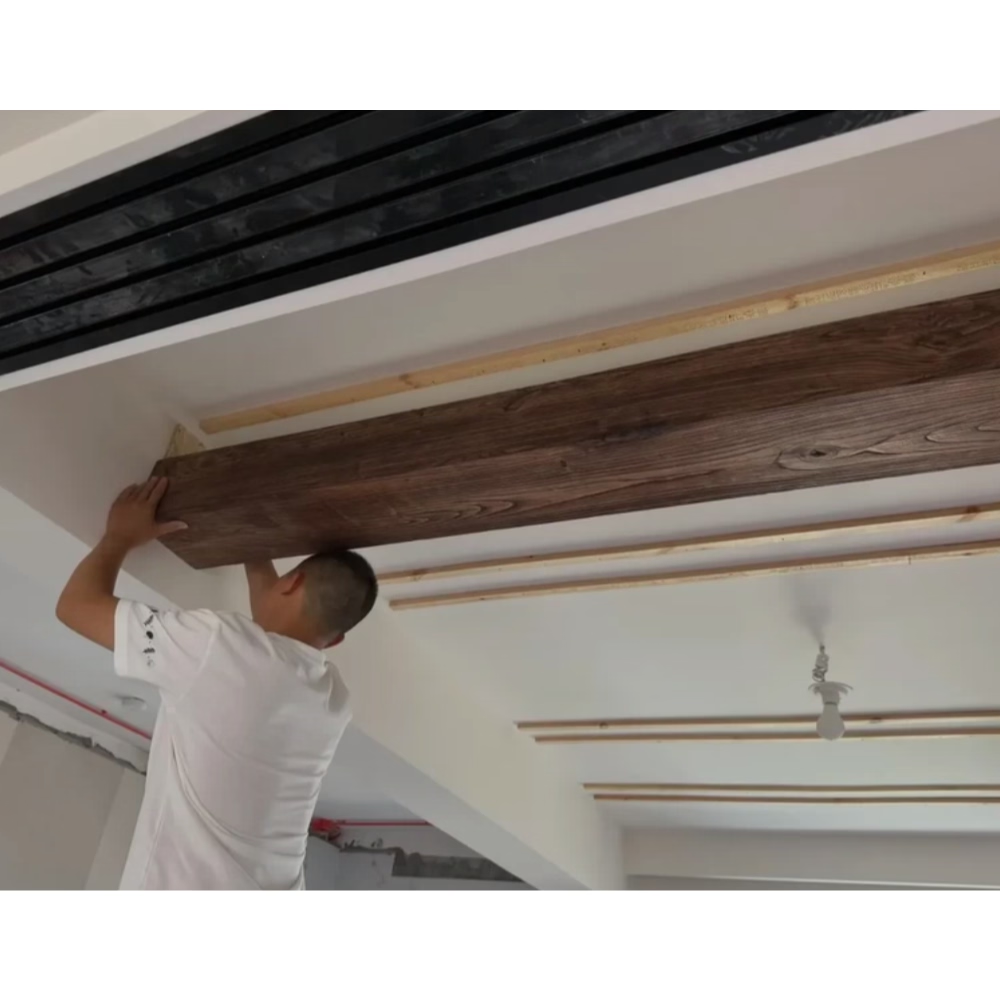
Even the most realistic faux beam can appear artificial if installed incorrectly. Joint treatment deserves particular attention because genuine wood beams typically show subtle variation at connections. Professional installers recreate these natural inconsistencies rather than achieving machine-like perfection, preserving the handmade quality that authentic timber displays.
Lighting interaction with beam surfaces affects perceived authenticity dramatically. Directional lighting that creates shadows along grain lines emphasizes texture convincingly, while flat overhead lighting minimizes the depth that makes wood appear three-dimensional. Design professionals understand how lighting choices affect material perception and specify beam placements that complement the intended illumination.
Adjacent material coordination ensures that beams appear native to their surroundings rather than imported into foreign environments. Wood species selections should complement other wood elements in the space, with beam tones harmonizing with flooring, millwork, and furniture. This coordination produces interiors that feel coherent rather than contrived, regardless of whether the wood is genuine or synthetic.
Quality Indicators and Selection Criteria
Evaluating faux beam authenticity requires understanding what features distinguish genuine wood from successful imitations. Grain consistency across beam lengths indicates proper manufacturing technique—real wood grain varies naturally while poor imitations repeat patterns identically. The presence of subtle imperfections, including small knots and color variations, suggests authentic attention to natural wood character.
Texture depth affects both appearance and authenticity. Quality faux beams exhibit surface variations that cast subtle shadows under directional lighting, creating the dimensional quality that genuine wood displays. Shallow textures that appear flat under any lighting conditions reveal their synthetic origins regardless of color accuracy.
Edge treatment and end grain reproduction distinguish premium products from budget alternatives. Authentic wood appearance requires realistic end grain that matches the beam's side surfaces appropriately. Knot formations should include appropriate root structure rather than appearing as simple holes. Premium manufacturers attend to these details because they complete the illusion that justifies the premium pricing.
The Design Value of Authentic Simulation
Hyper-realistic faux beams enable design visions that genuine timber cannot achieve. Large-scale installations that would require ancient trees of extraordinary dimensions become entirely achievable when manufacturing technology produces unlimited beam lengths and sizes. Complex curved beams that would require extraordinary woodworking expertise emerge from molds with perfect consistency. These capabilities expand the designer's palette significantly.
The cost-value relationship increasingly favors hyper-realistic faux beams over genuine timber for most applications. When authenticity approaches equivalence, the practical advantages of polyurethane—dimensional stability, moisture resistance, insect resistance, and installation simplicity—create compelling value propositions. Only applications where genuine timber's specific properties are essential justify the additional cost and complexity of natural wood.
Environmental considerations contribute to the appeal of authentic faux beams. Sustainable manufacturing with minimal waste, elimination of old-growth harvest concerns, and reduced transportation weights for distant installations all favor synthetic materials. Designers concerned about environmental impact can specify hyper-realistic faux beams with confidence that their aesthetic and environmental objectives both receive appropriate satisfaction.
Technical References
ASTM standards cited in every specification
Test Data
Lab results from internal testing program
Updated 2026
Reviewed against current product specs


