
Indoor air quality has emerged as a primary concern for building professionals, healthcare providers, and informed consumers alike. The compounds emitted by building materials—volatile organic compounds, formaldehyde, and various chemical off-gassing products—accumulate in building interiors where occupants breathe them continuously. While single exposures may seem insignificant, the cumulative effect of chronic low-level exposure affects occupant health, cognitive function, and long-term wellbeing. Specifying materials that contribute to healthy interior environments has become a professional responsibility that thoughtful designers embrace actively.
Polyurethane faux wood beams occupy a unique position in the materials selection discussion. As synthetic products, they potentially introduce chemical concerns that genuine timber's natural composition avoids. However, quality manufacturers have responded to these concerns by developing formulations and finishing systems that meet or exceed the most stringent indoor air quality standards. The result is products that provide the aesthetic and practical benefits of polyurethane while maintaining emissions levels appropriate for sensitive applications.
Understanding IAQ certification requires familiarity with the testing protocols and standards that govern material emissions. Several independent testing organizations evaluate building materials for chemical emissions, with GREENGUARD, SCS Global Services, and various regional programs establishing standards that manufacturers must meet to claim certification. Each certification involves chamber testing that measures emissions under standardized conditions, with results reported as emission factors per unit area or per unit weight.
The Science of Indoor Air Quality
Indoor air quality concerns arise from the cumulative effect of emissions from all building materials and furnishings in an enclosed space. No individual material may emit at concerning levels, yet the combination of many low-emitting sources can create interior environments with elevated contaminant concentrations. This additive effect means that specifying low-emitting materials throughout a building provides better outcomes than focusing only on the most visible finish materials.
Volatile organic compounds represent the primary concern category for most building materials. These carbon-based chemicals evaporate readily at room temperature, creating vapor concentrations that occupants inhale continuously. While individual VOCs may have no known health effects at typical concentrations, the mixture of dozens or hundreds of different VOCs creates concerns that single-compound toxicity testing cannot fully address.
Formaldehyde emissions receive particular attention because the compound is classified as a known human carcinogen. Some building materials contain formaldehyde in their basic composition, while others release formaldehyde generated during manufacturing processes. Quality polyurethane beam manufacturers eliminate formaldehyde from their formulations entirely, removing this concern from the materials palette.
Certification Standards and Testing Protocols
GREENGUARD certification, now part of UL Environment, represents the most widely recognized emissions certification for building products. The standard establishes emission limits for hundreds of individual chemical compounds plus aggregate measures including total volatile organic compound emissions. Products achieving GREENGUARD certification can be specified with confidence for use in schools, healthcare facilities, and other sensitive environments.
The testing process involves placing representative material samples in controlled-environment chambers where temperature, humidity, and air exchange rates simulate actual building conditions. Air samples collected over time intervals are analyzed using gas chromatography and mass spectrometry to identify and quantify emitted compounds. Results demonstrate compliance with standard limits for each compound category.
Children's product certification goes beyond standard emissions limits to address the particular vulnerability of young occupants. The GREENGUARD Children & Schools certification applies more restrictive limits reflecting children's higher breathing rates relative to body weight and their developing physiological systems. Products bearing this certification meet the most stringent emissions requirements available.
Manufacturing Approaches to Low Emissions
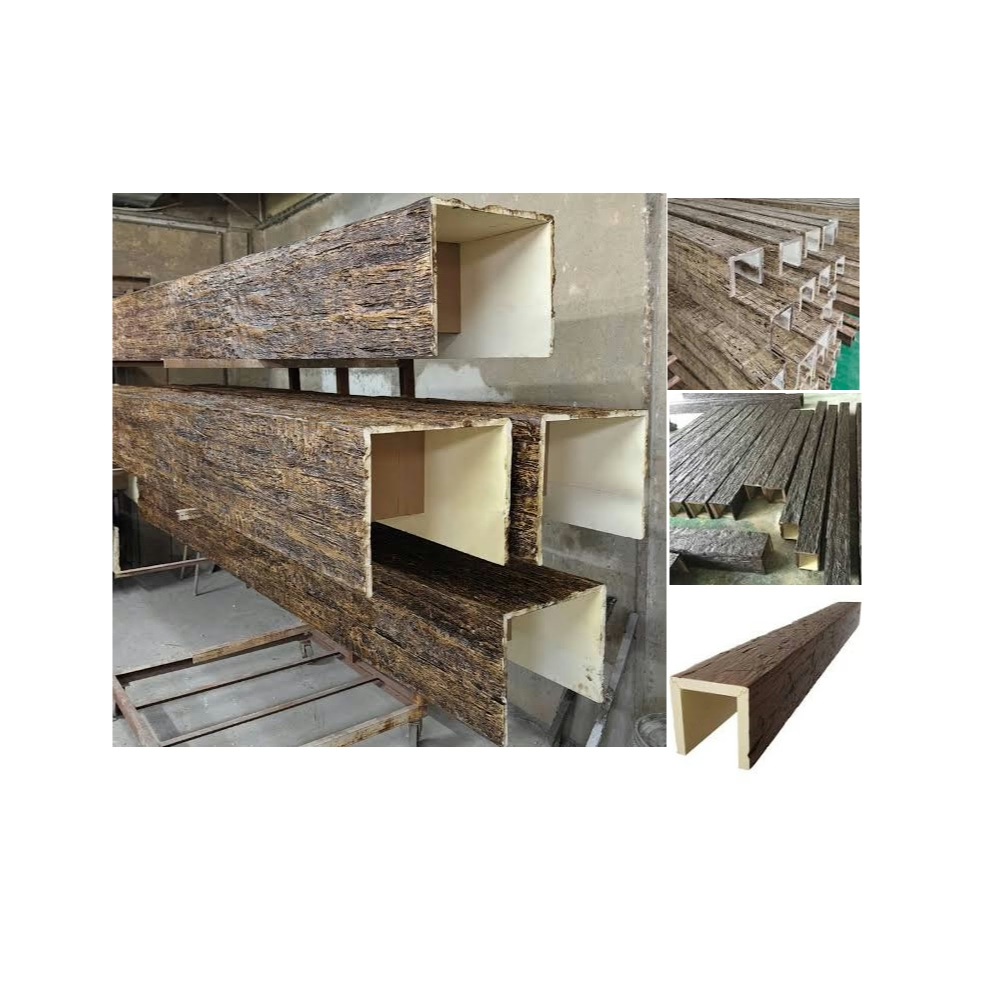
Responsible manufacturers control emissions through multiple strategies that address both the polyurethane formulation and the finishing system. The raw materials selected for foam production determine baseline emission characteristics, with some chemical precursors contributing fewer volatiles than others. Manufacturers committed to low emissions specify raw materials that support their certification objectives.
The blowing agents used to create cellular foam structure have evolved significantly over the past decades. Older formulations used blowing agents that contributed to ozone depletion and created indoor air quality concerns. Modern water-blown foam systems produce polyurethane with dramatically reduced emissions profiles while maintaining the performance characteristics that beam applications require.
Surface finishing systems represent the most significant remaining emission source in quality polyurethane beams. Factory-applied finishes must provide durability and appearance without releasing problematic volatiles during curing and throughout the product's service life. Water-based finishing systems have largely replaced solvent-based alternatives, with emission profiles measured in micrograms per square meter per hour rather than the higher values that solvents produce.
Applications Requiring IAQ Certification
Healthcare facilities represent the most demanding application category for IAQ-certified materials. Patients, particularly those with respiratory conditions, immune deficiencies, or chemical sensitivities, face elevated risks from interior air contamination. The extensive literature documenting relationships between indoor air quality and healthcare outcomes supports aggressive material selection standards in these environments.
Educational facilities serve populations particularly vulnerable to air quality impacts. Children spend substantial portions of their days in schools where air quality affects concentration, learning, and attendance. Research has documented improved academic performance in classrooms with low-emitting materials, creating incentives for schools to specify IAQ-certified products throughout construction and renovation projects.
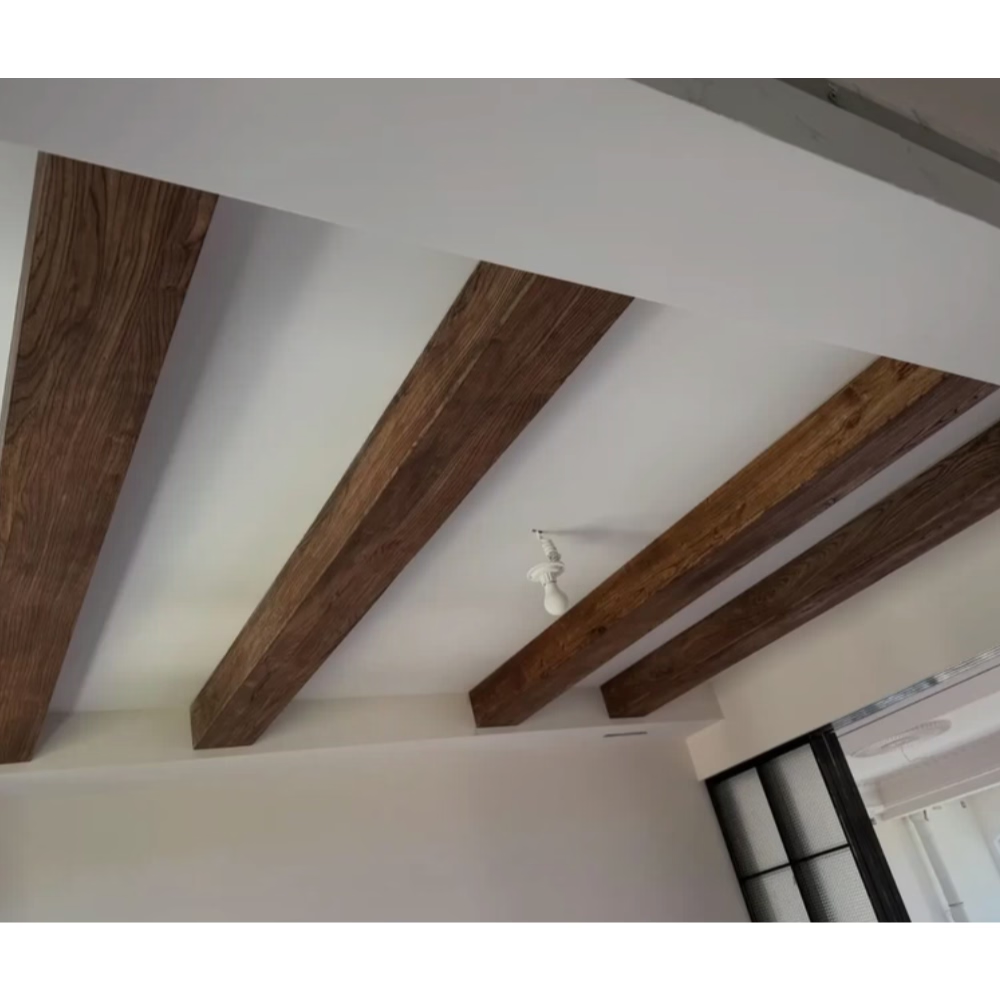
Residential applications for chemically sensitive occupants drive demand for the most stringent certification levels. Homeowners with allergies, asthma, chemical sensitivities, or autoimmune conditions often struggle with interior environments that aggravate their conditions. Specifying IAQ-certified beams throughout such homes removes one category of potential triggers while providing the aesthetic benefits that these discriminating clients appreciate.
Documentation and Specification Requirements
Proper specification of IAQ-certified beams requires attention to documentation that confirms certification validity. Manufacturers should provide current certificates demonstrating that specific products meet specific standards, with certification documentation updated regularly as standards evolve. Outdated certifications may no longer represent current manufacturing practices.
Third-party verification provides confidence that manufacturer claims reflect actual product performance. Independent testing organizations maintain databases of certified products that specifiers can consult to verify claims. Working with manufacturers who participate in these programs simplifies the verification process and ensures ongoing accountability.
Building certification programs including LEED, WELL Building Standard, and Green Globes all award credits for IAQ performance that IAQ-certified materials help achieve. Understanding which certifications apply to specific projects allows designers to specify beams that contribute to overall building certification objectives.
Health Benefits Beyond Certification
The health benefits of low-emitting materials extend beyond avoiding specific health risks. Research has documented relationships between indoor air quality and cognitive function, with occupants in low-emission environments demonstrating improved decision-making, problem-solving, and productivity. These benefits, while difficult to quantify precisely, provide meaningful value that supports investment in quality materials.
Symptom reduction in buildings with improved air quality includes fewer complaints of headaches, eye irritation, throat discomfort, and fatigue that building occupants often attribute to "stuffy air" or "bad air" without identifying specific causes. These building-related symptoms affect worker productivity and attendance in ways that have measurable economic impacts.
Long-term health outcomes may benefit from reduced lifetime exposure to problematic compounds. While individual exposures at typical indoor concentrations may present minimal risk, the accumulated exposure over decades of interior occupancy suggests benefits from minimizing emissions throughout the built environment. This long-term perspective supports aggressive material selection standards.
Maintenance and Long-Term Emissions
The initial emissions from newly installed materials typically exceed long-term emissions as the product cures and stabilizes. This phenomenon affects when spaces can be occupied after installation, with some materials requiring days or weeks of ventilation before reaching acceptable emission levels. Quality polyurethane beams achieve stable low-emission profiles quickly, often within hours of installation.
Aging and degradation can affect emissions profiles for some materials. Surface contamination, finish degradation, or material breakdown may increase emission rates over time. Polyurethane's inherent stability provides confidence that initial emission performance will persist throughout the product's service life without the degradation concerns that affect some other materials.
Cleaning and maintenance products used on beam surfaces may introduce temporary emission sources that should be considered in overall indoor air quality management. Specifying cleaning products with low emission profiles maintains the air quality benefits that the original material selection intended. Water-based cleaning products generally provide better indoor air quality outcomes than solvent-based alternatives.
Technical References
ASTM standards cited in every specification
Test Data
Lab results from internal testing program
Updated 2026
Reviewed against current product specs


