
Material specification involves matching product characteristics to application requirements in ways that optimize value. Inappropriate over-specification wastes money on capabilities that applications cannot use, while under-specification creates performance problems that undermine the design investment. For interior ceiling beam applications, indoor-only grade products offer meaningful cost savings compared to exterior-grade alternatives while providing exactly the performance characteristics that protected interior environments require.
The distinction between indoor-only and exterior-grade materials lies in the additional formulation complexity required to withstand environmental stresses that interior applications never experience. UV radiation, precipitation, freeze-thaw cycling, and biological exposure create demands that protected interior applications simply do not impose. Products designed without these demands can focus formulation complexity on interior-relevant performance, creating optimized solutions for their intended applications.
Factory finishing represents a significant value component for indoor-only grade products. The controlled manufacturing environment enables finish application under optimal conditions, producing consistent results that on-site finishing cannot match. This manufacturing efficiency translates to cost advantages that benefit buyers seeking quality without premium pricing.
Understanding Indoor-Only Grade Specifications
Indoor-only grade designation indicates products optimized for protected interior environments without the UV stabilization, moisture barrier properties, or biological resistance that exterior exposure requires. These products perform excellently in their intended applications while avoiding the formulation costs that exterior-grade construction demands.
The light exposure interior applications experience differs significantly from exterior conditions. Windows filter substantial UV radiation, and artificial lighting generates essentially no UV. The UV-stable formulations that exterior products require add cost without meaningful benefit in interior applications. Indoor-only grade products can achieve excellent appearance without these UV considerations.
Moisture exposure in interiors, while present, rarely approaches the saturation levels that exterior applications experience. Interior humidity fluctuations create conditions different from precipitation exposure, enabling formulation approaches that would fail outdoors but perform excellently indoors. This optimization creates cost opportunities that interior-focused products capture.
Finish Quality and Appearance
Factory-applied finishes for indoor-only grade beams provide appearance quality that rivals premium products. Modern finishing technologies apply multiple coats with controlled thickness and consistent cure, producing surfaces that meet exacting appearance standards. The controlled environment eliminates the variability that environmental conditions introduce into on-site finishing.
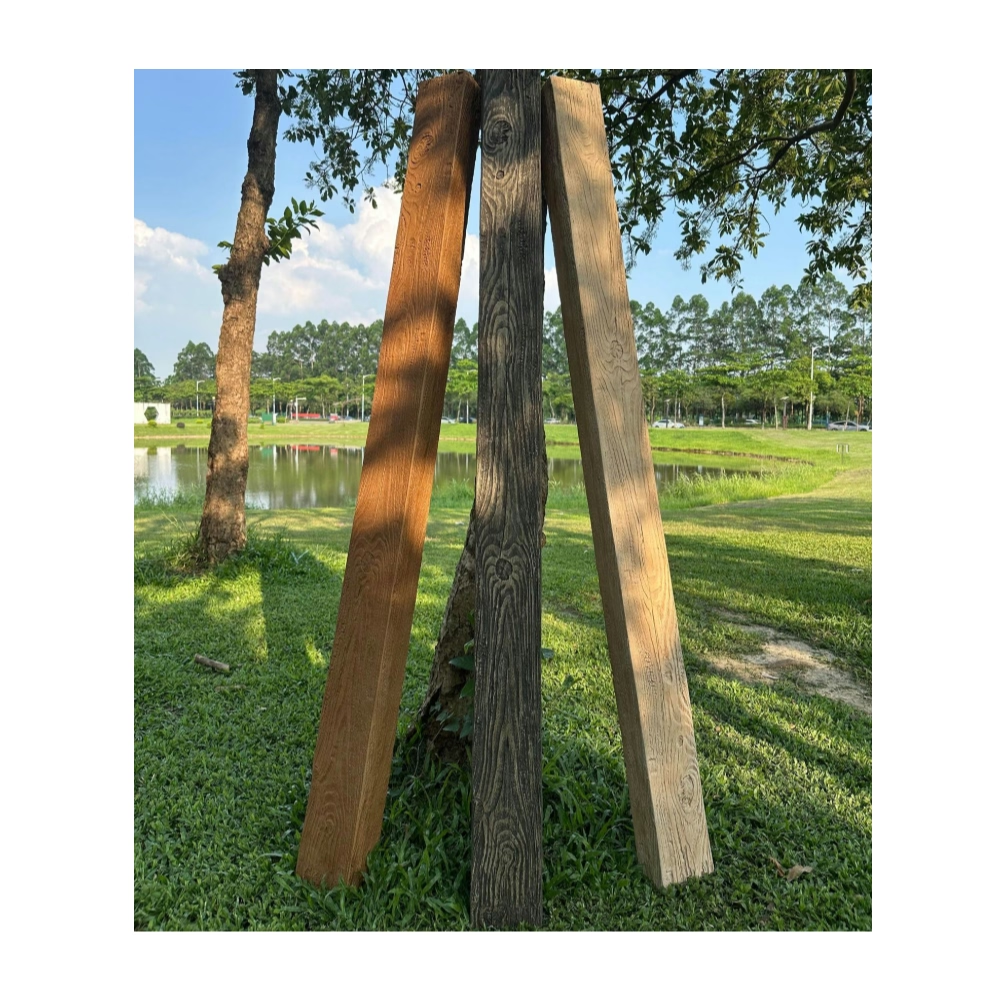
Surface texture options for indoor-only grade products span the full range of wood appearances from smooth contemporary finishes to deeply textured rustic profiles. These textures are molded or embossed into the polyurethane during production, ensuring consistency across all beams in an installation. The texture authenticity achieves levels that satisfy even discriminating design professionals.
Color consistency across beam surfaces and between multiple beams ensures uniform appearance throughout installations. Factory finishing with automated color matching produces results that hand-finishing cannot consistently achieve. This consistency becomes particularly valuable in large installations where cumulative variation might otherwise become apparent.
Cost-Benefit Positioning
Indoor-only grade products provide cost advantages that make quality beam aesthetics accessible to projects with tighter budgets. The formulation savings from omitting exterior-grade UV inhibitors, moisture barriers, and biological resistance compounds flow through to purchase prices. These savings can be substantial—often representing twenty to thirty percent of comparable exterior-grade product costs.
The value proposition extends beyond initial purchase to include installation and maintenance considerations. Indoor-only grade products install identically to premium alternatives, providing the same aesthetic benefits at lower cost. The simplified maintenance appropriate to indoor applications keeps lifecycle costs low while appearance quality remains high.
Project budget allocation benefits from indoor-only grade specification when applications genuinely suit these products. Budget dollars saved on beam materials can support elevated specifications elsewhere where project priorities concentrate value. This strategic allocation often produces better overall project outcomes than spreading moderate specifications across all materials.
Appropriate Application Selection
Standard residential and commercial interiors represent the primary application category for indoor-only grade beams. These spaces experience controlled temperatures, moderate humidity, and light exposure filtered through windows. Indoor-only grade products provide more than adequate performance for these conditions while avoiding the cost premium that exterior-grade materials would impose.
Climate-controlled commercial spaces including offices, retail environments, and hospitality venues suit indoor-only grade specifications perfectly. These environments maintain consistent conditions that eliminate the environmental stresses that justify exterior-grade construction. The cost savings from appropriate specification benefit project economics without creating performance risks.
The areas where indoor-only grade products should not be specified include spaces with elevated UV exposure, high humidity conditions, or proximity to moisture sources. These demanding conditions require upgraded specifications that address the specific challenges present. Identifying these conditions during design enables appropriate specification before construction begins.
Quality Indicators for Indoor-Only Products
Surface finish adhesion testing indicates how well factory finishes will perform through installation and service. Quality manufacturers test adhesion using standardized methods that verify coating bond strength. Poor adhesion would result in finish chipping or peeling during handling, installation, or subsequent service.
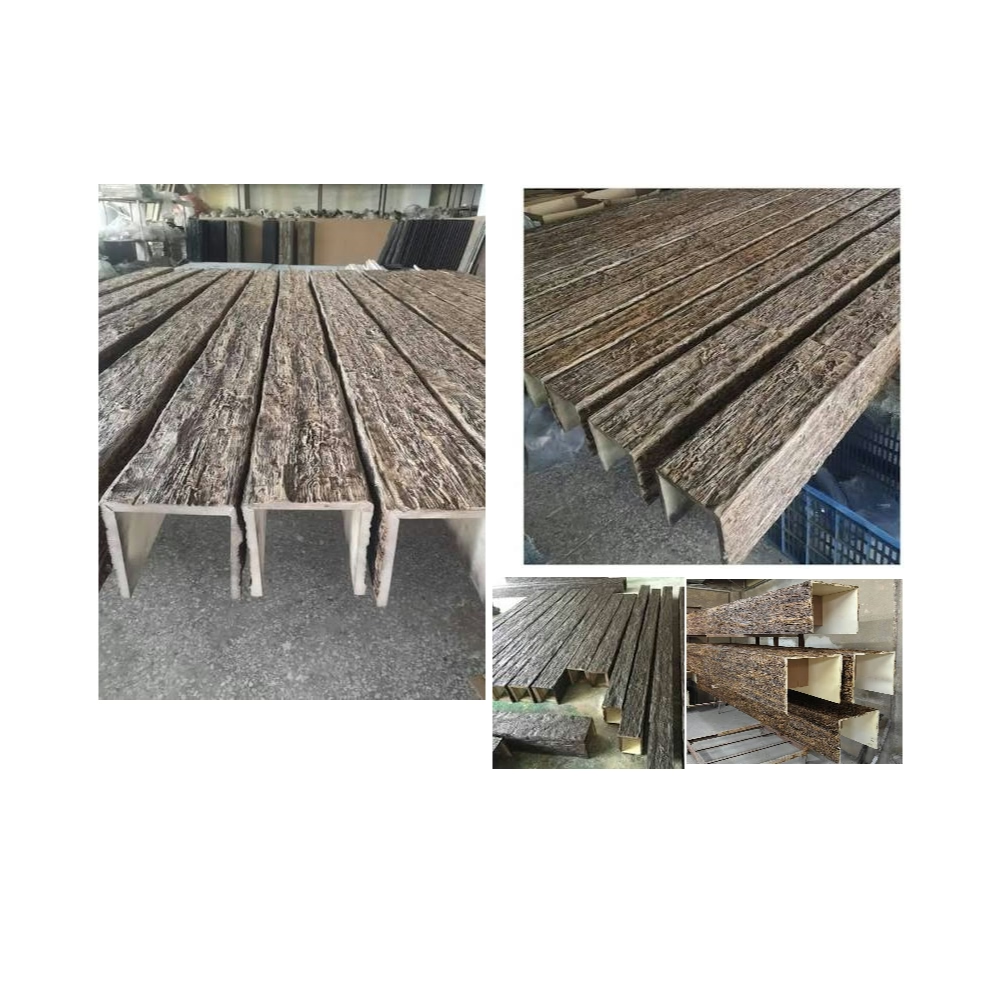
Texture depth and consistency across beam surfaces demonstrates manufacturing quality. Variations in texture depth, incomplete texturing in corners, or surface blemishes indicate quality control problems that will be visible in completed installations. Careful inspection of sample products reveals these potential issues before purchase commitment.
Dimensional consistency ensures that beams will align properly during installation. Variations in cross-sectional dimensions, length inconsistencies, or out-of-square ends create installation challenges and may produce visible gaps or misalignments in completed work. Quality manufacturers maintain tight tolerances that simplify installation and ensure professional results.
Installation Considerations
Installation techniques for indoor-only grade beams do not differ from premium product methods. The same fastening approaches, adhesive systems, and finishing techniques apply regardless of product grade. This equivalence means that the cost advantages of indoor-only grade products do not come with installation complexity tradeoffs.
Handling care during installation protects beam surfaces from damage that would compromise appearance. While indoor-only grade products resist normal handling effects, the same care that applies to premium products remains appropriate. Damaged surfaces may be more difficult to repair with matching finishes if the specific product line's touch-up materials are not available.
Joint treatment between beams follows standard practices regardless of product grade. The same caulking compounds, backer materials, and application techniques ensure professional results. Indoor-only grade products accept standard finishing materials without special preparation.
Design Applications and Limitations
Great room and living room applications benefit from the aesthetic warmth that indoor-only grade beams provide. These spaces typically experience consistent interior conditions that indoor-only grade products handle without concern. The cost savings from appropriate specification can be allocated to other living room features that homeowners value.
Kitchen and bathroom applications require evaluation of specific humidity conditions. Standard kitchens with working ventilation and typical use patterns suit indoor-only grade products. However, spaces with consistently elevated humidity or limited ventilation may require upgraded specifications. This evaluation should occur during design rather than after installation.
Basement applications depend heavily on whether the space is conditioned and humidity-controlled. Finished basements with HVAC connections to the main system experience typical interior conditions suitable for indoor-only grade products. Unconditioned basements with elevated humidity may require upgraded specifications.
Making the Grade Decision
The decision between indoor-only grade and exterior-grade products should follow from honest assessment of actual application conditions. Projects that genuinely experience only protected interior conditions benefit from appropriate specification of indoor-only grade products. The cost savings are real and can support other project priorities.
Communication among design professionals, contractors, and building owners ensures that specification decisions reflect shared understanding of conditions and priorities. Documented specification rationale helps prevent substitution of inappropriate products when cost pressures encourage specification compromise.
Quality assurance through proper supplier selection remains important regardless of product grade. Reputable manufacturers produce quality products whether labeled as indoor-only or exterior grade. The same due diligence applies to supplier selection in both cases.
The value of appropriate specification compounds over building life. Buildings designed with thoughtful material selections perform better, last longer, and maintain their appearance more economically than those where specification decisions follow habit or inertia rather than reasoned analysis.
Technical References
ASTM standards cited in every specification
Test Data
Lab results from internal testing program
Updated 2026
Reviewed against current product specs


