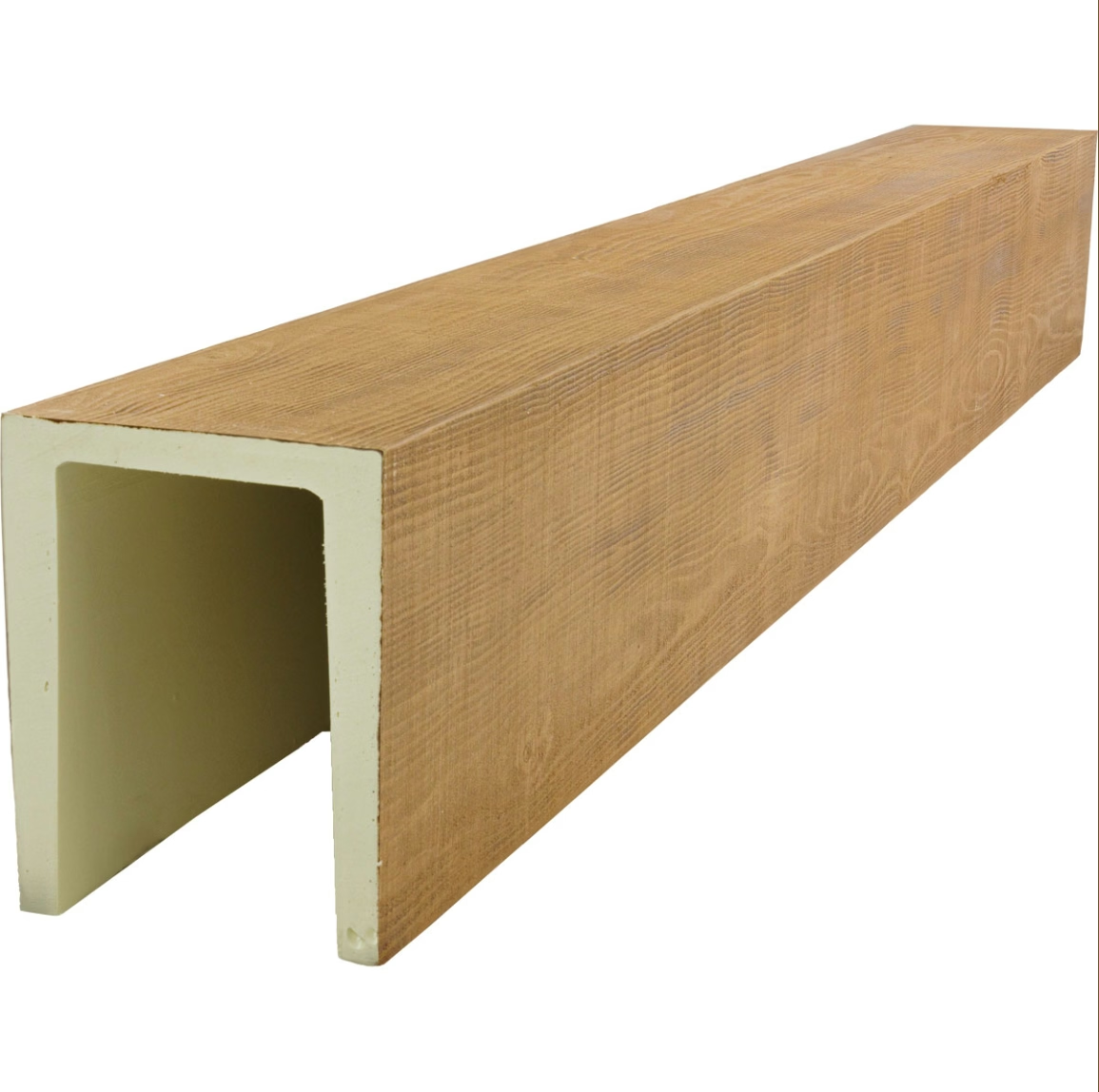
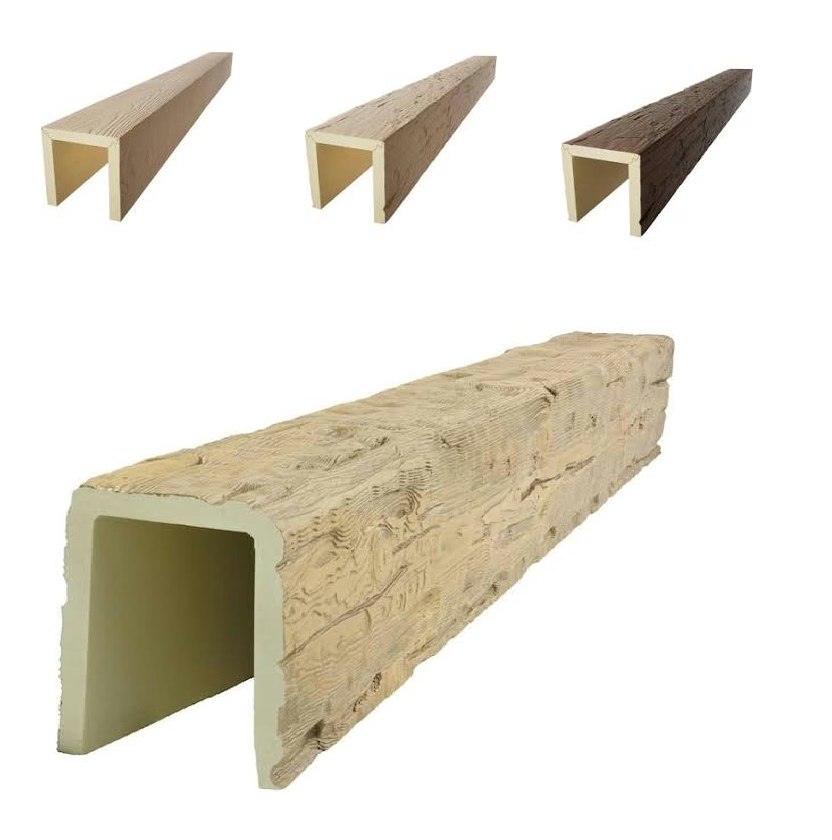
The transition from artisanal craft production to industrial manufacturing transformed countless product categories over the past two centuries, and ceiling beams are no exception. Where once every timber beam emerged from the hands of individual craftsmen whose skill and attention varied from piece to piece, modern manufacturing enables production of beams with consistency that handcraft cannot approach. This transformation brings both advantages and tradeoffs that informed buyers should understand when specifying beams for their projects.
Industrial automated molding line production represents the current state of the art in polyurethane beam manufacturing. These production systems combine sophisticated chemical processing, precision mechanical molding, automated finishing, and comprehensive quality control into integrated production flows that operate continuously. The result is products of consistent quality regardless of production volume, enabling large commercial projects to receive the same quality as small residential orders.
Understanding automated manufacturing capabilities helps architects, contractors, and project specifiers understand what to expect from quality polyurethane beam products. The precision, consistency, and quality control that automation enables translate directly to installation efficiency and finished project quality that distinguishes industrial production from artisanal alternatives.
Automated Molding Technology
The molding process for polyurethane beams begins with precision-engineered molds that define the beam profile with exactness measured in thousandths of an inch. These molds, typically machined from aluminum or steel using CNC equipment, capture the intricate surface textures that create authentic wood grain appearance. The mold surface quality determines the surface quality of every beam produced from it.
The chemical reaction that creates polyurethane foam requires precise control of multiple variables including temperature, pressure, mixing ratios, and reaction timing. Automated production lines monitor these variables continuously, adjusting process parameters in real time to maintain consistent product characteristics despite variations in raw material properties or ambient conditions. This automation enables consistency that operator-dependent manual production cannot match.
Shot timing and placement affect how foam fills mold cavities and creates the cellular structure that determines beam properties. Automated injection systems provide precise control over these parameters, ensuring complete mold fill without voids or density variations. The consistency of automated injection produces beams with uniform properties throughout their cross-section.
Quality Control Systems
Statistical process control applies continuous monitoring to production parameters, identifying variation before it produces defective products. Modern production lines generate data on every significant process variable, enabling trend analysis that predicts emerging problems before they affect product quality. This proactive quality approach differs fundamentally from inspection-based quality control that only detects problems after they occur.
Dimensional verification systems check beam measurements automatically as products exit the production line. Laser-based measurement systems verify cross-sectional dimensions, length, and profile accuracy against specification tolerances. Any beams falling outside tolerances are diverted automatically, preventing out-of-specification products from reaching customers.
Surface quality inspection combines automated visual systems with statistical sampling for human verification. Cameras and optical sensors examine beam surfaces for defects including blemishes, color variations, and texture inconsistencies. The automated systems flag potential issues for human review while passing acceptable products without interruption.
Production Capacity and Lead Time Advantages
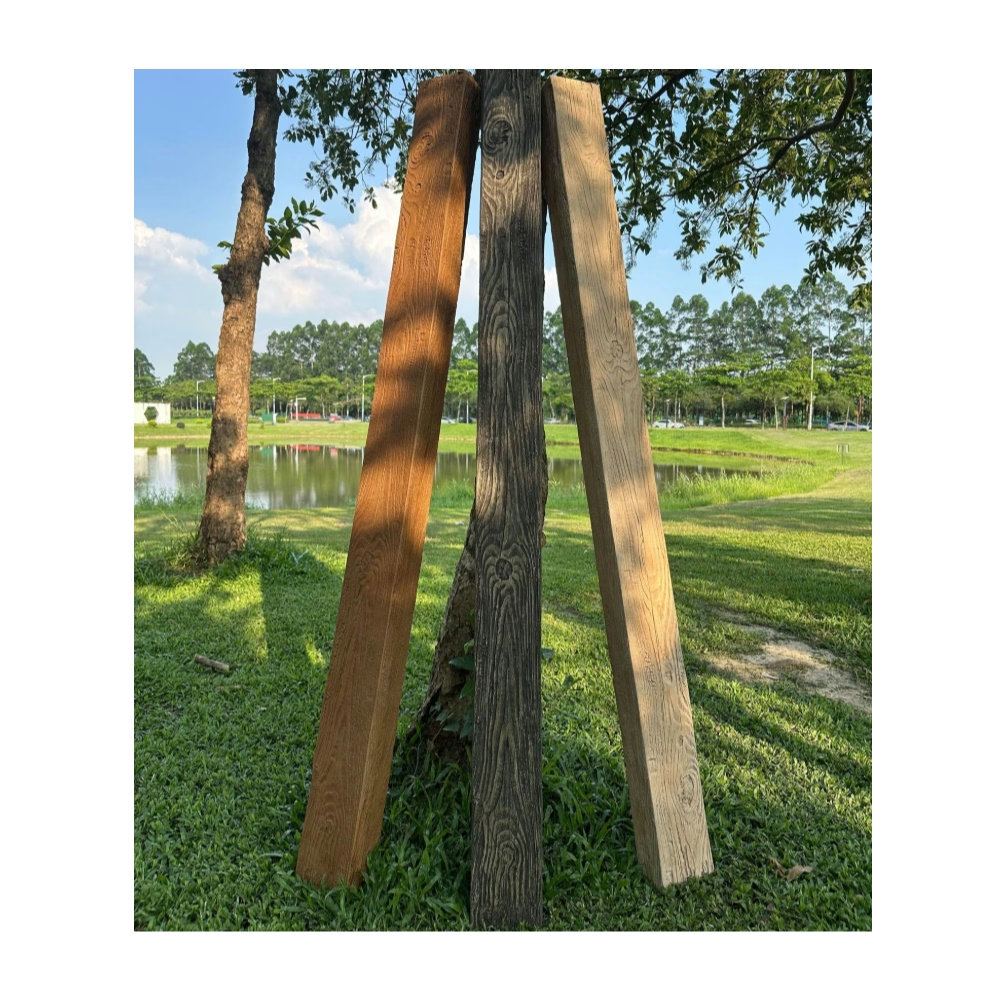
Industrial automated production lines operate continuously, producing beams twenty-four hours per day with minimal labor requirements beyond equipment monitoring and maintenance. This continuous operation enables production volumes that hand-craft methods cannot approach, supporting large commercial projects with thousands of beams while maintaining consistent quality throughout.
Lead time predictability improves significantly with automated production compared to craft methods. The consistent cycle times that automation provides enable accurate scheduling that accounts for production, finishing, and shipping. Project planners can rely on stated delivery dates with confidence that automated systems will meet commitments without the variability that human factors introduce.
Capacity flexibility allows production lines to respond to demand variations without sacrificing quality. When order volumes increase, automated systems can extend operating hours or increase batch sizes within equipment capabilities. When volumes decrease, the same equipment produces smaller runs economically. This flexibility enables efficient production across the full range of project sizes.
Surface Texture Reproduction
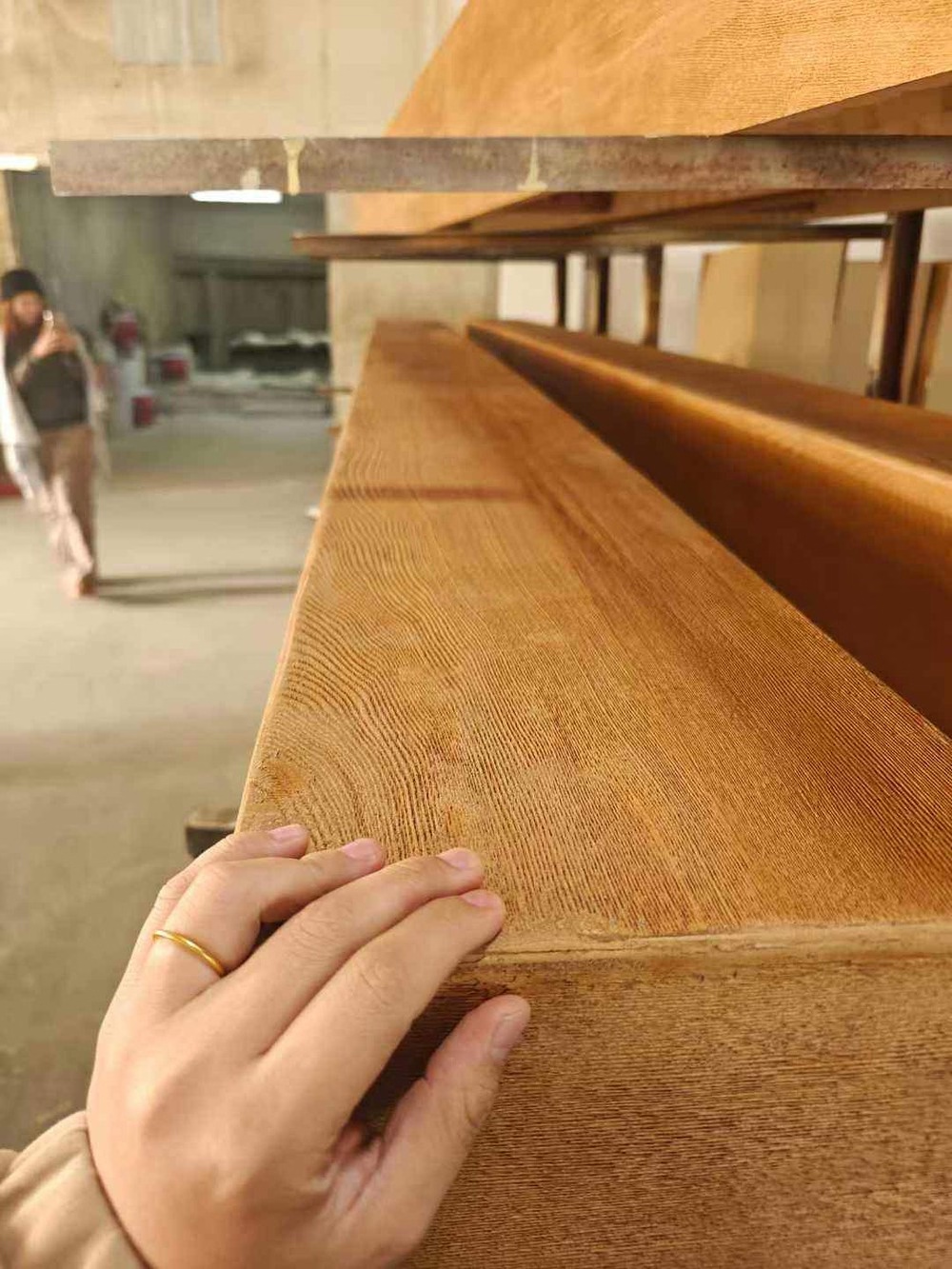
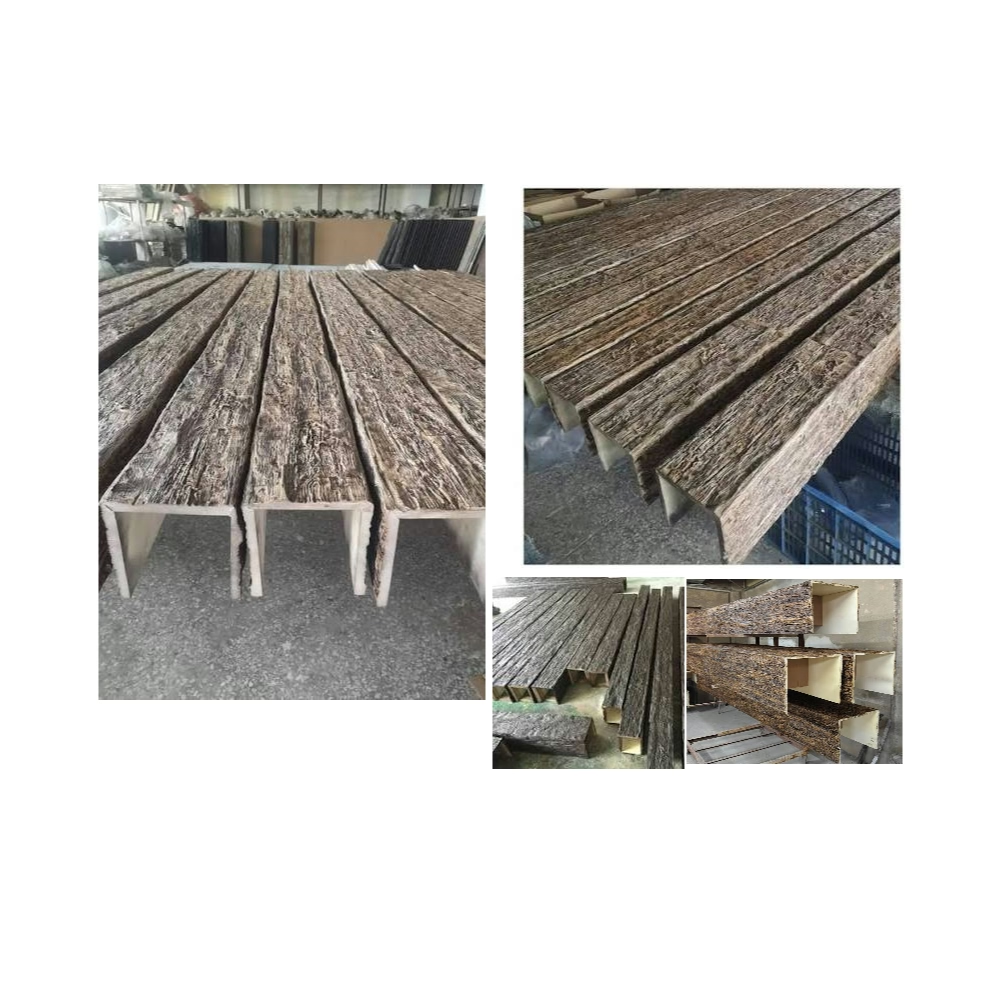
The surface textures that create authentic wood appearance emerge from precision-machined mold surfaces that capture every detail of original wood specimens. Modern mold-making combines digital scanning of wood surfaces with CNC machining that reproduces those surfaces with remarkable fidelity. The resulting mold textures interact with light identically to the natural wood surfaces they replicate.
Texture depth affects how beams appear under different lighting conditions. Shallow textures that look good under direct lighting may appear flat under indirect illumination. Deeper textures that show well in varied lighting may appear overdone up close. The best automated production achieves texture depths appropriate for typical viewing distances without sacrificing close-up authenticity.
Consistency of texture across beam surfaces and between beams ensures uniform appearance throughout installations. Automated texture application produces the same results on every beam, eliminating the variation that hand-applied textures would create. This consistency matters particularly in large installations where cumulative variation might otherwise become apparent.
Finishing Systems and Color Consistency
Automated finishing systems apply coatings with precision that spray-and-wipe methods cannot match. Programmable application equipment delivers consistent film thickness across all surfaces, producing even coverage without runs, sags, or thin spots. Multiple coat applications build color depth while maintaining exact control over final appearance.
Color matching between production batches enables orders to be placed over extended periods without appearance variation. Automated color mixing systems maintain precise pigment ratios that reproduce target colors consistently. When production resumes after maintenance shutdowns or material changes, the same color standards apply automatically.
Drying and curing systems provide controlled conditions for finish hardening. Temperature and humidity within curing chambers affect final finish properties including hardness, adhesion, and color stability. Automated curing systems maintain optimal conditions throughout the curing process, producing finishes that meet specification consistently.
Cost Structure and Value Creation
The capital investment required for automated production lines is substantial, but the efficiency gains over production volume create economic advantages that benefit customers. Lower per-unit labor costs, reduced waste from improved process control, and consistent quality that prevents costly field problems all contribute to favorable pricing for customers.
Economies of scale apply to automated production differently than to craft methods. While craft production costs increase roughly linearly with volume, automated production costs per unit decrease as volume increases up to equipment capacity limits. Large projects benefit disproportionately from these scale economies, receiving quality that improves with volume rather than degrading as rushed production introduces errors.
The total cost of ownership for quality automated production considers not only purchase price but also installation efficiency, field problems avoided, and long-term performance that eliminates maintenance and replacement costs. When these factors are included, automated production often proves more economical than lower-priced alternatives despite higher initial costs.
Sustainability Advantages
Material efficiency in automated production reduces waste from overproduction and handling damage. Computer-controlled mixing systems proportion raw materials precisely, minimizing excess that craft methods would generate. The reduced waste from improved accuracy contributes to favorable environmental profiles for automated production.
Energy efficiency improves with automation as production lines operate continuously at optimal efficiency rather than cycling through startup and shutdown phases. Modern equipment incorporates energy recovery systems that capture waste heat and process energy for productive reuse. These efficiency improvements reduce the environmental impact per unit of production.
Consistent quality extends product service life, reducing replacement frequency and the environmental burden of manufacturing new products. The durability that automation enables means fewer beams entering waste streams over building lifetimes, contributing to sustainability outcomes that specification decisions should consider.
Working with Industrial Manufacturers
Project planning should begin early when specifying industrial-produced beams to take full advantage of production capabilities. Lead time requirements, finishing options, and custom profile capabilities all benefit from early manufacturer consultation. The engineering support that industrial manufacturers provide helps ensure successful project outcomes.
Sample verification before production commitment confirms that specified products will meet expectations. Industrial manufacturers can produce samples from production tooling that represent actual product quality, enabling informed decisions before full production begins. This sample verification prevents costly errors that would be difficult to address after production starts.
Technical documentation from industrial manufacturers includes specifications, test data, and installation guidelines that support proper specification and installation. Professional manufacturers provide comprehensive documentation that enables confident specification and efficient installation.
Technical References
ASTM standards cited in every specification
Test Data
Lab results from internal testing program
Updated 2026
Reviewed against current product specs