The morning regulatory meeting threatened to derail an eighteen-month renovation project. The building inspector had flagged the decorative ceiling beams specified throughout the hotel lobby—beautiful hand-hewn polyurethane beams that would have transformed the space—citing concerns about fire performance in an egress corridor. The project team scrambled to identify compliant alternatives while preserving the intended aesthetic.
This scenario plays out across construction projects where decorative elements intersect with stringent safety requirements. Understanding safety certifications for polyurethane faux wood beams has become essential knowledge for architects, designers, and building owners navigating complex regulatory landscapes. The good news: many manufacturers now produce beams that meet or exceed the fire performance standards required for most commercial applications.
Understanding Fire Ratings and Testing Standards
Fire ratings for building materials derive from standardized testing protocols that evaluate material performance under specific fire exposure conditions. In North America, the primary testing standards include ASTM E84 (Standard Method of Test for Surface Burning Characteristics of Building Materials) and ASTM E136 (Standard Method of Test for Behavior of Materials in a Vertical Tube Furnace at 750°C). These tests generate classification metrics that building codes reference when specifying acceptable materials.
The ASTM E84 test, commonly known as the Steiner tunnel test, measures flame spread index and smoke developed index. Materials receive classification based on these measurements: Class A materials exhibit flame spread indexes below 25 and smoke developed indexes below 450, making them suitable for most commercial applications. Class B and Class C ratings indicate progressively higher flame spread characteristics, with usage restrictions in many occupancy types.
Quality polyurethane faux wood beam manufacturers subject their products to independent testing by accredited laboratories. The resulting test reports document performance across multiple metrics, including flame spread, smoke development, fuel contribution, and flashover potential. These reports enable code officials to evaluate compliance with specific project requirements and provide architects with the documentation necessary for code compliance packages.
Building Code Requirements by Occupancy Type
Building codes categorize occupancy types and assign fire performance requirements accordingly. Assembly occupancies—restaurants, theaters, places of worship, and similar gathering spaces—typically impose the most stringent requirements due to occupant populations that may be unfamiliar with building layouts and face challenges evacuating during emergencies.
Educational occupancies, including schools and universities, require materials that minimize flame spread along ceiling surfaces where fires can spread rapidly if ignited. Hotels and apartment buildings classify as residential occupancies, with requirements varying based on height and overall fire protection systems. Understanding the specific occupancy classification for your project determines which material fire ratings apply.
The International Building Code (IBC) and NFPA 101 Life Safety Code establish baseline requirements that state and local jurisdictions adopt, modify, or supplement. Some jurisdictions impose requirements exceeding model code baselines, particularly in high-rise construction or buildings with mixed occupancy types. Project specifications should always reference applicable local codes rather than assuming model code requirements apply universally.
For faux wood beams, the critical question involves whether the product qualifies as a finish material (subject to flame spread limitations) or a trim material (often subject to less stringent requirements). Building officials interpret these distinctions based on product geometry, installation method, and percentage of ceiling coverage. Clarifying the applicable classification early in design prevents costly substitutions during construction.

UL Listings and Third-Party Certification
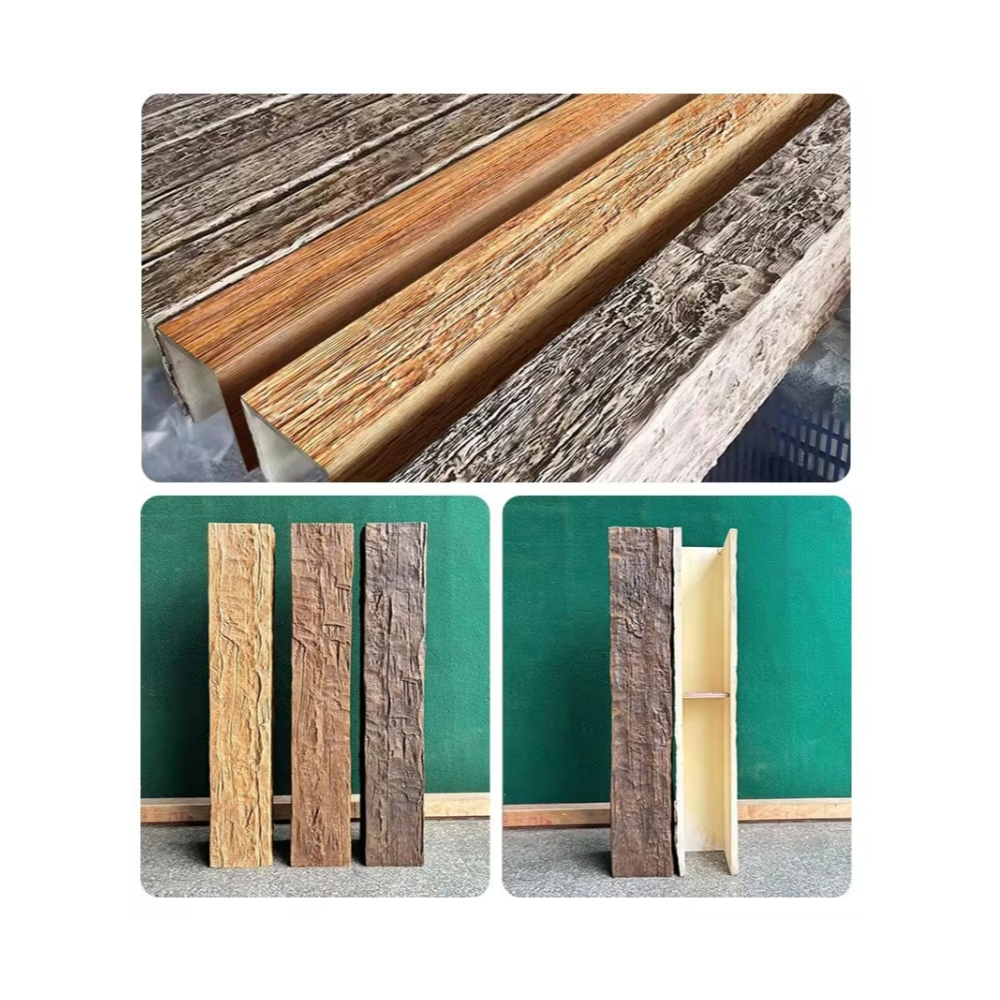
Underwriters Laboratories listings represent the gold standard for product safety certification in North American markets. UL-listed products have undergone evaluation by UL engineers, with ongoing factory inspection programs verifying consistent manufacturing quality. For polyurethane beams, UL listings confirm that products meet published safety standards and perform as specified in actual fire conditions.
The UL classification program offers several relevant categories for beam products. UL 723 covers surface burning characteristics, while UL 1715 addresses fire test response characteristics of interior finish materials. Products bearing UL marks have demonstrated compliance with these standards through testing and ongoing verification.
Third-party certification bodies beyond UL—including Intertek (ETL mark), FM Approvals, and QAI—provide equivalent verification services. These organizations operate similarly to UL, conducting testing and factory inspections that enable their marks to satisfy code requirements for third-party certification. Architects specifying certified products should verify which certification marks specific jurisdictions accept, as acceptance criteria vary.
The certification documentation provided by manufacturers should include test reports, installation requirements affecting fire performance, and any limitations on usage. Products achieving excellent flame spread ratings in laboratory testing might perform differently if installed in ways that compromise their fire characteristics—improper backing materials or concealed spaces that allow fire to bypass the material surface, for instance.
Special Applications Requiring Enhanced Ratings
Certain applications demand fire performance exceeding standard commercial requirements. High-rise buildings face extended evacuation times and fire department access challenges, prompting code officials to impose stricter material requirements for upper floors. Atriums and open floor plans create conditions where ceiling materials must perform under fire conditions that differ from enclosed room scenarios.
Places of assembly accommodating large populations—stadiums, convention centers, concert venues—often require fire-rated materials throughout public spaces regardless of ceiling height. The psychological impact of fire on crowd behavior in these environments justifies conservative material selections that minimize both flame spread and smoke production.
Healthcare facilities present unique requirements due to occupant vulnerability and the presence of medical equipment sensitive to smoke and combustion byproducts. Many jurisdictions require low-smoke formulations in healthcare occupancies, with smoke developed indexes below thresholds that apply to standard commercial installations. Manufacturers producing beams for healthcare applications should be prepared to document low-smoke formulations.
Theaters and performance venues often incorporate rigging systems for lighting and scenery that create concealed spaces above ceilings. Building codes may require fire-rated materials in these configurations to prevent fire from spreading through building cavities, with requirements varying based on whether sprinklers protect the concealed space.
Installation Factors Affecting Fire Performance
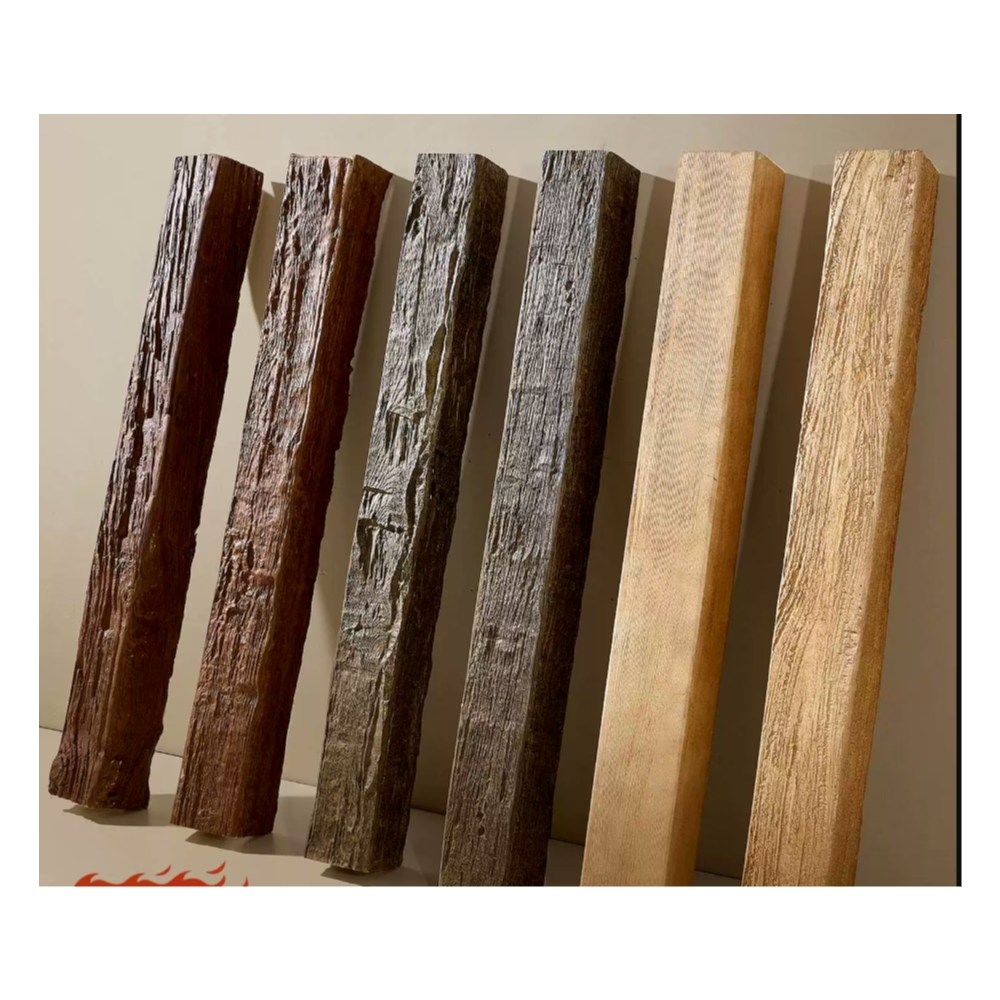
The fire performance of faux wood beams depends partly on how installers mount them in the field. Manufacturers provide installation guidelines that address factors affecting fire performance, including minimum clearances to other materials and requirements for backing materials that may influence overall system rating.
Adhesive selection matters significantly for fire-rated installations. Some adhesives support flame spread when ignited, potentially compromising the fire rating of an otherwise compliant beam system. Manufacturers typically specify low-VOC, fire-rated adhesive products compatible with their materials, and deviating from these specifications may void certification coverage.
Attachment hardware and mounting brackets must also meet fire performance requirements. Steel brackets generally perform well under fire exposure, but certain fasteners and hardware coatings might contribute to flame spread or produce toxic smoke when heated. Documentation should verify that mounting systems meet the same fire performance criteria as the beams themselves.
The interaction between beams and building insulation requires consideration in some jurisdictions. Where beams install over insulation materials, codes may require insulation products meeting specific fire ratings, or may limit insulation types permitted in concealed ceiling spaces. Coordinating between beam specifications and insulation requirements early in design prevents coordination conflicts during construction.

International Standards and Global Markets
Projects outside North American markets face different regulatory frameworks and certification requirements. The European Union applies reaction-to-fire classifications under EN 13501-1, with ratings ranging from A1 (non-combustible) through F (easily flammable). Polyurethane faux beams typically achieve ratings in the B to D range depending on formulation and density.
UK, Australian, and Asian markets maintain their own certification frameworks, though many reference ISO standards for testing methodology. International projects may require local testing or re-certification of products originally tested for North American compliance. Established manufacturers serving global markets typically maintain documentation for multiple certification systems.
The Middle East market applies requirements from multiple international standards, often requiring products to meet both European and American testing criteria. Projects in this region should verify specific documentation requirements during procurement, as approval timelines can extend significantly if documentation gaps emerge during regulatory review.
For export-oriented manufacturers, achieving multiple international certifications expands market access substantially. Products certified for European markets can often obtain approval in Australia, New Zealand, and Southeast Asian markets through mutual recognition agreements or straightforward re-testing protocols. Architects specifying products for international projects should verify that manufacturers hold relevant certifications for the target market.
Documenting Compliance for Plan Review
Building department plan review processes require comprehensive documentation demonstrating code compliance. For projects incorporating fire-rated faux wood beams, this documentation typically includes manufacturer certifications, independent test reports, installation instructions, and calculations addressing any special conditions affecting fire performance.
Organizing compliance documentation early in the design process streamlines plan review and reduces requests for additional information. Architects should request complete documentation packages from manufacturers, including primary test reports and any supplementary analysis addressing specific project conditions. Incomplete documentation is a common cause of review delays.
Product submittals to building departments should identify the specific products proposed, including manufacturer name, product line, and any applicable certification numbers. Generic descriptions like "polyurethane faux wood beams" are insufficient for code compliance verification; specific product identification enables code officials to locate test reports and verify certification status.
For complex projects or unfamiliar products, pre-application conferences with building officials can clarify documentation requirements before design investment reaches completion. Many jurisdictions offer this service, enabling project teams to understand local interpretation of code requirements before encountering issues during formal review.
Technical References
ASTM standards cited in every specification
Test Data
Lab results from internal testing program
Updated 2026
Reviewed against current product specs


