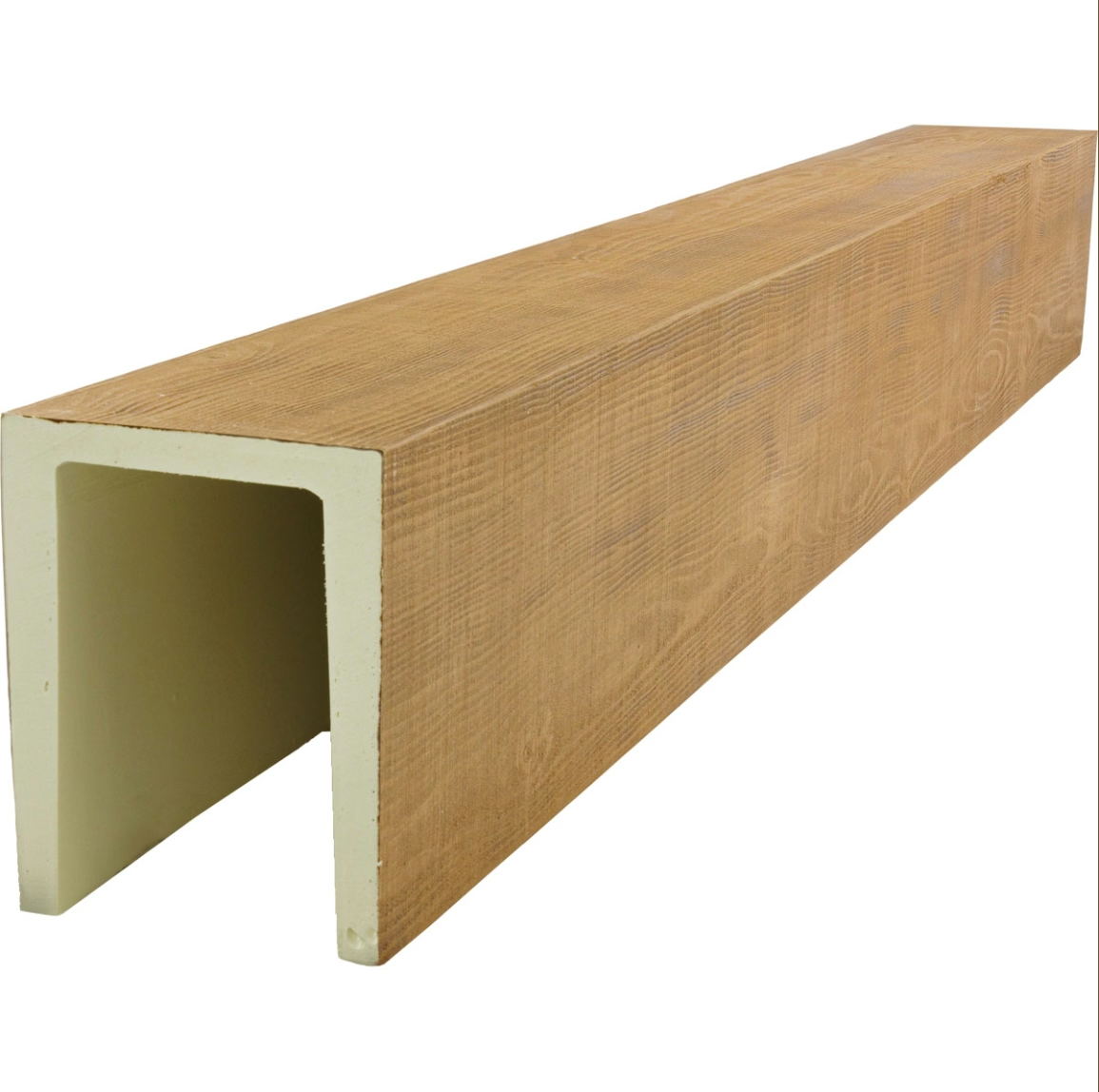
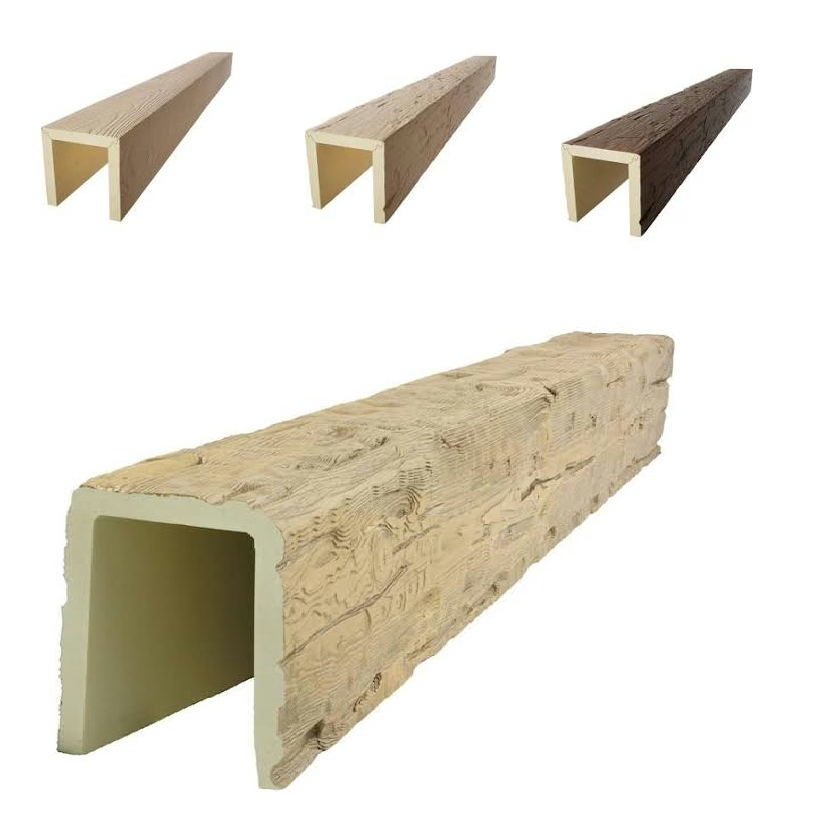
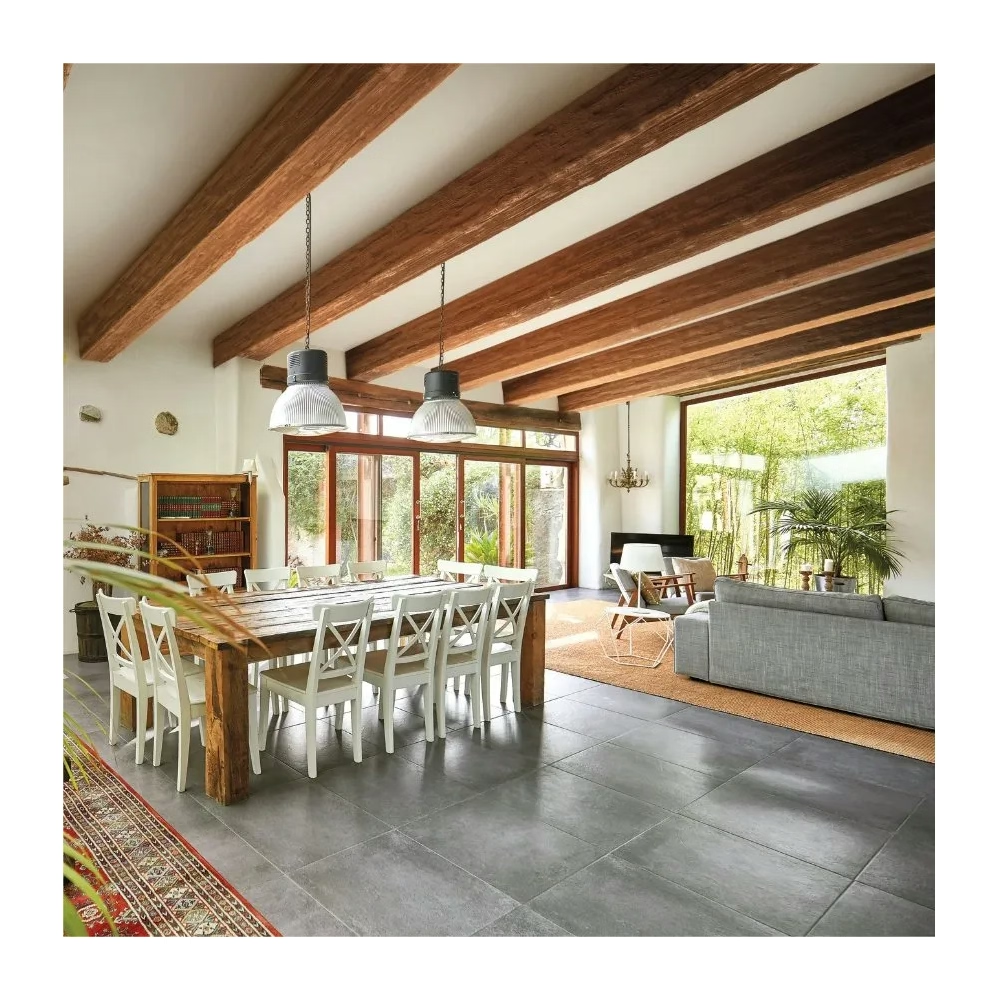
The construction and design industries have witnessed a significant shift in how architectural wood elements are specified and installed. What once required heavy timber, specialized structural engineering, and skilled craftsmen working with challenging materials has been transformed by polyurethane faux wood beams. These products deliver the visual warmth and character of natural timber while eliminating many of the practical limitations that have traditionally constrained exposed beam design.
For architects, builders, and homeowners evaluating options for ceiling treatments, wall features, and architectural accents, understanding the comprehensive advantages of polyurethane beams provides a foundation for better decision-making. The benefits span practical considerations like installation ease and maintenance requirements, performance factors including durability and environmental resistance, and aesthetic possibilities that simply cannot be achieved with natural timber.
Weight and Installation Advantages
The dramatic weight reduction achieved by polyurethane construction represents perhaps the most immediately apparent advantage over traditional timber. A polyurethane faux wood beam typically weighs one to three pounds per linear foot, compared to ten to twenty pounds or more for comparably sized natural timber. This difference transforms what was once a structural engineering consideration into a simple installation task.
Standard ceiling construction, including standard joists and standard attachment methods, can support polyurethane beams without reinforcement. The same cannot be said for genuine timber beams of equivalent visual impact. Natural timber of substantial appearance often requires engineered supports, additional ceiling framing, or structural calculations before installation can proceed. Polyurethane beams bypass these requirements entirely, opening architectural possibilities that would otherwise be impractical or impossible.
Installation time decreases correspondingly. A ceiling that might require a professional crew and specialized equipment for timber beam installation can often be completed by two people using basic tools when polyurethane beams are specified. Hidden mounting bracket systems, designed specifically for lightweight beams, simplify the process further by providing secure attachment without visible hardware. For DIY-inclined homeowners, this accessibility makes exposed beam ceilings a realistic weekend project rather than a professional installation.
The reduced weight also affects logistics throughout the project. Shipping costs decrease significantly when products weigh a fraction of their timber equivalents. Job site handling becomes manageable without equipment. Storage requirements simplify, and the risk of injury from handling heavy materials decreases substantially. These seemingly minor considerations accumulate into meaningful project cost savings and schedule advantages.

Durability and Longevity
Natural timber, despite its beauty and traditional appeal, carries inherent vulnerabilities that affect long-term performance. Moisture causes swelling, warping, and potential rot. Insects can compromise structural integrity. Temperature and humidity fluctuations create movement and stress. These characteristics of real wood, while natural and expected, create ongoing maintenance requirements and potential failure points.
Polyurethane faux beams resist all these degradation mechanisms inherently. The closed-cell structure of quality polyurethane does not absorb moisture, eliminating the primary pathway for rot and biological degradation. The material provides no nutritional value for insects, so termite or beetle damage is simply not a concern. Dimensional stability across temperature and humidity variations prevents the checking, splitting, and movement that affects natural timber over time.
UV stability in premium polyurethane beams ensures that finishes maintain their appearance despite exposure to sunlight. Some lower-quality products may yellow or chalk over extended sun exposure, but well-formulated beams include UV inhibitors that preserve color integrity for decades. This stability proves particularly valuable in spaces with large windows, skylights, or other significant light sources that would accelerate aging in natural timber.
The longevity advantage translates directly into lifecycle cost benefits. While initial material costs for polyurethane beams may approach or exceed timber costs for comparable appearances, the elimination of ongoing maintenance, refinishing, and eventual replacement creates meaningful savings over the life of the installation. Commercial installations particularly benefit from this advantage, where maintenance access may be difficult and where appearance standards must be maintained consistently.
Design Flexibility and Consistency
Timber's natural variations, while contributing to its character, also create challenges for designers and installers. No two pieces of natural wood are identical, meaning that grain patterns, color variations, and even dimensions will differ across a beam installation. Matching specific finishes across multiple pieces requires careful selection from larger inventories, and perfect matching is never truly achievable.
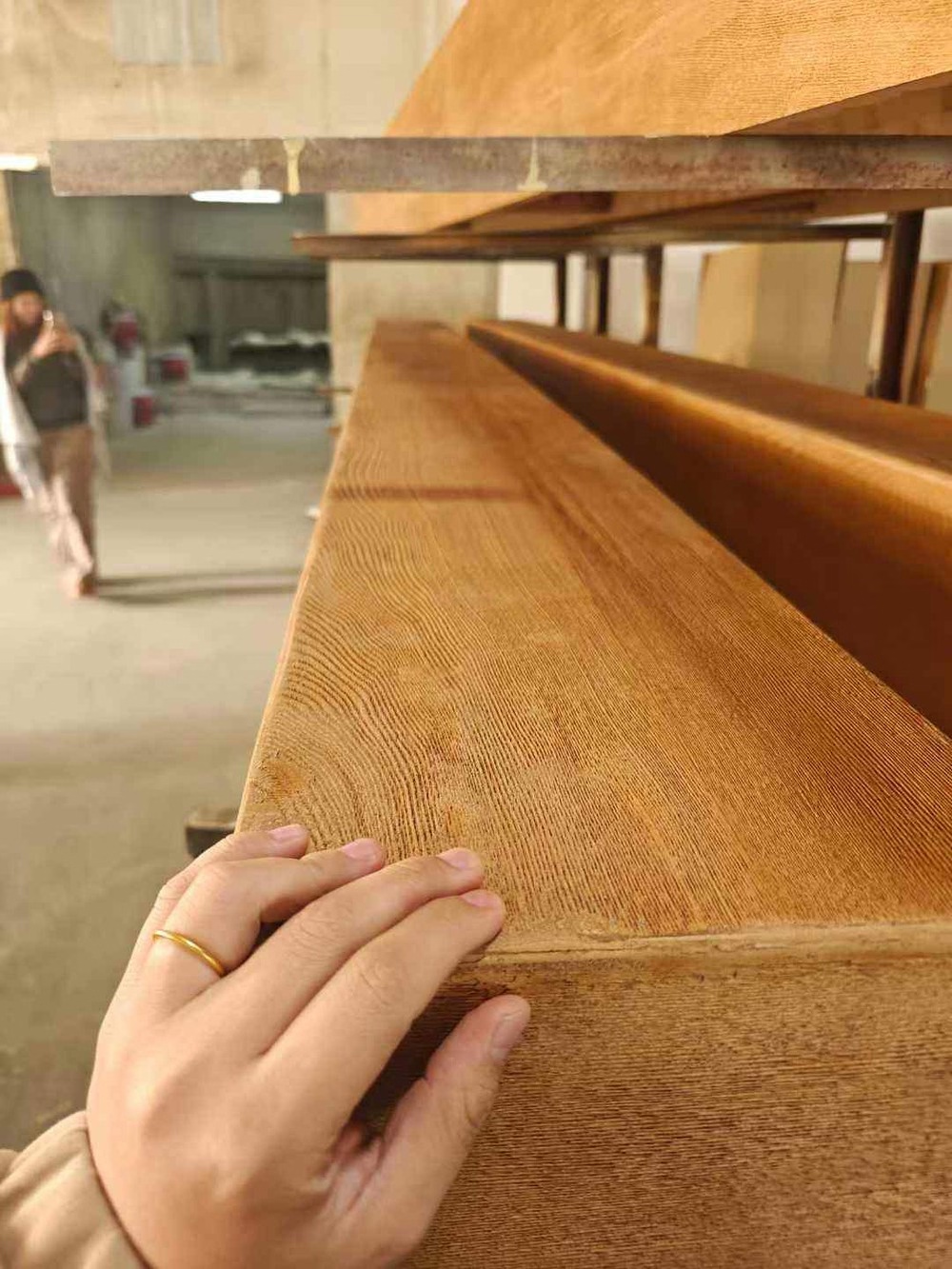
Polyurethane beams offer consistency that natural materials cannot match. Every beam section produced from the same mold and finishing process will exhibit the same grain patterns, color distribution, and surface characteristics. A designer can specify a particular product confident that all beams will match precisely. This predictability simplifies specification, reduces installation complications, and ensures consistent results across entire projects.
Beyond consistency, polyurethane enables design possibilities that timber cannot achieve. Extremely long beam lengths become practical without the structural limitations of natural timber. Complex curved and arched configurations can be molded rather than requiring skilled carpentry and steam-bending techniques. Intricate profiles and details can be reproduced consistently across unlimited production. These possibilities expand the designer's vocabulary, enabling architectural expressions that would otherwise require prohibitive expense or technical complexity.
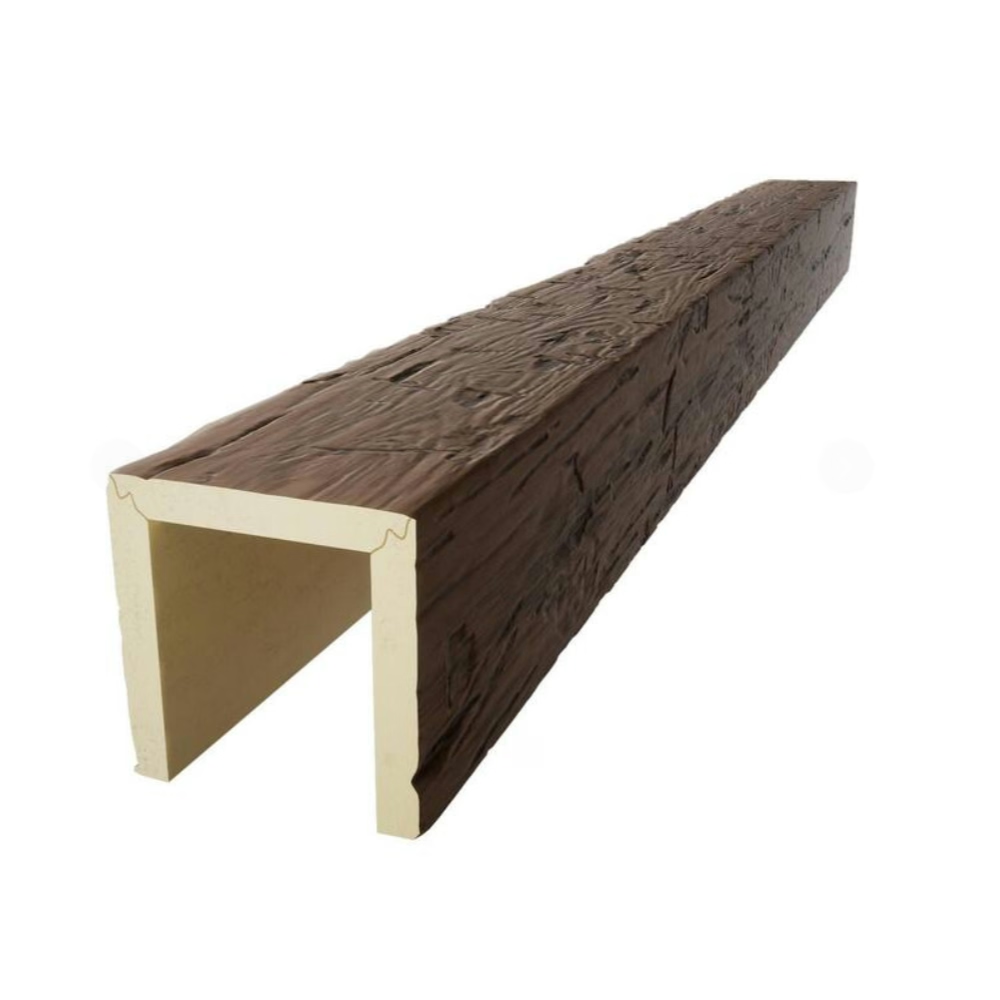
The range of available finishes grows continuously as manufacturers respond to market demand. From light natural wood tones to deep charred blacks, from smooth contemporary surfaces to heavily textured rustic appearances, polyurethane beams can be produced in virtually any finish that might be specified. Custom finishes for specific project requirements can be developed and reproduced reliably, enabling brand-consistent installations for hospitality chains, retail environments, or any application requiring specific aesthetic control.
Environmental Considerations
Environmental impact increasingly influences material selection decisions across the construction industry. Polyurethane faux wood beams offer several advantages in this context, though the full picture involves careful consideration of multiple factors.
The lightweight nature of polyurethane beams affects transportation-related carbon emissions significantly. Shipping a container of polyurethane beams generates far less fuel consumption and associated emissions than shipping equivalent timber volumes. For projects with environmental certification requirements, this factor can contribute meaningfully to overall project footprint calculations.
Resource efficiency differs between production methods. Natural timber requires decades to grow before harvest, consumes land resources, and may involve transportation from distant forests. Polyurethane beam production requires raw materials derived from petroleum, but the finished product density means less material overall, and production can occur in proximity to markets. Life cycle assessment studies suggest that polyurethane products often demonstrate favorable environmental profiles when full lifecycle factors are considered.
Recycling and disposal considerations continue to evolve. Some polyurethane products can be recycled into new applications, though infrastructure for this recycling remains limited in many regions. Natural timber biodegrades naturally at end of life but may contain chemical treatments that complicate disposal. Neither material presents a fully resolved end-of-life scenario, making this an area where ongoing development and consumer choice continue to shape outcomes.
Indoor air quality represents another environmental consideration. Quality polyurethane beams from reputable manufacturers are formulated to meet stringent VOC emissions standards, contributing to healthy indoor environments. The absence of off-gassing concerns means that polyurethane beams can be installed in occupied spaces without the precautions sometimes required for natural timber finishes containing volatile compounds.
Cost Considerations and Value
Comprehensive evaluation of polyurethane beams requires honest assessment of cost factors across project lifecycles. Initial material costs for polyurethane typically fall in the mid-range compared to various timber options, potentially exceeding inexpensive pressure-treated lumber while costing less than premium hardwoods or specialty timbers. However, material cost represents only a portion of total installed cost.
Installation labor savings can be substantial. The lightweight handling, simplified mounting, and elimination of structural engineering requirements all translate into labor cost reductions. Projects that might require two days of professional installation with timber can often be completed in hours with polyurethane beams. For commercial projects where labor costs dominate, this advantage can meaningfully affect project economics.
Maintenance costs diverge significantly over time. Natural timber beams require periodic inspection, cleaning, and refinishing to maintain their appearance. Refinishing intervals vary by exposure and finish but typically range from three to seven years for interior applications. Each refinishing cycle involves material costs, labor, and potentially business disruption in commercial settings. Polyurethane beams require no such maintenance, delivering equivalent appearance indefinitely with simple cleaning.
The total cost of ownership comparison consistently favors polyurethane for most applications. Initial cost premiums, where they exist, are typically recovered within a few years through maintenance savings. For applications where maintenance is difficult, expensive, or disruptive, the payback period shortens further. Over typical product lifespans measured in decades, polyurethane beams frequently represent the most economical choice.
The convergence of practical advantages, design possibilities, and economic value explains the growing adoption of polyurethane faux wood beams across residential and commercial applications. What began as a niche product has matured into a mainstream architectural element, valued by designers for its aesthetic versatility and by building professionals for its performance characteristics. Understanding these advantages enables informed decisions that optimize outcomes across all the factors that matter for any given project.
Technical References
ASTM standards cited in every specification
Test Data
Lab results from internal testing program
Updated 2026
Reviewed against current product specs